To curate art in open-plan living spaces, select pieces that define zones and create visual flow. Use lighting to highlight your artwork and choose furniture placement that encourages viewing from different angles. Balance the size and style of artworks with your overall décor, ensuring color harmony for a unified look. Thoughtful placement and cohesive style can transform your space into inviting, stylish areas. Keep exploring to discover how to make your art choices truly stand out.
Key Takeaways
- Select art that defines zones and guides flow, serving as focal points or curated gallery series.
- Use proper lighting to highlight artworks, ensuring visibility and enhancing ambiance.
- Arrange furniture to create natural viewing points and maintain space around artworks for focus.
- Balance scale and proportion between art and furniture to achieve visual harmony and cohesion.
- Choose art that complements the overall style and color palette for a unified, inviting space.
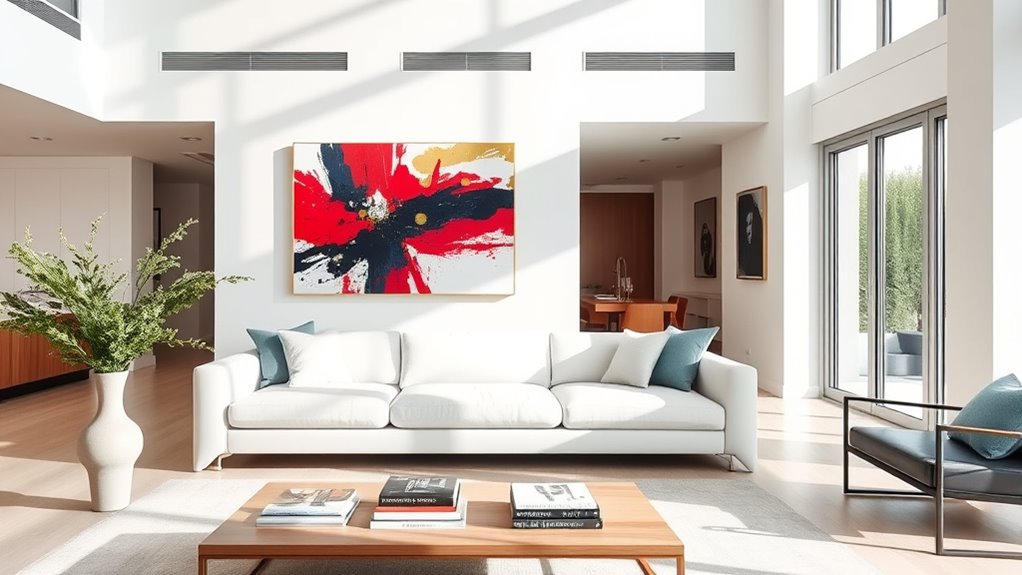
Choosing the right artwork can transform a living space from ordinary to inspiring, but it’s more than just picking pretty pictures. In an open-plan layout, your art selections serve as visual anchors that define zones and guide the flow of the room. To maximize their impact, you need to consider how lighting design plays a vital role. Proper lighting not only highlights your artwork but also enhances the overall ambiance. Think about installing adjustable fixtures—such as track lighting or picture lights—that can be directed to spotlight your pieces without creating glare or harsh shadows. This way, your art becomes a focal point, drawing attention and adding depth to your space. Equally important is furniture placement, as it influences how your artwork is viewed and appreciated. Position seating and tables thoughtfully to create natural vantage points where your art can be best seen and enjoyed. For example, hanging a large piece behind a sofa or along a focal wall ensures it becomes a centerpiece, rather than competing with clutter or other furnishings. You want to create visual harmony, so consider the scale and proportion of your art in relation to the furniture around it.
Strategic lighting and furniture placement elevate art as focal points, enhancing harmony and visual flow in open-plan spaces.
In open-plan areas, maintaining a sense of cohesion is key. You might choose a series of smaller artworks instead of one large piece, spacing them evenly along a wall to produce a curated gallery feel. When planning furniture placement, leave enough space around your artworks for unobstructed viewing—this prevents your art from feeling crowded or overlooked. The arrangement should encourage movement and exploration, guiding the eye naturally from one zone to another. Remember, lighting and furniture placement are interconnected; for example, positioning a lamp near a piece not only illuminates it but also creates a cozy nook that invites closer inspection. Additionally, incorporating visual balance is essential to achieve a harmonious and inviting environment.
Finally, you should think about the overall style and color palette of your art and furnishings. Cohesion doesn’t mean matching everything perfectly but rather creating a balanced aesthetic. If your furniture features cool tones, select artwork that complements these hues to unify the space visually. Conversely, bold or contrasting art can serve as eye-catching accents if balanced with neutral furniture.
In the end, curating art in an open-plan living space is about creating harmony—through thoughtful lighting design and strategic furniture placement—that invites viewers to engage, relax, and feel inspired. Your choices should enhance the flow, highlight your personality, and turn your living area into a well-curated, inviting environment.
Frequently Asked Questions
How Can I Incorporate Personal Memories Into My Art Choices?
You can incorporate personal memories into your art choices through sentimental art selection by choosing pieces that evoke meaningful moments or feelings. Consider displaying photographs, heirlooms, or artwork inspired by special events or loved ones. Personal memory integration is key—select art that resonates with your life story. Mix these pieces into your open-plan space to create a warm, authentic atmosphere that reflects your unique experiences and keeps your memories alive.
What Lighting Techniques Best Highlight Curated Artwork?
They say a picture is worth a thousand words, so make sure your lighting does it justice. Use gallery lighting with adjustable spotlight techniques to highlight key pieces. Position spotlights at a 30-degree angle to avoid glare and shadows, creating depth and focus. Opt for warm, dimmable lights to enhance colors and textures. This approach guarantees your curated artwork captivates and transforms your open-plan space into a true gallery.
How Do I Balance Art With Existing Interior Decor?
To balance art with your existing decor, focus on color coordination to create harmony and avoid clashing. Choose a focal point for your artwork that complements or contrasts with nearby elements, drawing attention without overpowering the space. Incorporate colors from your decor into the artwork or framing to unify the room’s look. This approach guarantees your art enhances your open-plan living space while maintaining visual balance and cohesion.
Are There Specific Art Styles Suited for Large Open Spaces?
For large open spaces, you should choose art with a commanding scale and proportion that fills the area without overwhelming it. Abstract and landscape styles work well, as they offer bold visuals that create visual harmony through consistent color palettes. Opt for pieces with color harmony that complement your existing decor, tying the space together seamlessly. Larger, statement artworks will enhance the openness and add a focal point.
How Often Should I Update or Rotate My Artwork?
You should update or rotate your artwork every season to keep your open-plan space fresh and engaging. Incorporate seasonal rotation by swapping out pieces that reflect current moods or holidays, and consider your investment pieces carefully—display them prominently and avoid frequent changes. This approach allows you to enjoy variety without risking damage or devaluing your high-quality art, ensuring your space remains vibrant and well-curated all year round.
Conclusion
Just like a well-choreographed dance, curating art for open-plan living spaces creates harmony and flow. Trust your instincts, choose pieces that resonate with your personality, and consider how they interact with the space around them. When you select art thoughtfully, your home becomes a vibrant canvas that reflects who you are. Remember, the right artwork isn’t just decoration—it’s the heartbeat of your living space, making it uniquely yours.