

When designing an accessible interior, focus on creating an inclusive space that welcomes everyone by prioritizing physical, sensory, and cognitive needs. Use principles like wide, clear pathways, adjustable features, and easy-to-use controls. Incorporate assistive technologies, tactile cues, and contrasting colors to support diverse users. Guarantee safety with non-slip floors and adequate lighting. By embracing flexible layouts and thoughtful design choices, you foster a welcoming environment—exploring these strategies can help you create truly inclusive spaces.
Key Takeaways
- Incorporate universal design principles to create spaces accessible and functional for all users.
- Use assistive technologies like voice controls and tactile cues to enhance independence.
- Ensure clear pathways, adjustable features, and non-slip flooring for safety and ease of movement.
- Utilize visual and tactile signage, with proper lighting, to assist navigation for diverse abilities.
- Design adaptable spaces that evolve with users’ needs, fostering inclusivity and community engagement.
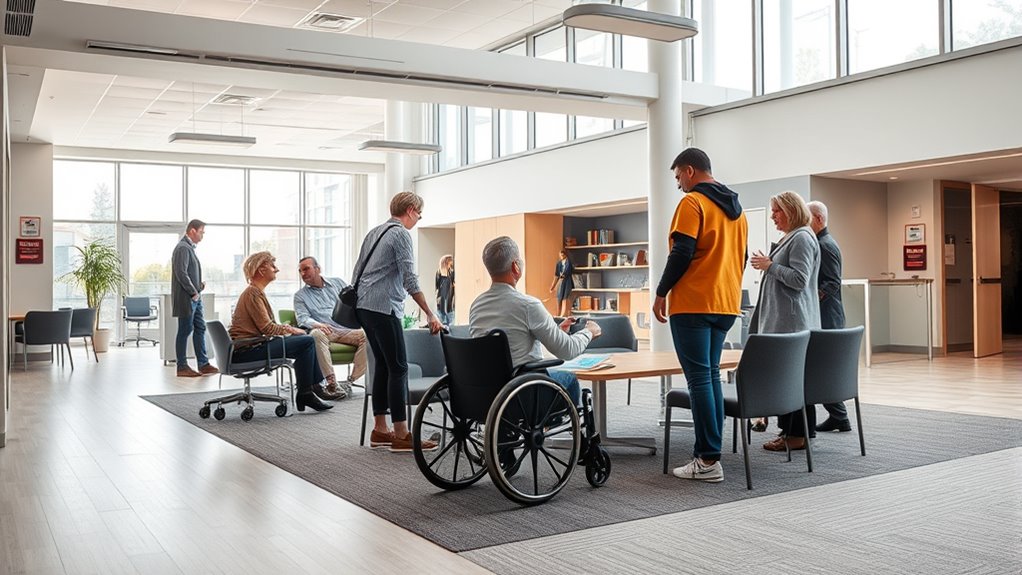
Creating accessible designs is vital to guarantee that everyone, regardless of their abilities, can use and benefit from your digital products. When it comes to interior spaces, this principle extends beyond visuals and into the physical environment itself. One of the key concepts to keep in mind is universal design, which emphasizes creating spaces that are inherently accessible to all people. By integrating universal design principles, you ensure that your interiors are welcoming, functional, and adaptable for a diverse range of users, including those with mobility challenges, sensory impairments, or other disabilities.
Universal design creates inclusive, adaptable spaces that welcome all users regardless of abilities.
Assistive technology plays an essential role in making interior spaces more inclusive. Devices like smart home systems, voice-activated controls, and adjustable lighting can drastically improve usability for individuals with disabilities. For example, installing voice-controlled lighting or thermostats allows someone with limited mobility or dexterity to easily control their environment without physical strain. Incorporating tactile cues and contrasting colors also helps individuals with visual impairments navigate spaces more effectively. These technologies and design strategies empower users to interact with their surroundings independently, fostering a sense of autonomy and safety.
Designing with accessibility in mind means considering the entire user experience. You should think about clear pathways that are wide enough for wheelchair users, lever-style door handles instead of knobs, and countertop heights that accommodate everyone. In addition, using non-slip flooring reduces risks for all users, especially those with balance issues. Bright, natural lighting and minimal visual clutter benefit everyone, but especially those with sensory sensitivities. When you plan your interior layout, keep sight lines open and ensure that essential controls and features are within easy reach. These small adjustments make a big difference in creating a space that’s truly inclusive.
Furthermore, universal design encourages flexibility. Incorporate adjustable features, like movable shelves or modular furniture, so the space can adapt to individual needs over time. Using signage with clear, large fonts and tactile elements ensures that everyone, including those with visual or cognitive impairments, can easily understand and navigate the environment. Additionally, understanding the importance of security zones can help protect vulnerable users and enhance overall safety. The goal is to eliminate barriers and create a seamless experience for all users. When you prioritize accessibility from the start, you’re not just complying with standards—you’re fostering a sense of community and respect. This proactive approach transforms interior spaces into environments that everyone can enjoy and benefit from, making your design truly inclusive.

DAYBETTER 100 ft Smart WiFi Led Lights, Led Strip Lights Work with Alexa and Google Assistant, App Remote Control RGB Strip Lighting for Bedroom Room Decor, 50 ft *2
- Voice Control Compatibility: Works with Alexa and Google Assistant
- Multiple Control Options: Control via App or IR remote
- Vast Color Selection: 16 million colors and scene modes
As an affiliate, we earn on qualifying purchases.
As an affiliate, we earn on qualifying purchases.
Frequently Asked Questions
How Can Technology Enhance Accessible Interior Design?
You can enhance accessible interior design with smart technology and assistive devices that adapt to your needs. Smart technology, like voice-activated lighting and thermostats, allows for easy control without physical effort. Assistive devices, such as wheelchair-friendly fixtures or visual alerts, improve independence. Together, these tools create a more inclusive space, ensuring comfort and usability for everyone, regardless of mobility or sensory limitations.
What Are Budget-Friendly Accessibility Design Options?
To create budget-friendly accessibility, consider affordable modifications like installing grab bars, non-slip mats, orlever handles. DIY accessibility projects, such as widening doorways or adding ramps, can also make a big difference without breaking the bank. Focus on simple, cost-effective solutions that improve safety and independence. You’ll be surprised how small changes can markedly enhance accessibility, making spaces more inclusive for everyone without needing expensive renovations.
How Do Cultural Differences Influence Accessible Interior Design?
You might worry about cultural differences complicating accessible interior design, but embracing cultural sensitivity actually enriches your space. By understanding diverse needs, you foster design diversity that respects traditions and preferences. Incorporate universal features alongside culturally specific elements, ensuring inclusivity for all. This approach not only creates a welcoming environment but also celebrates diversity, making your space truly accessible and meaningful to everyone, regardless of cultural background.
What Are Common Mistakes to Avoid in Accessible Design?
You should avoid neglecting visual cues and poor color contrast in accessible design. Don’t assume everyone perceives colors the same way; guarantee high contrast between text and backgrounds to improve readability. Steer clear of cluttered layouts and ambiguous signage, as these can confuse users. Also, don’t overlook the importance of consistent visual cues, which help guide individuals with disabilities effectively. Prioritizing clarity and contrast makes your design truly inclusive.
How Can Small Spaces Be Optimized for Accessibility?
You can optimize small spaces for accessibility by incorporating space-saving solutions like multi-functional furniture and clever storage options. Choose ergonomic furniture that supports comfort and ease of use, ensuring everyone can navigate comfortably. Keep pathways clear, use bright lighting, and install adjustable features where possible. These strategies create a more inclusive environment, making the space functional and welcoming for all users without sacrificing style or utility.

Home Techpro Vacuum Tech Rug Pad Gripper for Hardwood Floors No Damage, New Materials to Non Slip Rug Pads, Under Rug Carpet Tape : Keep Your Rug in Place & Make Corner Flat
- Vacuum Tech Design: Grips smooth floors without glue
- Floor Protection: No damage or marks on floors
- Easy Installation: Simple to glue under rugs
As an affiliate, we earn on qualifying purchases.
As an affiliate, we earn on qualifying purchases.
Conclusion
By prioritizing accessibility in your interior design, you create spaces that truly serve everyone, not just a select few. Some might think it’s too costly or complicated, but inclusive design often leads to timeless, versatile spaces that benefit all users. When you invest in accessibility, you’re building environments that foster independence, comfort, and connection. Ultimately, inclusive design isn’t just a courtesy—it’s a responsibility that transforms your space into a welcoming, empowering place for everyone.

BLEWAY Bump Dots for Visually Impaired 165 Pcs Combo Pack(Red,Yellow,Black,White) – Low Vision Aids Braille Stickers Raised Tactile Dots for Elderly, Blind
- Tactile Identification: Helps visually impaired identify items by touch
- Multiple Shapes and Sizes: Includes hemisphere, cylinder, and square shapes
- Vivid Color Options: Available in yellow, red, black, and white
As an affiliate, we earn on qualifying purchases.
As an affiliate, we earn on qualifying purchases.

RUILALIFE Expandable Cabinet Organizer Shelf With Adjustable Height, Stackable Kitchen Countertop Organizer Rack, Adjustable Shelf Riser For Kitchen Counter, Pantry, Cupboard, Desk, Tabletop
- Adjustable Size: 14-22.4 inches length, 8.27 inches wide
- Easy Installation: Simple manual setup with screw tightening
- Expandable Shelf: Extends from 14 to 22.4 inches
As an affiliate, we earn on qualifying purchases.
As an affiliate, we earn on qualifying purchases.