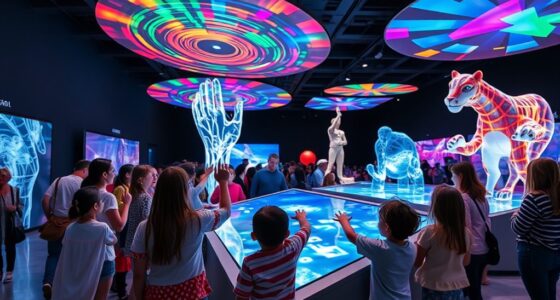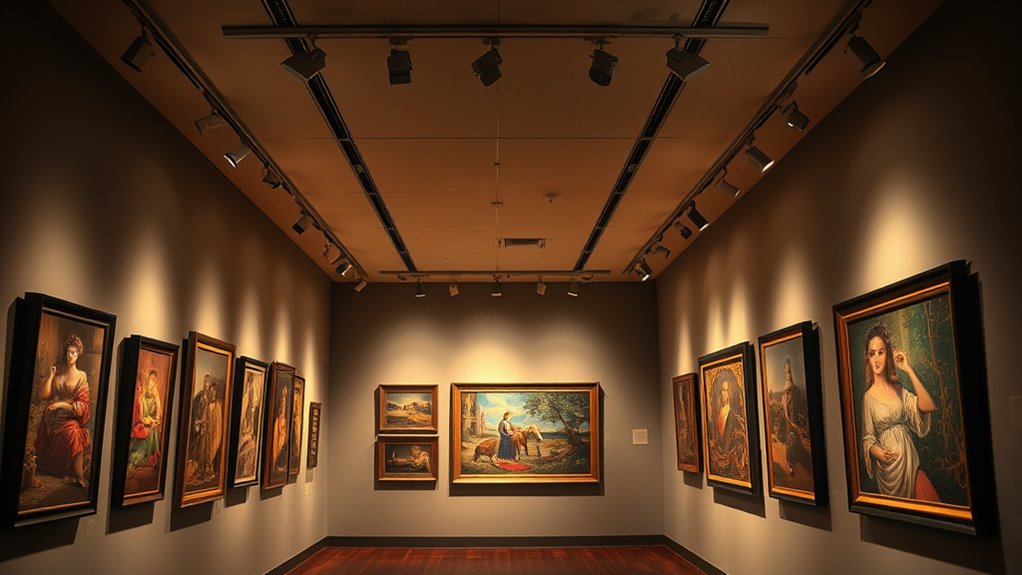

To enhance artworks without causing damage, you should choose adjustable LED lighting that offers precise control over color temperature and brightness. LED lights produce less heat and flicker, helping preserve delicate materials and prevent aging. By customizing lighting to highlight specific details, textures, and colors, you create an inviting atmosphere that captivates visitors while protecting your collection. Keep exploring, and you’ll discover more ways to create stunning, safe exhibition environments.
Key Takeaways
- Use adjustable LED lighting to highlight artworks while minimizing heat and UV damage.
- Select appropriate color temperatures to enhance artwork features without distortion.
- Incorporate flicker-free, consistent lighting to preserve visual integrity and prevent deterioration.
- Utilize dimming capabilities to create optimal viewing environments and reduce glare.
- Regularly evaluate and adapt lighting setups to ensure safety and optimal display of delicate materials.
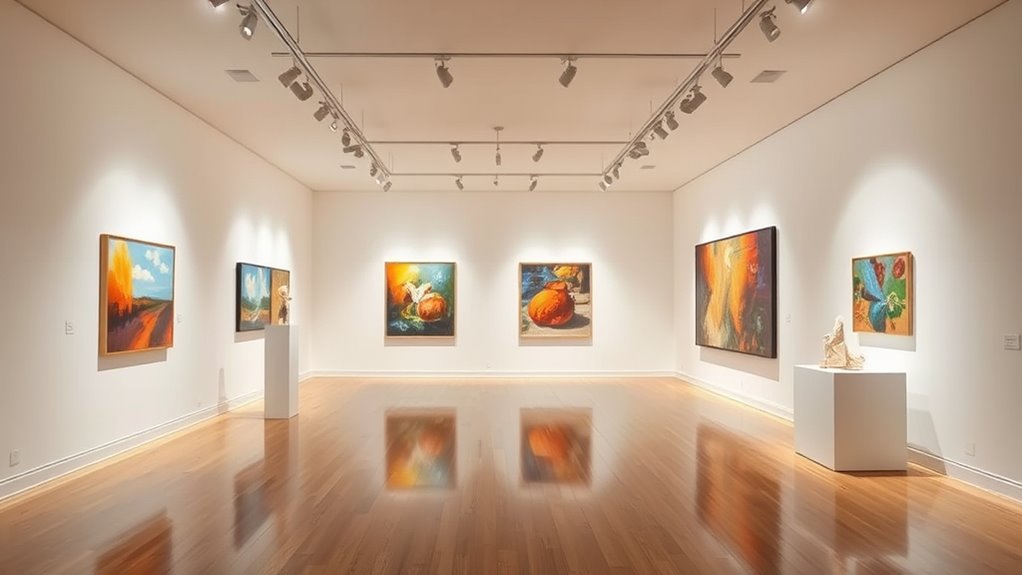
Have you ever wondered how some exhibitions manage to captivate visitors instantly? The secret often lies in the thoughtful use of lighting, especially when it comes to showcasing artworks in a way that highlights their beauty without causing any damage. Modern LED advancements have revolutionized exhibition lighting, offering versatile solutions that balance brilliance with safety. Their energy efficiency and long lifespan make them ideal for museums and galleries, but what truly sets them apart is the ability to fine-tune their output to match the specific needs of each artwork.
Effective exhibition lighting combines LED versatility with precise control to showcase art beautifully and safely.
One of the key features of LED technology is the ability to adjust color temperature. This control allows you to create the perfect ambiance for each piece, ensuring that the artwork appears true to its original colors. For example, a warmer color temperature, around 2700K to 3000K, can evoke a cozy, inviting feeling, making paintings with warm tones pop. Conversely, cooler temperatures, between 4000K and 5000K, tend to bring out the crispness and clarity in photographs or contemporary art. By selecting the appropriate color temperature, you prevent the artwork from appearing washed out or overly yellow, which can distort its perception.
LED advancements also mean that you can achieve consistent lighting quality throughout the entire exhibition space. Unlike traditional lighting, which can flicker or shift in color over time, modern LEDs provide stable illumination that preserves the integrity of the artwork. This consistency ensures visitors see each piece as intended, without distractions or misinterpretations caused by uneven lighting. Moreover, LEDs produce less heat than halogen or incandescent bulbs, reducing the risk of thermal damage to sensitive materials like paper, textiles, or pigments.
Controlling the color temperature also grants you flexibility in creating specific atmospheres that enhance the visitor experience. Subtle adjustments can emphasize textures, shadows, and details, guiding viewers’ attention to particular aspects of the artwork. This precision helps in storytelling and emotional engagement without overwhelming or distracting your audience. Additionally, because LEDs can be dimmed precisely, you can set lighting levels that avoid glare or reflections, making the viewing experience more comfortable and immersive.
Furthermore, understanding the lighting technology behind LEDs helps optimize their use for delicate artworks, ensuring preservation alongside presentation. In essence, leveraging LED advancements and carefully selecting color temperature enables you to showcase artworks beautifully while safeguarding their longevity. It’s about striking a balance—highlighting details and colors vividly, yet maintaining a gentle touch that respects the artwork’s material and history. As technology continues to evolve, your ability to craft inviting, visually stunning exhibitions becomes even more achievable, ensuring every visitor leaves with a deeper appreciation for the art on display.

EZVALO Picture Light for Wall, 4800mAh Rechargeable Wireless Remote Battery Lights for Painting, 16In Dimmable Magnetic LED Art Display Light, Colors Temperatures, for Gallery, Living Room,Hallway
USB Rechargeable & Easy Charge: Our picture light with with built-in 4800mAh large-capacity battery and comes with a…
As an affiliate, we earn on qualifying purchases.
As an affiliate, we earn on qualifying purchases.
Frequently Asked Questions
How Does LED Lighting Compare to Traditional Options for Art Displays?
You’ll find LED lighting superior to traditional options for art displays because of its high efficiency and excellent color rendering. LED lights consume less energy, helping you save on costs, while their precise color rendering ensures artworks look vibrant and true to life. Plus, LEDs emit minimal heat and UV rays, protecting delicate pieces without compromising brightness. Overall, LED lighting enhances your exhibits while maintaining the integrity of your artwork.
What Are the Best Practices for Adjusting Lighting Angles to Prevent Damage?
Think of light angle adjustment as a gentle dance—keep your fixtures at an ideal angle to avoid harsh glare and uneven shadows. You should aim for a slight tilt, directing light to highlight details without causing reflections. Regularly check the light’s position to guarantee glare mitigation, which protects delicate artworks. By maintaining these best practices, you preserve the artwork’s integrity while creating an inviting display that captivates viewers.
How Can Lighting Be Customized for Different Types of Artworks?
You can customize lighting by choosing artwork-specific lighting that highlights each piece’s unique features. Use adaptive lighting solutions to adjust brightness, color temperature, and direction based on the artwork’s material and visual needs. This approach guarantees each piece is illuminated ideally without risk of damage. Regularly evaluate the lighting setup, making necessary adjustments to preserve the artwork’s integrity while enhancing its visual appeal effectively.
What Are Common Mistakes to Avoid When Installing Exhibition Lighting?
Think of lighting like tuning a musical instrument—you want perfect harmony. Avoid common mistakes like improper lighting angles, which cause glare or shadows, and neglecting color temperature, making artworks appear dull or washed out. For example, a museum once used harsh, direct lighting that damaged paintings over time. Always make certain your lights are at correct angles and match the artwork’s ideal color temperature to protect and showcase pieces beautifully.
How Often Should Lighting Systems Be Maintained or Replaced?
You should schedule regular lighting maintenance at least every 6 to 12 months to guarantee peak performance and prevent damage to artworks. Keep an eye on replacement schedules for bulbs and fixtures, typically every 1 to 2 years, depending on usage. Regular checks help identify issues early, extend the lifespan of your lighting system, and ensure your exhibits remain beautifully illuminated without risking harm to the art.

Glendan LED Picture Light: Adjustable Aperture with Zoomable Projection — 2700–6500K High CRI Flicker-Free Smart Control — Perfect Art Light for Artwork in Museums and Galleries
Vivid Viewing Experience: This led picture light integrates anti-glare optics, high CRI 95+, and ultra-clear projection. Visitors enjoy…
As an affiliate, we earn on qualifying purchases.
As an affiliate, we earn on qualifying purchases.
Conclusion
By choosing the right lighting, you become the gentle gardener tending delicate blossoms, allowing their beauty to bloom without damage. Think of your space as a canvas, where each beam of light is a brushstroke that highlights artistry without overwhelming it. When you master this balance, your exhibition becomes a harmonious symphony of light and shadow, revealing the true soul of each artwork while preserving its fragile essence for generations to come.
EZVALO Picture Light for Wall, 4800mAh Rechargeable Wireless Remote Battery Lights for Painting, 16In Dimmable Magnetic LED Art Display Light, Colors Temperatures, for Gallery, Living Room,Hallway
USB Rechargeable & Easy Charge: Our picture light with with built-in 4800mAh large-capacity battery and comes with a…
As an affiliate, we earn on qualifying purchases.
As an affiliate, we earn on qualifying purchases.

GPRK Black Light Bar 15W 1ft LED Blacklight for Glow Party Fluorescent Tapestry Poster Body Paint UV Strip Lights for Cabinet and Display, 2 Packs
Well-buil and Safety: The LED blacklight bar is equipped with 48 high-quality UV LEDs, providing a total of…
As an affiliate, we earn on qualifying purchases.
As an affiliate, we earn on qualifying purchases.