To care for your oil paintings, guarantee they’re kept in a stable environment with consistent temperature and humidity, away from sunlight, vents, or radiators. Gently dust the surface with a soft brush or microfiber cloth, and protect the frame from damage. Avoid using water or chemicals, as harsh cleaners can cause irreversible harm. Regular, careful upkeep helps preserve their appearance and longevity—keep exploring to learn more about proper maintenance techniques.
Key Takeaways
- Regularly inspect the painting and frame for damage, pests, or deterioration, and protect from extreme environmental conditions.
- Clean surface dust gently with a soft, dry brush or microfiber cloth; avoid water and harsh chemicals.
- Maintain stable temperature (~70°F) and humidity (45-55%) to prevent mold, cracking, or warping.
- Keep paintings away from direct sunlight, radiators, and air vents to minimize environmental stress.
- Consult a professional conservator for stubborn dirt or significant damage to ensure proper care and preservation.
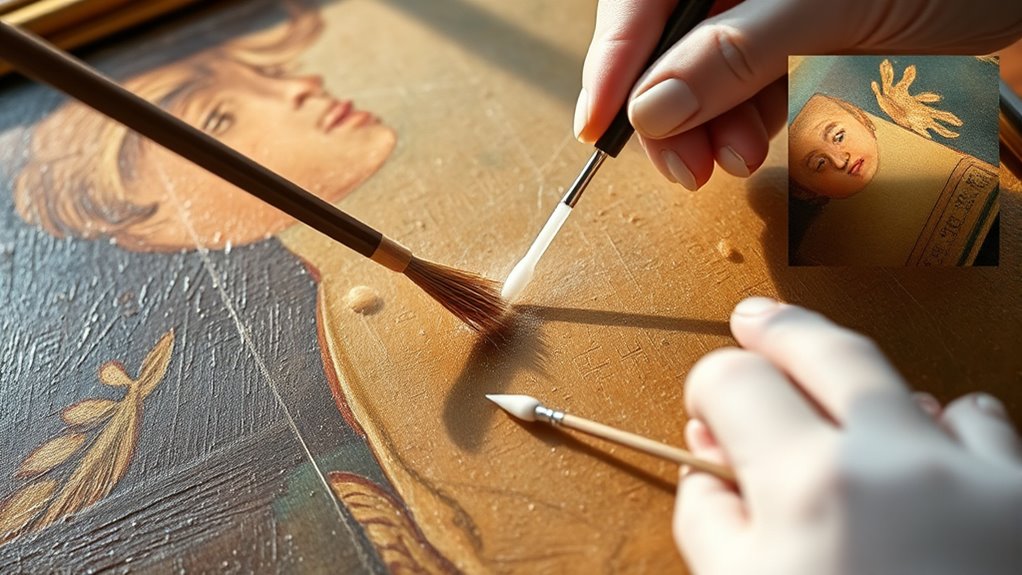
Oil paintings are valuable works of art that require proper cleaning and maintenance to preserve their beauty and longevity. One of the most critical aspects of caring for your painting is protecting its frame, which not only enhances its appearance but also provides physical support. You should regularly inspect the frame for signs of damage, such as looseness, cracks, or pests. To guarantee ideal frame protection, avoid exposing it to extreme temperatures, humidity, or direct sunlight, which can cause warping or deterioration over time. When cleaning the painting itself, be cautious about dust and dirt settling on the surface, as these can dull the colors and cause long-term damage. Using a soft, dry brush or a gentle vacuum with a brush attachment allows you to remove surface dust without risking scratches or damage to the paint layer.
Environmental control is equally crucial in maintaining your oil painting. Fluctuations in temperature and humidity accelerate deterioration, so aim to keep your artwork in a stable environment. Ideally, your space should be maintained at around 70°F (21°C) with relative humidity levels between 45% and 55%. Too much humidity can promote mold growth or cause the paint to become sticky, while excessively dry conditions may lead to cracking. You should also avoid placing your painting near windows, radiators, or air conditioning vents, which can create drafts or temperature swings. Proper environmental control not only helps preserve the paint but also minimizes risks to the frame and overall structural integrity of the artwork. Proper environmental conditions are essential to prevent long-term deterioration.
When it comes to cleaning the surface of your oil painting, always prioritize gentle methods. If you notice surface grime or surface dirt, start with a soft, clean brush or a microfiber cloth to delicately wipe away the debris. For more stubborn dirt, consult a professional conservator rather than attempting to clean the painting with water or cleaning solutions, as improper cleaning can cause irreversible damage. Remember, the goal is to conserve the painting’s original appearance without compromising its integrity. In addition, avoid using harsh chemicals or abrasive materials, which can damage the paint layer or disturb the varnish. Regular, careful maintenance combined with suitable environmental control and frame protection ensures your oil painting remains vibrant and well-preserved for years to come.
Top picks for "clean maintenance painting"
Open Amazon search results for this keyword.
As an affiliate, we earn on qualifying purchases.
Frequently Asked Questions
Can I Use Household Cleaning Products on Oil Paintings?
You should avoid using household chemicals on oil paintings because they can damage the delicate surface. Instead, stick to gentle cleaning methods, like soft brushes or dry cloths, to remove dust and dirt. Household cleaning products often contain harsh chemicals that can cause discoloration or deterioration. Always test a small area first, and when in doubt, consult a professional art conservator to guarantee proper care of your oil paintings.
How Often Should I Professionally Inspect My Oil Paintings?
You should schedule a professional assessment of your oil paintings at least every 3 to 5 years. Regular inspection frequency helps identify early signs of deterioration, such as cracking or discoloration. By consulting a conservator, you guarantee proper care and preservation. Don’t wait until visible damage appears; routine professional inspections maintain your artwork’s health and value over time.
Is It Safe to Display Oil Paintings in Direct Sunlight?
Exposing your oil paintings to direct sunlight is like throwing them into a fiery furnace—they face risks like UV damage and color fading. It’s safer to keep them away from direct sunlight to preserve their vibrancy and longevity. If sunlight is unavoidable, use UV-filtering glass or curtains to shield your artwork. Protecting your paintings guarantees they stay as stunning and timeless as the day they were created.
What Are the Signs of Deterioration in Oil Paintings?
You’ll notice signs of deterioration in oil paintings like cracking paint and color fading. Cracks often appear as fine lines or networks on the surface, indicating the paint or varnish is aging or drying unevenly. Color fading makes the artwork look dull or less vibrant, which can happen due to exposure to light or environmental conditions. If you see these signs, it’s time to consult a professional conservator to preserve your painting’s integrity.
How Do I Safely Remove Surface Dust From an Oil Painting?
You should gently brush surface dust off your oil painting using a soft, natural-bristle brush, making sure to hold it at a slight angle and move in a light, sweeping motion. Alternatively, you can wipe it softly with a clean, soft cloth dampened with distilled water. Avoid pressing hard or using chemicals, as these can damage the paint. Regular, gentle cleaning helps preserve your artwork’s beauty.
Conclusion
By regularly caring for your oil painting, you keep its vibrant colors and intricate details alive, like a gentle hand brushing away dust from a treasured masterpiece. Imagine the soft glow of sunlight illuminating its surface, revealing every stroke and nuance. With proper cleaning and maintenance, your artwork remains a timeless window into the artist’s soul, radiating beauty and history for generations to come. Treat it with care, and it will continue to inspire and captivate.