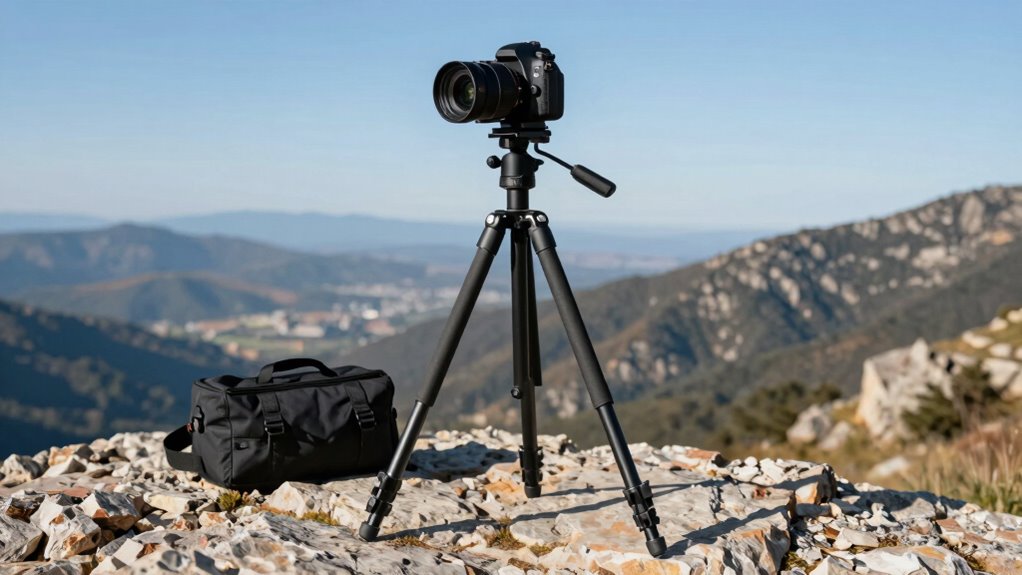
Heavier tripods aren’t always more stable because design, materials, and setup matter more. A lightweight tripod made with quality materials like carbon fiber or reinforced plastics can absorb vibrations and stay steady on uneven ground. Properly adjusting the legs and supporting accessories like sandbags can also boost stability. If you keep exploring, you’ll discover how smart choices in materials and setup techniques can improve your tripod’s performance beyond just weight.
Key Takeaways
- Heavier tripods are not inherently more stable; design and material quality play crucial roles.
- Proper setup, including leg extension and ground placement, significantly affects stability regardless of weight.
- Lightweight materials like carbon fiber can dampen vibrations and provide stability without adding weight.
- A wider base and better support geometry enhance stability more effectively than increased weight.
- Accessories like sandbags or stabilizers can improve stability without relying on the tripod’s weight.

NEEWER Upgraded 80.7" Carbon Fiber Camera Tripod Monopod with Telescopic 2 Section Center Axes, 360° Panorama Ballhead, 1/4" Arca Type QR Plate, Travel Tripod with ø28mm Column, Max Load 26.5lb, N55CR
【Carbon Fiber Travel Tripod】This camera tripod is strongly built with sturdy carbon fiber material for photography and videography….
As an affiliate, we earn on qualifying purchases.
As an affiliate, we earn on qualifying purchases.
What Makes a Tripod Stable? Key Factors Explained
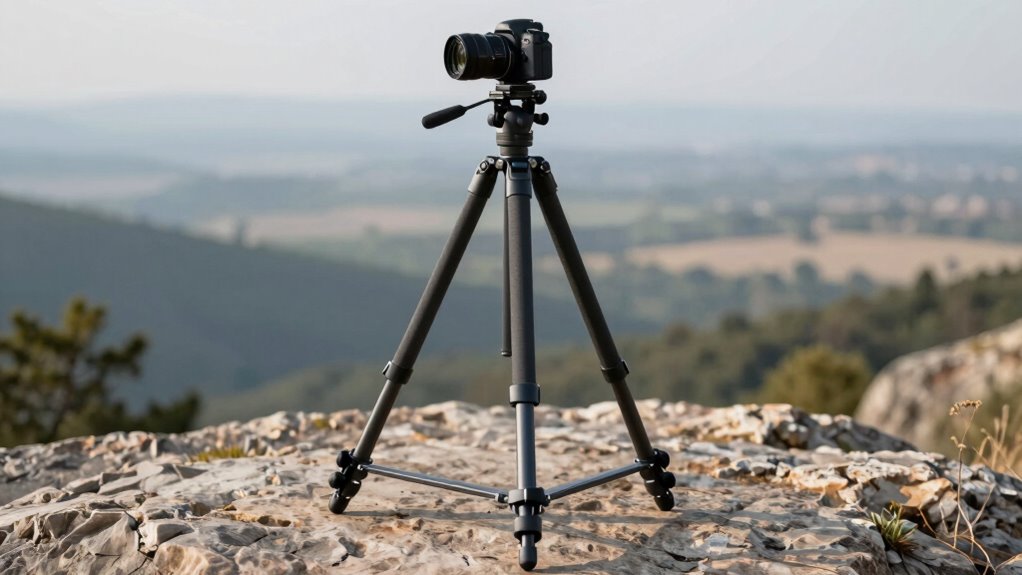
A tripod’s stability depends on several key factors working together to keep it steady. One major factor is tripod height; a taller tripod can be more prone to tipping if not balanced properly, so choose a height that suits your needs without sacrificing stability. Additionally, accessory compatibility plays a vital role—using compatible accessories like mounts and plates guarantees secure attachment, preventing wobbling or slipping. The center of gravity matters too: a lower center improves stability, especially at higher heights. Materials also influence stability; heavier, sturdy materials like aluminum or carbon fiber add weight where needed. By considering tripod height and guaranteeing accessory compatibility, you can enhance overall stability, making your shots steadier and more reliable in various conditions. Exploring digital concepts can also inform your choices, leading to better equipment selection and usage. Additionally, understanding paint viscosity can help you select the right tools for different projects, ensuring optimal performance.

EMART Heavy Duty Sandbag Photo Studio Weight Bag Saddlebag Design for Photography Light Stand Tripod, Outdoor Patio, Sports, Pop up Tent, Umbrella Base, Camping, Fishing Chair -4 Packs Set(Black)
The sand bags for weight feels softer and each sandbag has double zippers and a kind of rubber…
As an affiliate, we earn on qualifying purchases.
As an affiliate, we earn on qualifying purchases.
Why Heavier Tripods Aren’t Always More Stable
While adding weight to a tripod can seem like a straightforward way to boost stability, it doesn’t always deliver the results you’re expecting. Excess weight can make your setup cumbersome, reducing mobility and increasing strain during tripods’ use and maintenance. Overloading your tripod with accessories or weights may cause instability if the tripod’s design isn’t built to handle it. A heavy tripod can shift or topple more easily on uneven surfaces. Instead, focus on proper tripod maintenance and strategic use of tripod accessories, such as stabilizers or sandbags, to enhance stability without unnecessary weight. Additionally, many photographers find that using hydrotherapy techniques can help alleviate discomfort from long hours of shooting. Remember, stability depends on the tripod’s design and how you use it, not just its mass. Furthermore, investing in high-quality smart locks can help protect your equipment when you’re not on-site. Additionally, incorporating Bollywood music into your shooting sessions can create an enjoyable atmosphere, making the process more engaging. high contrast ratios can significantly improve the perceived sharpness and clarity of your images, which is crucial for achieving the best results in any setup. Understanding the principles of consumer ethics can also help you make informed choices about the equipment you invest in, ensuring it aligns with your values and needs.
| Factor | Impact |
|---|---|
| Tripod accessories | Can improve stability if used wisely |
| Weight overloading | May cause instability or damage |
| Tripod maintenance | Keeps equipment balanced and secure |
| Tripod design | Determines overall stability |

Amazon Basics 50-inch Lightweight Portable Camera Tripod Stand with Quick-Release Plate, Adjustable Height, Aluminum, for Travel Photography, Champagne
Camera mount tripod stand with zippered storage bag
As an affiliate, we earn on qualifying purchases.
As an affiliate, we earn on qualifying purchases.
Top Features That Improve Tripod Stability Beyond Weight
Sure! Here’s the revised content with the requested modifications:
—
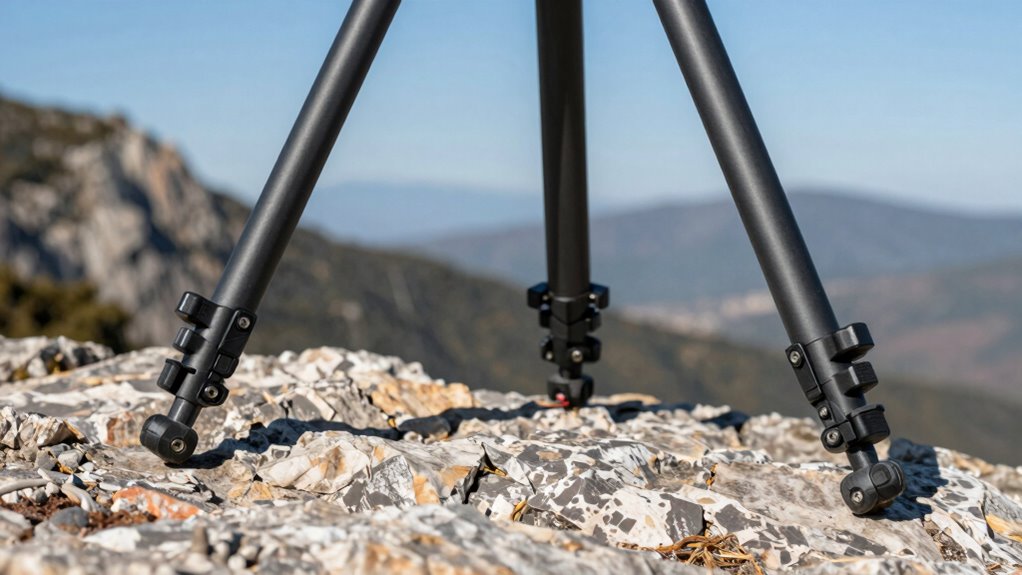
You can boost your tripod’s stability with a wider base, which provides better support on uneven surfaces. Incorporating seating areas for social gatherings can also enhance your overall setup by allowing for more comfortable positioning. Upgrading to enhanced leg materials makes your tripod more durable and resistant to movement, even in tough conditions. Additionally, improved locking mechanisms keep your setup secure, preventing unwanted shifts and vibrations. Including performance upgrades can also enhance overall stability, similar to how the right flywheel can improve your car’s handling. Furthermore, understanding the importance of weight distribution can help you optimize your tripod setup for varying terrains. A solid foundation, similar to well-constructed wall surfaces, ensures that your equipment remains stable and reliable in various environments. The integration of neural interface technology can also lead to innovative designs that enhance stability through real-time adjustments.
—
Let me know if you need any further changes!
Wide Base Design
Ever wondered how tripods stay steady even on uneven surfaces? A wide base design markedly boosts stability by distributing weight more evenly and lowering the center of gravity. This feature helps prevent tipping, especially when using taller or heavier camera setups. It’s particularly useful if you’re switching between a camera monopod and traditional tripods, as the wider stance offers extra support without adding weight. Additionally, a broad base makes your tripod more adaptable with various tripod accessories, like extra stabilizers or anti-slip feet. This design ensures your gear stays secure, reducing vibrations and camera shake. Overall, a wide base enhances stability without relying solely on weight, making your photography sessions more reliable and your shots sharper.
Enhanced Leg Materials
Have you noticed how some tripods feel more stable even without extra weight? That’s often thanks to the quality of their leg materials. High-end tripods use materials like carbon fiber, which is lightweight yet incredibly stiff, reducing vibrations and wobble. These advanced leg materials improve stability without adding bulk or weight, making setup easier and more reliable. Carbon fiber legs also dampen shocks and vibrations better than aluminum, helping your camera stay steady in challenging conditions. Additionally, the exploration of future economies can influence how manufacturers prioritize material innovation in photography gear. Other durable materials include magnesium alloys and reinforced plastics, which balance strength and lightness effectively. Understanding the fundamentals of stability can inspire innovation in equipment design that enhances performance.
| Material | Benefits |
|---|---|
| Carbon fiber | Lightweight, vibration dampening |
| Aluminum alloys | Strong, cost-effective |
| Reinforced plastics | Durable, lightweight, resistant to impact |
Improved Locking Mechanisms
Improved locking mechanisms play a essential role in enhancing tripod stability by ensuring that the legs stay firmly in place once adjusted. High-quality locking mechanisms prevent slips and unwanted movement, allowing you to maintain precise framing even in challenging conditions. These mechanisms also improve tripod ergonomics, making adjustments smoother and more intuitive. Quick-lock or twist-lock systems enable faster setup and secure locking, reducing the risk of accidental shifts. When you prioritize reliable locking mechanisms, you enhance overall stability without relying solely on weight. This means you can achieve steadiness with lightweight tripods, making them more portable. Clear, durable locks give you confidence that your equipment remains steady, whether you’re shooting on uneven terrain or capturing long exposures.

FANAUE TS-01 Tripod Stone Bag, Fit for Most, Heavy Duty Sandbag, Adjustable Buckles, Black
【Easy to Install】:The adjustable buckles on three connecting straps allow you to adjust the strap lengths easily in…
As an affiliate, we earn on qualifying purchases.
As an affiliate, we earn on qualifying purchases.
How to Choose the Best Tripod for Your Photography Needs
Sure! Here’s the revised content with the requested changes:
—
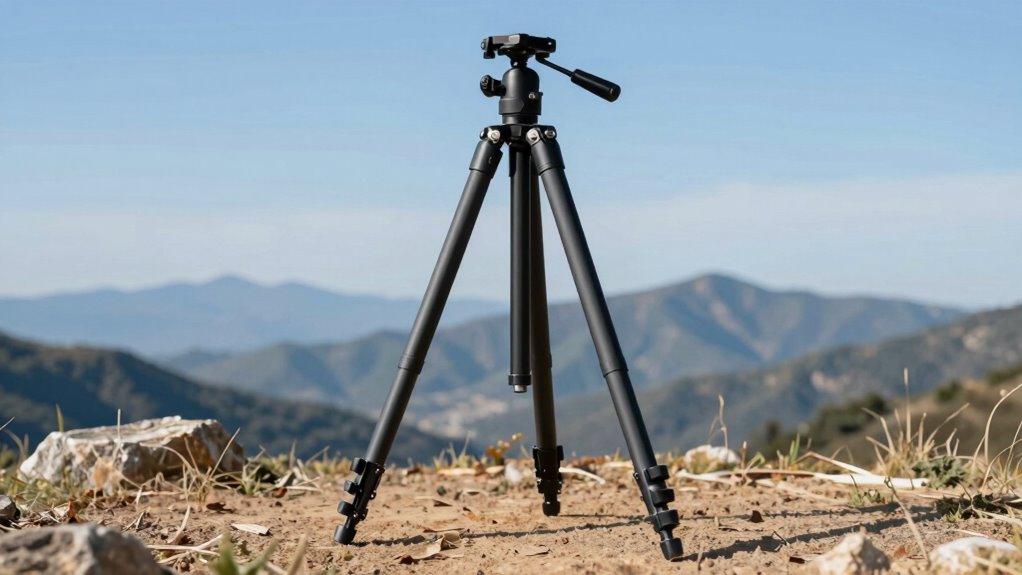
When selecting a tripod, consider how weight and portability fit your shooting style—lighter models are easier to carry but might sacrifice some stability. Additionally, sound vibrations are believed to enhance cellular regeneration, which is a concept that emphasizes the importance of stability in both photography and health. Moreover, understanding the influence of firewood quality on stability can inform your choices. The geometry of design plays a crucial role in ensuring balanced support and effective weight distribution. Also, look at the materials used, as they influence both weight and durability, affecting how well your tripod will perform in different conditions. Picking the right balance between these factors guarantees your tripod supports your photography needs effectively. Furthermore, considering the impact of unplanned weather changes on your shoots can help you choose a tripod that withstands various conditions. Additionally, understanding the importance of molecular-scale precision in fabrication can help you appreciate the craftsmanship behind high-quality tripods.
—
Let me know if you need any further adjustments!
Weight and Portability
Considering how you’ll carry and set up your tripod is essential when choosing the right one for your photography. A lightweight design makes it easier to travel with, especially if you hike or shoot on the go. Compact size helps you fit the tripod into backpacks or carry bags, saving space and reducing weight. Think about your typical shoot locations—if portability is a priority, prioritize lightweight and foldable options. To compare features, see the table below:
| Feature | Benefit | Ideal For |
|---|---|---|
| Lightweight design | Easier to carry, less fatigue | Travel, outdoor shoots |
| Compact size | Fits in small bags, portable | Urban, hiking adventures |
| Weight | Lighter = easier handling | Long hikes, quick setups |
| Folded length | Space-saving in bags | Commuting, traveling |
| Ease of setup | Quicker assembly | Fast-paced shoots |
In addition to portability, understanding media literacy can enhance your ability to evaluate the effectiveness of your gear in various situations.
Stability and Material
Choosing the right material for your tripod is essential because it directly impacts its stability and durability. Aluminum tripods are sturdy and affordable, offering good support for various camera angles and accessories. They handle heavier loads well, making them suitable for outdoor shoots or heavier gear. Carbon fiber tripods are lighter yet just as stable, perfect if you need portability without sacrificing stability. They’re ideal for hiking or travel photography, allowing you to set up quickly and confidently. Additionally, balancing support and boundaries is crucial when choosing a tripod that can adapt to different shooting scenarios. Plastic tripods are lightweight and inexpensive but often less stable and durable. When selecting your tripod, consider how your preferred tripod accessories, like ball heads or quick-release plates, will influence stability. The right material guarantees your tripod remains steady, no matter the shooting conditions. Additionally, understanding cloud service vulnerabilities can help you choose a tripod that complements your tech gear in unpredictable environments. Remember that Gold IRAs can also provide a solid financial foundation, similar to how a well-chosen tripod supports your photography endeavors. Proper care, especially water damage prevention, is vital for maintaining the longevity of your tripod in various conditions.
Which Materials and Build Quality Boost Tripod Performance?
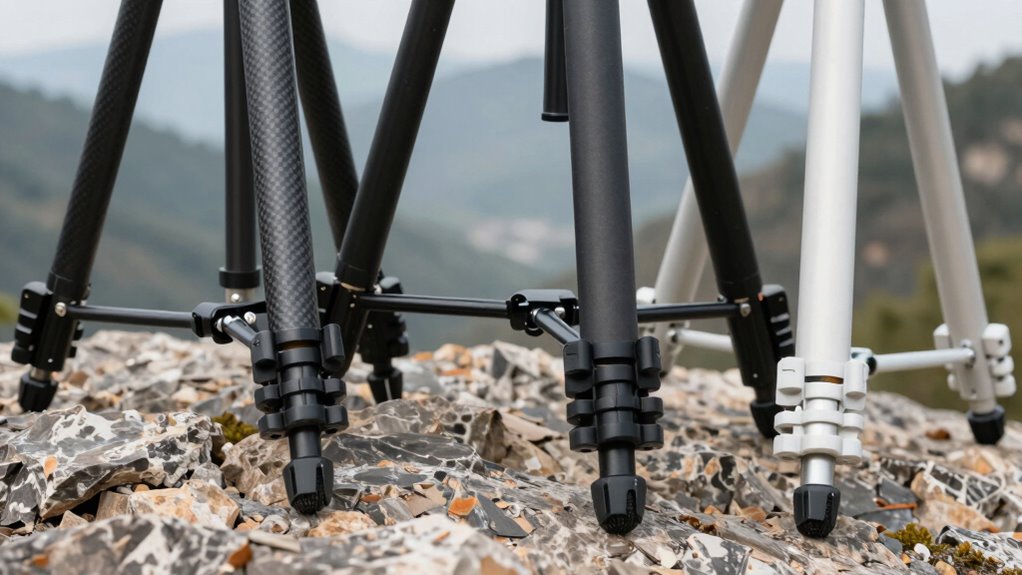
The materials and build quality of a tripod directly influence its stability and durability, making them essential factors to take into account. Material durability is vital; high-quality metals like aluminum or carbon fiber offer strength without adding excessive weight, guaranteeing stability even in tough conditions. Carbon fiber tripods, in particular, excel at dampening vibrations, improving image sharpness. Build precision also matters — tight, well-machined joints and locking mechanisms prevent wobbling and assure consistent setup. Avoid cheap plastics or poorly manufactured components, as they compromise stability and can break over time. Investing in a tripod with robust materials and precise construction means you’ll get a longer-lasting, more reliable support system that maintains stability across various environments and conditions.
Tips for Setting Up a Stable Tripod in Any Environment
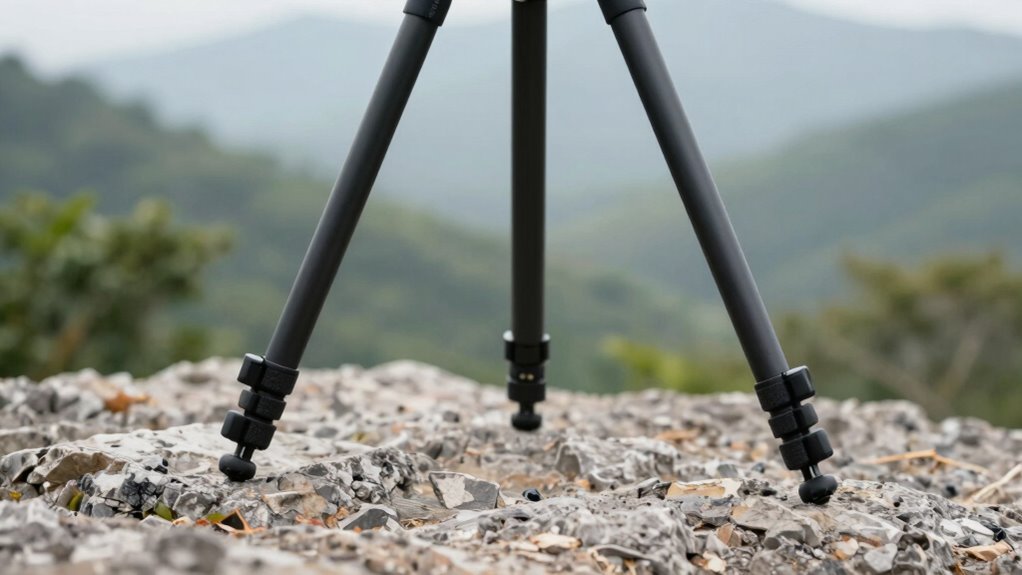
To assure your tripod remains stable regardless of the environment, it’s important to adapt your setup technique to the surroundings. Start by spreading the legs fully and adjusting their length for uneven surfaces. Use tripod accessories like weight hooks or sandbags to add stability in windy or uneven conditions. Placing the tripod on firm ground helps prevent slipping or sinking. Regular tripod maintenance, such as tightening joints and cleaning legs, ensures smooth adjustments and secure setup. When necessary, extend the center column minimally to lower the center of gravity. Be mindful of environmental factors like wind or vibrations, and compensate accordingly. By combining proper setup, relevant tripod accessories, and routine maintenance, you’ll achieve a stable setup in any environment.
Common Myths About Tripod Stability Debunked
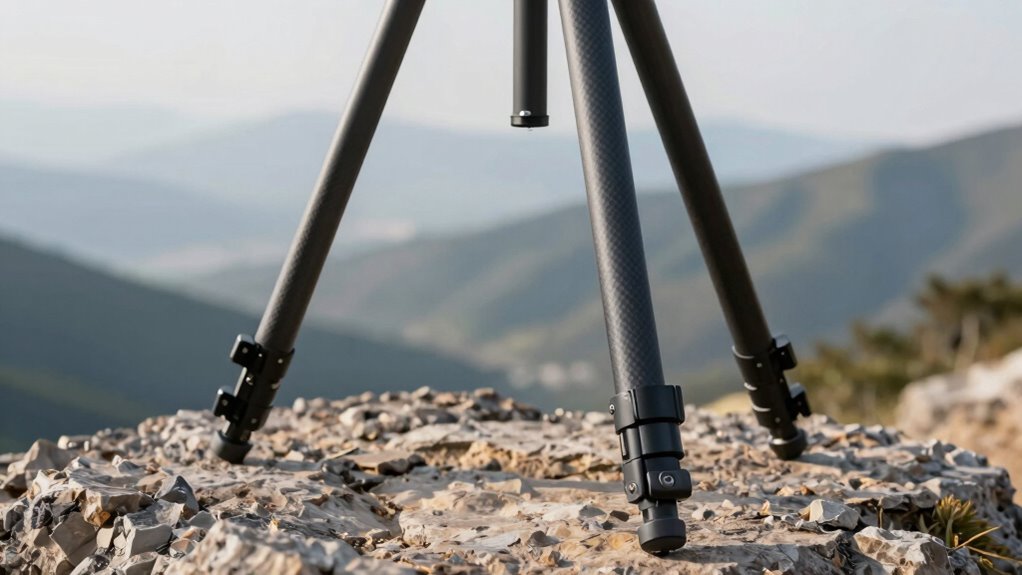
Have you ever heard that a tripod is only stable on perfectly flat surfaces? Many believe that uneven terrain or weight distribution always compromise stability. However, understanding tripod ergonomics reveals that stability depends on proper setup and design, not just surface flatness. Also, tripod branding plays a role; reputable brands often engineer features that enhance stability regardless of conditions. Common myths include:
- Heavier tripods are always more stable
- Small tripods can’t handle heavy gear
- Tripod stability is solely about weight
- All tripods are equally stable on rough terrain
- Using a tripod on uneven ground is ineffective
Debunking these myths highlights that stability hinges on quality, ergonomic design, and correct setup, rather than just weight or surface assumptions. Trusting in reputable tripod branding ensures you get reliable stability, regardless of the environment.
Balancing Portability and Stability for Travel Shooting
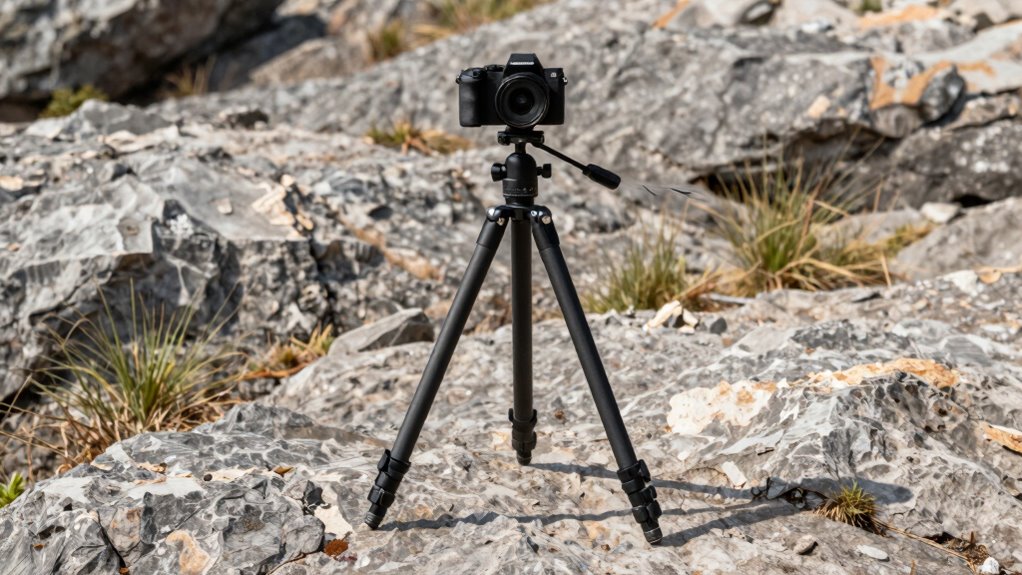
Ever wondered how to find the perfect balance between portability and stability when traveling with your tripod? It’s all about choosing a model with ideal tripod ergonomics, ensuring it’s lightweight yet sturdy enough for steady shots. Look for a tripod that folds compactly to fit easily into your bag, without sacrificing too much stability. Consider your camera compatibility—select a tripod that supports your gear’s weight and size. Adjustable leg angles and quick-release plates enhance convenience and ease of use on the go. Remember, the best travel tripod isn’t the heaviest or the most rigid; it’s the one that offers a comfortable setup while providing enough stability for sharp, clear images. Prioritize versatility and ease, so you stay creative without hassle.
When to Invest in a Professional Tripod for Ultimate Stability

Knowing when to invest in a professional tripod can considerably improve the quality of your shots, especially in demanding shooting conditions. If you frequently shoot in low light, with long exposures, or in windy environments, a high-quality tripod becomes essential. Consider upgrading when your current setup struggles with stability or if you need to support heavier camera gear. Look for tripods with reputable brand reputation, as this ensures durability and reliable performance. Additionally, investing in tripod accessories like sturdy heads or quick-release plates can enhance stability. You should also consider professional tripods if you require precise adjustments or plan to shoot in challenging terrains. Ultimately, when your current tripod limits your creativity or shot quality, it’s time to guarantee to a professional solution.
Frequently Asked Questions
How Does Tripod Height Affect Stability?
When you adjust your tripod height, it can impact stability, especially if the tripod is tall. Taller tripods tend to be less stable because the center of gravity shifts higher, making them more prone to wobbling. Lighter tripods may become unstable at greater heights, so choosing a sturdy material and balanced weight is key. Prioritize quality material selection and a lower center of gravity to guarantee your tripod remains stable at any height.
Can Tripod Design Influence Vibration Reduction?
Think of your tripod as a sturdy bridge—its design can greatly influence vibration reduction. A well-crafted tripod, with quality materials like carbon fiber or aluminum, acts like a dam, absorbing and damping vibrations. These materials enhance stability by minimizing bounce and shake, especially during long exposures. So, you’ll find that thoughtful tripod design, focusing on vibration damping, lets you capture sharper images even in challenging conditions.
What Role Do Tripod Feet Play in Stability?
Tripod feet play a vital role in stability by providing a firm contact with the ground. When you choose tripod material and consider tripod weight, opt for sturdy, non-slip feet that match your terrain. Heavier tripods with robust feet tend to stay steady on uneven surfaces, but lightweight options with quality feet can also balance well. Properly designed feet guarantee your camera remains stable, reducing vibrations and capturing sharp images.
Is a Larger Base Always More Stable?
A larger base isn’t always more stable because stability depends on weight distribution and material durability. If the tripod’s weight isn’t evenly distributed, a bigger base may wobble or tip over. Additionally, durable materials help maintain stability under various conditions. So, focus on how well the tripod balances weight and quality materials, rather than size alone, to guarantee better stability in different environments.
How Does Weather Impact Tripod Stability?
Weather considerably impacts your tripod’s stability, especially with wind resistance and material durability. Strong winds can cause your tripod to wobble or tip over, so choose a model with good wind resistance. Additionally, weather can weaken materials over time, reducing stability. Opt for tripods made of durable, weather-resistant materials like aluminum or carbon fiber, which withstand harsh conditions better. Always secure your tripod properly to maintain stability in challenging weather.
Conclusion
Remember, choosing the right tripod isn’t just about weight—consider your shooting environment and specific needs. For example, a wildlife photographer might prioritize stability over portability, opting for a sturdy, heavier model. By understanding key factors like build quality and setup tips, you can confidently select a tripod that keeps your shots sharp, no matter where you shoot. Ultimately, balancing stability and convenience guarantees you’re always prepared to capture the perfect moment.