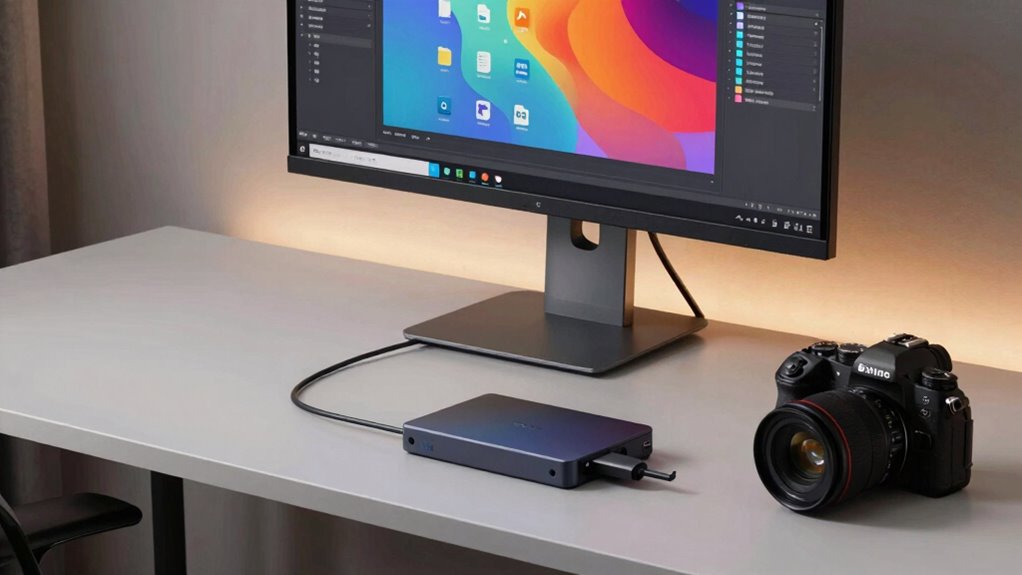

To archive your digital art files effectively, follow the 3-2-1 backup rule: keep three copies of each file, store two locally on different devices, and keep one offsite for disaster protection. Regularly update and verify your backups with checksum tests, and use organized labeling and metadata for easy access. Protect against hardware failure, cyber threats, and corruption. Keep your workflow secure and reliable—continue exploring how to implement these strategies seamlessly.

Get art and craft supplies delivered free — and shop member deals
- Fast, free delivery on millions of items
- Access to Prime Big Deal Days deals on October 6–7
- Prime Video, Amazon Music and more included
Key Takeaways
- Follow the 3-2-1 backup rule: keep three copies, two local, one offsite.
- Regularly verify backup integrity using checksum or hash verification methods.
- Use secure storage solutions with encryption and access controls for long-term preservation.
- Implement file versioning and detailed metadata for easy retrieval and historical reference.
- Conduct periodic restore tests to ensure backup files remain accessible and functional.
external hard drive for digital art backup
As an affiliate, we earn on qualifying purchases.
As an affiliate, we earn on qualifying purchases.
Why Artists Must Prioritize Digital Art Backup
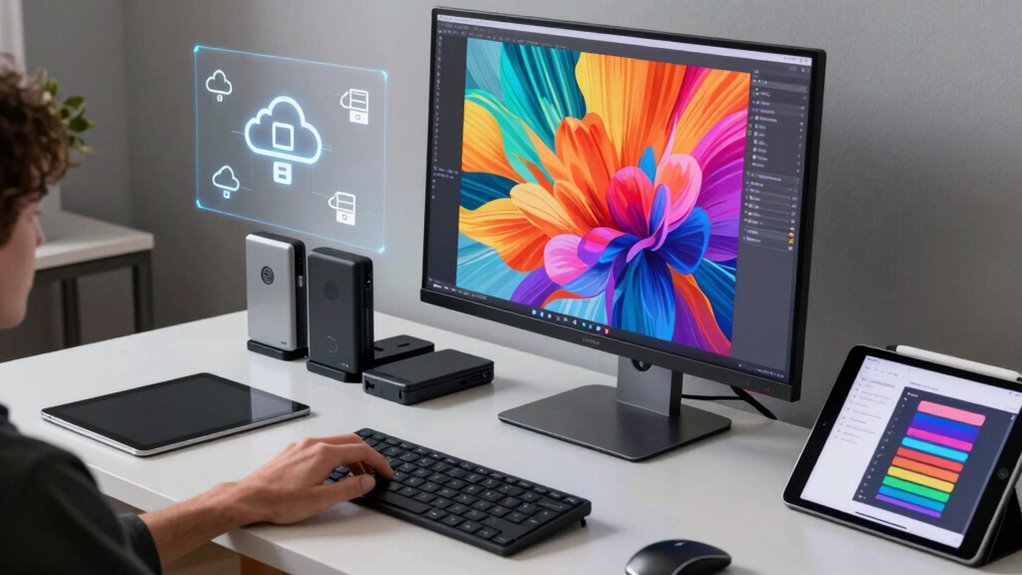
In today’s digital age, artists face the constant risk of losing their work due to hardware failures, accidental deletions, or cyber threats. Prioritizing digital art preservation is vital to protect your creations and maintain a smooth artist workflow. Without proper backups, a single mishap can erase hours, days, or even years of effort. Incorporating reliable backup strategies ensures your digital art files stay safe and accessible, preventing disruptions to your projects. A solid backup routine allows you to focus on your creative process without fear of losing valuable work. Remember, safeguarding your digital art isn’t just about storage; it’s about maintaining your artistic integrity and future productivity. Prioritizing backups is an essential step every artist must take. Additionally, understanding the importance of testing accuracy can significantly enhance your backup methods, ensuring that your files remain intact and usable. Moreover, implementing high contrast ratios in your digital workspace can help you better evaluate your art’s visual quality during the creation process. Furthermore, adopting traditional techniques for preserving digital files can ensure that your artistic legacy is maintained over time. Embracing new content formats can also provide innovative ways to enhance your digital art practice and streamline your backup processes. Additionally, utilizing media literacy can empower artists to discern and implement the best practices for securing their digital creations effectively.
As an affiliate, we earn on qualifying purchases.
The 3-2-1 Backup Rule Explained for Creators
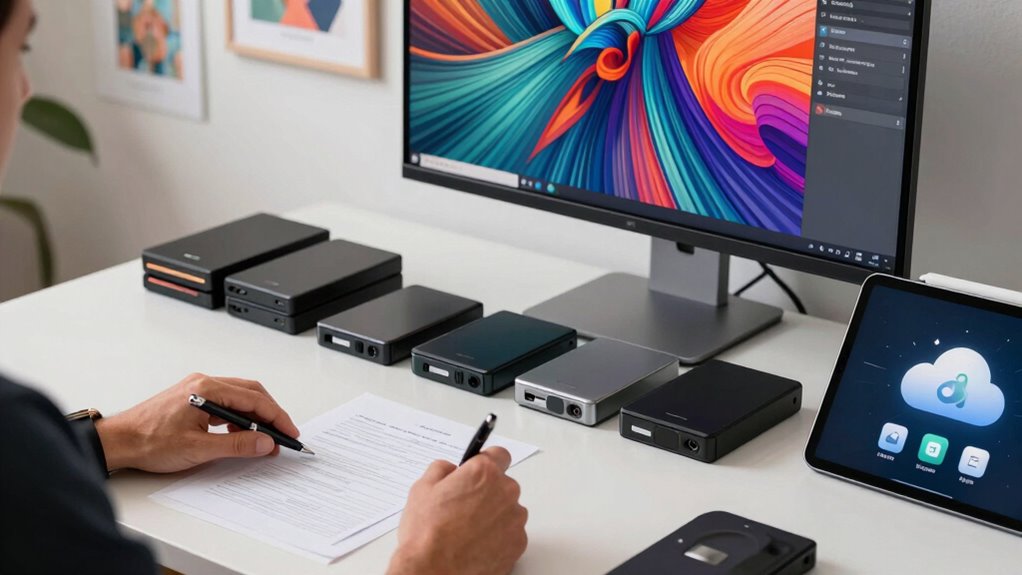
The 3-2-1 Backup Rule is a simple yet highly effective strategy to safeguard your digital art files. It encourages you to keep at least three copies of your work, with two stored locally on different devices and one offsite. This approach guarantees your files are protected from hardware failures, theft, or natural disasters. When collaborating creatively, having multiple backups prevents accidental loss and keeps your artistic inspiration safe. It also allows you to share work confidently, knowing you have secure copies. Implementing this rule helps you maintain a reliable archive, whether you’re working on a new project or archiving completed pieces. Staying organized with backups means you can focus more on your art and less on worrying about losing your creative progress.
encrypted cloud storage for digital art
As an affiliate, we earn on qualifying purchases.
As an affiliate, we earn on qualifying purchases.
How to Choose the Best Storage Solutions for Your Digital Art

When selecting storage solutions for your digital art, consider how much space you’ll need now and in the future, and whether the system can expand with your collection. Prioritize data security features to protect your work from threats, and explore cost-effective options that balance affordability with reliability. Additionally, consider enterprise USB backups as a robust option for safeguarding your files. Making informed choices ensures your art stays safe and accessible over time. Furthermore, implementing essential safety tips can help prevent operational hazards when using electronic devices, including storage solutions.
Storage Capacity and Scalability
Choosing the right storage solution for your digital art depends heavily on understanding your current needs and future growth potential. You’ll want a system that offers enough storage capacity now and can grow with you. Cloud storage provides flexible options, allowing you to expand your storage as your collection grows without major hardware changes. Look for solutions with hardware scalability, so you can easily upgrade or add drives when needed. This approach guarantees you don’t outgrow your storage unexpectedly. Consider your current file sizes and how much your collection might expand over time. A scalable storage plan prevents bottlenecks and minimizes disruptions. Balancing capacity with scalability is essential to keep your digital art safe, accessible, and manageable as your collection evolves.
Data Security Measures
How can you guarantee your digital art remains safe from threats like data breaches, hardware failures, or accidental loss? The key is choosing storage solutions with robust data security measures. Look for options that implement strong encryption protocols to protect your files during storage and transfer. Access controls are equally essential—they limit who can view or modify your artwork, reducing risks of unauthorized access. Consider solutions that offer multi-factor authentication and detailed permission settings. Additionally, understanding the role of necessary cookies can enhance your overall data protection strategy.
One emerging trend in the art world is interactive murals, which can also benefit from secure digital storage practices.
Use a table to compare options:
| Feature | Importance |
|---|---|
| Encryption protocols | Protects data from breaches |
| Access controls | Restricts unauthorized access |
| Backup redundancy | Prevents data loss due to failure |
| Regular updates | Ensures security patches are applied |
| User permissions | Controls who can modify or delete files |
Cost-Effective Options
Finding a storage solution that balances affordability with reliability is essential for digital artists on a budget. When choosing cost-effective storage, consider options that provide reliable backups without breaking the bank. Affordable backup options include:
- Cloud services with free tiers or low-cost plans, offering accessible, off-site storage.
- External hard drives that are durable and offer large capacities at a one-time cost.
- Network-attached storage (NAS) devices, providing a centralized, scalable solution for multiple backups.
These choices help you protect your art without overspending. Look for solutions that combine affordability with ease of use, ensuring your files stay safe while keeping costs manageable. Prioritize durability and future scalability to get the most value from your investment.
file checksum verification software
As an affiliate, we earn on qualifying purchases.
As an affiliate, we earn on qualifying purchases.
Schedule Regular Digital Art Backups to Keep Files Safe
Regularly backing up your digital art files is essential to prevent loss from hardware failures, accidental deletions, or cyber threats. Set a consistent schedule, whether weekly or after major projects, to guarantee your work remains protected. Proper color calibration during backups guarantees that your artwork’s colors stay true over time, preserving your creative intent. Additionally, keep backups organized with clear labels, especially if your work involves multiple licenses or creative licensing agreements. Incorporating seating areas can create a comfortable space for you to review your work while ensuring a productive environment. Automate backups when possible to minimize oversight. Regular backups also make it easier to recover files quickly, reducing stress and downtime. Staying disciplined with your backup schedule helps safeguard your digital art collection and maintains its integrity, ensuring your creative assets are always ready for future projects or exhibitions. Consider how engine upgrades can enhance performance, just as effective backup strategies enhance the longevity and reliability of your digital files. Moreover, using bike generators can provide a sustainable energy source for your workspace, similar to how regular backups ensure the continuity of your creative process. To improve your writing clarity, detecting passive voice can significantly enhance the readability of your documentation. Incorporating eco-friendly options for storage solutions can also support a more sustainable approach to managing your digital assets.
Protect Your Digital Art From Malware, Hardware Failures, and Damage
To keep your digital art safe, you should run regular malware scans to catch threats early. Using durable storage devices helps protect your files from hardware failures and physical damage. These simple steps strengthen your defenses against common risks that can jeopardize your artwork.
Regular Malware Scans
Sure! Here’s your revised article subheading content with the requested addition:
—
Since malware can quietly compromise your digital art files, it’s vital to run regular scans to detect and remove threats early. Consistent malware prevention ensures your files stay safe, reducing the risk of corruption or loss. Setting a regular backup frequency depends on how often you update your artwork, but pairing it with routine malware scans keeps your archive secure. Imagine:
- A scanner flagging a hidden virus lurking in your file, preventing widespread damage.
- An alert notifying you of suspicious activity, prompting immediate action.
- A clean bill of health after a scan, reassuring you your files are protected.
Additionally, using sulfate-free options in your software can help reduce system vulnerabilities. Regular use of malware scans, much like consistent use of glycolic acid, helps you identify threats before they cause irreparable harm. Regular malware scans are an essential part of an effective archiving strategy, safeguarding your digital art from unseen dangers. Furthermore, understanding cloud-based systems can help you appreciate the importance of securing your backups against potential outages. Additionally, incorporating Red and Blue team tactics into your security measures can further enhance your protection against cyber threats. Engaging in utilitarian ethics while making backup decisions helps balance the collective good of your creative community with your personal artistic integrity.
—
Let me know if you need any further adjustments!
Use Durable Storage Devices
Using durable storage devices is essential to protect your digital art from malware, hardware failures, and physical damage. Durable media, like high-quality external hard drives or solid-state drives, offers reliable long-term storage. These devices are less prone to data corruption and physical wear, ensuring your artwork stays safe over time. When selecting storage, prioritize devices known for durability and stability, which helps prevent unexpected failures. Regularly update and verify the data stored on these devices to catch potential issues early. Keep backups on multiple durable media types to add layers of protection. By investing in long-term storage solutions, you minimize risks from hardware breakdowns and physical damage, ensuring your digital art remains secure for years to come. Additionally, consider color matching techniques to create a visually harmonious presentation of your digital art when showcasing it. Moreover, understanding gear care tips can further enhance the longevity of your storage devices, safeguarding your creative work against unforeseen circumstances.
Organize and Label Your Files for Easy, Fast Retrieval
Organizing and labeling your digital art files is essential for quick, effortless retrieval. Proper metadata management helps you assign descriptive tags, dates, and keywords, making searches faster. File versioning ensures you keep track of progress, avoiding confusion between drafts and final pieces. To visualize, think of:
Organize with clear labels, metadata, and versioning for easy, quick access to your digital art files.
- A folder labeled “Digital Art” with subfolders for each project.
- Files named systematically, like “Sunset_V2_Final.jpg” or “Portrait_Draft1.psd.”
- Metadata tags like “Landscape,” “Character,” or “Illustration” for instant filtering.
These practices allow you to locate specific files swiftly, saving time and frustration. Clear organization combined with consistent labeling guarantees your digital art archive remains accessible and manageable, no matter how extensive your collection becomes.
Prevent Backup Files From Becoming Obsolete or Corrupted
Backup files can become obsolete or corrupted over time if you don’t take proactive steps to maintain them. To prevent this, regularly update your backups with current files and implement file versioning, so you always have access to previous iterations. Proper metadata management is crucial; it ensures your files are organized, easily searchable, and contain essential information about their creation and modification dates. Store backups on reliable, redundant storage media and avoid relying on a single device or location. Periodically test your backup files to verify their integrity and confirm they remain usable. By staying diligent with file versioning and metadata management, you safeguard your digital art files against obsolescence and corruption, keeping your archive safe and accessible for the long term. Additionally, creating cozy spaces that promote wellness can enhance your creativity and focus, making it easier to maintain your digital archives. Incorporating fresh ingredients into your creative process can also inspire new ideas and improve efficiency in your backup systems. Furthermore, understanding the importance of game mechanics in classic arcade games can help you appreciate the intricacies of digital art creation and preservation.
How to Verify and Restore Your Digital Art Backups Confidently
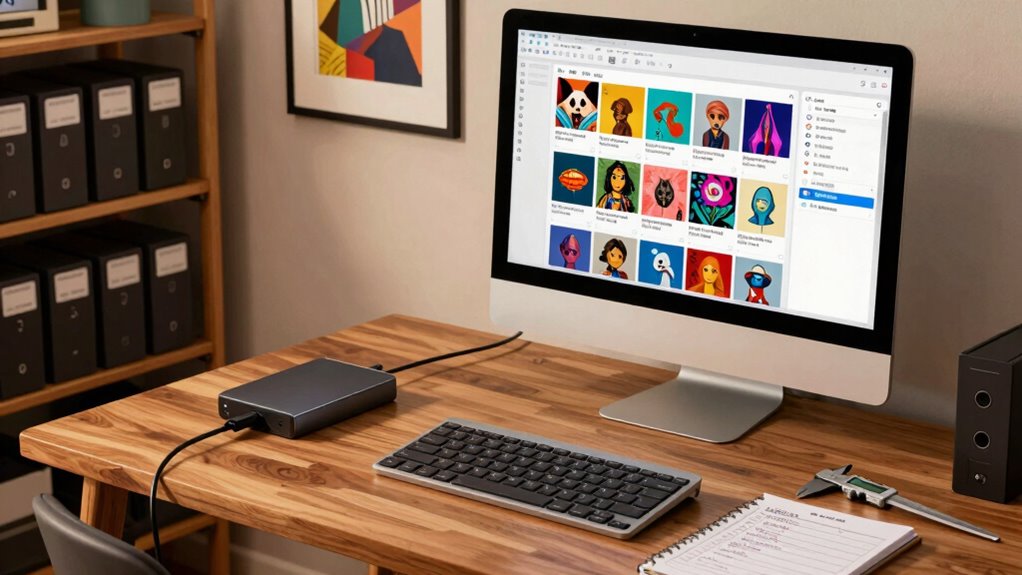
Before relying on your backup files, it’s essential to verify their integrity and confirm they can be restored without issues. Verification techniques ensure your digital art files are intact and usable. To do this confidently, consider these steps:
Always verify your backups’ integrity and test restoration to ensure your digital art files remain safe and accessible.
- Run checksum or hash verification to compare the stored file with a fresh copy, catching any corruption.
- Test restore your backup to a separate location, mimicking the actual recovery process.
- Check file integrity across different devices or software to ensure compatibility.
Frequently Asked Questions
How Often Should I Update My Digital Art Backups?
You should update your digital art backups regularly, ideally every time you finish a significant project. Keep your files organized with clear file naming and use consistent storage formats like PNG or TIFF for quality. Regular updates guarantee your latest work is protected against data loss. Set a schedule—weekly or monthly—to review and back up new files, maintaining a reliable archive of your digital art journey.
What Are the Best Practices for Encrypting Backup Files?
A chain is only as strong as its weakest link, so you must encrypt your backup files carefully. Use strong encryption algorithms like AES-256, guaranteeing your data stays protected. Manage passwords securely with a reliable password manager, avoiding simple or reused passwords. Regularly update your encryption methods and review access controls. By doing this, you safeguard your digital art files from unauthorized access and ensure your backups remain secure.
Can Cloud Backups Be Vulnerable to Data Loss?
Yes, cloud backups can be vulnerable to data loss, especially if cloud security isn’t robust. Relying solely on cloud storage risks gaps if servers experience outages, cyberattacks, or data corruption. To protect your digital art files, make certain data redundancy across multiple cloud providers and maintain local backups. This layered approach minimizes risks, keeps your files safe, and guarantees access even if one cloud service encounters issues.
How Do I Handle Version Control for Digital Art Files?
Think of version control like organizing a photo album; each version is a different page. You should regularly save files with clear, consistent file naming, like “Artwork_v1” or “Final_v2,” to keep track. Use versatile storage formats such as PSD for edits and JPEG for sharing. This way, you can easily revert or compare versions, ensuring your digital art stays well-organized and protected across all your storage options.
What Legal Considerations Exist for Archiving Digital Art?
You need to take into account intellectual property laws and copyright enforcement when archiving digital art. Make sure you have proper rights or permissions for the files you store, especially if they belong to others. Keep detailed records of your licenses and ownership rights. Avoid infringing on copyright by properly attributing works and respecting licensing terms. Doing so protects you legally and maintains the integrity of your digital art archive.
Conclusion
By following these backup rules, you’ll keep your digital art safe and sound, no matter what comes your way. Regularly backing up, choosing the right storage, and staying organized guarantees your creative work is never lost in the shuffle. Remember, a stitch in time saves nine—don’t wait until it’s too late to protect your masterpieces. Stay vigilant, keep your backups current, and your art will always be ready to shine when you need it most.
Fall Picks
fall essentials
As an affiliate, we earn on qualifying purchases.