
To incorporate eco-friendly materials in your studio, choose biodegradable supplies like natural glues and water-based paints, and prioritize recycling and reuse of scraps and leftover materials. Segment waste properly and explore sustainable options that perform well while reducing pollution. Adopting these practices not only minimizes your environmental impact but also nurtures a more innovative and responsible creative space. Continuing to explore these techniques can help you make even greater eco-conscious choices for your work.
Key Takeaways
- Use biodegradable supplies like natural pigments, water-based paints, and plant-based adhesives to reduce environmental impact.
- Implement recycling systems for paper, plastics, and metals to minimize waste and promote material reuse.
- Choose eco-friendly materials that meet sustainability standards to support healthier studio environments.
- Educate on proper disposal and local recycling guidelines to ensure effective waste management.
- Incorporate repurposing and upcycling of scraps and leftovers to foster resourcefulness and reduce waste.
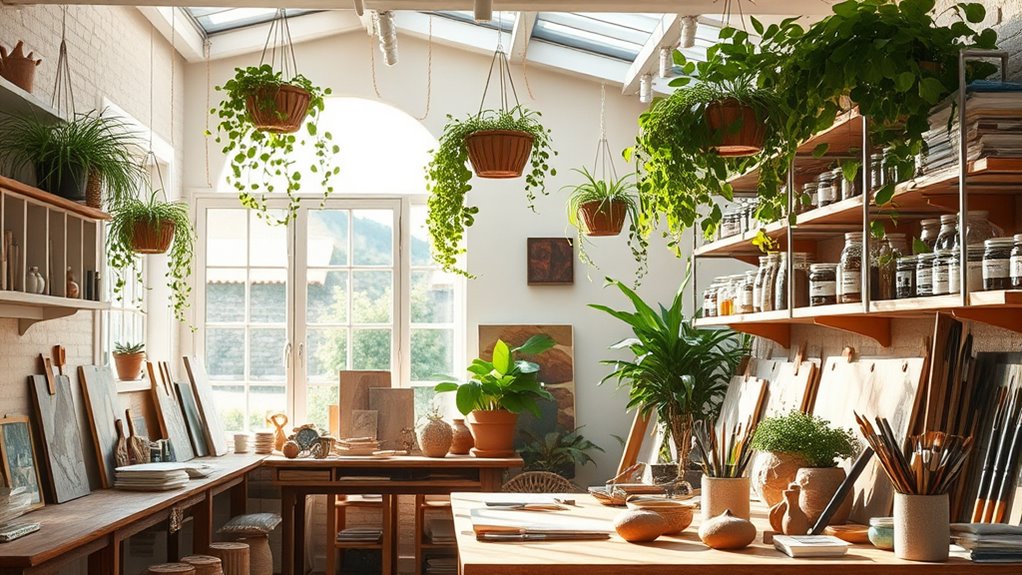
In today’s creative spaces, adopting sustainable practices isn’t just a trend—it’s a vital responsibility. As an artist or designer, you have the power to make a significant impact by choosing eco-friendly materials and methods that reduce waste and lessen environmental harm. One effective way to start is by implementing recycling techniques within your studio. This doesn’t mean just tossing paper or plastics into recycling bins; it involves thoughtful sorting of various materials, educating yourself on local recycling guidelines, and finding new uses for scraps. For instance, leftover paper or canvas trimmings can be repurposed for smaller projects, while plastics and metals can often be recycled into new supplies or art pieces. By establishing a systematic approach to recycling, you not only cut down on waste but also foster a mindset of reuse and resourcefulness that can inspire your entire creative process.
Another key aspect is opting for biodegradable supplies whenever possible. Traditional art materials, like certain paints, adhesives, and packaging, often contain chemicals that aren’t biodegradable and can linger in landfills for years. Switching to biodegradable supplies means choosing products made from natural, renewable materials that break down more quickly and safely in the environment. For example, you might select biodegradable glues or water-based paints instead of solvent-based options. This shift not only minimizes long-term waste but also promotes a healthier workspace for you. Many manufacturers now offer eco-friendly alternatives that perform just as well as conventional supplies, so you don’t have to compromise on quality to be environmentally conscious.
Incorporating these practices requires a bit of planning and commitment, but the benefits are clear. Recycling techniques help you reduce your studio’s overall waste footprint, making your workspace more sustainable. Meanwhile, biodegradable supplies ensure that the materials you use won’t contribute to pollution or landfill buildup. Over time, these choices can influence your creative habits, encouraging you to think more critically about every material you bring into your studio. You’ll find that such mindful practices not only benefit the environment but also foster a more intentional and innovative approach to your work. As you continue to explore eco-friendly options, you’ll discover new ways to express your creativity while staying aligned with your environmental values. Ultimately, embracing these sustainable practices transforms your studio into a space that’s not only productive but also responsible, setting a positive example for others in your community.
Frequently Asked Questions
What Are the Most Affordable Eco-Friendly Materials for Small Studios?
You can keep costs low by choosing recycled paper for your printing needs and notebooks. Biodegradable paints are also affordable options for decorative work and murals. These materials not only save money but also reduce your studio’s environmental impact. Look for local suppliers or bulk discounts to further cut costs. Incorporating recycled paper and biodegradable paints helps you create a sustainable studio without breaking the bank.
How Can I Recycle or Dispose of Studio Waste Responsibly?
Did you know that recycling can cut your studio waste by up to 50%? You should start by sorting your waste into recyclables and non-recyclables, using recycling bins for paper, plastics, and metals. Implement waste reduction strategies like reusing materials and composting organic waste. Educate yourself on local recycling methods to guarantee proper disposal, and consider partnering with eco-friendly waste management services to handle your studio waste responsibly.
Are There Eco-Friendly Alternatives to Traditional Studio Lighting?
Yes, you can switch to LED lighting for your studio. LED lights are energy-efficient and produce less heat, making them a sustainable choice. They use considerably less power than traditional bulbs, which reduces your carbon footprint. Plus, LED fixtures last longer, so you’ll replace them less often. By choosing LED lighting, you actively support eco-friendly practices while maintaining excellent studio illumination.
How Do Sustainable Practices Impact Studio Workflow and Productivity?
You might think going green slows you down, but sustainable practices actually boost workflow efficiency and spark creative inspiration. When you use eco-friendly materials, you create a healthier workspace, reducing distractions and downtime. This balanced environment keeps your energy high, allowing you to stay in the zone longer. In the end, caring for the planet and your work go hand in hand, proving that sustainability is a win-win for your studio productivity.
What Certifications Should I Look for in Eco-Friendly Art Supplies?
You should look for eco-friendly art supplies with certifications that meet recognized standards, ensuring they’re truly sustainable. Certification standards like FSC, GREENGUARD, or Cradle to Cradle indicate products adhere to strict environmental and health criteria. Additionally, seek out eco label recognition from reputable organizations, which confirms the supplies are environmentally responsible. These certifications help you choose products that support eco-friendly practices and reduce your studio’s ecological footprint.
Conclusion
By choosing eco-friendly materials, you transform your studio into a haven of sustainability, where vibrant colors blend seamlessly with the earthy tones of nature. Imagine your workspace, filled with the soft rustle of recycled fabrics and the gentle glow of natural light filtering through eco-conscious windows. Every mindful decision you make helps protect our planet’s beauty. Keep embracing these practices, and watch your creative space flourish into a sanctuary that nurtures both your art and the Earth.