Sculptural materials range from traditional clay, which allows you to mold and fire durable, tactile forms, to modern digital media like 3D printing that enable precise, complex designs. You can combine materials like metal, wood, and found objects in mixed media, expanding creative possibilities. Incorporating ceramic techniques or digital fabrication broadens your artistic toolkit, helping you craft expressive, innovative artworks. Explore further to discover how these materials can elevate your sculpture practice in surprising ways.
Key Takeaways
- Traditional sculpture relies on materials like clay, which are molded, carved, and fired for durability and tactile expression.
- Modern fabrication introduces digital tools such as 3D printing, expanding possibilities for complex and precise sculptural forms.
- Mixed media approaches combine materials like metal, wood, and ceramics, creating layered, textured artworks with diverse expressive qualities.
- Incorporating ceramic techniques within mixed media allows for unique surface effects and material interactions in contemporary sculpture.
- Material choice influences the narrative and emotional impact of a sculpture, from tactile clay to technologically advanced 3D printed media.
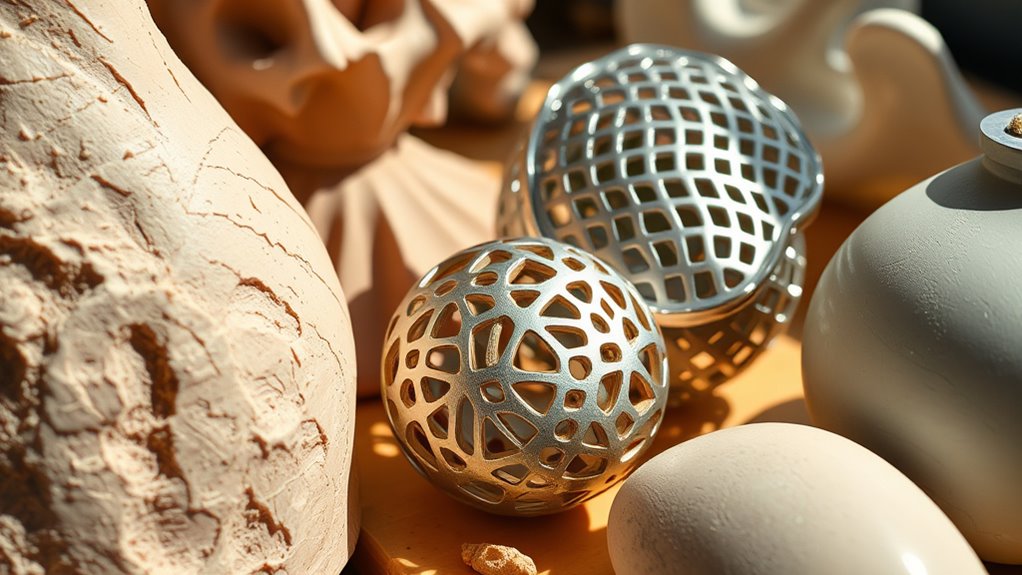
Sculptural materials are the foundation of every artwork, shaping the form and expression of a piece. When you work with sculptural media, you’re engaging with a diverse range of techniques and materials that allow you to bring your creative visions to life. One of the most traditional and versatile materials you’ll encounter is clay, which opens the door to ceramic techniques. With clay, you can mold, carve, and fire your sculptures to achieve a wide array of textures and finishes. Whether you’re working with wheel-throwing or hand-building, the process demands patience and precision, but it rewards you with tactile, durable forms that carry a sense of craftsmanship. Ceramic techniques also include glazing and firing, which add color, gloss, and strength to your work, transforming raw clay into polished sculptures. As AI-powered tools continue to evolve, some artists are exploring digital fabrication methods like 3D printing to push the boundaries of traditional sculpture.
But sculptural practice isn’t confined to just one material or approach. You may find yourself experimenting with mixed media approaches, combining different materials like metal, wood, plastics, and found objects to create complex, layered artworks. Mixed media allows you to push boundaries and explore new textures and visual effects, blending elements that might seem incompatible at first glance. For example, you might embed ceramic elements into a structure made of metal or incorporate fabric and paint into your sculpture. This approach fosters innovation, giving you more flexibility to express ideas and evoke emotions that a single material might not fully convey. It also encourages a tactile dialogue between the different media, inviting viewers to explore the contrasting surfaces and depths within your piece.
Incorporating ceramic techniques within mixed media approaches can be particularly compelling. You might craft small ceramic components that act as focal points or textured accents within larger assemblages. Conversely, you could incorporate ceramic glazes onto other materials or experiment with firing techniques on non-traditional substrates. These combinations challenge you to think critically about material interactions and technical possibilities, broadening your artistic toolkit. Ultimately, working with sculptural materials—whether through traditional ceramic techniques or innovative mixed media approaches—empowers you to shape not just forms, but ideas and narratives. The materials become extensions of your vision, allowing you to craft works that are as expressive and dynamic as you are willing to experiment.
Frequently Asked Questions
Which Sculptural Material Is Most Environmentally Sustainable?
You should choose biodegradable plastics or recycled metals for a more environmentally sustainable sculpture. Biodegradable plastics break down naturally, reducing waste, while recycled metals reuse existing materials, cutting down on mining and energy use. By opting for these materials, you actively reduce your environmental impact and promote sustainability. Both options help create art that’s eco-friendly, aligning your creative process with responsible practices.
How Do Material Choices Influence Sculpture Longevity?
Your material choices directly impact sculpture longevity through material durability. Using durable materials like metal or stone guarantees your piece withstands environmental factors and time, preserving artistic expression. Conversely, softer or less stable materials may deteriorate faster, risking loss of your creative vision. Selecting appropriate materials balances your artistic intent with the need for longevity, enabling your sculpture to endure and communicate your message for years to come.
Are There Health Risks Associated With 3D Printed Sculptures?
You should be aware that 3D printed sculptures can pose health concerns due to chemical emissions. As you work with these materials, fumes from heated plastics might irritate your eyes or respiratory system. Proper ventilation and protective gear are essential to minimize risks. While many 3D printing filaments are safe when used correctly, lingering chemical vapors highlight the importance of working in well-ventilated spaces to protect your health.
Can Traditional Materials Be Integrated With Digital Fabrication?
Yes, you can definitely integrate traditional materials with digital fabrication to achieve digital physical integration and material hybridity. You might combine hand-carved wood with 3D printed components or fuse clay with resin casts. This approach allows you to blend the tactile qualities of traditional materials with precise digital techniques, giving your sculptures unique textures and forms. Embracing material hybridity enhances creativity and expands your artistic possibilities.
What Are Emerging Trends in Sculptural Materials Technology?
You’ll see emerging trends in sculptural materials technology focusing on biodegradable composites and responsive materials. These innovations enable you to create eco-friendly sculptures that can adapt to environmental stimuli, like heat or light. As you explore these trends, you’ll discover new ways to push artistic boundaries, combining sustainability with interactivity. This evolution allows you to craft dynamic, environmentally conscious artworks that engage viewers in innovative, meaningful ways.
Conclusion
As you explore sculptural materials, you see how ancient clay and modern 3D printing stand side by side, each shaping art’s future. The tactile warmth of clay contrasts with the sleek precision of digital media, yet both invite your creativity. In this dance between tradition and innovation, you realize that whether hand-molded or digitally crafted, the essence remains the same: your expression. Embrace both worlds, and let your sculptures bridge the past and future.