When working with wood burning, follow key safety tips like never leaving your tool unattended, wearing safety glasses, and working in a ventilated space to avoid fumes. Regularly inspect and clean your tips, unplug the device before changing parts, and let it cool before storing. Keep your workspace tidy and use safety features on your pyrography device to prevent accidents. Staying mindful of safety guarantees you create beautiful art without injury—explore further to sharpen your skills and stay safe.

Get art and craft supplies delivered free — and shop member deals
- Fast, free delivery on millions of items
- Access to Prime Big Deal Days deals on October 6–7
- Prime Video, Amazon Music and more included
Key Takeaways
- Always wear safety glasses and work in a well-ventilated area to protect yourself from fumes, dust, and sparks.
- Regularly inspect and clean your pyrography tool to ensure even heating and prevent safety hazards.
- Follow manufacturer instructions carefully, unplug the device before changing tips, and wait for it to cool before storing.
- Keep your workspace clutter-free and never leave the hot tool unattended to avoid fires or burns.
- Practice proper technique and handle the heated tip with care to create detailed designs safely and effectively.
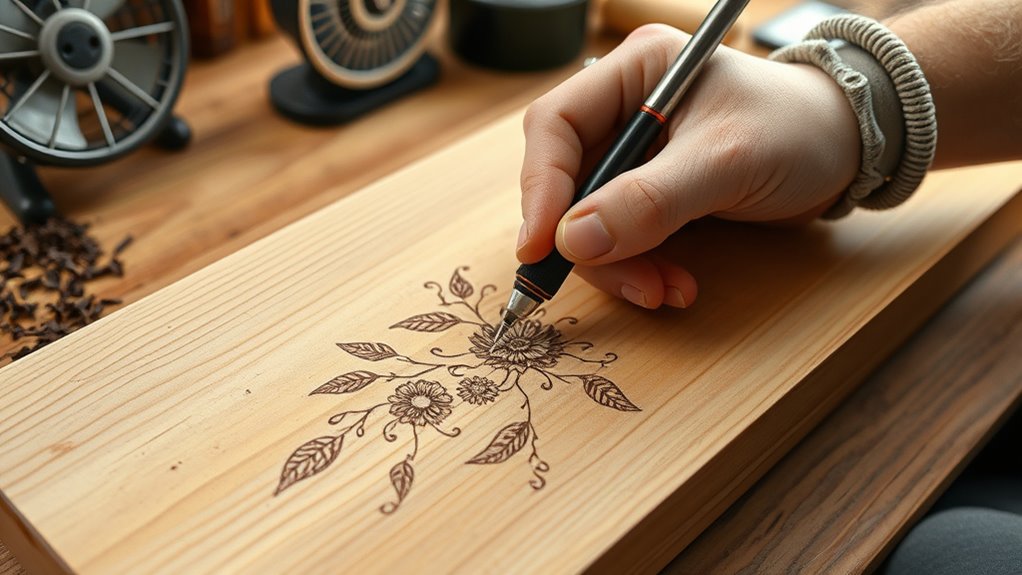
Wood burning is a versatile craft that allows you to create detailed artwork and personalized projects, but it also requires careful attention to safety. When working with a pyrography tool, your personal safety should always come first. The heated tip can cause burns or start fires if mishandled, so never leave the tool unattended while plugged in. Always wear protective gear like safety glasses to guard your eyes from tiny wood splinters or accidental sparks. Keep your workspace clean and well-ventilated to avoid inhaling fumes or dust, which can be harmful over time. Handling the tool carefully and respecting its heat is essential to prevent injuries and ensure your safety during each session.
Tool maintenance plays a critical role in both safety and the quality of your work. Regularly inspect your pyrography pen for signs of wear or damage, such as frayed cords or loose connections. A well-maintained tool heats evenly and responds accurately to adjustments, making it easier and safer to control. Always clean the tip after each use to prevent buildup of carbon or resin, which can cause inconsistent heating and potentially damage your device. Use the recommended cleaning tools and avoid using abrasive materials that could harm the tip. Proper storage is equally important—store the tool in a safe, dry place away from children and pets, and ensure it’s completely cooled down before putting it away. This reduces the risk of accidental burns and extends the lifespan of your equipment.
Familiarizing yourself with the user manual and following the manufacturer’s instructions is essential for safe operation and effective tool maintenance. Keep spare tips on hand to switch out when they become worn, ensuring you maintain ideal control and safety. When changing tips or adjusting the temperature, always unplug the device first, and wait for it to cool before handling. This prevents accidental burns and damage to the tool. Practicing proper tool maintenance not only keeps your equipment in top shape but also minimizes safety hazards, allowing you to focus on your creative process with confidence. Additionally, understanding the safety features of your pyrography device can further prevent accidents and ensure a secure crafting experience.
As an affiliate, we earn on qualifying purchases.
Frequently Asked Questions
What Type of Wood Is Best for Pyrography Projects?
You should choose softwoods like basswood, pine, or cedar for pyrography projects, as they have fine, even grain patterns that make burning easier and more precise. These wood types are less likely to splinter or burn unevenly, helping you achieve detailed designs. Avoid hardwoods with coarse grain patterns, which can be tricky to work with and may damage your tools. Stick to softwoods for smoother, cleaner results.
How Do I Fix Mistakes on a Wood Burning Piece?
Fix your fiery faux pas by gently correcting burn marks with a fine-tip pyrography pen, blending techniques to hide mishaps seamlessly. You can also lightly sand the surface to smooth out uneven areas, then re-burn or add shading to blend the correction. Patience is key—take your time to perfect your piece, and remember, small mistakes can often become part of your artistic charm.
Can I Use a Regular Soldering Iron for Pyrography?
You can technically use a soldering iron for pyrography, but it has limitations. Soldering irons aren’t designed for detailed shading or long sessions, and they lack the variable temperature control of dedicated pyrography tools. For better results, consider alternative tools like specialized pyrography pens or heated wire tools, which give you more control and safety during your projects. This way, you’ll achieve cleaner, more precise designs.
What Are Environmentally Friendly Disposal Methods for Pyrography Waste?
You can recycle pyrography waste like wood shavings and chips by checking local recycling options, but they often go to composting methods first. Compost wood scraps free from paint or chemicals by mixing them into your compost pile, ensuring they decompose naturally. Avoid burning waste, which releases harmful fumes. Properly disposing of pyrography waste supports environmental health, reduces pollution, and promotes eco-friendly practices in your craft.
How Do I Achieve Different Shading Effects in Pyrography?
To achieve different shading effects in pyrography, you can use gradient shading by gradually increasing or decreasing the heat on your tool to create smooth progressions. Stippling techniques involve making tiny dots at varying densities to build up darker areas. Practice controlling your tool’s temperature and pressure to master these methods, allowing you to add depth and detail to your designs with subtle shading variations.
As an affiliate, we earn on qualifying purchases.
Conclusion
By mastering these wood burning techniques and prioritizing safety, you open endless creative possibilities. Imagine creating a personalized family portrait on a rustic plaque—your own masterpiece. Just like Sarah, who started as a hobbyist and now sells her pyrography art online, you too can turn your passion into a rewarding craft. Keep practicing, stay safe, and let your imagination guide you. Your next beautiful piece is just a spark away!
pyrography tool tips replacement
As an affiliate, we earn on qualifying purchases.
As an affiliate, we earn on qualifying purchases.
ventilated workspace for pyrography
As an affiliate, we earn on qualifying purchases.
As an affiliate, we earn on qualifying purchases.
Fall Picks
fall essentials
As an affiliate, we earn on qualifying purchases.