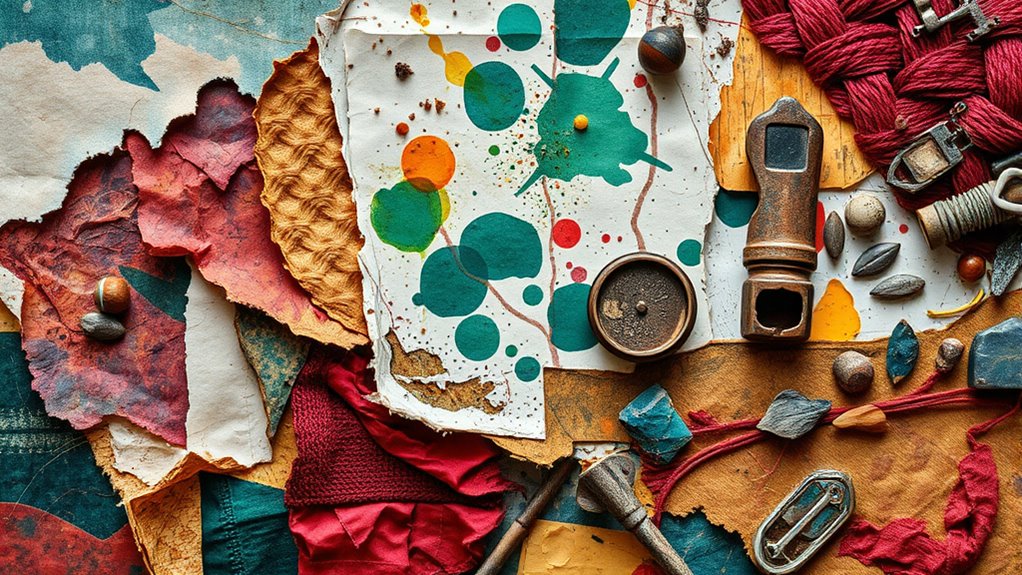
To create a rich mixed media collage using paper, fabric, and found objects, start with a sturdy base and layer textures for depth and interest. Combine smooth magazine cutouts with rough fabrics or textured papers, overlapping different materials to build complexity. Use thoughtful color choices to unify or contrast elements, balancing warm and cool tones. Mastering these layering techniques will help your artwork become more vibrant, dynamic, and engaging—exploring further reveals even more ways to enhance your collage skills.
Key Takeaways
- Select a sturdy base and layer textured materials like fabric and crinkled paper for added depth.
- Overlap various textures with found objects to create visual and physical complexity.
- Use a cohesive color palette to unify diverse materials and enhance visual harmony.
- Balance warm and cool tones, contrasting textures, and tactile qualities for overall harmony.
- Master layering techniques to guide the viewer’s eye and evoke emotional and tactile responses.

Have you ever wondered how artists combine different materials to create dynamic and textured artwork? When working with mixed media collage, understanding how to effectively layer textures and manage color harmony can transform a simple assembly of materials into a compelling visual story. Texture layering is at the core of this process. You start by selecting a base, such as sturdy paper or canvas, then add various elements that bring tactile interest. For instance, rough fabric patches or crinkled paper can create a sense of depth, while smooth magazine clippings offer contrast. As you build your collage, think about how each layer interacts not just visually but also physically. Overlapping textured papers with fabric or found objects adds complexity, inviting viewers to explore the surface with their eyes and fingertips alike. This layering technique enhances the dimensionality of your piece, making it more engaging and lively.
Layer textures and manage colors to create vibrant, dynamic mixed media collages that invite tactile exploration.
Color harmony plays an equally essential role in unifying the diverse materials you choose. When combining paper, fabric, and found objects, the colors can easily become chaotic or discordant if not carefully planned. To maintain balance, choose a color palette that complements or contrasts intentionally. For example, if your fabric has warm tones, incorporate paper or objects that echo those hues to create cohesion. Alternatively, use contrasting colors sparingly to highlight specific areas, drawing attention to focal points. Harmonizing colors across different materials ensures your collage feels intentional rather than random, guiding the viewer’s eye smoothly from one element to the next.
As you assemble your collage, consider how texture layering and color harmony work together. A textured element painted with warm reds and oranges can be balanced by cool, muted blues and greens in surrounding papers, creating a sense of equilibrium. The tactile qualities of fabric can be echoed in painted paper or textured found objects, reinforcing unity within the piece. Be mindful of how the visual weight of each element influences the overall composition; balancing heavy textures with lighter ones prevents your work from feeling cluttered or unbalanced. Additionally, understanding texture layering techniques can help you achieve more sophisticated and nuanced effects in your artwork.
Ultimately, the success of a mixed media collage relies on your ability to blend materials thoughtfully. By focusing on texture layering, you add richness and depth, while managing color harmony ensures that all these varied elements work together harmoniously. When you master these techniques, your collages will not only look captivating but also evoke a tactile and emotional response, making your artwork stand out with vibrancy and depth.
Top picks for "media collage combin"
Open Amazon search results for this keyword.
As an affiliate, we earn on qualifying purchases.
Frequently Asked Questions
What Are the Best Tools for Assembling Mixed Media Collages?
You’ll want to use a variety of tools for assembling your mixed media collage. Adhesive options like glue sticks, gel mediums, or spray adhesives work best for different textures. Cutting tools such as scissors, craft knives, or rotary cutters help you shape paper, fabric, and found objects precisely. Keep these tools handy, and you’ll find it easier to layer and secure diverse materials, creating a dynamic, cohesive artwork.
How Do I Preserve My Mixed Media Artwork Long-Term?
Did you know that up to 50% of artwork degradation happens within the first decade? To preserve your mixed media collage long-term, use proper preservation techniques like framing under UV-protective glass and storing it away from direct sunlight. Incorporate archival materials such as acid-free papers and adhesives. Regularly check your piece for damage, and consider professional conservation if needed to guarantee your artwork stays vibrant for years.
Can Mixed Media Collage Be Done Digitally?
Yes, mixed media collage can be done digitally. You can use digital techniques like layering, masking, and blending to create virtual collaging. Programs such as Photoshop or Procreate let you combine images, textures, and even scanned fabric or paper snippets, mimicking traditional mixed media. This approach offers endless flexibility, allowing you to experiment and refine your artwork without physical materials, making digital collaging a versatile and accessible option.
How Do I Choose Color Schemes for My Collage?
To choose color schemes for your collage, start by considering color harmony—select colors that complement or contrast effectively. Think about the mood you want to set; warm tones create energy, while cool tones evoke calm. Use a color wheel to guide your choices, balancing bold and subtle shades. Trust your instincts, and experiment with different combinations until you find a scheme that resonates with your artistic vision.
Are There Safety Concerns When Working With Certain Materials?
Be aware of potential perils with certain materials. You might encounter toxicity in paints, adhesives, or fabrics, so always read labels and work in well-ventilated spaces. Protect your health by using gloves and masks when necessary. Practice proper disposal—dispose of hazardous waste responsibly—and avoid inhaling fumes. Staying safe guarantees your creative process stays positive, productive, and free from preventable problems, preserving your passion and peace of mind.
Conclusion
Now that you’ve explored mixing paper, fabric, and found objects, you can create truly unique collages. Think of your artwork as a vibrant garden, where each element adds color and texture, making the whole scene come alive. Keep experimenting and trusting your instincts—your creativity is the sunlight that helps everything flourish. With each piece you craft, you’ll discover new ways to express yourself, turning everyday materials into stunning visual stories.