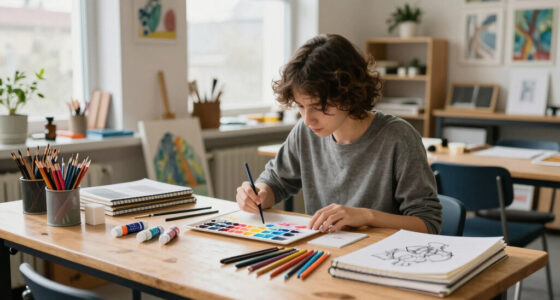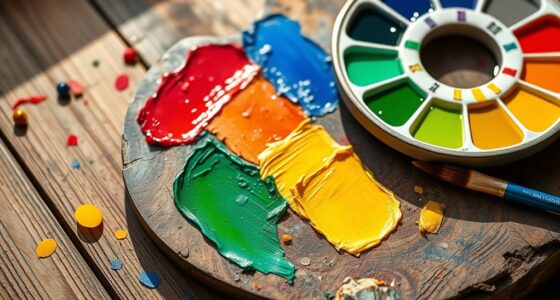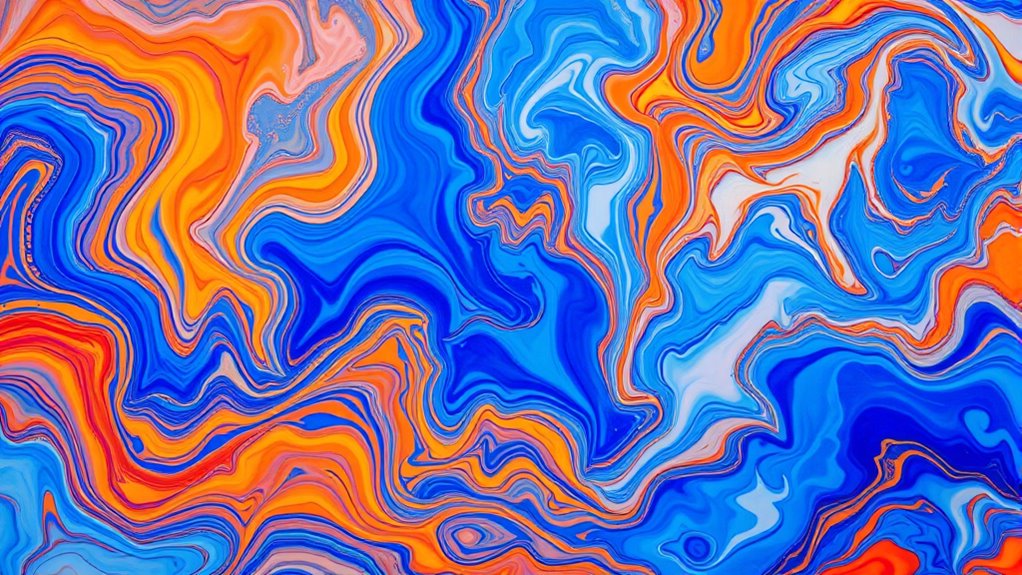
To master acrylic pouring, start by experimenting with color blending directly on your surface or in cups for smooth transitions and marbled effects. Use silicone to create cells and textured patterns, adjusting the amount to control size and density. Be mindful of your paint consistency—too thick or thin can affect flow and effects. Practice different pouring and manipulating techniques for dynamic results, and keep exploring new ideas. Continue exploring these tips to open up even more creative possibilities.
Key Takeaways
- Use high-quality acrylic paints and proper pouring mediums for smooth flow and vibrant colors.
- Experiment with silicone additives to create cells and unique textures in your designs.
- Practice different pouring techniques like dirty pour, flip cup, and direct pouring to achieve diverse effects.
- Manipulate the surface through tilting or using tools to enhance blending and pattern formation.
- Be patient and keep experimenting to develop your skills and discover mesmerizing fluid art effects.
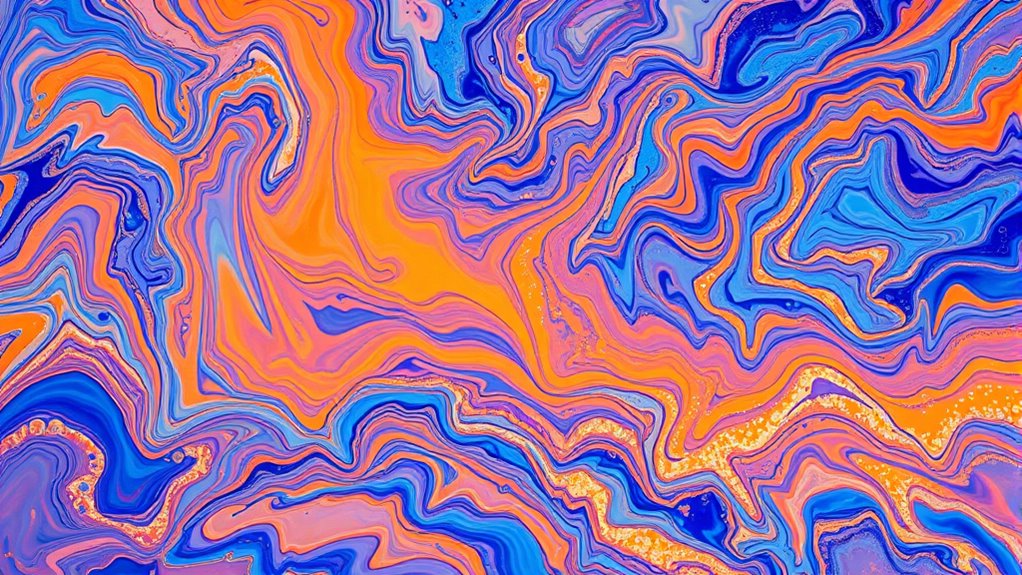
Acrylic pouring has become a popular and accessible art technique that allows you to create vibrant, unique masterpieces with minimal experience. This fluid art style relies on pouring diluted acrylic paints onto a surface and manipulating them to produce mesmerizing patterns. One of the most exciting aspects of acrylic pouring is the opportunity to experiment with color blending, which involves mixing different hues directly on the canvas to achieve seamless transitions and dynamic color combinations. When you master color blending, your artwork gains depth and complexity, making each piece truly one-of-a-kind. To enhance this effect, many artists incorporate silicone effects into their pours. Silicone drops or silicone oil are added to the paint mixture to create cells and lacy textures that add an organic, spontaneous feel to your artwork. These silicone effects can transform a simple pour into a captivating visual explosion, as they cause the paint to separate and form intricate patterns naturally.
When working with color blending, it’s important to choose colors that complement each other and to pour them in a way that encourages smooth transitions. You can layer your paints in cups or pour them directly onto the canvas, allowing the colors to interact naturally. As you tilt or manipulate the surface, the paints will flow and blend, creating stunning gradients and marbled effects. Using silicone effects further enhances this process because the silicone causes the paints to repel each other slightly, forming cells and lacy textures that add visual interest. Experimenting with different amounts of silicone allows you to control the size and density of these cells, giving you more artistic freedom.
Keep in mind that the quality of your paints and the consistency of your mixture play vital roles in achieving successful color blending and silicone effects. Thicker paints tend to hold their shape better, while thinner mixtures flow more smoothly across the surface. To balance this, many artists use pouring mediums to adjust the consistency without sacrificing color vibrancy. As you practice, you’ll learn how different techniques—like layering colors in cups, pouring directly, or using a swipe tool—affect the blending and cell formation. With patience and experimentation, you’ll develop a keen eye for creating mesmerizing effects that showcase your personal style. Acrylic pouring offers endless possibilities, and by mastering these core techniques, you’ll set free your potential to produce stunning fluid art pieces full of vibrant colors and captivating textures.
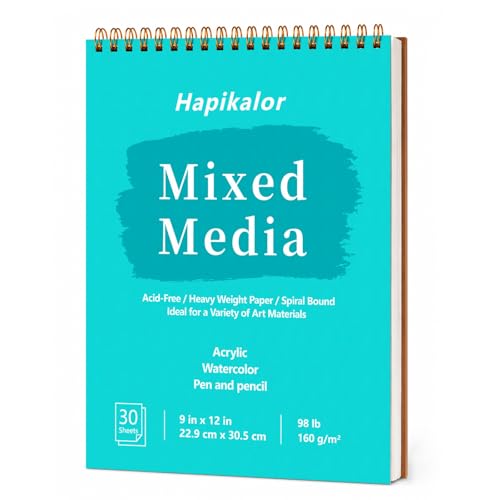
Mixed Media Sketchbook 9"x12" Multimedia Sketchbook, 30 Sheets Sketch Book
- Spiral Bound for Easy Use: Ergonomic spiral binding for all users
- Tear-Away Micro-Perforated Pages: Easily remove artwork without jagged edges
- High-Quality Durable Paper: 98lb/160gsm paper resists bleed-through
As an affiliate, we earn on qualifying purchases.
Frequently Asked Questions
What Are the Best Tools for Acrylic Pouring?
You’ll want a good pouring palette to mix your paints smoothly and prevent sticking, along with cups and stir sticks for easy blending. Silicone oil is essential too, as it creates interesting cell effects and enhances your designs. Also, keep a palette knife or spreader handy for adjusting your pour, and gloves to keep your hands clean. These tools help you achieve stunning fluid art with ease and control.
How Do I Fix Mistakes in My Pour?
If you make a mistake in your pour, don’t worry—start by gently tilting your canvas to achieve better layer correction. Use blending techniques to soften unwanted lines or harsh edges, blending the colors smoothly. You can also add a small amount of fresh paint to areas needing correction, then tilt again to distribute it evenly. Patience and gentle manipulation will help you fix mistakes and enhance your fluid art piece.
Can I Create Textured Effects With Acrylic Pouring?
Yes, you can create textured effects with acrylic pouring by adding mediums like modeling paste or gel medium to your paint. These substances increase surface dimension and add tactile qualities to your artwork. Apply them to specific areas or mix them into your paints before pouring. This technique results in a rich, textured surface that enhances the visual depth and complexity of your fluid art piece.
How Long Does Acrylic Pour Artwork Take to Dry?
Acrylic pour artwork generally takes about 24 to 72 hours to dry completely, but drying time varies depending on environmental factors. If it’s humid or if you apply thicker layers, it can take longer. To speed up drying, guarantee good ventilation and keep the piece in a warm, dry area. Keep patience, as rushing drying might crack or damage your beautiful artwork.
Are There Eco-Friendly or Non-Toxic Acrylic Pouring Mediums?
You can definitely find eco-friendly paints and non-toxic mediums for acrylic pouring that are safe for you and the environment. These options are becoming more popular, so look for brands that prioritize sustainability and low VOC levels. Don’t throw the baby out with the bathwater—many non-toxic mediums work just as well as traditional ones, helping you create beautiful art without harming the planet or your health.

135lb/200gsm Marker Paper Pad, 8.3×8.9in Double Sided Bleedproof Sketch Pad, 30 Sheets Art Paper Spiral Sketchbook, Smooth Painting Coloring Alcohol Marker Paper for DIY, Gift
- Size and Material: 8.3×8.9 inch, 200gsm acid-free paper
- Bleedproof Surface: Double-sided bleedproof, anti-bleed marker pad
- Durable Paper: Resists fading and yellowing for 20+ years
As an affiliate, we earn on qualifying purchases.
Conclusion
Now that you’ve explored acrylic pouring techniques, you might wonder if your artwork’s success depends solely on luck. While fluid art does involve some chance, skill and understanding play huge roles. By experimenting with colors, consistency, and pouring methods, you can improve your results profoundly. So, don’t just rely on fate—embrace the process, learn from each pour, and watch your skills grow. With practice, you’ll find your own flow and create stunning masterpieces every time.

Soucolor Marker Paper Sketchbook,Bleedproof Maker Paper 9"x12"
- Bleedproof Marker Paper: No show-through or bleed-through
- Double-Sided Usability: Both sides fully usable for markers
- Premium 73lb/120gsm Paper: Thick, durable, prevents ink penetration
As an affiliate, we earn on qualifying purchases.

Marker Paper Sketchbook, 100 Sheets Alcohol Marker Paper, 73 lb/ 120 GSM (8.3x11.7 Inch) A4 Marker Sketchbook Bleedproof, Spiral Bound Marker Paper Pad, Sketch Pads for Drawing for Adults & Teens.
- Portable Size: Fits in most bags for on-the-go drawing
- High-Quality Paper: 73LB/120GSM bleedproof, smooth surface
- Versatile Compatibility: Suitable for alcohol markers, watercolor, pencils
As an affiliate, we earn on qualifying purchases.