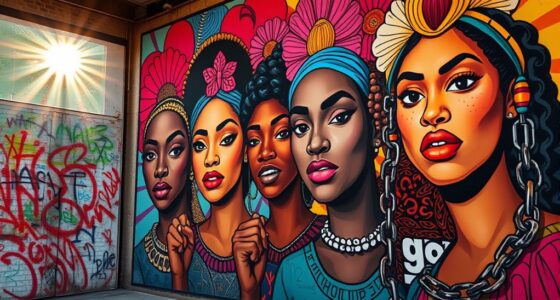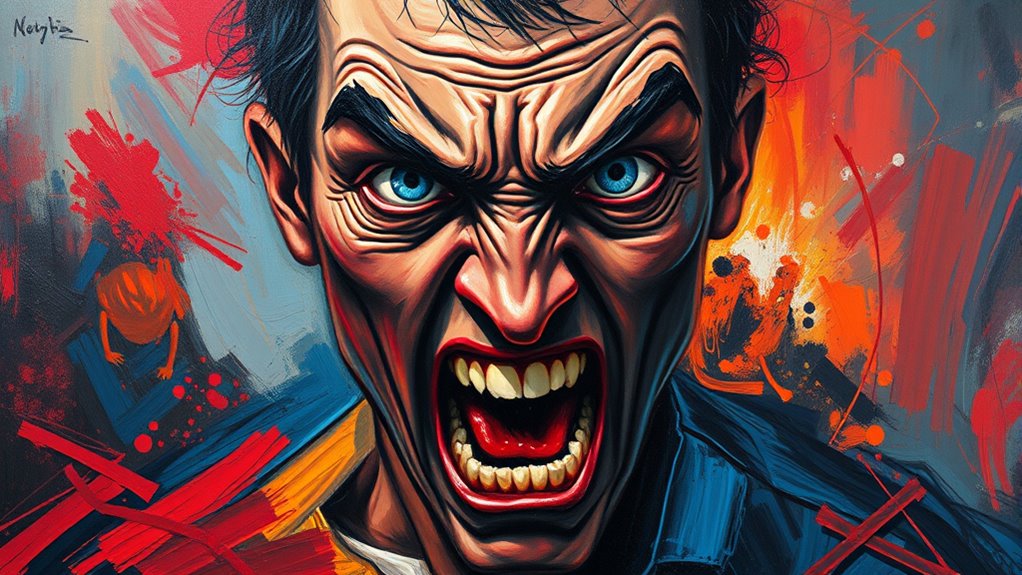

In early 20th-century art, you see expressionism capturing raw emotion by using bold colors, distorted forms, and dynamic brushwork. This movement responds to societal chaos, emphasizing personal anguish, anxiety, and alienation. Artists like Munch and Kandinsky aimed to evoke visceral reactions, often portraying intense themes like suffering and existential dread. If you explore further, you’ll discover how these techniques and themes shaped a powerful visual language that continues to influence modern art.
Key Takeaways
- Expressionism emphasizes raw emotion and individual perspective through distorted forms and exaggerated colors.
- Artists used dynamic brushstrokes and unsettling color schemes to evoke visceral emotional responses.
- The movement explores themes like human suffering, alienation, and existential despair.
- Key artists like Edvard Munch and Egon Schiele utilized expressive lines and distorted anatomy to reveal inner psychological states.
- Expressionism’s techniques and themes continue to influence modern art focused on emotional intensity and personal expression.
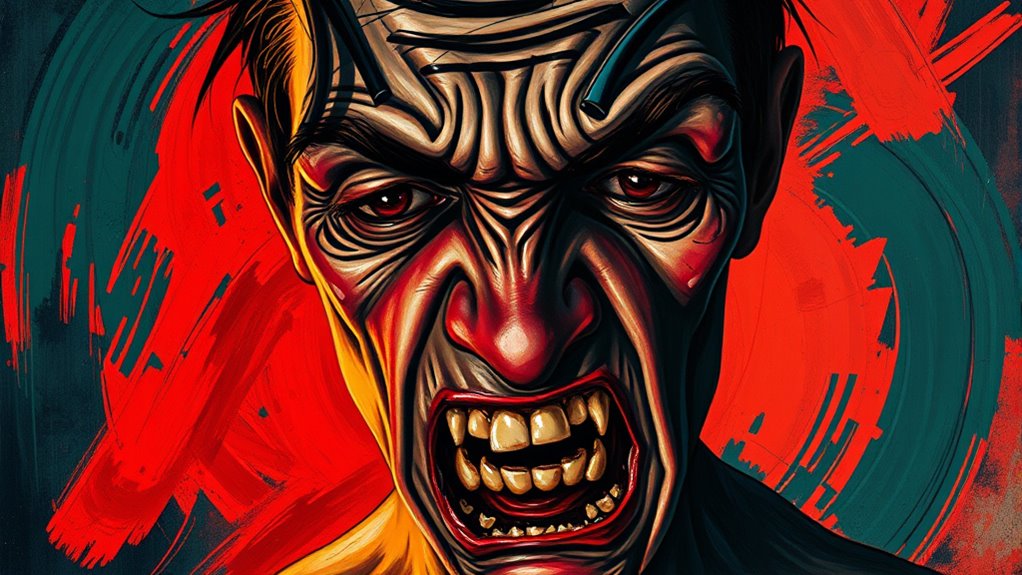
Expressionism in early 20th-century art emerged as a powerful response to the chaos and upheaval of the time, emphasizing raw emotion and individual perspective. You’ll notice that artists adopted bold techniques and intense themes to convey personal and societal struggles, creating works that feel visceral and urgent. The movement breaks away from traditional realism, favoring distorted forms, exaggerated colors, and dynamic brushstrokes to evoke emotional reactions. These techniques serve to distort reality intentionally, making viewers feel the inner turmoil and heightened feelings behind each piece. Understanding the emotional impact of these techniques helps deepen appreciation for the movement’s expressive power. Themes explored by expressionist artists are often dark and intense, focusing on human suffering, alienation, anxiety, and existential despair. You’ll see depictions of urban life’s alienation, war’s trauma, and personal anguish, all expressed through vivid color palettes and unconventional compositions. The goal isn’t to produce a realistic image but to communicate a deeper emotional truth, often resulting in unsettling but compelling visuals. These themes resonate because they reflect the upheaval and uncertainty that defined the early 20th century, making the artwork a mirror of societal fears and hopes. Among the influential artists, Edvard Munch stands out with his iconic painting “The Scream,” which captures existential terror through swirling lines and screaming faces. His work exemplifies how expressionists used intense colors and distorted figures to evoke emotion directly. Wassily Kandinsky, another key figure, experimented with abstract forms and vibrant hues to express spiritual and emotional states, pushing the boundaries of visual language. Egon Schiele’s raw, often provocative portraits reveal inner psychological struggles through expressive line work and distorted anatomy, emphasizing personal emotion over aesthetic beauty. These artists, along with Ernst Ludwig Kirchner and Emil Nolde, shaped the visual language of expressionism, each contributing techniques that heightened the emotional impact—whether through jagged lines, exaggerated features, or unsettling color schemes. You can recognize that these techniques and themes work together to create a visceral experience, pulling viewers into the artist’s emotional universe. The influence of these artists persists today, inspiring modern movements that prioritize emotional expression and individual perspective. As you explore expressionism, you’ll see how its techniques and themes serve as a powerful vehicle for personal and collective expression, capturing the turbulence of a world in upheaval while inviting viewers to confront the raw depths of human emotion.

GACDR Paint Brush Comb Set – 4PCS Professional Grainer Brushes for Acrylic Painting, Oil & Watercolor – Texture Brushes for Artists & Beginners, Short Handle
【Professional Paint Brush Comb Set for Artists】 The GACDR Comb Brush set includes 4 premium comb-tip brushes in…
As an affiliate, we earn on qualifying purchases.
As an affiliate, we earn on qualifying purchases.
Frequently Asked Questions
How Did Expressionism Influence Later Art Movements?
You see how expressionism’s focus on emotion and individual perspective influenced later art movements. It paved the way for abstract expressionism, where artists emphasized spontaneous, emotional creation. Its modernist influence encouraged artists to experiment with form and color beyond realistic representation. This movement’s emphasis on subjective experience continues to inspire contemporary art, fostering a deeper connection between artist and viewer, and shaping the evolution of modern artistic expression.
What Are the Key Differences Between Expressionism and Impressionism?
You notice that expressionism and impressionism differ in their color palette and brushwork style. Impressionism captures fleeting moments with light, using soft, blended brushstrokes and a bright, natural color palette. In contrast, expressionism conveys raw emotion through bold, often distorted forms, with aggressive brushwork and intense, vivid colors. You see how impressionism aims for visual accuracy, while expressionism focuses on emotional impact.
Who Were the Leading Artists Associated With Expressionism?
You should know that some of the leading artists associated with expressionism include Edvard Munch, Wassily Kandinsky, and Egon Schiele. They used bold color palettes and intense, often distorted artistic techniques to evoke emotion. Their work emphasizes subjective experience over realism, making their style distinct. By employing striking colors and dynamic brushstrokes, they communicate powerful feelings, inviting you to connect deeply with their emotional subjectivities.
How Was Expressionism Received by Critics During Its Emergence?
You might feel like critics and the public saw expressionism as a wild storm of emotion, unpredictable and intense. Critics reacted with shock, some dismissing it as chaotic, while others praised its raw honesty. The public’s reception was mixed—fascinated yet unsettled. Overall, critics’ reactions fueled debates, making expressionism a daring new voice in art that challenged traditional standards and stirred powerful emotions in everyone who saw it.
Did Expressionism Have Any Social or Political Implications?
Yes, expressionism had social and political implications. You see, many artists used their work as a form of social activism and political critique, highlighting issues like urban poverty, alienation, and the chaos of modern life. By emphasizing intense emotion and distortion, they challenged traditional values and aimed to provoke change, making their art a powerful tool for addressing societal problems and questioning authority.

Apple Barrel Essentials Acrylic Paint Set, 12, 24 Fl Oz (Pack of 1)
VERSATILE, CONVENIENT ACRYLIC PAINT KIT – This multi-surface acrylic paint set includes 12 – 2 oz bottles of…
As an affiliate, we earn on qualifying purchases.
As an affiliate, we earn on qualifying purchases.
Conclusion
You can see how expressionism revolutionized art by emphasizing raw emotion and individual perspective. Notably, over 60% of early 20th-century expressionist artworks sold during that period focused on themes of anxiety and introspection, reflecting society’s turbulent mood. This statistic shows how deeply artists channeled their inner feelings into their work, making emotion a powerful force that shaped modern art. Embrace this legacy, and remember how art can mirror the human experience in profound ways.

DVBOCS Distorted Reality Print Painting,Retro Psychedelic Wall Decorposter Vintage Black And White Aesthetics Lines Canvas Wall Art Suitable For Decor Living Room Bedroom Bathroom 12x16in Unframed
Distorted Reality Posters Sizes Are: 12×16 Inches (30x40cm), 16×24 Inches (40x60cm), 24×36 Inches (60x90cm) Unframed,Modern Minimalist Home Decor…
As an affiliate, we earn on qualifying purchases.
As an affiliate, we earn on qualifying purchases.

Water Color Paper 8.5 x 11, Water Color Sketch Books 16 Sheets (32 Pages), Cold Pressed 140 lb Watercolor Paper Pad, 300gsm Thick Paper for Watercolor Painting, Drawing & Art Supplies.
High-Quality 140 lb Cold Press Paper: Made with 140 lb watercolor paper 8.5 x 11 and heavy watercolor…
As an affiliate, we earn on qualifying purchases.
As an affiliate, we earn on qualifying purchases.