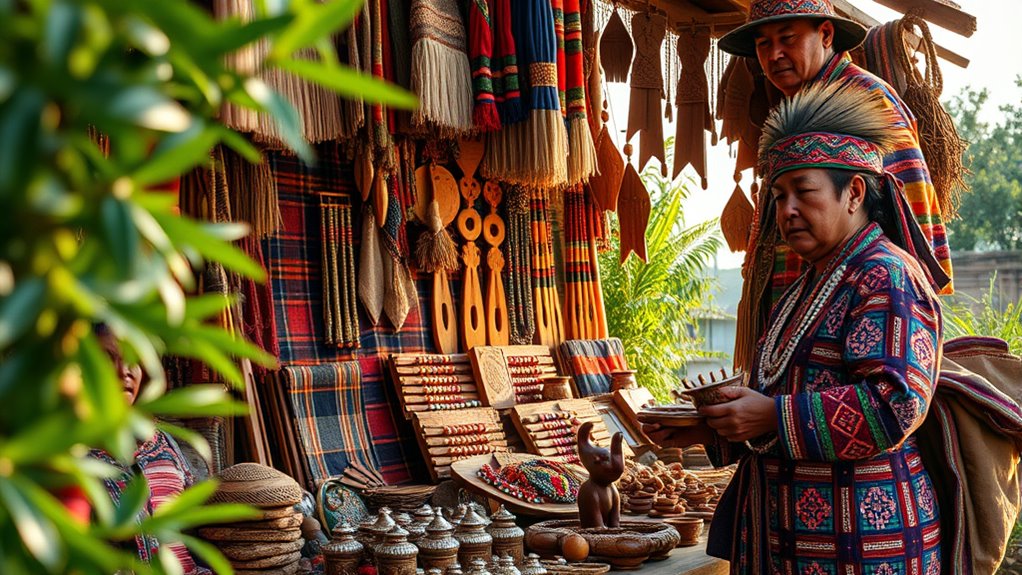

To collect indigenous and cultural art responsibly, you should guarantee your purchases support artists and communities by buying directly from reputable sources or cooperatives that follow fair trade practices. Educate yourself on the cultural significance of each piece to avoid misinterpretation or appropriation. Always verify provenance and respect traditional meanings. Share the stories behind your acquisitions respectfully, emphasizing authenticity and preservation. Continuing with these principles helps you honor and sustain cultural heritage while enriching your collection.
Key Takeaways
- Verify the provenance and authenticity of artifacts to ensure they are ethically sourced and not stolen or misappropriated.
- Purchase directly from artisans or reputable organizations that support fair compensation and cultural preservation.
- Educate yourself on the cultural significance and traditional meanings of the items to foster respectful appreciation.
- Share the stories and origins behind each piece to promote understanding and prevent cultural misappropriation.
- Avoid acquiring replicas or illicit trade items to maintain the integrity and value of authentic cultural artifacts.

Collecting indigenous and cultural art offers a meaningful way to connect with diverse traditions and histories. When you approach this journey thoughtfully, you respect the communities and stories behind each piece. One of the most important principles to keep in mind is ethical sourcing. This means ensuring that your acquisitions are obtained in ways that support the artists and communities, rather than exploiting them. Seek out reputable sources that prioritize fair compensation, transparent provenance, and direct relationships with artisans. By doing so, you help sustain cultural practices and contribute positively to the communities involved.
Cultural sensitivity is equally essential. Before you add an artifact or artwork to your collection, take the time to educate yourself about its significance. Understand the cultural context, symbolism, and traditional meanings attached to it. This knowledge prevents misinterpretation and shows respect for the community’s heritage. Avoid purchasing items that are stolen, misappropriated, or sold without proper authorization. Instead, focus on working with galleries, cooperatives, or artisans who operate ethically and openly about their sourcing practices. This not only protects you from inadvertently supporting illicit trade but also honors the integrity of the culture.
When you display indigenous and cultural art, do so with awareness. Share the story behind each piece and acknowledge its origins. This fosters appreciation rather than appropriation, ensuring that you’re honoring the traditions rather than reducing them to decorative objects. Supporting artists directly, through commissions or purchases from their cooperatives, helps empower them economically and socially. It also encourages the preservation of cultural practices that might otherwise be at risk of fading away. Additionally, understanding the importance of cultural authenticity can help you recognize genuine artifacts and avoid replicas that diminish their value and significance.

Painted Spirit Native American Woman Wall Art 11×14 Unframed Poster-Colorful Female Warrior Portrait with Tribal Headdress, Modern Abstract Indigenous Artwork for Boho Dorm Decor & Contemporary Spaces
- Vibrant Native American Woman Art: Captivating cultural portrait with rich colors
- Unframed Modern Tribal Poster: Ready for framing with bold abstract design
- Ideal Gift for Cultural Appreciation: Perfect for birthdays, holidays, and housewarmings
As an affiliate, we earn on qualifying purchases.
As an affiliate, we earn on qualifying purchases.
Frequently Asked Questions
How Can I Verify the Authenticity of Indigenous Art?
To verify the authenticity of indigenous art, start by researching the artist’s credibility through reputable sources and galleries. Ask for provenance documentation or certificates of authenticity, and look for consistent stylistic elements tied to specific cultures. Engage directly with the artist or trusted dealers to confirm their background. Be cautious of imitations, and always prioritize verified authenticity verification methods to guarantee you’re supporting genuine indigenous craftsmanship.
What Are the Legal Considerations When Purchasing Cultural Artifacts?
Steering the legal landscape is like walking a tightrope; one misstep can cause harm. When buying cultural artifacts, you must guarantee legal compliance and ethical sourcing. Verify that the seller has the right to sell and that the artifact isn’t stolen or illegally exported. Ask for provenance documentation, respect local laws, and prioritize sources committed to preserving cultural heritage. Doing so keeps your collection both beautiful and responsible.
How Do I Ensure Fair Compensation to Artists?
To guarantee fair compensation to artists, you should prioritize ethical sourcing and support fair trade practices. Always verify that the artist or community receives a fair price for their work, and avoid intermediaries that take excessive cuts. Educate yourself on the cultural significance of the art, and buy directly from artists or reputable sources committed to fair trade. This way, you help sustain their livelihood and respect their cultural heritage.
Are There Specific Regions With Stricter Export Restrictions?
Imagine stepping into a maze of regional export laws and cultural heritage protections, each corridor more restrictive than the last. Some regions, like parts of Africa and Oceania, have stricter export restrictions to guard their cultural treasures. You need to navigate these legal labyrinths carefully, respecting local laws to make certain you’re not unwittingly crossing boundaries that protect priceless artifacts. Always research specific regional export laws before making any purchase.
How Can I Support Indigenous Communities Beyond Purchasing Art?
You can support indigenous communities beyond buying art by participating in cultural preservation efforts and community empowerment initiatives. Volunteer with local organizations, donate to projects that sustain traditional practices, or attend cultural events to show your respect and interest. Sharing their stories responsibly and advocating for their rights also helps. Your active involvement helps preserve their heritage and empowers communities to maintain their traditions and sovereignty.

As an affiliate, we earn on qualifying purchases.
Conclusion
As you walk through a vibrant market, you notice a handcrafted piece that perfectly captures the spirit of its origin. It’s no coincidence—your thoughtful approach to collecting guarantees these treasures support communities and honor traditions. By respecting cultural meanings and sourcing responsibly, you become part of a meaningful story, much like the intricate patterns woven into each artifact. Remember, responsible collecting isn’t just about ownership; it’s about preserving a living heritage for generations to come.

Eastern Print Native American Wall Art, Set Of 9 Pcs Unframed Posters, Native American Tribal Artwork, Indigenous Indian Pictures, America Indian Decor for Bedroom, Livingroom, UNFRAMED
- Unframed Prints Included: Set of 9 posters in various sizes
- Easy Wall Arrangement: Includes double-sided tape for display
- Native American Heritage Art: Vibrant artwork inspired by Native culture
As an affiliate, we earn on qualifying purchases.
As an affiliate, we earn on qualifying purchases.

Attica Tracery Handcrafted Dhokra Wall Art Frame (10.5"x10.5") Tribal Metal Decor Wall Hanging Rustic Indian Sculpture Traditional Brass Artwork Decorative Frame for Living Room, Bedroom, Office (Design 4)
- Handcrafted Dhokra Wall Art: Authentic tribal metal sculpture with imperfections
- Tribal Indian Wall Decor: Inspired by indigenous dance scenes with cultural storytelling
- Rustic Brass Art Frame: Premium gold finish with antique brass tone
As an affiliate, we earn on qualifying purchases.
As an affiliate, we earn on qualifying purchases.