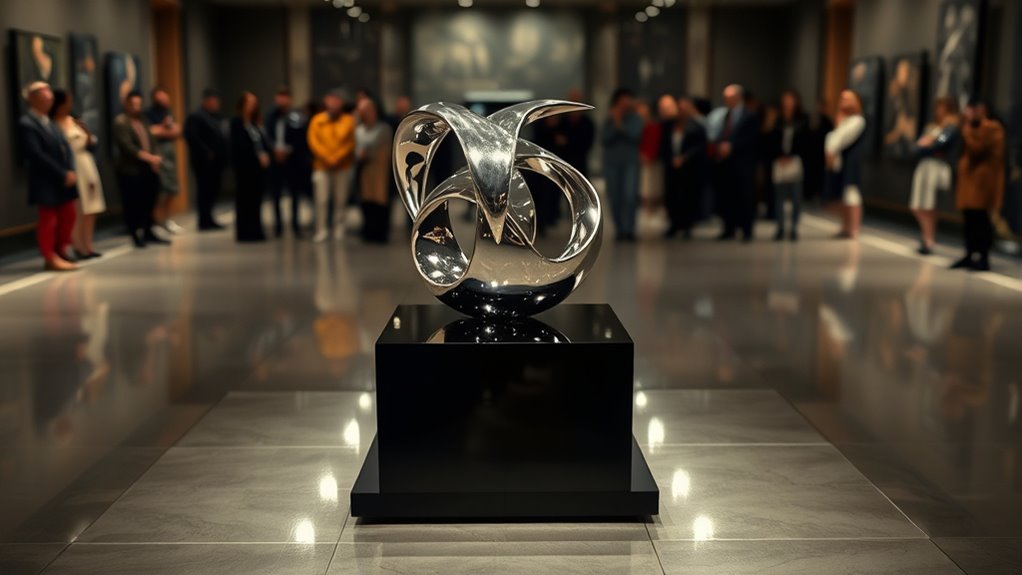

Limited-edition sculptures gain value through scarcity, making them highly desirable and exclusive. As demand grows, prices tend to rise, reinforcing their status as investments and symbols of prestige. Strategic pricing helps maintain their allure, while their rarity keeps market interest high over time. This cycle of demand and value escalation fuels their economic significance. To understand how these factors interact and influence their long-term worth, explore the key dynamics behind their coveted appeal.
Key Takeaways
- Limited editions create scarcity, boosting exclusivity and desirability among collectors and art enthusiasts.
- High demand and perceived investment value drive premium pricing and market interest.
- Strategic pricing maintains sculpture prestige and reinforces its status as a valuable asset.
- Self-reinforcing dynamics, like rising prices, enhance desirability and sustain high market valuations.
- Scarcity, demand, and pricing strategies collectively elevate the economic and investment appeal of these sculptures.
Have you ever wondered what makes limited-edition sculptures so valuable? The answer lies in understanding how market demand and pricing strategy work together in the art world. These sculptures are produced in restricted quantities, which immediately creates a sense of exclusivity. When you consider the scarcity factor, it’s clear that the demand for such pieces tends to be high among collectors and art enthusiasts who seek unique items that stand out. This heightened demand drives up their desirability, making them more sought after than mass-produced artworks. As a result, artists and galleries often implement strategic pricing to capitalize on this scarcity, positioning these sculptures as premium collectibles.
Limited-edition sculptures gain value through scarcity, high demand, and strategic pricing, making them sought-after collectibles and investments.
Your ability to recognize the importance of market demand becomes essential here. Limited editions attract a specific segment of buyers who are willing to pay a premium for exclusivity and rarity. This demand isn’t just about wanting the sculpture but also about owning a piece that’s perceived as a status symbol or an investment opportunity. Because these sculptures are limited, their supply is intentionally restricted, which amplifies the demand’s impact on their value. The scarcity, combined with a strong desire from collectors, creates a natural upward pressure on prices. Additionally, the perceived investment potential of limited-edition sculptures often influences buyer behavior, further elevating their market value.
The pricing strategy employed for limited-edition sculptures is often carefully calibrated. Artists and sellers set initial prices based on the perceived value of their work, the exclusivity of the edition, and the anticipated demand. As interest grows, prices can increase, especially if the artist gains recognition or if the sculpture becomes highly desirable. Sometimes, pricing is used as a tool to maintain the sculpture’s exclusivity—by setting a high price point, sellers discourage casual buyers and attract serious collectors who appreciate the sculpture’s rarity and potential for appreciation. This strategy reinforces the sculpture’s prestige and guarantees that the market perceives it as a valuable asset.
You might notice that the combination of high market demand and strategic pricing creates a self-reinforcing cycle. As prices rise, the sculpture’s status as a limited-edition piece intensifies, encouraging even more interest from collectors. Conversely, if demand wanes, prices can be adjusted, but generally, the scarcity and perceived value keep the prices elevated. In essence, the dynamic between market demand and pricing strategy is what sustains the high valuation of limited-edition sculptures. This delicate balance is what makes them not just art pieces but also potent economic assets—desirable, exclusive, and ultimately, valuable.
Top picks for "economic limit edition"
Open Amazon search results for this keyword.
As an affiliate, we earn on qualifying purchases.
Frequently Asked Questions
How Do Artists Decide the Edition Size for Sculptures?
When deciding the edition size for sculptures, you consider factors like printmaking techniques and material scarcity. You weigh how many copies you can produce while maintaining quality, knowing limited editions increase exclusivity. You also factor in the scarcity of materials, which can limit production. By balancing these elements, you determine an edition size that maximizes value and appeal, ensuring each piece remains desirable and collectible for your audience.
What Factors Influence the Pricing of Limited-Edition Sculptures?
Imagine a delicate dance where market demand leads and material costs follow. Your sculpture’s price hinges on how much collectors crave your work and the expenses to craft it. When demand soars, prices climb like a rising tide. If materials become scarce or costly, you must adjust your price accordingly. Balancing these forces, you set a value that reflects both your artistic vision and the market’s pulse.
How Does Authentication Impact the Sculpture’S Value?
Authentication vital impacts a sculpture’s value because provenance significance and authenticity verification guarantee its legitimacy. When you verify the sculpture’s provenance and confirm its authenticity, you boost buyer confidence, making it more desirable. Without proper authentication, the piece’s value drops due to doubt about its origin or authenticity. So, thorough authentication and clear provenance are essential in maintaining and increasing the sculpture’s worth in the market.
Are Limited-Edition Sculptures a Good Investment?
You might find that limited-edition sculptures can be a good investment if you consider current collector trends and their cultural significance. These pieces often appreciate in value due to their exclusivity and artistic importance. By staying informed about market demand and the artist’s reputation, you can make smarter choices. However, always remember that investments carry risks, so it’s wise to do thorough research before committing your resources.
How Do Resale Markets Affect Original Sculpture Prices?
Imagine a rare baseball card skyrocketing in value after initial release. Similarly, secondary markets can boost original sculpture prices when collector demand surges. When resale markets thrive, they signal strong interest, often inflating prices as collectors compete. Conversely, if resale value drops, it can diminish original sculpture worth. So, active secondary markets directly influence how much collectors are willing to pay for the original piece, shaping its overall value.
Conclusion
Think of limited-edition sculptures as rare stars in a night sky. Their scarcity makes them shine brighter, drawing collectors who want to own a piece of that celestial glow. Just like stars, their value depends on how many are left in the universe. By understanding this cosmic dance, you can navigate the art world wisely, knowing that each limited piece is a unique constellation waiting to be discovered and cherished in your collection.