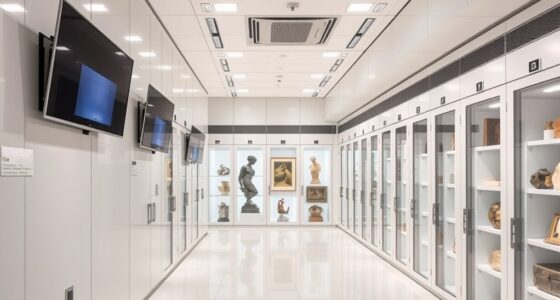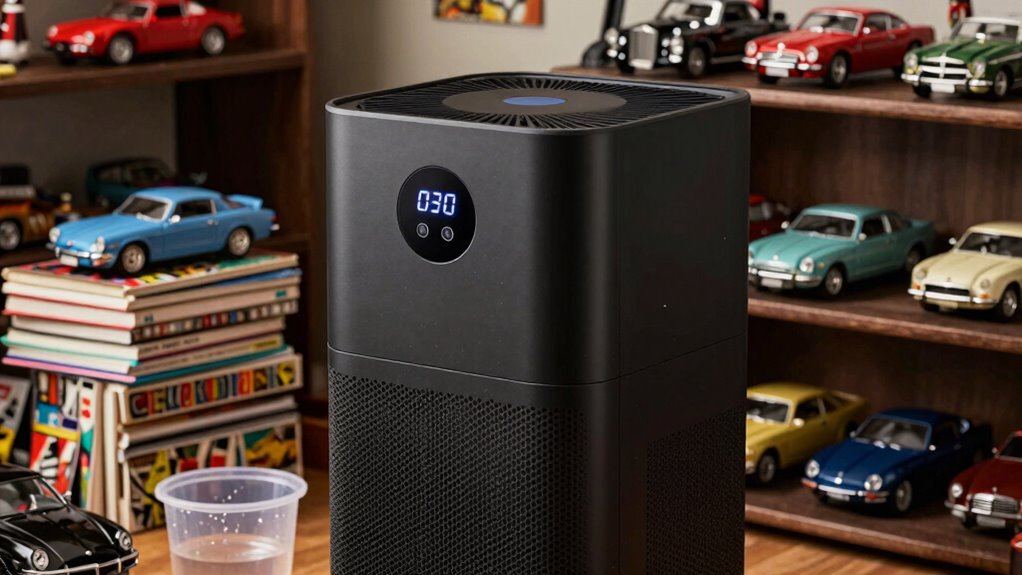

To size a dehumidifier for your collection space, first measure the room’s dimensions to determine the total cubic footage. Assess your humidity levels with sensors at different spots to identify fluctuations. Consider space features like high ceilings or storage areas. Choose a unit with enough capacity to handle your space’s moisture levels, and select features that suit your environment, such as adjustable settings or quiet operation. If you want to protect your treasures effectively, keep exploring how to get it right.
Open a free Amazon Business account
Business pricing, bulk buying and tax-exempt orders.
As an affiliate, we earn on qualifying purchases.
Key Takeaways
- Measure your room’s total cubic footage to determine the dehumidifier’s required capacity.
- Assess current humidity levels with sensors to identify fluctuations and appropriate dehumidifier strength.
- Consider space features like high ceilings or storage areas that affect moisture levels and dehumidifier size.
- Choose a unit with adjustable humidity settings and sufficient airflow features for optimal environment control.
- Regularly monitor environmental conditions and maintain the dehumidifier for consistent, effective moisture management.
As an affiliate, we earn on qualifying purchases.
Why Humidity Control Is Critical for Collectors
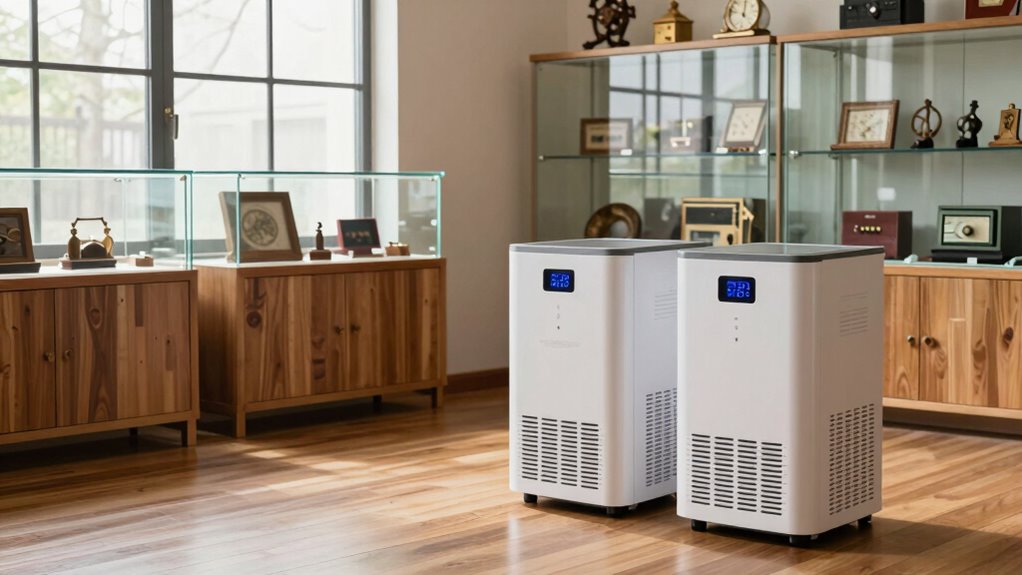
Have you ever wondered why maintaining proper humidity levels is so essential for collectors? Humidity sensors play a crucial role in monitoring your space, ensuring you stay within ideal ranges. Too much moisture can damage delicate items like artwork, photographs, or antique collectibles, leading to mold, warping, or corrosion. Conversely, low humidity can cause cracking or brittleness. Proper dehumidifier placement is vital; positioning it in strategic spots helps evenly control humidity throughout the space. This prevents hotspots of excess moisture or dry areas. By consistently regulating humidity with the help of sensors and thoughtful placement, you protect your collection’s integrity, preserve its value, and reduce the risk of deterioration. Additionally, high refresh rates can enhance your overall experience as a collector by ensuring that you can safely transport your valuable items. Proper humidity control isn’t just maintenance—it’s safeguarding your collection’s future. Understanding heatstroke signs can also enhance your overall experience as a collector by ensuring that you can safely transport your valuable items.
digital humidity sensor for home
As an affiliate, we earn on qualifying purchases.
As an affiliate, we earn on qualifying purchases.
How to Measure Your Space for the Right Dehumidifier
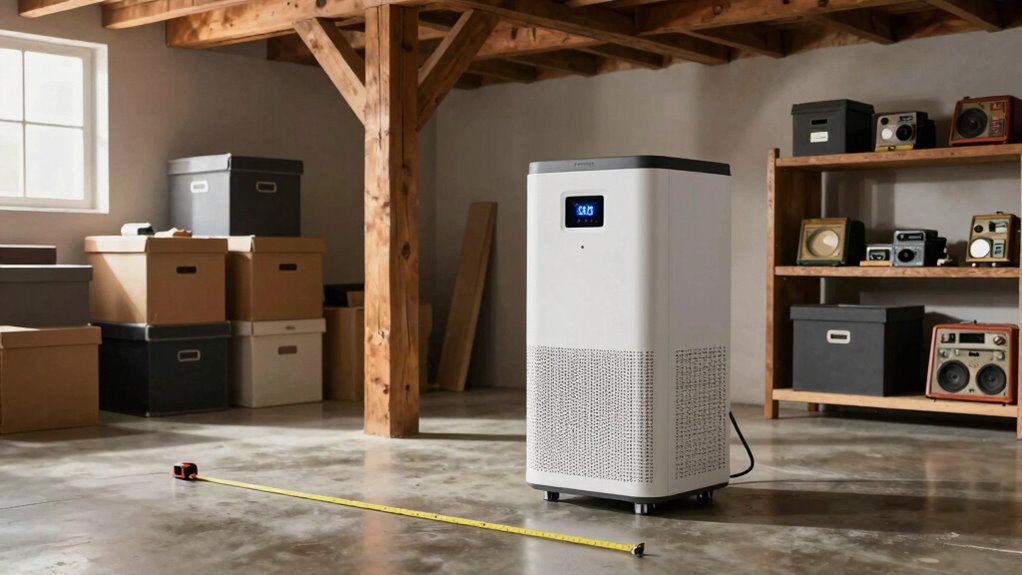
To find the right dehumidifier, start by measuring your room’s dimensions accurately. Next, calculate the total cubic footage to determine the capacity you need. Finally, assess your humidity levels to make sure your chosen unit can maintain ideal conditions. Additionally, consider how regular exercise can help maintain a balanced environment by reducing excess moisture from pet activities. Understanding digital concepts can also enhance your ability to manage and optimize your space effectively. For instance, knowing about drink traditions can inspire you to create a welcoming atmosphere when hosting friends. Implementing energy-efficient models can further enhance your space by lowering energy costs while maintaining optimal humidity levels. Moreover, having a positive mindset can help you stay focused on maintaining your environment’s ideal conditions.
Measure Room Dimensions Accurately
Accurately measuring your room’s dimensions is essential to selecting the right dehumidifier. Use a tape measure to determine the length, width, and height of the space, noting each measurement carefully. Keep in mind that well-planned decorating ideas and efficient space utilization can influence your room’s size and humidity levels. For example, high ceilings or storage areas may require a more powerful unit. To guarantee precise sizing, measure all areas where moisture can accumulate, including closets or corners. Avoid guesswork—double-check your measurements for accuracy. Properly gauging your space helps you choose a dehumidifier that effectively manages moisture without over- or under-sizing, making your space more comfortable and preserving your collectibles.
Calculate Cubic Footage
Calculating the cubic footage of your space is a straightforward way to determine the right size dehumidifier. Measure the length, width, and height of your room or storage area, then multiply these dimensions to get the total cubic footage. This step is essential for spaces with decorative styles or those involved in historical preservation, where maintaining specific humidity levels is critical. Keep in mind that larger, more ornate rooms or preserved artifacts may require a more powerful unit. To make this process easier, consider these tips:
- Use a tape measure for accuracy
- Record measurements in feet
- Include all connected or enclosed areas
- Adjust for unusually high ceilings
- Remember that precise measurements help prevent over- or under-sizing
Accurate cubic footage ensures your dehumidifier effectively protects your collection. Additionally, consider how electric power generation can influence humidity levels, especially in spaces that utilize bike generators for renewable energy.
Assess Humidity Levels
Wondering how to determine the humidity levels in your space? Using humidity sensors is the most accurate way to assess your environment. Place these sensors at different locations, especially near valuable collectibles or areas prone to excess moisture. Proper dehumidifier placement is essential; position the unit in a central spot where it can circulate air effectively. Measure the humidity consistently over a few days to identify fluctuations, especially during different weather conditions. This data helps you understand whether your space needs a dehumidifier and how powerful it should be. Keep in mind that high humidity levels—above 50%—can harm your collection, so regular monitoring guarantees you select the right dehumidifier size and placement for ideal protection. Additionally, continuous learning about your collection’s requirements can enhance your ability to maintain optimal conditions. Understanding industry trends can also provide insights into the best dehumidifiers for collectors. Moreover, maintaining low humidity levels can prevent damage to items sensitive to moisture, enhancing the longevity of your collection. For instance, high-quality materials used in luxury items can be particularly susceptible to moisture damage, making proper humidity control even more critical. Monitoring humidity can also reveal microplastics in dust, which may pose additional risks to your collectibles.
energy-efficient dehumidifier for collectibles
As an affiliate, we earn on qualifying purchases.
As an affiliate, we earn on qualifying purchases.
Calculating the Ideal Dehumidifier Size for Your Collection Room
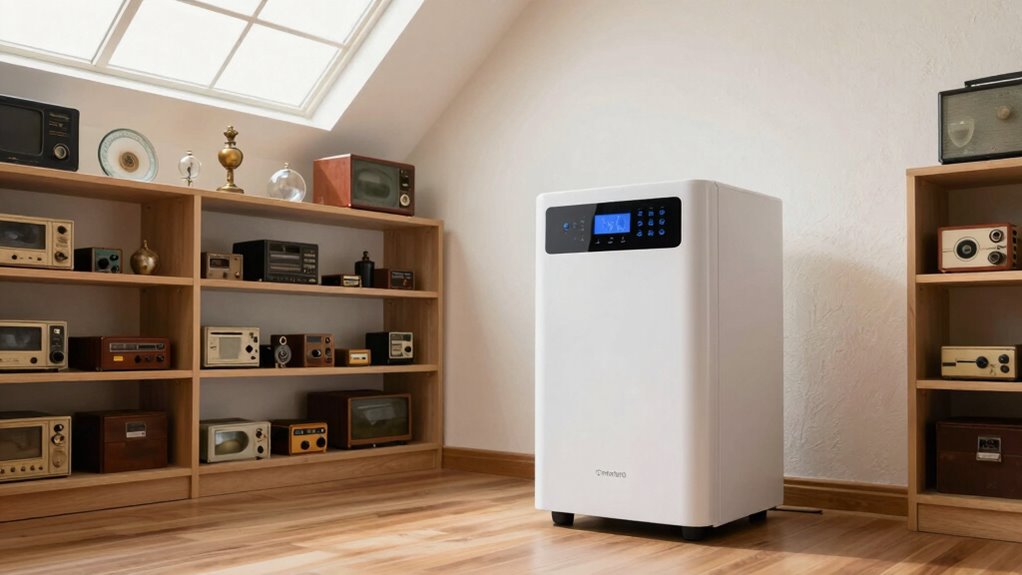
Determining the right size dehumidifier for your collection room is essential to maintaining ideal conditions without wasting energy. To do this effectively, consider the room’s size, humidity levels, and how much moisture your collection generates. Use the following tips:
Choosing the right dehumidifier ensures optimal conditions and energy savings for your collection room.
- Calculate the room’s square footage to find the appropriate capacity
- Consider the room’s typical humidity fluctuations
- Account for the number of items contributing moisture
- Choose a unit with best placement in the space
- Prioritize energy-efficient models to save on running costs
quiet dehumidifier for storage room
As an affiliate, we earn on qualifying purchases.
As an affiliate, we earn on qualifying purchases.
Key Factors That Affect Dehumidifier Capacity and Effectiveness
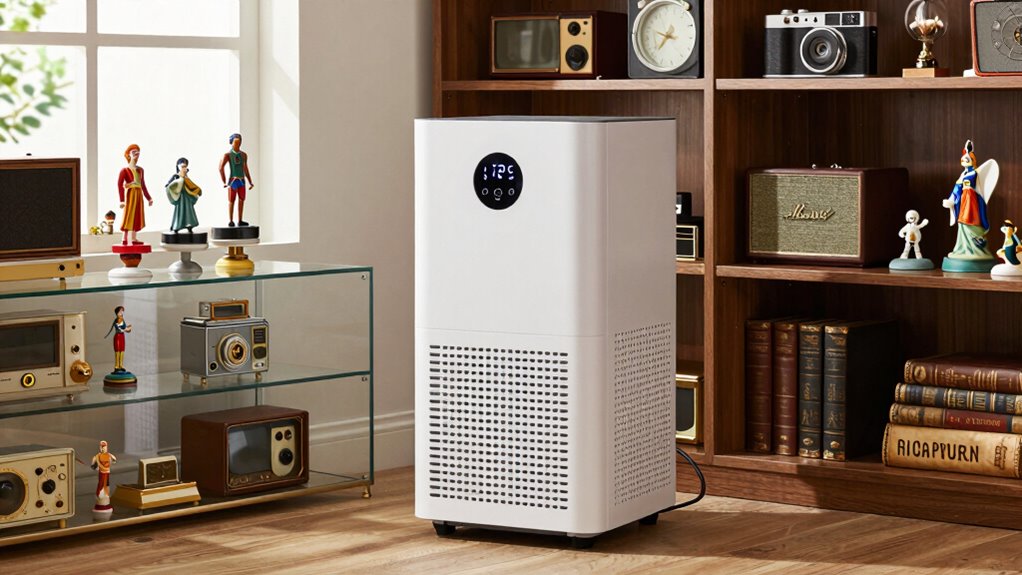
Your collection room’s size, humidity levels, and air circulation all influence how well a dehumidifier works. Larger spaces or higher humidity require a more powerful unit, while poor air flow can reduce efficiency. Understanding these factors helps you choose a dehumidifier that keeps your collections in peak condition. Additionally, incorporating accessibility features can enhance the usability of your space, ensuring that it remains comfortable for all collectors. Keeping art in a controlled environment can also help preserve its integrity over time, as sound vibrations can enhance the overall health of the space. Regularly monitoring phone settings related to humidity can further optimize the conditions for your collection. Moreover, using professional services for tailored solutions can significantly improve how effectively your dehumidifier maintains the ideal environment.
Room Size and Volume
Choosing the right dehumidifier depends heavily on the size and volume of the room you’re trying to dehumidify. Larger spaces require models with higher capacity, especially if you’re storing vintage items that need stable humidity levels. Consider climate conditions, as humid environments demand more powerful units. To determine your needs, think about:
- Room dimensions (length, width, height)
- Total volume in cubic feet or meters
- Vintage storage areas prone to dampness
- Climate conditions impacting moisture levels
- Space for the dehumidifier itself
Additionally, integrating eco-friendly practices can help manage humidity levels while promoting a healthier environment. A thorough understanding of tax planning strategies is also beneficial for collectors looking to invest in equipment to protect their valuable items. Understanding humidity control is essential in preserving the condition of your valuable collections. Incorporating traditional techniques in your storage solutions can further enhance the protection of your vintage items.
Humidity Levels and Conditions
Have you noticed how humidity swings can impact the effectiveness of your dehumidifier? Rapid changes in moisture levels can make it harder for your unit to maintain a consistent environment. Using humidity sensors helps you monitor these fluctuations accurately, so you can adjust settings or choose a capacity suited to your space’s needs. Conditions like high humidity, leaks, or inadequate moisture barriers can cause excess moisture, overwhelming smaller units. In such environments, a larger dehumidifier or one with adjustable humidity controls becomes essential. Also, moisture barriers—like sealed windows or vapor barriers—reduce external moisture intrusion, easing your dehumidifier’s workload. Understanding these humidity levels and conditions guarantees you select a model that effectively protects your collection without overworking the unit.
Air Circulation Efficiency
Proper air circulation plays a significant role in maximizing your dehumidifier’s capacity and efficiency. When airflow patterns are ideal, moisture is more evenly removed, preventing damp spots and mold. Effective ventilation strategies help distribute dry air throughout your space, ensuring the dehumidifier works effectively. To improve air circulation, consider these tips:
- Position your dehumidifier centrally for even airflow
- Use fans to enhance circulation in stagnant corners
- Avoid blocking vents or intake/exhaust areas
- Open windows periodically to promote natural ventilation
- Install exhaust fans in high-moisture zones
Choosing Features That Protect Your Treasures
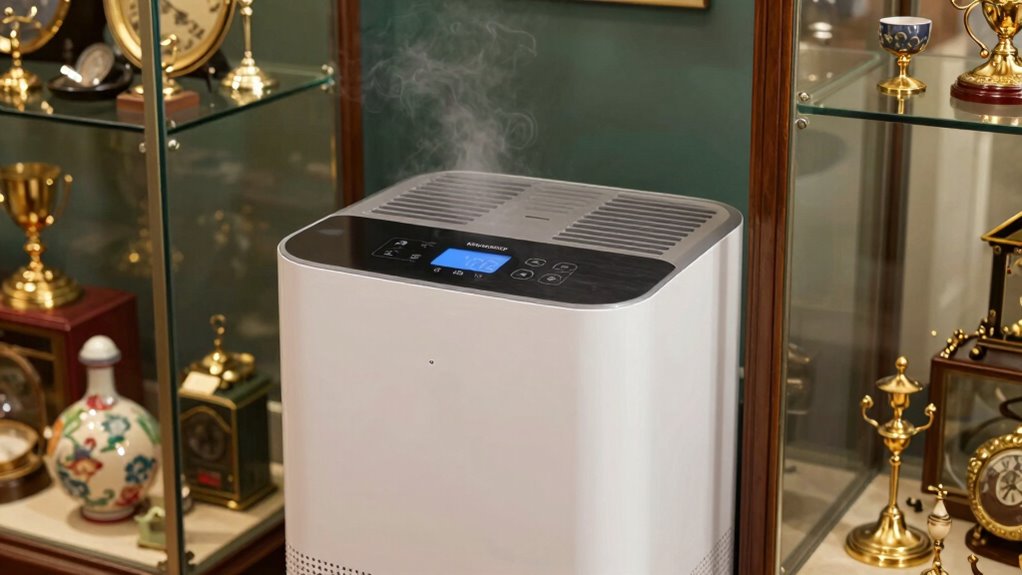
When selecting a dehumidifier to protect your treasures, paying close attention to its features can make all the difference. Look for decorative features that blend seamlessly with your display space, enhancing aesthetics without sacrificing functionality. Energy efficiency is equally important, helping you save on long-term costs while maintaining ideal humidity levels. Features like adjustable humidity settings and quiet operation ensure your collection remains undisturbed. Consider this table to help visualize key features:
| Feature | Benefit |
|---|---|
| Decorative accents | Enhances display, complements décor |
| Energy-efficient design | Saves power, reduces costs |
| Humidity control | Maintains ideal conditions |
| Quiet operation | Protects treasures from vibrations |
Choosing the right features ensures your treasures stay safe, beautiful, and well-preserved.
Common Mistakes When Picking a Dehumidifier : and How to Avoid Them

Choosing the wrong dehumidifier can lead to more harm than good, especially if you overlook common mistakes during the selection process. One mistake is ignoring the decorative design, which can clash with your space’s aesthetics. Overlooking energy efficiency is another; a less efficient unit wastes power and increases costs. Picking a model that’s too small won’t control humidity effectively, while a too-large one wastes energy. Failing to check noise levels can disrupt your environment, and ignoring maintenance needs leads to poor performance. To avoid these pitfalls, consider your space’s style and opt for energy-efficient models that blend form and function. Proper sizing and attention to details ensure your dehumidifier protects your collection without unnecessary expense or disruption.
Maintaining Your Dehumidifier to Keep Your Collection Safe
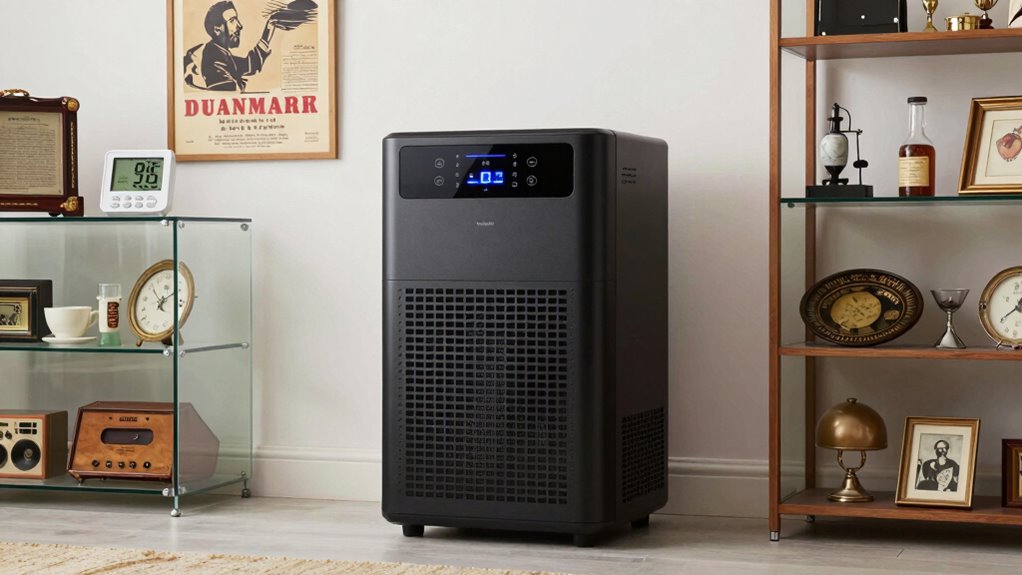
Regular maintenance is essential to guarantee your dehumidifier continues to protect your collection effectively. Start by checking the dehumidifier placement; ensure it’s positioned where airflow isn’t obstructed and away from walls or furniture. Proper placement maximizes efficiency and prevents uneven humidity levels. Next, perform regular filter maintenance—clean or replace filters according to the manufacturer’s instructions. Dirty filters reduce airflow and strain the unit, decreasing its lifespan and effectiveness. Keep an eye on water collection, emptying the tank frequently to prevent overflow and mold growth. Additionally, clean the coils periodically to maintain peak operation. Consistent upkeep ensures your dehumidifier runs smoothly, maintaining a stable environment that preserves your collection’s integrity over time.
Frequently Asked Questions
Can I Use a Dehumidifier in Multiple Rooms Simultaneously?
Yes, you can use a dehumidifier in multiple rooms simultaneously, especially with portable units designed for multi-room placement. These units often have flexible hoses or vents that allow you to direct dehumidification where needed. However, for ideal results, guarantee the portable dehumidifier’s capacity matches the combined space’s size. Using multiple units can improve efficiency and maintain consistent humidity levels across different rooms.
How Loud Are Different Dehumidifier Models During Operation?
Like a whispering breeze, dehumidifier noise levels vary by model. Most operate between 40 to 60 decibels, comparable to a quiet conversation or background music. Higher-end models tend to be quieter, ideal for collectors who value silence. Check the decibel ratings to find one that suits your space, ensuring your collection stays dry without disturbing your peace.
Are Energy-Efficient Dehumidifiers Suitable for Large Collections?
Energy-efficient dehumidifiers are suitable for large collections because they offer significant energy savings and reduce environmental impact. They typically feature advanced technology that consumes less power while maintaining ideal humidity levels. By choosing an energy-efficient model, you not only save on electricity bills but also contribute to environmental conservation. These dehumidifiers are designed to handle larger spaces effectively, making them a smart choice for protecting your valuable collection sustainably.
How Often Should I Empty or Clean the Dehumidifier’s Water Tank?
Think of your dehumidifier’s water tank as a garden pond—if you don’t empty it regularly, it overflows and causes problems. You should empty or clean the water tank when it’s full, typically every few days to weekly, depending on humidity levels. Regular water tank maintenance prevents mold and guarantees your dehumidifier works efficiently, which ultimately extends its lifespan. Keep an eye on the tank to keep your collection safe and dry.
Can Dehumidifiers Be Used Alongside Other Climate Control Devices?
Yes, you can use dehumidifiers alongside other climate control devices, but you need to take into account humidity levels and device compatibility. Make sure your dehumidifier complements your air conditioner or humidifier to maintain ideal humidity and temperature. Proper coordination prevents over-drying or excessive moisture, protecting your collectibles. Always check the specifications and settings of each device to ensure they work well together, providing a balanced and controlled environment.
Conclusion
Think of your dehumidifier as a guardian, silently standing watch over your treasures. When sized right, it acts as an invisible shield, warding off moisture’s silent threat. With proper care and the right features, your collection remains a calm, protected lake—still and safe. Trust your dehumidifier to be the steady lighthouse guiding your treasures safely through the stormy waters of humidity, preserving their beauty for generations to come.
Evergreen bestsellers Picks
bestsellers
As an affiliate, we earn on qualifying purchases.