
To store certificates of authenticity without damaging them, handle them carefully by washing hands or wearing gloves to prevent oils and dirt. Use acid-free, archival-quality materials like sleeves, folders, and enclosures, and avoid materials with lignin or acids. Keep them flat, away from direct light, moisture, and extreme temperatures, and consider digital backups for added security. Proper organization, labeling, and routine inspections help preserve their condition. Continue exploring for detailed tips on keeping your certificates in pristine condition.

Get art and craft supplies delivered free — and shop member deals
- Fast, free delivery on millions of items
- Access to Prime Big Deal Days deals on October 6–7
- Prime Video, Amazon Music and more included
Key Takeaways
- Handle certificates with clean, dry hands or gloves to prevent oils and dirt transfer.
- Store in acid-free, archival-quality sleeves or folders to prevent deterioration.
- Keep certificates flat in a cool, dry, and dark environment to avoid light and moisture damage.
- Use UV-resistant glass or acrylic when framing to protect against fading from light exposure.
- Create digital backups to preserve the information and reduce handling of the physical certificate.
acid-free archival document sleeves
As an affiliate, we earn on qualifying purchases.
As an affiliate, we earn on qualifying purchases.
Why Proper Storage of Certificates of Authenticity Matters
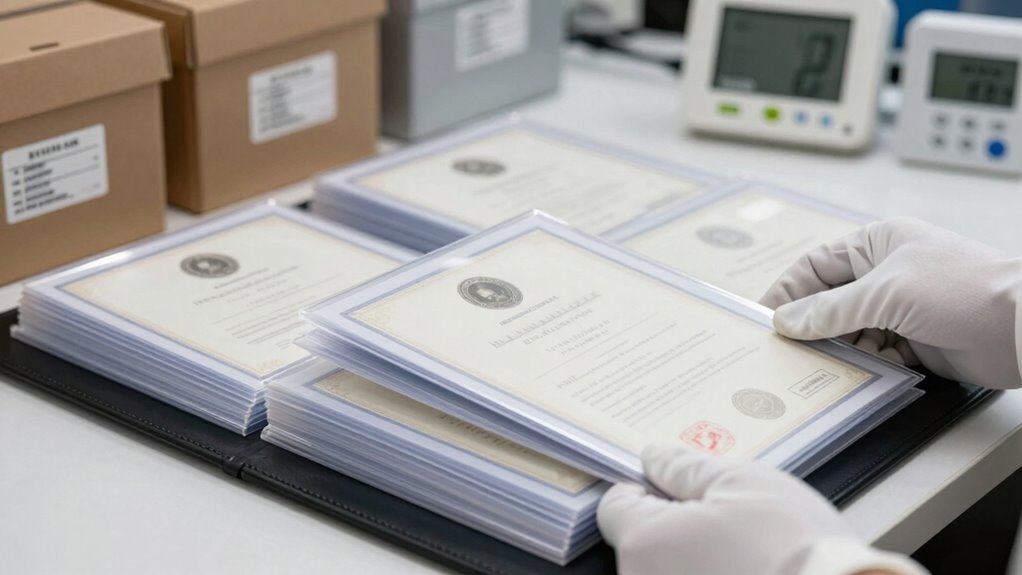
Properly storing Certificates of Authenticity is essential because these documents verify the legitimacy and value of your collectibles or valuables. Certificate authentication confirms that your item is genuine, increasing its worth and trustworthiness. Without proper storage, certificates can become damaged, lost, or illegible, which could undermine your collector’s tips for protecting your investment. Keeping these documents safe guarantees you maintain their integrity over time. Use acid-free, archival-quality materials to prevent deterioration. Additionally, consider using eco-friendly disposal methods for any damaged items in your collection, as this aligns with sustainable practices. Storing these certificates in a climate-controlled environment is also crucial for preventing degradation. Store certificates flat in a cool, dry environment, away from sunlight or moisture. Handling them carefully and avoiding unnecessary exposure preserves their condition. Proper storage not only safeguards your certificates but also upholds the authenticity and value of your collectibles for years to come. Additionally, being aware of Frühwarnzeichen für Brustkrebs can help you understand the importance of maintaining valuable documents as you protect your overall health and well-being. To further enhance your collection’s safety, consider using well-drained soil as a metaphorical reminder for finding the right environment for all valuable items, including documents. Furthermore, understanding the significance of mythology-inspired names can provide you with a deeper appreciation for the stories tied to your collectibles.
UV-resistant document framing glass
As an affiliate, we earn on qualifying purchases.
As an affiliate, we earn on qualifying purchases.
How to Handle Certificates Without Damaging Them
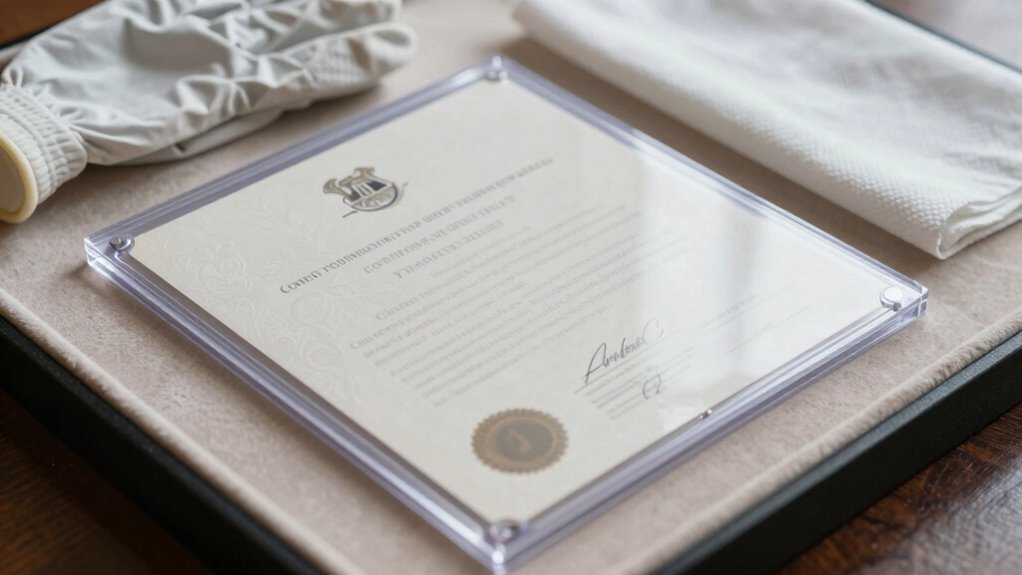
Handling Certificates of Authenticity with care is key to keeping them in pristine condition. When handling delicate documents, always wash and dry your hands thoroughly to prevent oils and dirt from causing damage. Use clean, dry gloves if necessary, especially for valuable papers. Additionally, be mindful that certain regional flavors may have a unique impact on the preservation of the paper. It’s essential to consider the impact of best home security systems when storing these documents in a secure location. Avoid bending or folding the certificate, as this can lead to creases or tears. Always support the entire document when moving it to prevent stress on fragile areas. To help you remember, here’s a quick guide:
| Step | Tip | Why |
|---|---|---|
| Handle | With clean hands or gloves | Protects against oils and dirt |
| Support | Fully support the paper | Prevents tears or creases |
| Environment | Keep away from moisture | Avoid damage from humidity |
Protecting valuable papers requires gentle handling at every step. Consider utilizing bike generators to power small devices for proper lighting when storing these documents. Additionally, understanding the importance of user privacy can help ensure that any digital files related to these certificates are also protected. It’s important to recognize that excessive ear wax can lead to complications in preserving any document if not handled properly.
As an affiliate, we earn on qualifying purchases.
Choosing the Best Materials for Storing Your Certificates

To protect your certificates of authenticity, you need to choose the right materials for storage. Look for acid-free options and archival-quality supplies to prevent deterioration over time. Additionally, UV-resistant protectors will help guard against light damage and keep your certificates in pristine condition. Incorporating eco-friendly materials can further enhance the longevity of your storage solutions. For instance, using archival-quality supplies can significantly reduce the risk of fading and yellowing caused by environmental factors. Furthermore, employing digital content formats can also help in creating backups of your certificates, ensuring their preservation in case of physical damage. Remember, maintaining a joint budget can also aid in consistently investing in quality storage solutions. Adding a touch of color to your storage materials can enhance the visual appeal while still providing soundscapes of protection against environmental harm.
Acid-Free Storage Options
Choosing the right materials is essential to guarantee your certificates stay in pristine condition over time. Acid-free storage options help prevent deterioration and preserve authenticity. When selecting materials, look for acid-free, lignin-free paper or sleeves designed for archival storage. These are ideal for protecting certificates during storage and display. Using acid-free sleeves or folders ensures your documents won’t yellow or become brittle. For certificate framing or display techniques, choose acid-free mat boards and UV-protective glass to avoid damage from light exposure. Additionally, investing in best safety glasses can protect your eyes while handling these valuable documents. Keep certificates flat and avoid adhesives that can cause damage. Remember, proper storage not only safeguards your certificates but also maintains their value and appearance over the years. Prioritize acid-free options for long-lasting preservation and excellent display. Additionally, consider how performance parts like flywheels can be similarly protected during storage to enhance their longevity.
Archival Quality Materials
Selecting archival quality materials is essential to guarantee your certificates remain in excellent condition over time. Use acid-free, lignin-free paper and sleeves designed for preservation to prevent deterioration. When framing your certificates, choose framing techniques that avoid adhesives or tapes that can damage the paper. Instead, opt for mounting methods like corner mounts or archival-quality hinges. For display cases, select ones made from inert materials that won’t off-gas or discolor your certificates. Assure the case provides a stable environment, protecting your certificates from dust, pollutants, and physical damage. Properly chosen display cases and framing techniques, combined with archival-quality materials, help maintain your certificates’ integrity and appearance for years to come.
UV-Resistant Protectors
UV radiation can substantially accelerate the fading and deterioration of your certificates, making it vital to use protectors that block harmful rays. UV-resistant protectors help preserve the integrity of your documents by providing essential UV protection and enhancing material durability. When choosing these protectors, look for materials designed specifically for long-term exposure to light. These typically include UV-coated acrylic or polyester, which prevent ultraviolet rays from penetrating and damaging the paper.
- Ensure the protector explicitly states UV protection
- Opt for materials with proven durability
- Avoid cheap plastics that yellow or become brittle over time
- Consider sealed or UV-filtering sleeves for added security. Additionally, using mount leveling kits can provide a stable display environment that reduces the risk of damage from physical factors.
Using the right UV-resistant materials keeps your certificates vibrant and intact for years to come. Additionally, understanding stain removal techniques can further enhance the care you provide for your certificates and other important documents. Incorporating smart lifestyle tips can also help you make better choices in preserving all your important papers.
As an affiliate, we earn on qualifying purchases.
How to Store Certificates in Albums or Folders

When storing certificates in albums or folders, use acid-free materials to prevent deterioration over time. Place each certificate in protective sleeves and organize them with clear labels to keep everything accessible. Proper labeling and careful arrangement help you maintain order and easily find certificates when needed. Additionally, choosing sustainable options for storage materials can further enhance the longevity of your certificates.
Choose Acid-Free Materials
To guarantee your certificates remain in pristine condition, it’s essential to use acid-free materials when storing them in albums or folders. Acid-free paper quality ensures that the documents won’t degrade or discolor over time, especially during long-term storage. Choosing the right materials helps preserve the certificates’ integrity and appearance. When selecting storage products, look for items labeled as acid-free or pH-neutral.
Key points include:
- Use acid-free folders and envelopes to prevent deterioration.
- Confirm the paper quality is archival-grade for long-term preservation.
- Avoid materials with lignin or acidic dyes that can damage paper over time.
- Consider durability for the expected storage duration, ensuring materials won’t weaken or break down.
Additionally, understanding the importance of gelato preservation techniques can also inspire better practices in document storage. This proactive approach safeguards your certificates for years to come.
Use Protective Sleeves
Are you aware of how protective sleeves can enhance the preservation of your certificates? Using protective sleeves is an effective way to prevent damage from handling, moisture, and dirt. These sleeves are typically made from clear, acid-free plastic, allowing you to view your certificates without exposing them to harmful elements. When storing, place each certificate in a protective sleeve before inserting it into albums or folders. This extra layer safeguards against tears, smudges, and bending. For added protection, consider using storage containers designed for archival materials, which can keep your certificates safe from environmental factors. Protective sleeves make it easier to handle and display your certificates while maintaining their integrity over time, contributing to the broader effort of cultural preservation in art.
Label and Organize Properly
After placing your certificates in protective sleeves, the next step is to label and organize them properly within albums or folders. Proper labeling helps you quickly identify each certificate without unnecessary handling, reducing the risk of damage. Use clear, consistent labels with relevant details like the certificate type, date, or origin. When storing, consider certificate framing or display techniques for showcasing important pieces, but keep the original certificates stored safely. Arrange certificates in chronological order or by category for easy access. Keep albums or folders in a cool, dry place away from light. Remember, organization saves time and preserves the integrity of your certificates. Maintain a catalog or inventory to track your collection efficiently.
Using Archival Enclosures to Protect Your Certificates
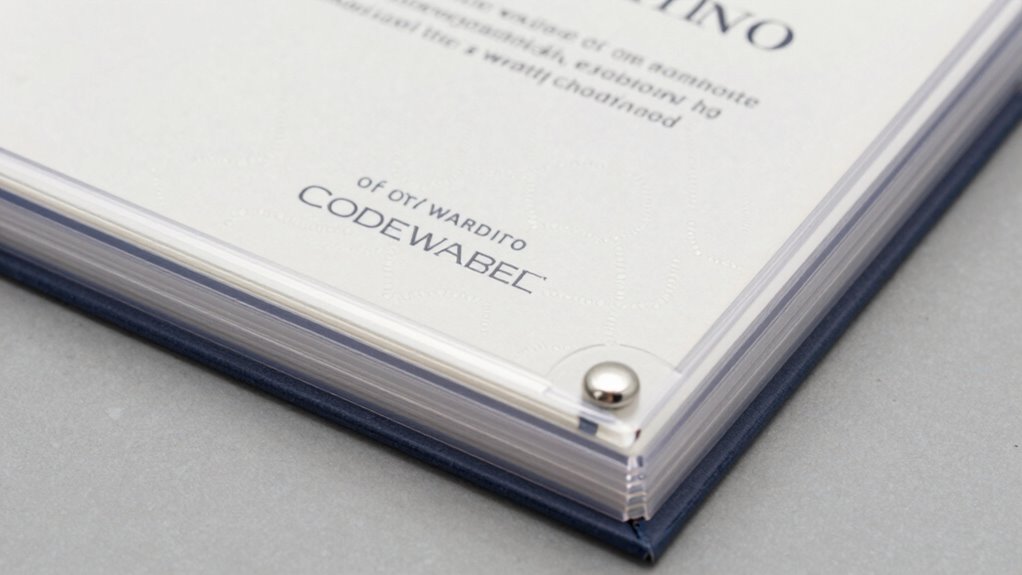
Using archival enclosures is one of the most effective ways to protect your certificates of authenticity. These enclosures shield your documents from dust, pollutants, and handling damage. Choose acid-free, pH-neutral sleeves or folders designed specifically for archival storage. When displaying your certificates, incorporate proper framing techniques that avoid direct contact with glass, which can cause damage over time. Use UV-filtering glass or acrylic to minimize light exposure, especially from display lighting. This prevents fading and deterioration. Keeping your certificates stored in appropriate conditions can enhance their longevity. Keep the certificates flat and avoid folding or rolling them, which archival enclosures help facilitate. By selecting high-quality enclosures and thoughtful display methods, you guarantee your certificates remain pristine and protected for years to come. Additionally, managing weight and diabetes through proper nutrition can also enhance the longevity of your documents by reducing the risk of exposure to harmful environmental factors.
Backing Up Certificates Digitally for Safety
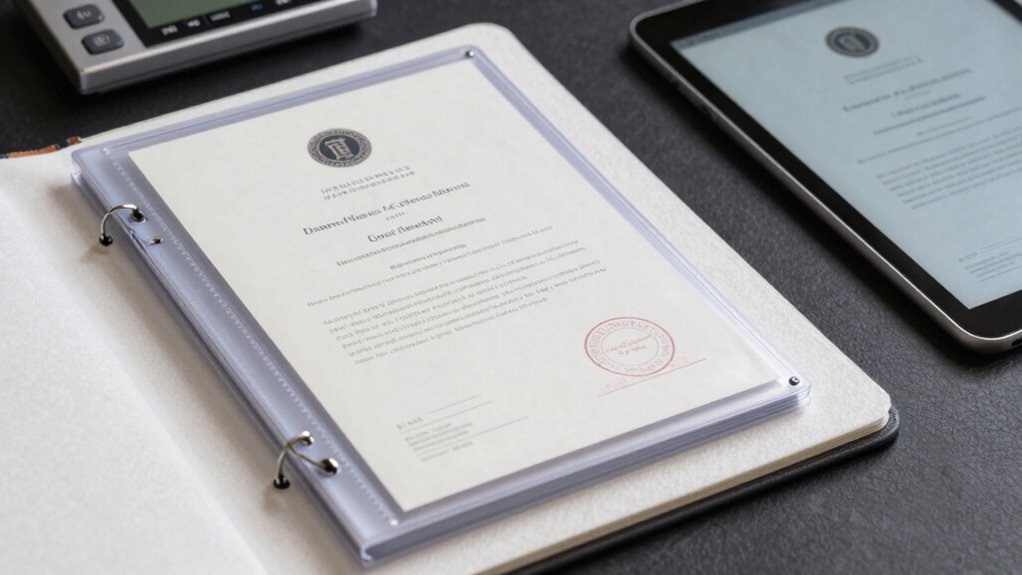
Backing up your certificates digitally is a crucial step in safeguarding your valuable documents. Digitization benefits include easy access, enhanced security, and protection against physical damage. Using digital backup methods, like scanning or photographing your certificates, guarantees you have copies stored safely off-site. When choosing your method, consider these options:
- Cloud storage services for automatic backups
- External hard drives for offline security
- Secure USB drives for portability
- Encrypted digital folders for added protection
Organizing and Labeling Certificates for Easy Access
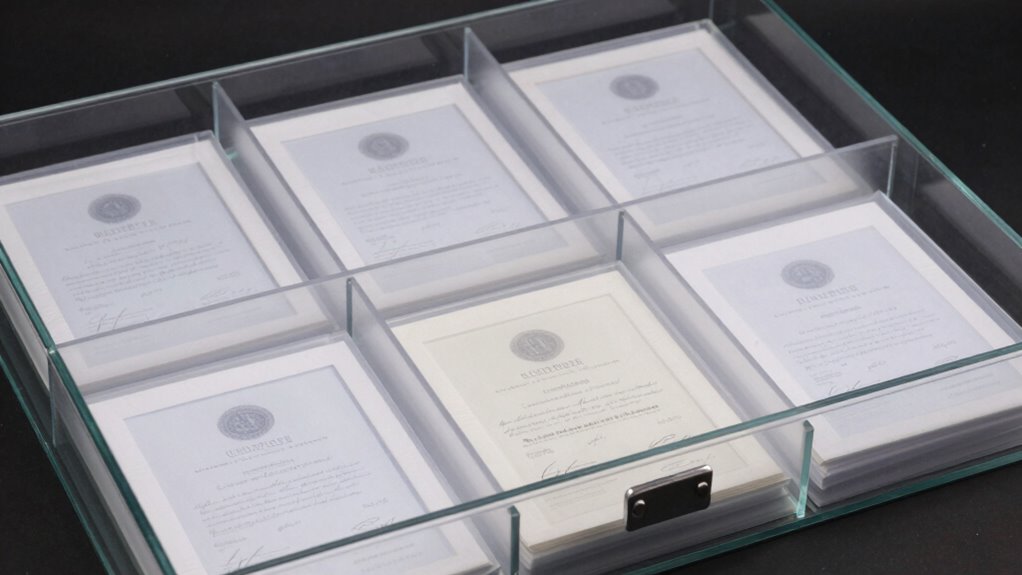
To guarantee you can quickly find the certificates you need, it’s essential to organize and label them systematically. Use clear, consistent labels that include details like the item’s description, date, and certificate authentication status. Store certificates in labeled folders or binders designed for archival preservation techniques to prevent damage. Consider using acid-free sleeves or folders to protect against deterioration while maintaining accessibility. Keep a master index—either digital or physical—that references each certificate’s location and details. Regularly update your labeling system as new certificates arrive or existing ones change. Proper organization not only streamlines your access but also helps preserve the certificates’ integrity over time, ensuring they remain authentic and legible for future verification.
Common Mistakes to Avoid When Storing Certificates
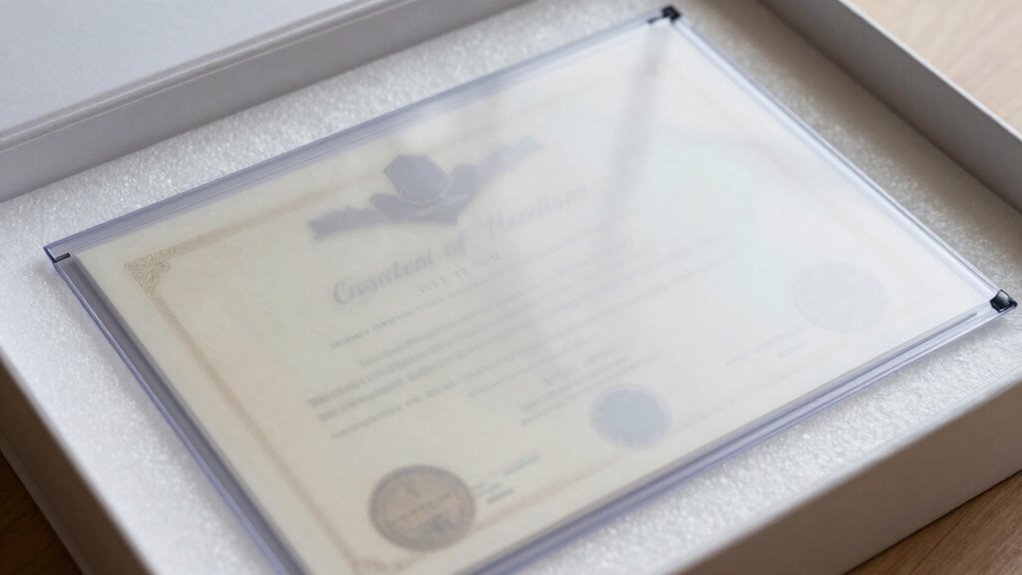
Even with well-organized certificates, mistakes in storage can undermine their preservation and accessibility. One common error is exposing certificates to environmental hazards like moisture, light, or extreme temperatures, which can cause fading or deterioration. Choosing the wrong storage container types can also lead to damage; avoid materials that emit acids or chemicals that harm paper. Additionally, stacking certificates without proper protection can cause creases or tears. Failing to label and document storage locations makes retrieval difficult, especially when managing many certificates. To prevent these issues, use acid-free folders or sleeves, store certificates in a cool, dry place, and keep them flat and separated. Regularly check storage conditions to guarantee long-term preservation and easy access.
Maintaining Climate Control and Reviewing Storage Over Time
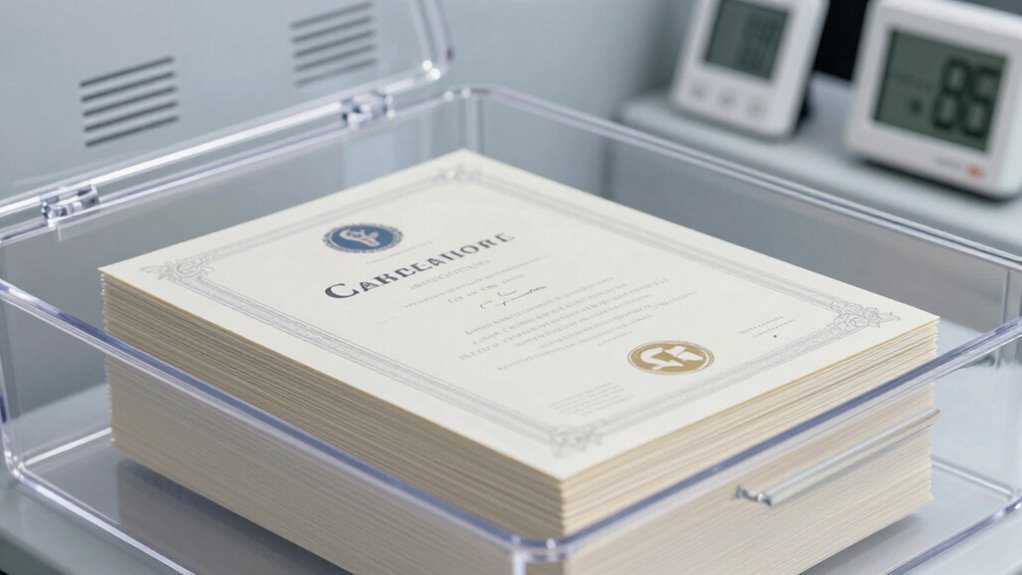
Maintaining proper climate control is essential for preserving your certificates over time. You should regularly monitor the environment with climate monitoring tools to guarantee stable temperature and humidity levels. Fluctuations can cause deterioration or warping, so consistent conditions are critical. Additionally, implementing storage rotation is indispensable; periodically reviewing and repositioning your certificates prevents long-term damage from compression or exposure to light. Keep the storage area clean, dry, and free from pollutants that could accelerate degradation. Regularly inspecting your certificates helps catch any potential issues early, allowing you to address them promptly. By actively managing climate conditions and performing routine storage reviews, you’ll confirm your certificates stay in pristine condition for years to come.
Frequently Asked Questions
Can Sunlight Damage Certificates Over Time?
Yes, sunlight exposure can damage certificates over time. Direct sunlight causes paper discoloration and weakens the material, making it more prone to tears and deterioration. To safeguard your certificates, keep them in a shaded, cool spot away from direct sunlight. Using UV-protective covers or frames can also help prevent damage. Proper storage ensures your certificates stay vibrant and intact for years to come.
How Often Should I Inspect Stored Certificates?
Think of your certificates as delicate plants needing gentle care. You should inspect them every 6 to 12 months to catch any signs of deterioration early. Use proper preservation techniques, like acid-free storage containers and avoiding sunlight, to keep them safe. Regular inspections help guarantee your certificates stay pristine, allowing you to spot issues before they become damage. Consistent care preserves their value and integrity over time.
Are There Specific Adhesives to Avoid on Certificates?
You should avoid adhesives that leave residue or cause paper discoloration, like standard glue or tape. Instead, opt for acid-free, archival-quality adhesives designed for delicate documents. These prevent damage and keep your certificates looking pristine over time. Always test a small area first and use minimal adhesive to avoid residue buildup. Properly selecting the right adhesive ensures your certificates stay intact without risking damage or discoloration.
What Are the Signs of Archival Material Deterioration?
Signs of archival material deterioration include fading ink, discoloration, brittleness, and warping. You should monitor your certificates regularly, paying attention to changes in color or texture. Using proper conservation techniques and maintaining an ideal storage environment—cool, dry, and dark—can slow deterioration. Avoid exposure to light, humidity, and pollutants, which accelerate damage. Proper storage helps preserve your certificates’ integrity and keeps them in good condition over time.
How Do I Safely Transport Certificates for Moving or Exhibitions?
When transporting certificates for moving or exhibitions, you should use protective measures like certificate framing with acid-free materials and rigid backing to prevent damage. Keep the certificates in a controlled environment with proper storage humidity to avoid warping or deterioration. Place them in a sturdy, waterproof container, and handle them carefully with gloves. This guarantees they stay safe and intact during transit, maintaining their integrity for display or safekeeping.
Conclusion
Properly storing your certificates of authenticity is essential to preserve their value and condition. Did you know that over 70% of damaged documents result from improper storage? By handling them carefully, choosing the right materials, and maintaining a stable environment, you guarantee your certificates stay pristine for years to come. Regularly review and organize your collection, and you’ll protect your investment while making it easy to access whenever needed. Your careful efforts will pay off in the long run.
Fall Picks
fall essentials
As an affiliate, we earn on qualifying purchases.