Humidifiers help protect your collectibles by maintaining optimal humidity levels, but they also carry hidden mold risks if not managed properly. Stagnant water, poor maintenance, and using the wrong type of device can promote mold growth inside the unit and on your items. To prevent this, choose models with antimicrobial filters, use distilled water, and clean regularly. Staying vigilant about these risks is vital—if you keep going, you’ll discover essential tips to keep your collection safe and mold-free.
Listen free for 30 days with Audible
Thousands of audiobooks and originals — cancel anytime.
As an affiliate, we earn on qualifying purchases.
Key Takeaways
- Proper humidity control (40-50%) and regular monitoring prevent mold growth on collectibles and inside humidifier units.
- Using distilled or demineralized water reduces mineral buildup that fosters mold development.
- Choosing humidifiers with antimicrobial filters and easy-to-clean parts minimizes mold risk.
- Regular cleaning, disinfecting, and thorough drying of humidifiers inhibit mold spores from thriving.
- Proper placement away from windows and vents, combined with good airflow, helps prevent dust and mold spores from settling.
humidifier with antimicrobial filter
As an affiliate, we earn on qualifying purchases.
As an affiliate, we earn on qualifying purchases.
How Humidifiers Protect and Risk Your Collectibles
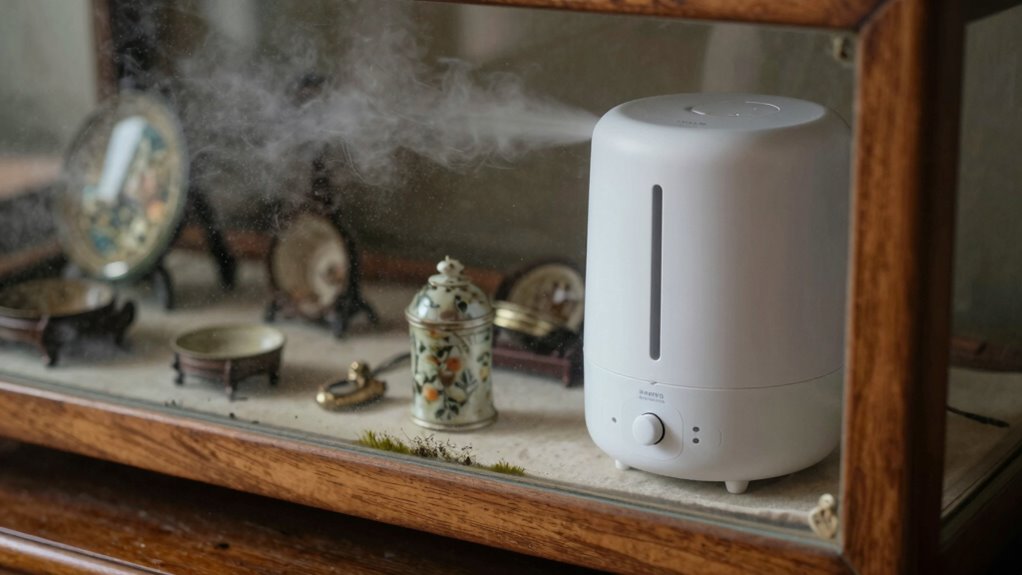
Have you ever wondered how maintaining proper humidity levels can safeguard your collectibles? Humidity sensors are essential tools here; they help you monitor moisture levels accurately, preventing conditions that lead to deterioration. When your humidity stays within ideal ranges, your collectibles remain stable and less prone to damage. However, there’s a risk if your humidifier isn’t equipped with proper air filtration. Without it, dust, mold spores, and airborne pollutants can settle on your items, causing discoloration or mold growth. Using high-quality air filtration systems in conjunction with humidity sensors ensures clean, controlled air quality. This balance protects your collection from both excessive moisture and airborne threats, helping you preserve its value and appearance over time. Additionally, maintaining optimal image quality can enhance the visual experience of displaying your collectibles. Understanding the impact of regional flavors from coffee and tea culture can also add a unique element to your collection’s context and presentation. Furthermore, using performance enhancements in your storage environment can contribute to better preservation practices. Incorporating innovative digital tools can further optimize your monitoring of humidity and air quality, ensuring long-term protection for your items. Regular maintenance of your humidifier, including advanced filtration systems, is crucial to prevent mold growth and ensure optimal performance.
digital hygrometer and thermometer
As an affiliate, we earn on qualifying purchases.
As an affiliate, we earn on qualifying purchases.
Signs of Mold Growth in Your Humidifier and Collection Space
Sure! Here’s the revised content with the requested adjustments:
—
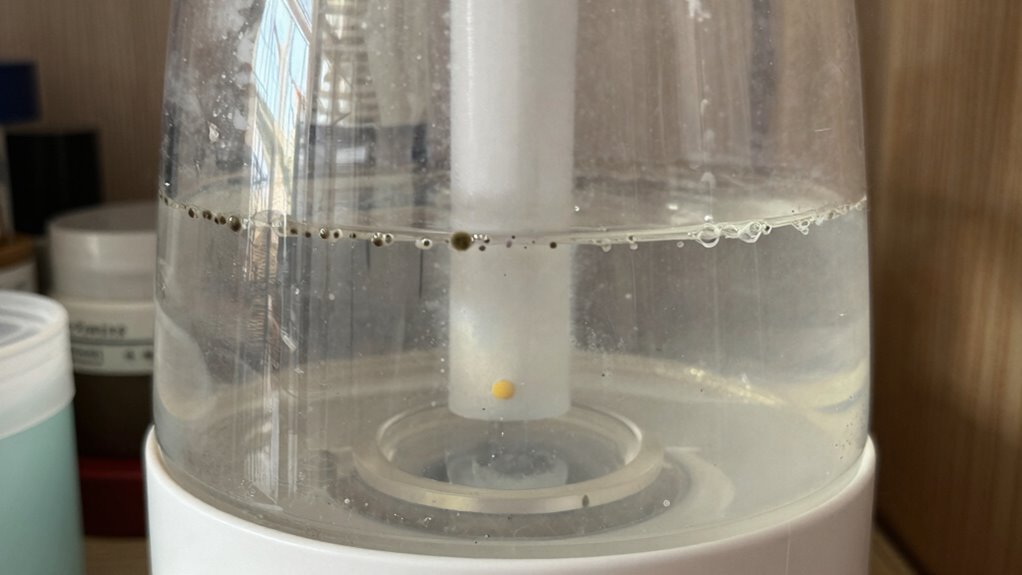
Even with properly maintained humidity levels, mold can still pose a threat if you’re not vigilant for signs of growth. Regular humidifier maintenance is essential for mold prevention, as engine upgrades can enhance performance in other areas. Look for visible mold spots or discoloration on your humidifier’s components, especially near the water reservoir or filters. A musty odor is another warning sign, indicating mold lurking somewhere in your system. In your collection space, check for mold on surfaces or items that have been exposed to excess moisture. Any signs of slimy or fuzzy growth should be addressed immediately. Maintaining optimal humidity levels can significantly reduce the chances of mold growth in your environment. Additionally, ensuring that your collection area is well-ventilated can help prevent moisture buildup that encourages mold growth. By staying alert to these indicators, you can catch mold early, ensuring your humidifier remains clean and safe for your collectibles. Consistent maintenance helps prevent mold from taking hold in the first place. Additionally, understanding humidity control techniques can further enhance your efforts in maintaining a mold-free environment. Implementing proactive monitoring strategies can help you stay ahead of potential mold issues.
—
Let me know if you need any more changes!
As an affiliate, we earn on qualifying purchases.
Choosing a Humidifier That Minimizes Mold Risks
Choosing a Humidifier That Minimizes Mold Risks
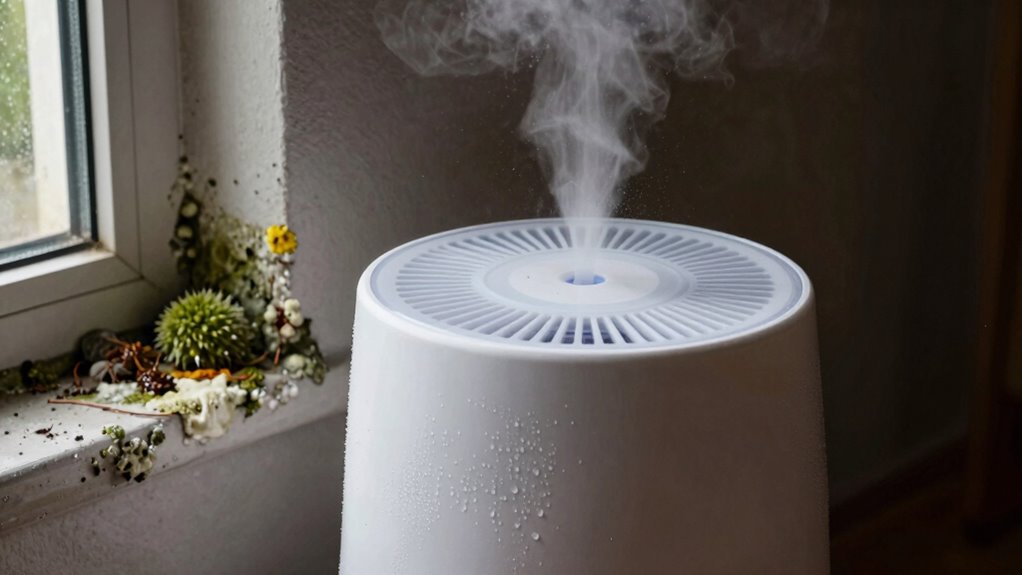
Choosing a humidifier that minimizes mold risks starts with selecting the right type and features. Opt for models with antimicrobial or antibacterial filters, which help improve air quality and prevent mold growth. Evaporative humidifiers are generally better for mold prevention because they use a wick filter that dries out mold spores. Additionally, abstract art often challenges traditional views, much like how innovative humidifiers challenge conventional moisture management. Avoid ultrasonic models with stagnant water reservoirs, as they can harbor mold if not properly maintained. Look for units with easy-to-clean parts and adjustable humidity controls to keep moisture levels balanced—ideally between 40-60%. Proper air quality management is essential for mold prevention; a well-chosen humidifier supports this by reducing excess moisture that fosters mold development. Furthermore, understanding curiosity as a success tool can enhance your knowledge about innovative solutions for maintaining optimal conditions. Additionally, understanding humidity control principles can further enhance your efforts in maintaining a healthy, mold-free environment for your collection. Incorporating accessibility tips for kids can also be beneficial in selecting user-friendly humidifiers that anyone can operate safely and effectively. Investing in quality humidifiers can significantly improve your collection’s preservation and overall air quality.
As an affiliate, we earn on qualifying purchases.
How to Keep Your Humidifier Clean and Mold-Free

To keep your humidifier clean and mold-free, you need to clean it regularly and avoid neglect. Using proper water types, like distilled or demineralized water, helps prevent mineral buildup and mold growth. Creating seating areas for social gatherings can help you remember to maintain a clean environment around your humidifier. Additionally, incorporating essential oils known for their antimicrobial properties can further enhance the cleanliness of your space. Regularly checking humidity levels with hygrometer readings is essential to ensure your device operates effectively and safely. Staying consistent with these practices guarantees your device remains safe and effective. Additionally, maintaining proper charger settings can contribute to the overall health of your devices that rely on batteries for operation. Consider utilizing a water filtration system to ensure the quality of the water you use in your humidifier.
Regularly Clean Your Device
Regularly cleaning your humidifier is essential to prevent mold and bacteria buildup that can affect both your health and the device’s performance. Consistent humidifier maintenance helps guarantee good indoor air quality by reducing mold spores and dust mites that thrive in dirty water reservoirs. To keep your device in top shape, empty and rinse the tank daily, using a soft brush to remove any deposits. Disinfect the interior weekly with a mixture of white vinegar and water to eliminate mold spores. Additionally, incorporating smart home automation can further enhance your efforts by monitoring humidity levels and alerting you to potential issues. Always dry all parts thoroughly before reassembling to prevent moisture that encourages mold growth. Regular cleaning not only prolongs your humidifier’s lifespan but also ensures it operates efficiently, providing safe, clean moisture to improve indoor air quality. Furthermore, understanding modern family dynamics can contribute to a healthier living environment by reducing allergens in the home. Additionally, meal planning can help create a healthier living environment by reducing allergens in the home. Moreover, using enterprise USB backups for your data can protect your important files from unexpected loss, just as regular maintenance protects your humidifier from mold. Proper maintenance is akin to investing in top car protection, ensuring that your humidifier remains a reliable source of clean air.
Use Proper Water Types
Are you aware that the type of water you use can considerably impact how easy it is to keep your humidifier clean and mold-free? Using distilled or demineralized water reduces water mineralization, preventing mineral buildup and mold growth. Tap water with high mineral content encourages deposits that foster mold. Consider your humidifier placement too; avoid placing it near windows or vents where dust and mold spores can settle.
| Water Type | Pros | Cons |
|---|---|---|
| Distilled/Demineralized | Minimal mineral deposits, easy cleaning | Slightly more expensive |
| Tap Water | Readily available, inexpensive | Higher mineralization risk |
| Filtered Water | Reduced minerals, cost-effective | May still contain some minerals |
Controlling Humidity Levels Safely for Your Collection
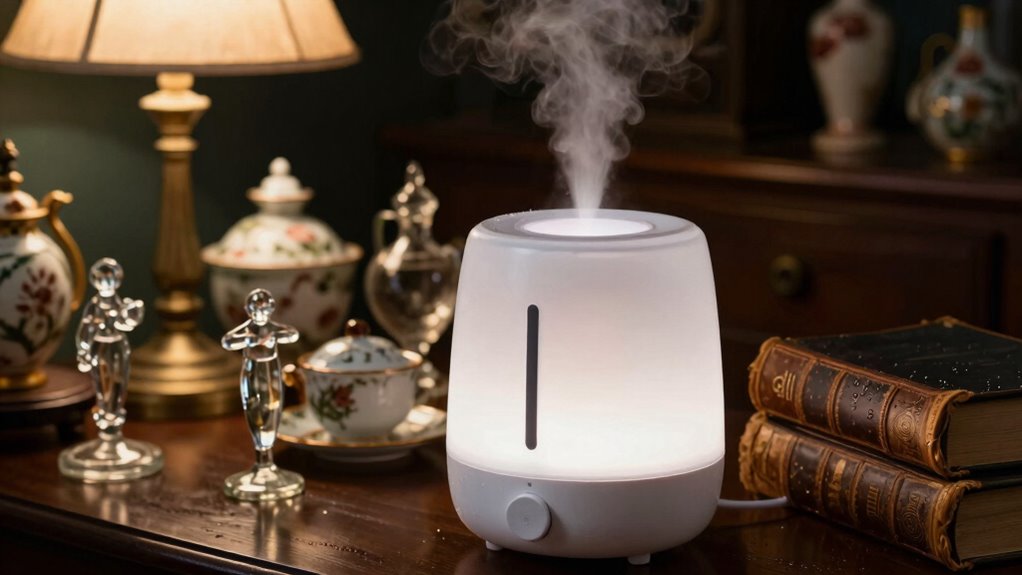
To keep your collection safe, you need to monitor humidity levels regularly and adjust as needed. Use reliable, safe humidification devices to prevent over- or under-humidifying. Also, take steps to prevent mold growth by maintaining proper airflow and cleaning your equipment consistently.
Monitoring Humidity Regularly
Keeping a close eye on humidity levels is vital to safeguard your collection from damage caused by fluctuations. Regularly monitoring air quality helps you catch changes in humidity before they cause harm. Use a reliable hygrometer to track humidity consistently, ideally daily or weekly. Sharp fluctuations can lead to mold growth or cracking, so maintaining steady levels is essential. By monitoring humidity, you can identify when adjustments are needed, preventing harmful swings. Remember, stable air quality guarantees your collection remains in peak condition. Set alerts if your device supports them, and keep detailed records of readings. This proactive approach allows you to respond quickly to any unexpected changes, preserving your collection’s integrity and reducing the risk of mold or other damage.
Using Safe Humidification Devices
Using safe humidification devices is essential to prevent over- or under-humidifying your collection. Many collector misconceptions stem from humidifier myths that suggest more is better, but excess humidity can cause damage. Choose devices specifically designed for delicate items, such as ultrasonic or evaporative humidifiers, which regulate moisture more reliably. Avoid cheap or poorly maintained units, as they can introduce mold spores or bacteria. Always follow manufacturer instructions and monitor humidity levels closely, ensuring they stay within the ideal range for your collection. Relying on the right equipment helps you maintain a stable environment, reducing risks associated with improper humidification. By understanding these principles, you’ll avoid common humidifier myths and protect your collection effectively.
Preventing Mold Growth
Since mold thrives in environments with excessive humidity, controlling moisture levels is vital for protecting your collection. To prevent mold growth, focus on consistent mold prevention techniques, such as monitoring humidity regularly with a reliable hygrometer. Keep humidity levels between 40-50%, avoiding fluctuations that encourage mold. Proper humidifier maintenance is essential; clean your device regularly to prevent mold spores from spreading. Use distilled water to reduce mineral buildup and mold growth inside the humidifier. Ensure good air circulation around your collection, and avoid over-humidifying rooms. By maintaining ideal conditions and staying vigilant with humidifier upkeep, you can safeguard your collection from mold damage while enjoying the benefits of proper humidity control.
Detecting and Removing Mold From Your Humidifier and Items
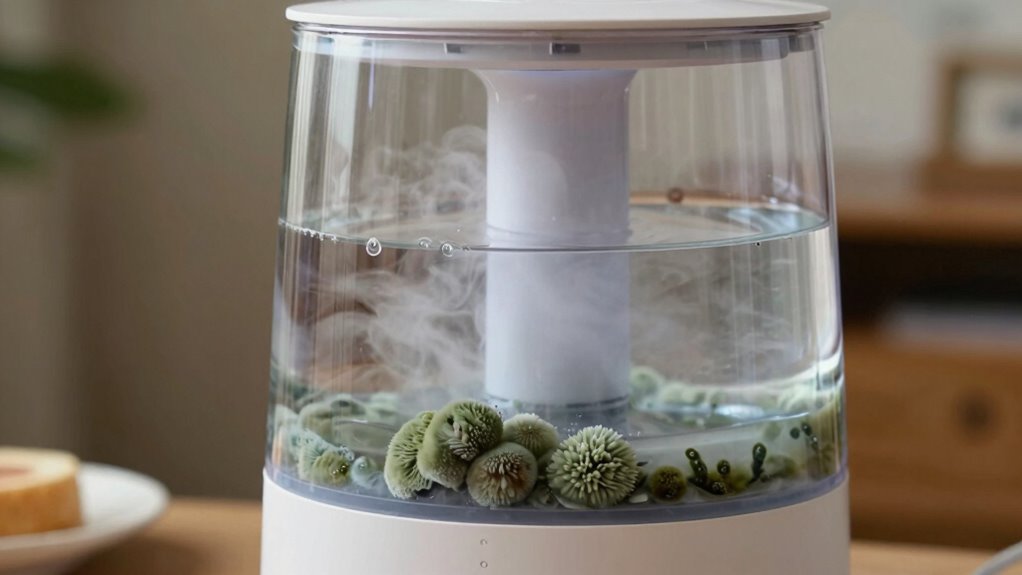
How can you tell if mold has taken hold in your humidifier or on your belongings? Look for visible black, green, or gray spots, musty odors, or slimy textures. To effectively detect mold, check areas prone to humidity fluctuation, like the water tank and filters. Using mold resistant materials can help prevent growth, but regular inspection is key. If you find mold, clean the humidifier thoroughly with a mixture of vinegar and water or a mild disinfectant, paying close attention to crevices and filters. For items that can’t be sanitized easily, consider replacing them. Always dry everything completely after cleaning to inhibit mold growth. Regular maintenance and monitoring are essential for keeping your humidifier and belongings mold-free.
Common Mistakes That Lead to Mold Growth

Are you unintentionally creating conditions that promote mold growth in your humidifier? Using non-mold resistant materials can make your setup more vulnerable. Cheap plastics or porous surfaces trap moisture, creating the perfect environment for mold. Overlooking proper humidity control techniques is another mistake. If humidity levels stay too high, mold spores thrive, so aim for ideal levels—around 40-50%. Failing to clean your humidifier regularly also invites mold buildup. Keep your device dry when not in use and avoid leaving standing water for extended periods. Additionally, neglecting to monitor humidity levels or using ineffective filters can lead to excess moisture. By choosing mold-resistant materials and practicing proper humidity control techniques, you reduce the risk of mold growth and protect your collection.
What to Do If You Find Mold in Your Humidifier or Collection
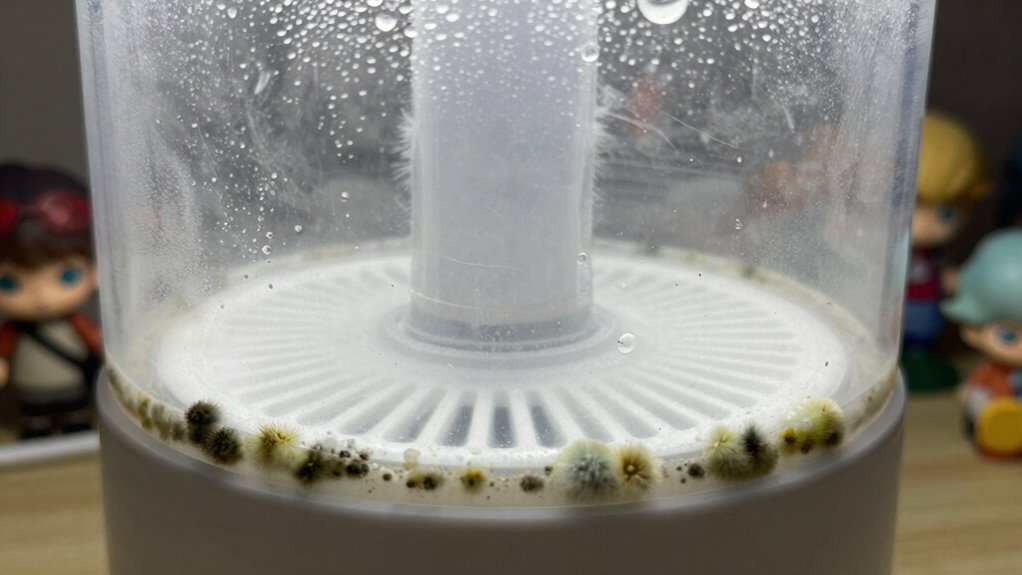
Discovering mold in your humidifier or collection can be alarming, but addressing it promptly is key to preventing further damage. First, isolate the affected items to prevent mold spores from spreading. Then, thoroughly clean and disinfect the humidifier with a mixture of vinegar and water, ensuring you scrub all surfaces. Consider replacing any filters or parts showing mold growth. To prevent future mold issues, review your humidifier maintenance routine and focus on mold prevention strategies.
- Discard heavily contaminated components
- Use a brush to scrub all surfaces
- Dry everything completely before reassembling
- Regularly clean and inspect to maintain mold prevention
Frequently Asked Questions
Can Certain Collectibles Be More Vulnerable to Mold From Humidifiers?
Yes, certain collectibles are more vulnerable to mold from humidifiers, especially those made of porous or organic materials. You should use mold-resistant materials where possible and implement humidity control techniques like dehumidifiers or regular ventilation. Keep humidity levels between 30-50%, clean your humidifier often, and monitor your collection closely. These steps help prevent mold growth and protect your valuables from potential damage caused by excess moisture.
Are There Specific Humidifier Models That Reduce Mold Risk?
Yes, some humidifier models focus on mist control and easier device maintenance, helping you reduce mold risk. Look for units with antibacterial filters, automatic shut-off, and adjustable humidity settings. Regularly cleaning and maintaining your device is essential, regardless of the model. By choosing a humidifier designed for easy mist control and staying diligent with maintenance, you can enjoy proper humidity without worrying about mold.
How Does Room Ventilation Affect Mold Growth in Humidified Spaces?
Proper room ventilation greatly reduces mold growth in humidified spaces by improving air circulation and moisture control. When you guarantee good airflow, excess moisture doesn’t linger, making it harder for mold to thrive. Keep vents open or use exhaust fans to help remove humid air. Regularly airing out the room helps maintain a balanced humidity level, protecting your collectibles and preventing mold buildup caused by stagnant, moist conditions.
What Are the Long-Term Health Effects of Mold Exposure Around Collectibles?
You might develop a mold allergy, experience respiratory issues, or face increased asthma symptoms over time. Mold spores around your collectibles can cause persistent coughing, throat irritation, and sinus problems, especially if you’re sensitive. Long-term exposure can weaken your immune system and worsen existing health conditions. Protect your health by controlling humidity, ensuring proper ventilation, and regularly cleaning your collectibles to prevent mold growth.
Can Natural or Ultrasonic Humidifiers Be Safer for Mold Prevention?
Natural humidifiers, like those using steam or water features, often pose less mold risk compared to ultrasonic technology, which can harbor bacteria if not cleaned regularly. Ultrasonic humidifiers produce fine mist that disperses quickly, but if not maintained properly, they can promote mold growth. To stay safer, choose natural humidifiers and clean ultrasonic units frequently, ensuring your collectibles stay protected without increasing mold risks.
Conclusion
Think of your collection as a delicate garden, thriving only when nurtured with care. By maintaining proper humidity, staying vigilant for mold, and keeping your humidifier spotless, you’re tending to your treasures with the precision of a skilled gardener. Neglect these details, and mold can sneak in like weeds, choking the life out of your collection. Stay vigilant, stay informed, and let your passion flourish in a safe, mold-free haven.
Flea & tick season Picks
flea and tick prevention
As an affiliate, we earn on qualifying purchases.