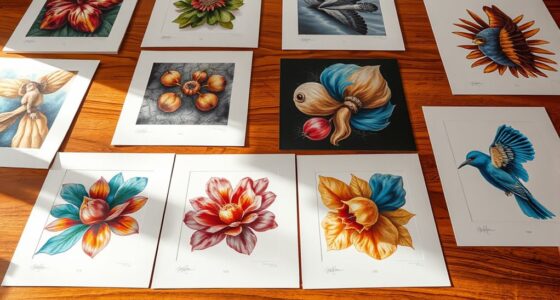

Balancing passion and profit in art investment involves exploring emerging markets, where local artists are gaining recognition at lower prices, and harnessing digital platforms like NFTs for unique assets. By carefully evaluating trends and understanding local cultures, you can diversify your portfolio and increase chances of profit. Remember, combining emotional resonance with strategic choices can make your collection both meaningful and financially rewarding. Keep exploring to discover how to navigate these exciting opportunities effectively.

Get art and craft supplies delivered free — and shop member deals
- Fast, free delivery on millions of items
- Access to Prime Big Deal Days deals on October 6–7
- Prime Video, Amazon Music and more included
Key Takeaways
- Conduct thorough research on emerging markets and local artists to identify promising investment opportunities aligned with personal passion.
- Balance emotional connection with financial analysis to ensure artworks have potential for appreciation and long-term value.
- Diversify collections across physical and digital art to mitigate risks and capitalize on technological advancements.
- Stay informed about market trends, authenticity verification, and legal frameworks, especially in digital art and NFTs.
- Define clear investment goals, combining personal enjoyment with strategic planning for sustainable profitability.
Have you ever considered that art can be more than just a source of beauty or cultural expression? In recent years, the art world has evolved, opening new doors for investors seeking both passion and profit. One of the most exciting developments is the rise of emerging markets, which are transforming the landscape of art investment. Countries like India, Brazil, and Southeast Asian nations are experiencing a surge in local artists gaining international recognition. These markets often offer opportunities to buy promising works at relatively lower prices before they appreciate markedly. Investing here can be rewarding, but it requires a keen eye for talent and an understanding of local trends. Emerging markets also introduce a level of diversification to your portfolio, reducing reliance on traditional assets and providing exposure to dynamic economies.
Emerging markets offer unique art investment opportunities, lower prices, and portfolio diversification for passionate collectors and investors alike.
Alongside traditional art forms, digital art has emerged as a game-changer. Digital platforms make art more accessible and allow artists to reach global audiences instantly. For investors, this means new avenues to acquire innovative works, often at a fraction of the cost of physical pieces. Digital art also includes non-fungible tokens (NFTs), which have gained immense popularity as a way to own unique digital assets securely. While NFTs can be highly volatile, they present an intriguing blend of technology and creativity, offering potential for substantial returns if you approach them wisely. Digital art’s transparency and ease of transfer make it appealing for both collectors and investors, especially in markets where physical transportation and storage are complicated or costly. Additionally, understanding art valuation methods can help you make more informed investment decisions.
However, balancing your passion with profit in the art world demands due diligence. It’s essential to research emerging markets thoroughly, understanding the cultural and economic factors that influence art valuation. In digital art, staying updated on technological trends and the reputation of creators helps you avoid pitfalls. You should also consider the longevity and authenticity of digital works, which often depend on blockchain technology to verify ownership. Diversifying your investments across physical art, digital assets, and emerging markets can mitigate risks and enhance potential gains. Remember, investing in art isn’t just about immediate profit; it’s about cultivating a collection that resonates with you emotionally and culturally while also appreciating in value over time.
Ultimately, art as an investment requires a blend of passion, knowledge, and strategic planning. Whether exploring emerging markets or diving into digital art, your approach should be informed, deliberate, and aligned with your long-term goals. When done thoughtfully, art can be a fulfilling pursuit that combines your love for creativity with the potential for financial growth.
art investment books for beginners
As an affiliate, we earn on qualifying purchases.
As an affiliate, we earn on qualifying purchases.
Frequently Asked Questions
How Do Art Market Trends Influence Investment Decisions?
You should watch art market trends because auction dynamics and market speculation greatly influence your investment decisions. When auctions become competitive, prices often rise, signaling potential profit opportunities. Conversely, high speculation can inflate values, risking future declines. By staying informed about these trends, you can better time your purchases and sales, balancing your passion for art with strategic financial moves, ensuring your investments align with current market conditions.
What Are the Risks of Investing in Emerging Artists?
Like a fragile seed, investing in emerging artists carries risks amid market volatility. You might find their work skyrockets in value or withers before gaining traction. The uncertainty of an emerging artist’s future means your investment could blossom or falter unexpectedly. Staying informed and diversifying your collection helps you navigate this unpredictable terrain, balancing the thrill of supporting new talent with the caution needed to protect your financial growth.
How Can I Evaluate the Authenticity of a Piece?
To evaluate the authenticity of a piece, you should start with provenance verification—review all documentation and history of ownership to verify legitimacy. Additionally, use forgery detection techniques like expert analysis, ultraviolet light examination, and material tests. Trust reputable galleries or appraisers, and if in doubt, seek a professional opinion. Combining these methods helps confirm the artwork’s authenticity, giving you confidence in your investment or collection.
What Role Do Art Advisors Play in Investment?
Think of art advisors as your compass in a sea of colors and canvases. They guide you through art valuation, helping you spot gems with strong artist reputation and potential for growth. By interpreting market trends and understanding an artist’s significance, they steer you clear of stormy waters and toward treasures that align with your passion and profit goals. With their expertise, you navigate the art world confidently and wisely.
How Does Art Diversification Compare to Traditional Portfolios?
You’ll find that art diversification adds a unique layer to your portfolio, reducing overall risk compared to traditional investments. An art collection offers tangible value and aesthetic enjoyment, unlike stocks or bonds. By diversifying across different artists and styles, you enhance your portfolio’s resilience. This approach allows you to balance passion with profit, making your investments more dynamic and personalized, while potentially benefiting from art’s unpredictable market performance.
As an affiliate, we earn on qualifying purchases.
Conclusion
While passion fuels your love for art, profit drives your desire to invest. Balancing these might seem like walking a tightrope, but it’s essential for long-term success. You can’t ignore the thrill of discovering a masterpiece, yet you also can’t overlook the smart moves that turn your collection into a valuable asset. Ultimately, blending emotion with strategy guarantees you’re not just an art lover, but a savvy investor—finding beauty and profit in every piece.
art valuation tools for collectors
As an affiliate, we earn on qualifying purchases.
As an affiliate, we earn on qualifying purchases.
As an affiliate, we earn on qualifying purchases.
Halloween Picks
halloween
As an affiliate, we earn on qualifying purchases.