Participating in art fairs can boost your visibility, connect you with collectors and critics, and enhance your credibility, which can lead to more sales and opportunities. While costs like booth fees, travel, and shipping can add up, many find the benefits outweigh the expenses. Increased exposure and networking often lead to future collaborations and growth. If you’re considering making this strategic move, you’ll discover more about maximizing your impact and steering through the costs effectively.
Key Takeaways
- Participation increases visibility, sales, and connections with industry professionals, boosting an artist’s reputation and career prospects.
- Costs include booth fees, travel, shipping, and marketing, but benefits often outweigh expenses through enhanced exposure.
- Exhibiting at reputable fairs validates credibility and can lead to future gallery representation and opportunities.
- Art fairs provide direct feedback, market insights, and networking opportunities with collectors, critics, and peers.
- A compelling booth presentation maximizes impact, attracts media attention, and encourages word-of-mouth promotion within the art community.
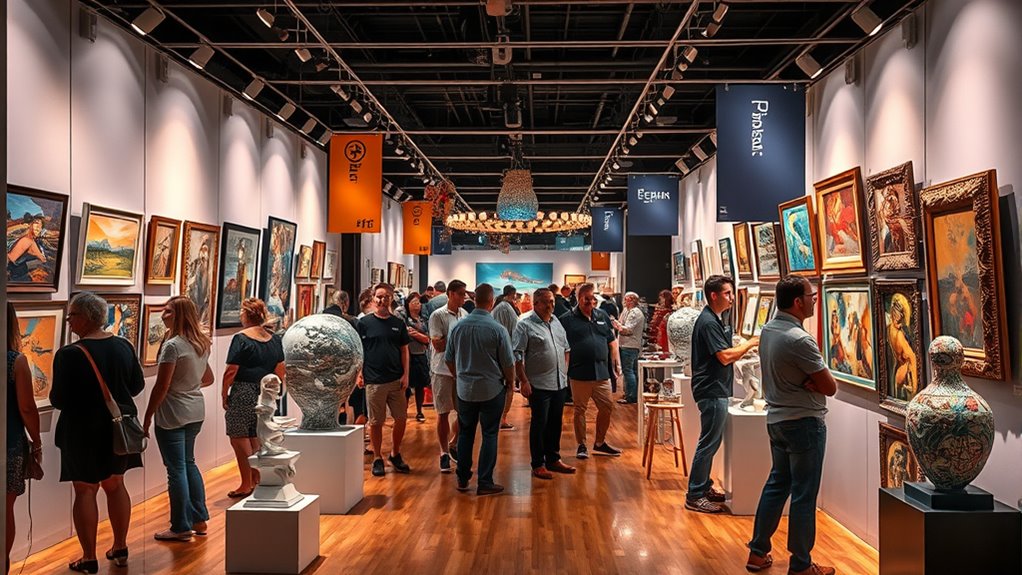
Participating in art fairs offers artists and galleries a essential opportunity to showcase their work, connect with new audiences, and build their reputation. When you take part in these events, you noticeably enhance your gallery representation, making it easier for collectors, curators, and critics to discover your art. Art fairs serve as a concentrated platform where your pieces can gain widespread visibility, often reaching audiences that might not encounter your work through traditional gallery visits or online channels. This increased artist visibility can lead to new sales, commissions, and future collaborations, which are critical for sustainable growth in your artistic career.
Participating in art fairs boosts your visibility, gallery representation, and opportunities for sales and collaborations.
By presenting your work at an art fair, you position yourself among many other artists and galleries, creating a dynamic environment where your art can stand out. The exposure helps elevate your profile, especially if your booth design and presentation are compelling. As visitors walk through the fair, your work becomes more memorable, and word-of-mouth can spread quickly within the art community. This heightened exposure often translates into media coverage, social media buzz, and increased interest from collectors seeking fresh talent. The goal is to make your art accessible and attractive to a broad audience, and art fairs are an effective way to do that efficiently.
While the costs of participating can seem intimidating—covering booth fees, travel, shipping, and marketing—the benefits often outweigh the expense. When your work is featured at a reputable art fair, you gain credibility and validation, which can lead to stronger gallery representation and opportunities to be included in future exhibitions. This kind of visibility helps establish your reputation as a serious artist, attracting attention from galleries that might want to represent you more formally. Over time, consistent presence at key art fairs can become a cornerstone of your professional strategy, solidifying your position within the art world.
Moreover, art fairs offer valuable networking opportunities. You can meet fellow artists, gallery owners, collectors, and critics, creating relationships that can open doors for future projects. These connections are often just as important as the sales themselves, as they can lead to invitations to other exhibitions or collaborations. The energy and immediacy of an art fair enable you to gauge market trends, get real-time feedback, and refine your presentation. In essence, participating in art fairs isn’t just about selling art—it’s about amplifying your visibility, strengthening your gallery representation, and embedding yourself more deeply into the art community. Additionally, understanding the contrast ratio of your display setup can significantly enhance the visual impact of your booth, making your artwork more striking and engaging to viewers.
Frequently Asked Questions
How Do I Choose the Right Art Fair for My Work?
To pick the right art fair for your work, focus on gallery selection and your artist reputation. Research fairs that align with your style and target audience. Consider their reputation and reputation for quality. Attend beforehand if possible, and talk to other artists. Choose a fair that offers good exposure and fits your career goals. This will help you maximize benefits and build your reputation effectively.
What Are the Common Hidden Costs of Participating?
Hidden expenses and unexpected fees often catch artists off guard when participating in art fairs. You might overlook costs like shipping, insurance, or packing materials, which can add up quickly. Additionally, consider expenses such as booth setup, promotional materials, and commissions or fees charged by the event organizers. To avoid surprises, always review the fine print, budget for unforeseen costs, and ask organizers about any extra charges beforehand.
How Can I Maximize Sales During the Fair?
Think of your booth as a magnet attracting buyers. To maximize sales, craft a smart pricing strategy that balances value and profit, and actively engage customers with friendly conversations and storytelling. Offer limited-time discounts or bundle deals to create urgency. By making genuine connections and showcasing your art’s story, you turn visitors into buyers, transforming your booth into a bustling hub of activity and sales.
What Are the Best Times to Apply for Art Fairs?
You should apply for art fairs during their seasonal timing, typically several months before the event to guarantee your application stands out. Pay close attention to application deadlines, which vary by fair, and plan accordingly. By applying early, you increase your chances of acceptance, gain ample preparation time, and can align your portfolio with the fair’s theme or audience, maximizing your exposure and sales opportunities.
How Do I Evaluate the Success of My Participation?
You evaluate your success by analyzing visitor engagement during the fair and afterward, noting how many visitors interacted with your booth or signed up for your mailing list. Track social media strategies by monitoring online mentions, shares, and new followers related to the event. Assess sales figures and artwork inquiries as well. Combining these insights helps you gauge overall impact, refine your approach, and plan better for future art fairs.
Conclusion
Participating in an art fair can transform your career overnight, catapulting your work into the spotlight and flooding your studio with enthusiastic collectors. Sure, the costs are high, but the benefits are astronomical—exposure, connections, sales—it’s like launching yourself into the art universe with a rocket booster. So, if you’re ready to risk it all, remember, an art fair could be your ticket to fame, fortune, and a future you never even dreamed possible!