

In art auctions, bidding works by placing offers to buy artwork, either in person or online. You set your maximum bid beforehand and bid incrementally until reaching that limit. Timing is essential—you can bid early to set a ceiling or wait until the last moment to win. Understanding the auction’s rules, etiquette, and how bids escalate helps you stay confident. Keep exploring further to learn how to master these dynamics and boost your success.
Key Takeaways
- Bidding begins with participants submitting offers either in person or online, following specific auction terms.
- Participants set a maximum bid beforehand and bid incrementally until reaching their limit.
- Timing is crucial; bids made late can win the auction, while early bids help establish a ceiling.
- Online auctions often feature countdown timers that extend bidding if placed near closing.
- Maintaining composure and understanding auction etiquette increase the chances of successful bidding.
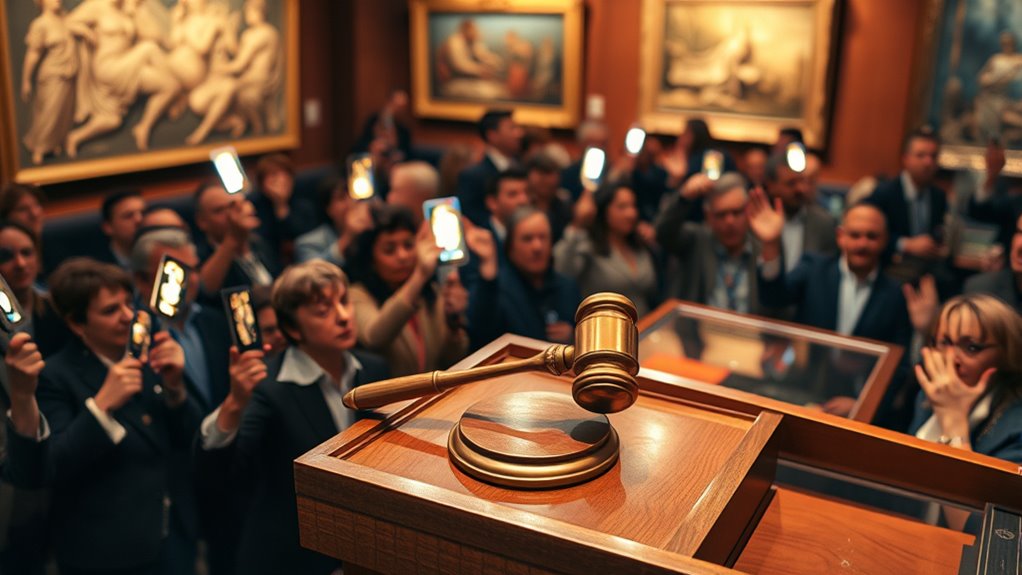
Art auction bidding can be an exhilarating experience, whether you’re a seasoned collector or a first-time participant. As you step into the auction room or log in online, understanding how bidding works puts you in a stronger position to succeed. One of the first things to weigh is developing effective auction strategies. These strategies involve setting a clear maximum bid before the auction begins, so you don’t get caught up in the heat of the moment and overspend. You might also decide to start with a low bid to test the waters or jump in with a higher bid if you’re determined to secure a particular piece. Knowing your limits and sticking to them is essential, especially when the competition heats up. Additionally, familiarizing yourself with the auction’s terms and conditions can help you avoid surprises or misunderstandings later on.
Developing effective auction strategies and knowing your limits are key to successful art bidding.
Bidding etiquette plays a key role in ensuring a smooth auction experience. Respect the auctioneer’s cues and avoid bidding out of turn or making disruptive comments. When participating in live auctions, raise your paddle confidently but without unnecessary flourish—this shows respect for the process and keeps things orderly. If you’re bidding online, familiarize yourself with the platform’s interface and notifications so you can respond promptly. Remember, in both settings, patience and politeness go a long way. Avoid aggressive bidding or trying to intimidate others, as this can create tension and disrupt the event. Instead, focus on making strategic bids that reflect your true interest and budget constraints.
Timing is another essential aspect of how bidding works. In live auctions, bids are often made in quick succession, and the auctioneer’s call can escalate the tension. Knowing when to bid—whether to jump in early to set a ceiling or wait until the last moment—can give you an edge. Online auctions usually have a countdown feature that extends bidding if someone places a bid just before closing, so stay alert until the very end. This timing savvy helps you avoid bidding wars that push prices beyond your comfort zone. It’s also important to understand the halal status of the items being auctioned, especially if you want to ensure your purchases align with your dietary and ethical standards.
Finally, keep in mind that understanding the dynamics of bidding can help you stay calm and focused. Whether you’re bidding face-to-face or through a digital platform, maintaining composure allows you to make rational decisions rather than impulsive ones. By mastering auction strategies and adhering to proper bidding etiquette, you position yourself better to win the artworks you desire without unnecessary stress or overspending. The more familiar you are with these aspects, the more confident and successful your auction experience will become.

50 PCS Blank Fans Handheld Double Sided Paddles DIY Paper Fans with 50 PCS Blank Cardboard and Plastic Handle Auction Answer Paddles for Crafting Classroom Voting Painting Celebration and Wedding
Complete Set: Our 50 PCS blank fans contains 50 PCS blank white cardboard and 50 PCS plastic handle,…
As an affiliate, we earn on qualifying purchases.
As an affiliate, we earn on qualifying purchases.
Frequently Asked Questions
What Are the Key Factors Influencing Art Auction Prices?
You influence art auction prices through art valuation and bidding psychology. Your perception of an artwork’s worth, combined with how others bid, shapes the final price. Factors like an artist’s reputation, provenance, rarity, and current market trends drive art valuation. Your bidding behavior, whether competitive or cautious, impacts the auction’s momentum and outcomes. Understanding these key factors helps you anticipate prices and make strategic decisions during the auction.
How Do Absentee and Proxy Bids Work in Auctions?
Imagine you’re casting a spell through absentee bidding, where you place your bid remotely, and a proxy acts as your enchanted messenger. When you use proxy bidding, you set your maximum price, and the auction system automatically bids on your behalf, outbidding others up to your limit. This way, you stay in the race without being present, letting technology work as your silent champion in the art auction arena.
What Role Do Auction Houses Play in Setting Art Prices?
You should know that auction houses influence art prices by shaping the art market and highlighting certain artists’ reputations. They set starting bids, guide bidding activity, and create competitive atmosphere, which can drive prices higher. Their expertise and marketing efforts enhance an artist’s reputation, impacting demand and value. Ultimately, auction houses help establish fair market prices while also reflecting current trends and collector interest in the art world.
How Can Bidders Ensure Their Bids Remain Confidential?
You can guarantee your bids remain confidential by requesting confidentiality measures from the auction house, such as anonymous bidding or secure, private bidding platforms. While some might worry about the effectiveness of these measures, reputable auction houses prioritize bidding privacy and implement advanced security protocols. Always communicate your privacy concerns upfront, and trust that these measures help protect your identity, giving you confidence to bid without fear of exposure.
What Are Common Strategies for Winning High-Value Art Lots?
To win high-value art lots, you should employ artistic tactics like setting a maximum bid early and sticking to it, while understanding bidding psychology to avoid emotional bidding. Stay calm and confident, and observe other bidders’ patterns to time your bids strategically. Use incremental increases carefully, and consider employing a proxy bid if allowed. This combination helps you stay in control and increases your chances of securing the artwork at a favorable price.

Real-Time online Auction Systems: Design and Development of Secure Web-Based Bidding Platforms
As an affiliate, we earn on qualifying purchases.
As an affiliate, we earn on qualifying purchases.
Conclusion
Understanding how bidding works is like learning the rhythm of a dance—you move in sync with others, feeling the energy build. When you grasp the strategies and timing, you’ll navigate auctions with confidence, turning the auction floor into your stage. Remember, each bid is a step closer to claiming your masterpiece. So, stay alert, trust your instincts, and let your passion lead you through the lively dance of art auctions.
art auction bid monitor
As an affiliate, we earn on qualifying purchases.
As an affiliate, we earn on qualifying purchases.

Wooden 8" Fan Handles, Wedding Programs, or Paint Mixing, Pack 75, Jumbo Craft Popsicle Sticks for Auction Bid Paddles, Wooden Wavy Flat Stems for Any DIY Crafting Supplies Kit, by Woodpeckers
GET A HANDLE – These unfinished wood sticks are great to have on hand for church fans, bidding…
As an affiliate, we earn on qualifying purchases.
As an affiliate, we earn on qualifying purchases.