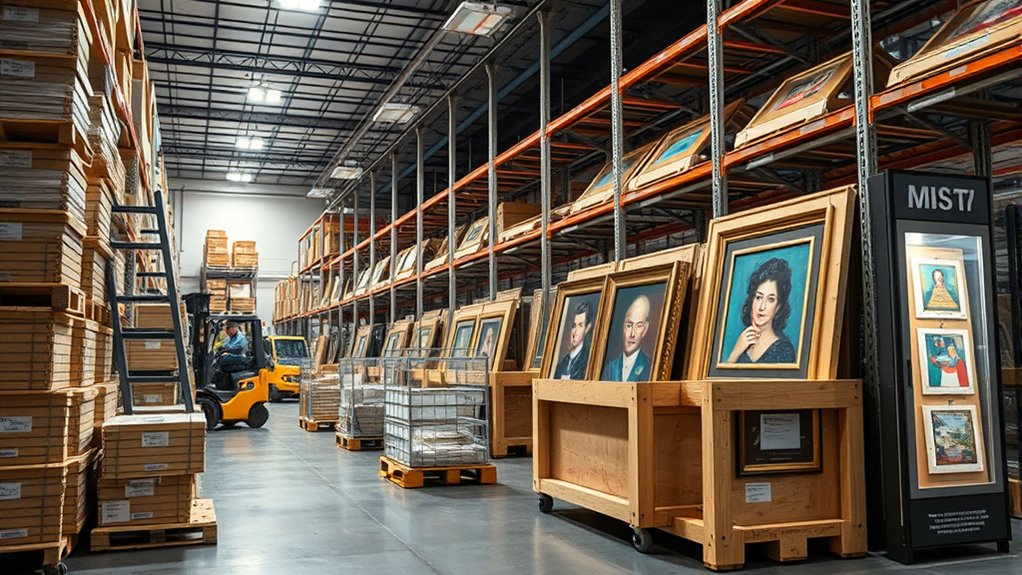

Managing traveling exhibitions involves coordinating safe transportation, proper packing, and secure storage of valuable artifacts. You’ll select experienced carriers, use custom crating and climate-controlled containers, and develop detailed plans based on each item’s needs. Ensuring proper labeling, documentation, and insurance coverage helps prevent loss or damage. Timing and contingency plans are crucial to meet schedules and handle unforeseen issues. If you keep exploring, you’ll discover all the essential steps to streamline your exhibition’s logistics effectively.

Get art and craft supplies delivered free — and shop member deals
- Fast, free delivery on millions of items
- Access to Prime Big Deal Days deals on October 6–7
- Prime Video, Amazon Music and more included
Key Takeaways
- Selecting experienced carriers and customizing packing methods to ensure safe transportation of fragile and valuable exhibition items.
- Utilizing climate-controlled containers and systematic storage solutions to maintain environmental stability and security.
- Developing detailed packing, labeling, and documentation procedures for tracking and minimizing handling risks.
- Planning precise shipment schedules with contingency plans and comprehensive insurance coverage for timely and protected delivery.
- Coordinating seamless transfer from storage to installation, with emphasis on environmental control and minimizing handling.
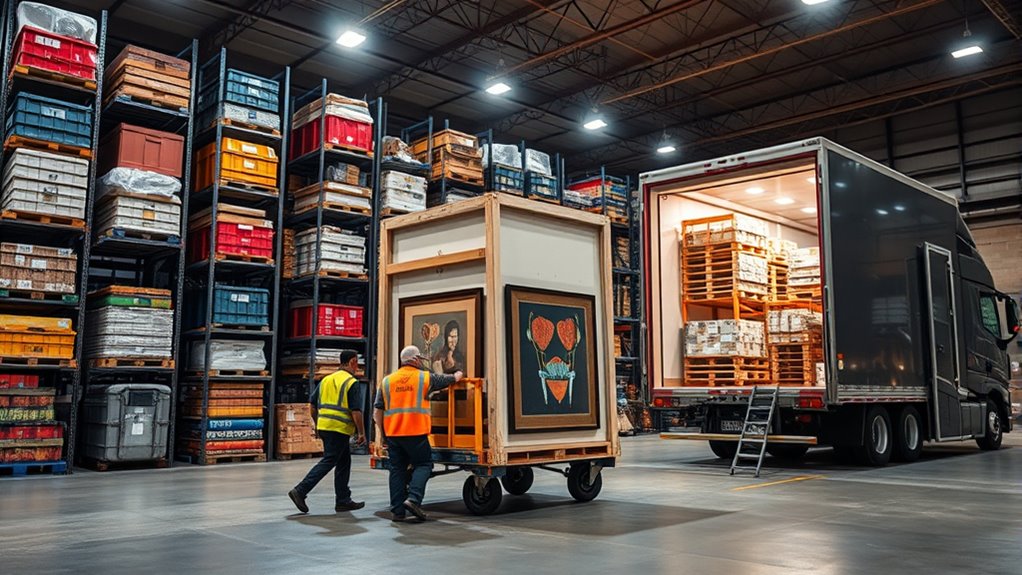
Organizing a traveling exhibition involves complex logistics that require careful planning and coordination. One of the most critical aspects is exhibition transportation, which involves moving valuable and often fragile items from one venue to another safely and efficiently. You need to select reliable carriers experienced in handling artwork or delicate artifacts, guaranteeing they understand the specific requirements of your pieces. Proper packing and storage are essential to prevent damage during transit. You’ll want to use custom crating, padded materials, and climate-controlled containers when necessary. This not only protects the items from physical shocks but also from environmental fluctuations like humidity and temperature changes. This is where understanding projector technology can be beneficial for creating engaging digital displays or presentations at the exhibition. You must also develop a detailed packing plan that accounts for the size, weight, and fragility of each piece, making sure everything is secured tightly to prevent shifting during transport.
Careful packing and storage prevent damage during transit and environmental fluctuations.
Storage plays a crucial role in the overall logistics process. When items arrive at the exhibition venue, they need to be stored temporarily in controlled environments to maintain their condition until installation. This means coordinating with storage facilities that can provide climate control, security, and pest management. You should also plan for a seamless flow from storage to display, minimizing handling to reduce the risk of damage. Proper storage isn’t just about safeguarding the objects; it also involves organizing them systematically so that installation teams can quickly access and set up each piece without unnecessary delays.
Transporting and storing exhibition items require meticulous documentation. You’ll need detailed inventories, condition reports, and shipping labels to keep track of each piece throughout the journey. This helps ensure nothing gets lost or misplaced and provides a record for insurance purposes. Additionally, clear labeling and packaging instructions help handlers understand how to manage each item appropriately, reducing the chance of mishandling.
Coordinating transportation and storage also involves timing everything perfectly. You’ll need to plan the shipment schedule so that items arrive well before the opening date, allowing ample time for installation and any necessary repairs or adjustments. Contingency plans are essential, too—think about what to do if a shipment is delayed or damaged. You might consider insurance coverage for the entire journey, giving you peace of mind that your collection is protected against unforeseen events.
custom art crating and packing supplies
As an affiliate, we earn on qualifying purchases.
As an affiliate, we earn on qualifying purchases.
Frequently Asked Questions
How Are Security Concerns Managed During Transportation?
You manage security concerns during transportation by carefully planning routes and using specialized transportation methods to guarantee safety. You comply with customs regulations to prevent delays and legal issues. You also implement security measures such as secure containers, GPS tracking, and trained personnel to monitor the artwork constantly. These steps help protect valuable pieces from theft, damage, or loss, ensuring they arrive safely at each destination.
What Insurance Options Are Available for Traveling Exhibits?
You might worry about the costs of insurance, but it’s crucial for protecting your traveling exhibit. You should explore thorough insurance coverage that includes damage, theft, and transit risks. Liability options are also indispensable in case of accidents or damages to third parties. By understanding your options, you guarantee your exhibit is well-protected throughout its journey, giving you peace of mind and safeguarding your valuable collection.
How Is Climate Control Maintained Across Venues?
You guarantee climate control by implementing climate regulation systems at each venue, which maintain stable temperature and humidity levels. Temperature monitoring devices continuously track conditions, alerting staff to any fluctuations. Portable climate control units or integrated HVAC systems are often used to adapt to each space. Regular checks and adjustments keep the exhibit in prime condition, preventing damage caused by temperature or humidity extremes during travel and display.
What Are the Costs Involved in Organizing a Traveling Exhibition?
Like planning a grand voyage, organizing a traveling exhibition involves several costs. You’ll invest in exhibition branding to create a memorable identity, covering design, printing, and marketing. Visitor engagement strategies, such as interactive displays and guided tours, also require funding. Transportation, insurance, and venue fees add to expenses. You must balance these costs to guarantee the exhibition remains enthralling and financially sustainable across all venues.
How Are Installation and Deinstallation Procedures Coordinated?
You coordinate installation and deinstallation by planning detailed schedules, ensuring artwork labeling is clear, and coordinating with your team. You manage logistics to minimize disruption and maximize audience engagement. During installation, you carefully handle each piece, checking labels and placement for accuracy. Afterward, during deinstallation, you oversee the packing process, confirming all artwork is securely stored. Effective communication keeps everything on track, creating a smooth experience for both staff and visitors.
climate-controlled shipping containers for artwork
As an affiliate, we earn on qualifying purchases.
As an affiliate, we earn on qualifying purchases.
Conclusion
So, while the logistics of traveling exhibitions can seem like a delicate dance, with a bit of planning and patience, everything falls into place smoothly. Embrace the journey’s complexities as opportunities for growth and learning, turning potential hurdles into stepping stones. Remember, every carefully coordinated detail brings your exhibition closer to success. Trust in the process, and enjoy the rewarding experience of sharing your work across new and exciting venues.
artwork insurance and security for transportation
As an affiliate, we earn on qualifying purchases.
As an affiliate, we earn on qualifying purchases.
art handling and storage organization products
As an affiliate, we earn on qualifying purchases.
As an affiliate, we earn on qualifying purchases.
Fall Picks
fall essentials
As an affiliate, we earn on qualifying purchases.