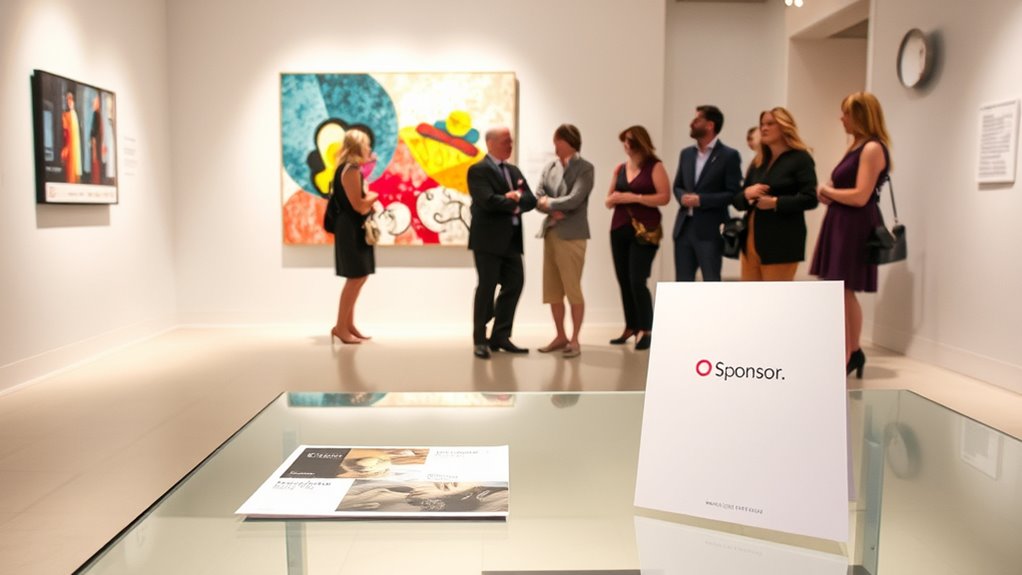

Sponsorships and partnerships are essential in shaping the art world by driving innovation, increasing access, and boosting cultural impact. They support artists, galleries, and institutions through financial backing and visibility, helping to fund exhibits, education, and digital projects. These collaborations foster long-term relationships that promote social responsibility and community engagement. As you explore further, you’ll discover how strategic alliances continue to evolve, fueling creativity and broadening the reach of arts worldwide.
Key Takeaways
- Sponsorships and partnerships drive innovation and growth in the art world by supporting artists, galleries, and cultural initiatives.
- They provide financial backing and visibility, enabling access to diverse audiences and enhancing credibility.
- Long-term relationships foster sustained support, funding, and democratized access to art for wider communities.
- Strategic alliances align shared values like creativity and community development, helping to bridge gaps left by public funding.
- These collaborations promote cultural prestige, support emerging talent, and shape the evolving cultural landscape.

Sponsorships and partnerships have become essential drivers of growth and innovation in the art world today. They serve as crucial tools, enabling artists, galleries, and institutions to expand their reach and impact. One of the key ways this happens is through art philanthropy, where individuals and organizations invest in art projects and cultural initiatives to foster creativity and community engagement. Art philanthropy isn’t just about donating money; it’s about actively shaping the cultural landscape and supporting emerging talent. When you partner with corporations through sponsorship, you tap into a powerful resource that can provide both financial backing and increased visibility. Corporate sponsorships often come with mutual benefits: brands align themselves with cultural prestige while supporting meaningful artistic endeavors.
Sponsorships fuel growth, support emerging talent, and foster cultural innovation in the art world today.
You might find that many galleries and museums rely heavily on corporate sponsorship to fund exhibitions, educational programs, and infrastructure improvements. These partnerships are strategic, often crafted to align the sponsor’s brand with the values of innovation, creativity, and community development. For example, a tech company might sponsor an interactive digital art exhibit to showcase its commitment to cutting-edge technology and cultural engagement. Such collaborations allow you to reach diverse audiences, enhance your credibility, and attract new supporters who appreciate the sponsor’s involvement in the arts.
Additionally, fostering long-term relationships with sponsors can lead to sustained support that benefits both parties over time. By engaging in art philanthropy and seeking out corporate sponsorship, you’re also helping to democratize access to art. These partnerships often lead to free or reduced-price entry to exhibitions and programs, making art more accessible to wider communities. This not only benefits the public but also elevates the profile of the arts within society. As a supporter or participant in these collaborations, you become part of a larger movement that values cultural growth and social responsibility. You see firsthand how private resources can bridge gaps left by public funding, ensuring that innovative projects and emerging artists have the means to thrive.
Furthermore, corporate sponsorships often lead to long-term relationships that can evolve into dedicated programs or endowments. This stability allows artists and institutions to plan for the future with confidence, knowing they have committed partners. When you understand the power of these collaborations, you realize they’re more than just financial transactions—they’re strategic alliances built on shared values and mutual growth. As the art world continues to evolve, sponsorships and partnerships will remain central to fostering creativity, expanding access, and driving cultural innovation.
art sponsorship display banners
As an affiliate, we earn on qualifying purchases.
As an affiliate, we earn on qualifying purchases.
Frequently Asked Questions
How Do Art Sponsorships Influence Artistic Freedom?
Art sponsorships can influence your creative independence and artistic integrity by potentially guiding your work to align with sponsors’ interests. You might feel pressured to create pieces that appeal to sponsors’ goals, risking your original vision. While funding can provide opportunities, it’s essential to maintain boundaries that protect your artistic integrity, ensuring your work remains authentic and true to your creative spirit.
What Are the Ethical Considerations in Art Sponsorship Deals?
You should consider how art sponsorship deals raise ethical concerns like cultural appropriation and the impact on artistic independence. When accepting sponsorship, make sure you’re not exploiting or misrepresenting cultures, which can harm communities. Maintain your creative freedom by setting clear boundaries, so your work isn’t compromised. Ethical sponsorship supports authentic expression and respects cultural sensitivities, allowing you to create responsibly without compromising your integrity or the integrity of the artwork.
How Do Partnerships Impact Emerging Artists’ Careers?
Partnerships are like bridges, connecting you to new opportunities. When you engage in gallery collaborations or mentorship programs, you expand your network, gain visibility, and develop your craft. These alliances can propel your career forward, opening doors to exhibitions or collectors. They also offer support and guidance, helping you navigate challenges. Embracing partnerships can turn your artistic journey into a thriving voyage, transforming potential into tangible success.
Can Sponsorships Lead to Commercial Bias in Art Exhibitions?
Yes, sponsorships can lead to commercial bias in art exhibitions. You might notice corporate influence shaping which artists or themes get promoted, potentially compromising cultural authenticity. When sponsors prioritize profit, it can skew exhibition choices, making them less about genuine artistic expression and more about appealing to sponsor interests. This bias risks diluting the integrity of the art, so you should stay aware of how corporate influence impacts the exhibition’s authenticity.
What Are the Long-Term Benefits of Art Sponsorship for Brands?
You gain long-term benefits like increased brand visibility and stronger consumer engagement through art sponsorship. When your brand supports art initiatives, it stays top of mind for audiences, fostering positive associations. Over time, this boosts brand loyalty and trust, helping you connect with diverse communities. By consistently aligning with the arts, you create a lasting impression that encourages ongoing consumer interest and loyalty, ultimately strengthening your brand’s presence in the marketplace.

Garosa LED Spotlight USB Powered Adjustable Jewelry Light White Light for Cabinet Retail Store Museum Gallery Exhibition Display Case Lighting
[Versatile Application] : Ideal for dressing tables, cabinets, restaurants, cafes, galleries, showrooms, and entrances, enhancing aesthetics and spotlighting.
As an affiliate, we earn on qualifying purchases.
As an affiliate, we earn on qualifying purchases.
Conclusion
In the art world, sponsorships and partnerships are the lifeblood that help creative visions flourish. They act as bridges, connecting artists with audiences and opportunities alike. By fostering these collaborations, you become a crucial part of a vibrant ecosystem where ideas bloom and talent thrives. Embrace these connections, for they’re the silent threads weaving the rich tapestry of art’s ongoing story—an intricate dance of support that elevates both creator and patron alike.

QIXZOCV MWE 43 Inch Mobile Digital Signage Display Touchscreen Kiosk with Flight Case, Portable LCD Screen with Screen Mirroring App Publishing, Advertising Display Poster, Android OS
【Portable and Movable】Designed for portability and mobility, this MWE- QIXZOCV product is lighter in weight than traditional digital…
As an affiliate, we earn on qualifying purchases.
As an affiliate, we earn on qualifying purchases.

PHS Anti Theft Picture Hangers – Bulk Pack – 25 Pack Security Frame Lock Hanging Kit with T-Head Screws – Earthquake Proof Art Hangers for Museums, Galleries, Hotels – Holds 15 lbs
BEFORE YOU BUY: Our Security Hanging kits supports up to 15 pounds per set. Prevents theft and falling,…
As an affiliate, we earn on qualifying purchases.
As an affiliate, we earn on qualifying purchases.