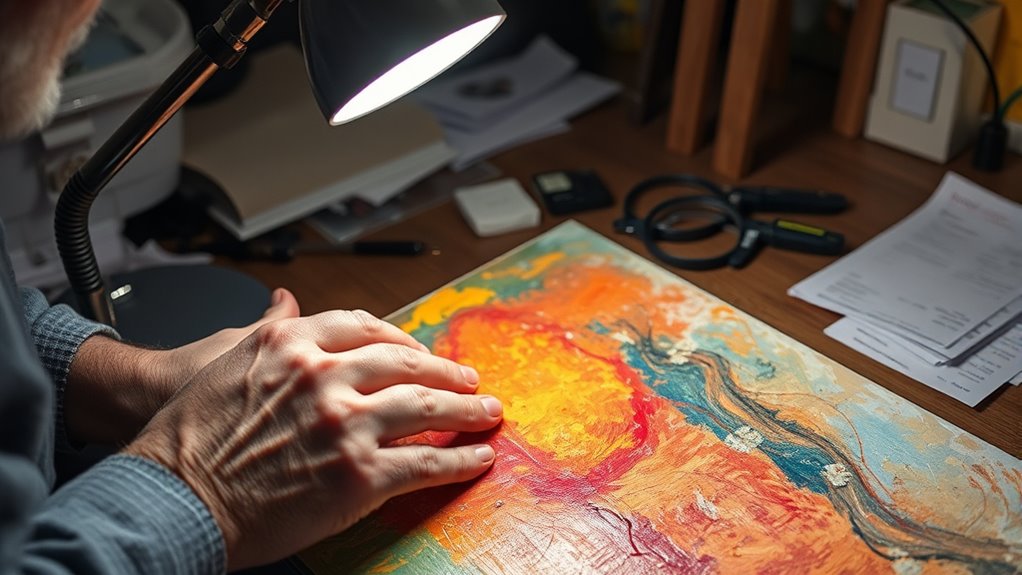

To understand art valuation, you need to contemplate market trends, artist reputation, authenticity, and provenance. These factors influence an artwork’s current worth and future value. Appraisals involve expert evaluations based on recent sales, demand, and the work’s condition. Authentication confirms the piece’s legitimacy, protecting you from forgeries and increasing confidence in its value. Keep exploring to discover how combining these elements can give you a clearer picture of an artwork’s true worth.

Get art and craft supplies delivered free — and shop member deals
- Fast, free delivery on millions of items
- Access to Prime Big Deal Days deals on October 6–7
- Prime Video, Amazon Music and more included
Key Takeaways
- Market trends, recent sales, and genre popularity influence an artwork’s market value and appraisal accuracy.
- Artist reputation and career recognition significantly impact authenticity and overall valuation.
- Provenance and expert authentication verify an artwork’s origin, ensuring valuation reliability.
- Technological advances and consumer preferences affect demand and influence art appraisal considerations.
- A comprehensive valuation considers market factors, authenticity, condition, and provenance for accurate appraisals.

Art valuation can seem complex, but understanding the key factors behind an artwork’s worth makes the process clearer. One of the most important aspects to consider is market trends. The art world is constantly shifting, with certain styles, periods, and artists gaining popularity or losing relevance over time. When valuing an artwork, you need to pay attention to current demand, auction prices, and how similar works are performing in the marketplace. For instance, if a particular genre is trending and collectors are willing to pay high prices, that can considerably boost an artwork’s value. Conversely, if a style falls out of favor, its value may decline. Keeping an eye on recent sales and market movements helps you understand whether an artwork’s price is justified or inflated. Additionally, the rise of electric bikes and similar innovative transportation options reflects changing consumer preferences and technological advancements, which can influence the valuation of related art and collectibles.
Another essential factor is the artist’s reputation. An artist’s standing in the art community directly influences how much their work is worth. Well-established artists with a proven track record of sales, exhibitions, and critical acclaim tend to command higher prices. Their works are often seen as investments, and collectors are willing to pay a premium for their pieces. On the other hand, emerging artists or those with less recognition might have lower valuations initially, but their prices can rise as their reputation grows. Understanding the artist’s career trajectory, previous sales, and overall recognition helps you assess how their reputation impacts an artwork’s worth. This is especially important when considering authenticity and appraisals, as a reputable artist’s work is more likely to hold or increase its value over time. When performing an art appraisal, you should also consider the provenance and condition of the piece, but market trends and artist reputation lay the foundation for understanding its relative worth. Authenticity plays a key role here, as forgeries or misattributions can severely diminish value. Confirming an artwork’s authenticity through expert authentication or provenance research ensures you’re basing your valuation on a genuine piece. By combining an awareness of current market trends with knowledge of the artist’s reputation, you gain a more accurate and confident understanding of an artwork’s true value. This approach not only helps you make informed buying or selling decisions but also prepares you for the complexities involved in art appraisal and authentication. Ultimately, staying informed about the dynamic nature of the art market and the reputation of artists empowers you to navigate art valuation with greater clarity and confidence.
As an affiliate, we earn on qualifying purchases.
Frequently Asked Questions
How Often Should I Reassess My Art Collection’s Value?
You should reevaluate your art collection’s value every 2 to 3 years, especially as market trends fluctuate. Regular updates ensure your insurance valuation stays accurate, protecting you financially. If you acquire new pieces or notice major shifts in the art world, consider more frequent reviews. Staying proactive helps you understand your collection’s worth, keeps your insurance coverage current, and allows you to make informed decisions about buying or selling.
What Are Common Signs of a Fake or Counterfeit Artwork?
You can spot a fake artwork by looking for signature inconsistencies, such as irregularities or mismatched styles, and material discrepancies, like unusual textures or suspect mediums. Pay attention to color quality and brushwork that don’t match the artist’s known techniques. Always compare with verified works and consult experts if you notice anything suspicious. These signs can help you differentiate authentic pieces from counterfeits.
How Do Provenance and Documentation Influence Art Valuation?
Imagine uncovering a treasure chest that opens priceless secrets—that’s what provenance and documentation do for your art valuation. They serve as vital maps through art history, revealing a piece’s true origin and journey. When your artwork’s provenance is solid and documented, it boosts your collector reputation, skyrocketing its value. Without this clarity, your masterpiece risks losing its worth, like a ship lost at sea without a compass.
Can Digital Art Be Appraised the Same Way as Traditional Art?
Yes, digital art can be appraised similarly to traditional art, but it involves unique challenges. You need to take into account digital authenticity, which verifies the artwork’s originality, and NFT valuation, since many digital pieces are tied to blockchain technology. Appraisers analyze factors like rarity, creator reputation, and market demand, just like with physical art. However, the intangible nature of digital art requires specialized knowledge to accurately assess its worth.
What Are the Costs Involved in Professional Art Appraisal Services?
Imagine opening a treasure chest—you’ll find costs vary based on appraisal fee structures and the artwork’s complexity. You might pay a flat fee, hourly rate, or a percentage of the value. Valuation report costs depend on the artwork’s size, rarity, and detail needed. Expect to spend anywhere from a few hundred to several thousand dollars, ensuring you get an expert assessment to protect your investment and authenticate your piece.
As an affiliate, we earn on qualifying purchases.
Conclusion
Now that you know the keys to art valuation, imagine the moment you hold that piece in your hands—knowing its true worth isn’t just about numbers. Every detail, every signature, could hold secrets waiting to be uncovered. Will your next appraisal reveal a hidden masterpiece or a carefully crafted forgery? The world of art is full of surprises, and with the right knowledge, you’re ready to navigate its mysteries. The next discovery could change everything.
As an affiliate, we earn on qualifying purchases.
As an affiliate, we earn on qualifying purchases.
Halloween Picks
halloween
As an affiliate, we earn on qualifying purchases.