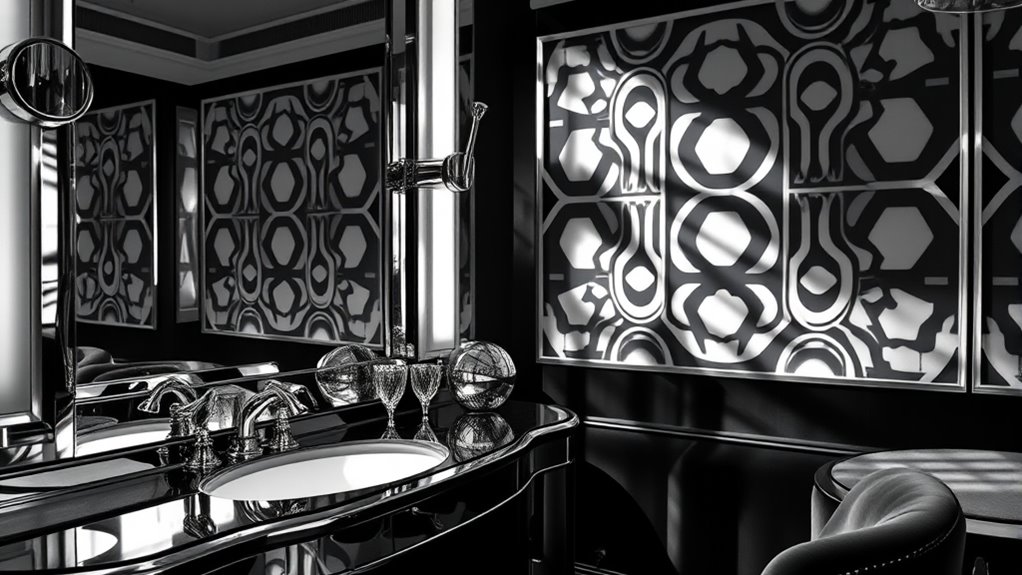

Art Deco captures the glamour and geometric precision of 1920s design, blending luxury with modernity. You’ll notice bold patterns like zigzags and chevrons, combined with high-quality materials such as polished metals and exotic woods. Its style reflects sophistication, innovation, and a sense of movement, inspired by ancient art and technological progress. If you want to explore how these striking visual elements evoke elegance and power, keep exploring, and you’ll see how they shaped timeless design.
Key Takeaways
- Art Deco emerged in the 1920s, celebrating modernity, luxury, and technological progress through sleek, ornamental design.
- It features bold geometric patterns like zigzags, chevrons, and stepped forms arranged with rhythm and symmetry.
- High-quality materials such as polished metals and exotic woods emphasize glamour and craftsmanship.
- Inspired by African, Egyptian, and Aztec art, its motifs symbolize power, opulence, and innovation.
- The style creates an immersive sense of elegance and continues to influence modern design with its precise geometric language.
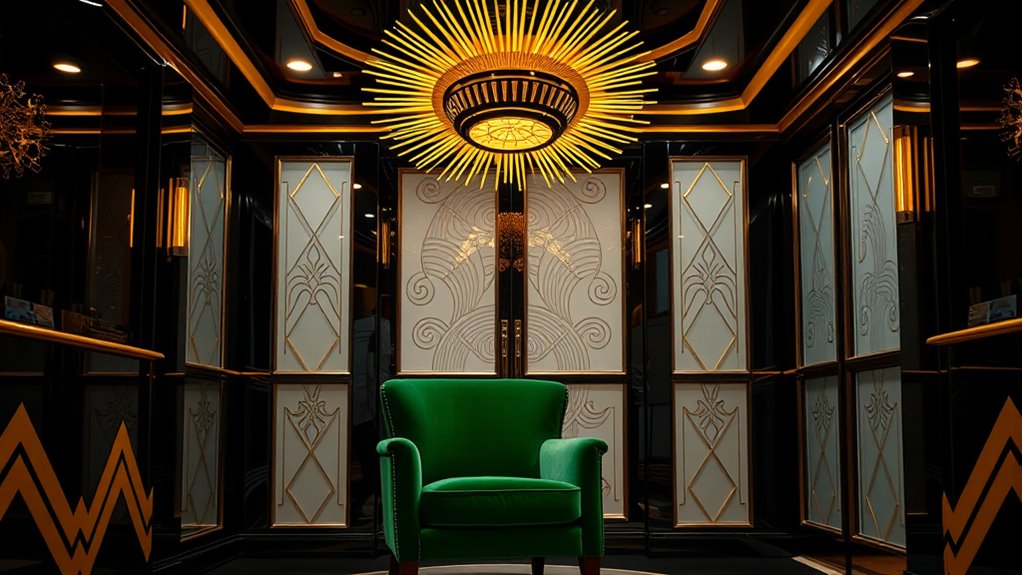
Have you ever noticed the striking geometric patterns and bold ornamentation that define Art Deco? This style emerged in the 1920s as a celebration of modernity, glamour, and technological progress. When you observe Art Deco architecture or interior design, you’re instantly drawn to its luxury design elements—those sleek lines, shiny surfaces, and intricate motifs that evoke sophistication. The hallmark of this style is its use of geometric patterns, which create a sense of order and elegance. These patterns often feature zigzags, chevrons, and stepped forms, all arranged with precision and rhythm. They serve not just as decoration but as a visual language that conveys power and opulence.
Art Deco’s bold geometric patterns symbolize modernity, luxury, and technological progress with elegance and precision.
In embracing luxury design, Art Deco seamlessly combines form with function. The style emphasizes high-quality materials like polished metals, exotic woods, and rich fabrics, elevating everyday objects into works of art. When you step into an Art Deco building or room, you notice how the geometric patterns are integrated into everything—from the faceted glass windows to the decorative motifs on furniture and lighting fixtures. These patterns aren’t just ornamental; they’re a reflection of the era’s fascination with progress and innovation. The symmetry and repetition of geometric shapes give a sense of harmony, while their boldness immediately captures your attention.
The use of geometric patterns in Art Deco isn’t accidental. It stems from a desire to showcase modernity and technological achievements. You can see influences from African, Egyptian, and Aztec art, which inspired designers to incorporate stylized motifs and sharp angles. This fusion results in a style that feels both timeless and forward-looking. As you explore Art Deco design, you’ll notice how these patterns serve as visual anchors—creating rhythm and movement across surfaces. They add a dynamic quality that makes spaces feel lively and energetic, yet refined.
Furthermore, luxury design achieved in the Art Deco era isn’t just about visual impact; it’s about creating an immersive experience. The patterns, materials, and ornamentation work together to evoke a sense of glamour and exclusivity. When you’re in an Art Deco space, it feels like stepping into a world of elegance and innovation. The geometric patterns act as a language of luxury—bold, precise, and unforgettable. This style invites you to indulge in beauty and craftsmanship, making every detail a statement of sophistication. Additionally, the emphasis on symmetry and repetition reflects a mastery of architectural principles, which contributed to the style’s lasting appeal.

CZUR ET24 Pro Book Scanner and Portable Studio Box Bundle
- Studio Box isolates ambient light: Enhances scanning quality
As an affiliate, we earn on qualifying purchases.
Frequently Asked Questions
Which Countries Were Most Influential in Art Deco’s Development?
France and the United States were the most influential countries in shaping Art Deco. You see, French influence brought elegance, luxury, and geometric patterns, reflecting the glamour of Paris. Meanwhile, American innovation introduced modern materials and bold designs, making the style more accessible and dynamic. Together, these countries combined sophistication and innovation, creating a distinctive movement that spread worldwide, influencing architecture, fashion, and design during the 1920s.
How Did Art Deco Influence Modern Interior Design Trends?
You’re on the right track when noticing how art deco shaped modern interior design trends. It’s a game-changer, influencing color schemes with bold, contrasting hues and sleek furniture styles that emphasize both form and function. You’ll find that today’s interiors often blend these elegant geometric patterns and luxurious materials, making spaces look timeless yet fresh. fundamentally, art deco’s flair for glamour still guides your design choices, showing that style never goes out of fashion.
What Materials Were Commonly Used in Art Deco Jewelry?
You’ll notice that Art Deco jewelry commonly features precious metals like platinum and gold, giving it a sleek, luxurious look. Colorful gemstones such as sapphires, rubies, and emeralds are used to add vibrancy and contrast. These materials combine to create bold, geometric designs that are both glamorous and modern. By using precious metals and colorful gemstones, Art Deco jewelry captures the essence of the era’s elegance and innovation.
Were There Any Prominent Female Artists in the Art Deco Movement?
Yes, there were prominent female artists in the Art Deco movement. You’ll find female pioneers and women designers who considerably influenced the style, bringing innovative ideas and craftsmanship. These women broke barriers, contributing to jewelry, fashion, and interior design, shaping the movement’s glamorous aesthetic. Their creative visions helped define Art Deco’s distinct geometric forms and luxurious details, proving that women played a crucial role in its development and enduring legacy.
How Did Art Deco Impact Architecture Beyond the 1920S?
You might think Art Deco’s influence faded after the 1920s, but it actually sparked an ongoing impact on architecture. Its bold geometric shapes and luxurious details inspired urban renewal projects and a persistent Art Deco revival in design. This movement shaped skyscrapers, cinemas, and public spaces well into later decades, emphasizing glamour and modernity. So, your cityscape still echoes the glamorous elegance of Art Deco, long after its original era.

DoubleFill 12 Set Father's Day DIY Picture Frames Crafts Kit
- Complete DIY Frame Set: 12 frames with designs, decorations, and tools
- Generous Creative Canvas: Each frame measures 5.5 x 5.5 inches
- Personalized Gift Idea: Create heartfelt, custom Father's Day gifts
As an affiliate, we earn on qualifying purchases.
Conclusion
So, after all this, you might think Art Deco was just about fancy designs and shiny surfaces. But here’s the irony: beneath its glamorous façade, it reflected a society enthusiastic for progress, yet caught in the chaos of change. You’d expect simplicity, yet it’s all about bold geometry and lavish detail. Turns out, the more luxurious it looked, the more it symbolized a world rushing toward the future—sometimes, beauty hides complexity.

InSimSea Extra Large Framed Vintage Wall Art, Flower Meadow Prints,20x40In
- Artwork Title: Champ fleuri by Antoine Chintreuil
- Style: Vintage classical oil painting
- Material: Canvas on wood fiberboard with gel finish
As an affiliate, we earn on qualifying purchases.

Stoie's Kids Musical Instruments Set – Wooden Percussion Instruments for Toddlers, Xylophone, Tambourine, Maracas, Music Toys for Toddlers, Preschool Musical Instruments
- Complete Toddler Music Set: Includes various percussion instruments and storage bag
- Educational Development: Enhances motor skills, coordination, and creativity
- Premium Wooden Materials: Safe, durable, non-toxic wood construction
As an affiliate, we earn on qualifying purchases.