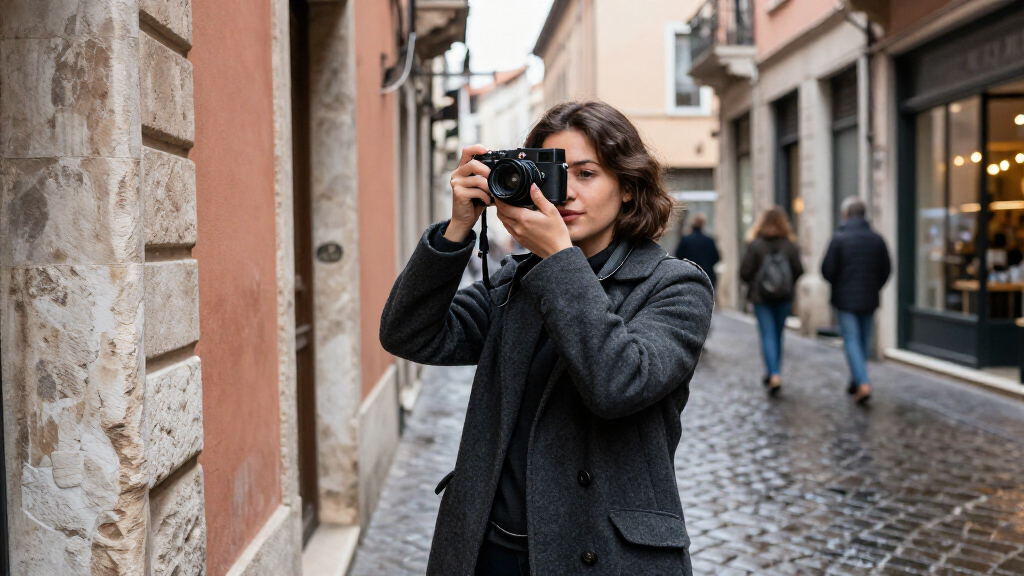

The Leica Q3 is my best overall pick among these cameras, pairing a full-frame sensor with a versatile 28mm lens and modern features. The Q3 43 stands out for a tighter, more natural perspective, while the D-Lux 8 is the more approachable compact option for buyers who want a smaller-sensor camera. The main choice is between the Q series’ fixed-lens simplicity, the M11-P’s manual rangefinder approach, and the D-Lux models’ portability and zoom flexibility. Older Q and D-Lux versions can still suit buyers who do not need the newest generation, but their feature and sensor differences matter. Read on for a model-by-model comparison and practical advice on which Leica best fits your shooting habits.

Get art and craft supplies delivered free with Prime
- Fast, free delivery on millions of items
- Prime Video, Amazon Music and more included
- Member-only deals all year
Key Takeaways
The Q3 is the strongest all-rounder here: its 28mm fixed lens suits broad everyday uses, while its full-frame sensor gives it a different level of image-making flexibility from the D-Lux models.
The Q3 43 changes the framing, not just the model number. Its 43mm lens suits portraits and tighter compositions better than the Q3’s 28mm, but offers less room for wide scenes.
The M11-P is the specialist choice. Its rangefinder handling and interchangeable M-mount lenses offer a distinct shooting experience, but demand more manual involvement than the fixed-lens Q cameras.
D-Lux cameras prioritize portability and zoom versatility. The D-Lux 8 is the newer choice in that pair, while the D-Lux 7 remains relevant for buyers comparing an older compact design rather than seeking the latest generation.
Several listings are bundles or near-duplicates. Compare the camera body, lens, included accessories, and exact model name before choosing; a bundle label alone does not mean the camera is a better fit.
| Leica Q3 Compact Digital Camera, Black (19080) |  | Best Overall | Sensor: 60MP BSI CMOS, full-frame (35mm) | Lens aperture: F1.7 | Autofocus: Hybrid phase and contrast detection; 399 focus points | VIEW LATEST PRICE | See Our Full Breakdown |
| Leica Q2 47.3MP Full-Frame Digital Camera |  | Best for a Simpler Full-Frame Setup | Sensor: 47.3MP full-frame CMOS | Lens: 28mm f/1.7 Summilux ASPH | Image stabilization: Optical | VIEW LATEST PRICE | See Our Full Breakdown |
| Leica D-Lux 8 Compact Digital Camera Bundle, 17MP, Black |  | Best for Versatile Everyday Carry | Sensor: 17MP Four Thirds CMOS, 17.3 × 13.0 mm | Lens: 10.9–34mm f/1.7–2.8; 24–75mm full-frame equivalent | Image stabilization: Optical | VIEW LATEST PRICE | See Our Full Breakdown |
| Leica Q3 43 60MP Compact Camera with 43mm Lens (19084) Bundle |  | Best for Portraits and Natural Perspective | Sensor: 60MP full-frame BSI CMOS | Lens: 43mm f/2 APO-Summicron ASPH | Image resolutions: 60MP, 36MP, or 18MP | VIEW LATEST PRICE | See Our Full Breakdown |
| Leica M11-P Full-Frame Camera, 60 MP BSI CMOS, 256 GB Internal Memory, Black |  | Best for Manual-Focus Rangefinder Photography | Sensor: 60MP BSI CMOS, full-frame; 60.3MP total still resolution | Lens mount: Leica M bayonet | Focus: Manual focus | VIEW LATEST PRICE | See Our Full Breakdown |
| Leica Q 24.2 MP Full-Frame Compact Camera with 28mm f/1.7 Lens |  | Best for a Fixed-Lens Full-Frame Experience | Sensor: 24.2 MP full-frame CMOS | Lens: Fixed 28mm Summilux f/1.7 ASPH | ISO range: 50–50,000 | VIEW LATEST PRICE | See Our Full Breakdown |
| Leica Q3 60MP Full-Frame Compact Camera with 28mm Lens Bundle |  | Best High-Resolution 28mm Bundle | Sensor: 60MP full-frame BSI CMOS | Processor: Maestro IV | Lens: Fixed 28mm focal length | VIEW LATEST PRICE | See Our Full Breakdown |
| Leica D-Lux 7 Silver Compact Camera |  | Best for a Versatile Everyday Zoom | Sensor: 17 MP Four Thirds MOS | Lens: 24–75mm equivalent Vario-Summilux f/1.7–2.8 | Image stabilization: Optical | VIEW LATEST PRICE | See Our Full Breakdown |
| Leica D-Lux 8 17MP Compact Digital Camera Bundle |  | Best Compact Leica Bundle | Sensor: 17MP Four Thirds CMOS | Lens: 10.9–34mm f/1.7–2.8 | Full-frame equivalent focal range: 24–75mm | VIEW LATEST PRICE | See Our Full Breakdown |
| Leica Q3 43 Digital Camera, Black |  | Best for Portraits and Close-Ups | Sensor: 60MP full-frame BSI CMOS | Lens: 43mm f/2 APO-Summicron | Image resolutions: 60MP, 36MP, or 18MP | VIEW LATEST PRICE | See Our Full Breakdown |
| Leica camera | Sensor | Video | Lens | Image stabilization |
|---|---|---|---|---|
| Leica Q3 Compact Digital Camer | 60MP BSI CMOS, full-frame (35mm) | Up to 8K; MP4, MOV, and AVI | — | — |
| Leica Q2 47.3MP Full-Frame Dig | 47.3MP full-frame CMOS | Up to 4K; Full HD up to 60 fps | 28mm f/1.7 Summilux ASPH | Optical |
| Leica D-Lux 8 Compact Digital | 17MP Four Thirds CMOS, 17.3 × 13.0 mm | 2160p | 10.9–34mm f/1.7–2.8; 24–75mm full-frame equivalent | Optical |
| Leica Q3 43 60MP Compact Camer | 60MP full-frame BSI CMOS | DCI 8K up to 30p; 4K up to 60p | 43mm f/2 APO-Summicron ASPH | — |
| Leica M11-P Full-Frame Camera | 60MP BSI CMOS, full-frame; 60.3MP total still resolution | — | — | Digital |
| Leica Q 24.2 MP Full-Frame Com | 24.2 MP full-frame CMOS | FHD 1080p | Fixed 28mm Summilux f/1.7 ASPH | Optical |
| Leica Q3 60MP Full-Frame Compa | 60MP full-frame BSI CMOS | DCI 8K at 30p; 4K at 60p with 10-bit color | Fixed 28mm focal length | — |
| Leica D-Lux 7 Silver Compact C | 17 MP Four Thirds MOS | UHD 4K at 30p | 24–75mm equivalent Vario-Summilux f/1.7–2.8 | Optical |
| Leica D-Lux 8 17MP Compact Dig | 17MP Four Thirds CMOS | — | 10.9–34mm f/1.7–2.8 | — |
| Leica Q3 43 Digital Camera | 60MP full-frame BSI CMOS | DCI 8K at 30p; 4K at 60p | 43mm f/2 APO-Summicron | Digital |
More Details on Our Top Picks
Leica Q3 Compact Digital Camera, Black (19080)
I rank the Leica Q3 first for buyers seeking one fixed-lens camera that can handle high-detail stills and serious video. Its 60MP full-frame sensor gives more cropping room than the Q2’s 47.3MP sensor, while Triple Resolution Technology lets you choose smaller files when maximum resolution is unnecessary. The built-in F1.7 lens and hybrid autofocus with subject tracking make it more adaptable for changing subjects than the manual-focus M11-P. For video, 8K recording with ProRes support gives this Q3 broader production appeal than the Q2’s 4K ceiling. Its fixed lens still defines the camera: digital framing reaches 90mm, but it cannot replace an optical telephoto lens. It also lacks weather resistance, so I would not choose it for exposed outdoor work.
Pros:- 60MP full-frame sensor with Triple Resolution Technology supports detailed files and flexible cropping.
- Hybrid autofocus with subject tracking is more convenient for moving subjects than the M11-P’s manual focus.
- 8K video with ProRes support suits video work beyond the Q2’s 4K capability.
- Tilting touchscreen and USB-C, HDMI, and wireless connectivity offer flexible shooting and transfer options.
Cons:- The fixed lens limits optical framing choices; digital framing reaches only 90mm.
- The camera is not water resistant, limiting use in rain or dusty conditions.
- The listed weight of 5 pounds is a substantial portability drawback for a compact camera.
Best for: Photographers and hybrid creators who want a high-resolution full-frame compact with autofocus, a fast built-in lens, and 8K video.
Not ideal for: Travelers who need weather protection or a true optical telephoto range; digital framing cannot substitute for interchangeable lenses.
- Sensor:60MP BSI CMOS, full-frame (35mm)
- Lens aperture:F1.7
- Autofocus:Hybrid phase and contrast detection; 399 focus points
- Video:Up to 8K; MP4, MOV, and AVI
- Continuous shooting:Up to 15 fps
- Display:Tilting capacitive touchscreen, 1.84M dots
- Connectivity:Wi-Fi, USB-C, HDMI
- Water resistance:Not water resistant
Our verdict“Choose the Q3 if you want Leica’s strongest mix here of full-frame resolution, autofocus, and high-resolution video in a fixed-lens camera.”
Leica Q2 47.3MP Full-Frame Digital Camera
The Leica Q2 is the more straightforward choice for photographers who want a full-frame Leica with a built-in wide-angle lens and do not need the Q3’s newer video and resolution capabilities. Its 47.3MP sensor, 28mm f/1.7 lens, and optical image stabilization make it well suited to travel, street scenes, and available-light shooting. Compared with the Q3, it gives up resolution, 8K video, and a tilting screen, but retains 4K recording and a useful electronic viewfinder. The fixed 28mm perspective is a real creative constraint: unlike the Q3’s digital framing options, it offers no listed crop modes, and it cannot zoom optically. A single card slot also leaves less backup flexibility than many working photographers may want.
Pros:- 47.3MP full-frame sensor captures detailed still images.
- Built-in 28mm f/1.7 lens pairs a wide view with a bright maximum aperture.
- Optical image stabilization helps reduce blur from camera movement.
- Electronic viewfinder and 4K recording support both stills and video.
Cons:- The fixed 28mm lens offers no optical zoom or listed digital framing range.
- Video tops out at 4K, below the Q3’s 8K capability.
- A single memory card slot provides no in-camera card redundancy.
Best for: Street and travel photographers who prefer a 28mm perspective, want optical stabilization, and do not need 8K video.
Not ideal for: Photographers who need framing flexibility, a tilting display, higher-resolution video, or dual-card backup.
- Sensor:47.3MP full-frame CMOS
- Lens:28mm f/1.7 Summilux ASPH
- Image stabilization:Optical
- Viewfinder:Electronic, 0.70x magnification
- Video:Up to 4K; Full HD up to 60 fps
- Continuous shooting:10 fps
- Memory card:Single SD/SDHC/SDXC slot; UHS Speed Class 3
- Connectivity:Wi-Fi, NFC, Bluetooth
Our verdict“Pick the Q2 if a stabilized 28mm full-frame camera matters more to you than the Q3’s extra resolution, 8K video, and tilting screen.”
Leica D-Lux 8 Compact Digital Camera Bundle, 17MP, Black
The D-Lux 8 is the practical pick for buyers who want framing flexibility without carrying the Q3 or Q2’s fixed wide-angle setup. Its built-in 24–75mm-equivalent zoom covers broad scenes through short telephoto framing, while optical stabilization can help when shooting handheld. The Four Thirds sensor is smaller and lower-resolution than the full-frame sensors in the Q2 and Q3, so this model gives up some detail and low-light latitude in exchange for a more versatile lens range. The included memory card, travel bag, cleaning kit, and wallet make this bundle ready for basic outings, though those extras do not change the camera’s core limitations. I would also check the listed 2.9-pound weight before buying for all-day carry, and its listed maximum shutter speed of 1/500 second may constrain some bright-light shooting.
Pros:- 24–75mm-equivalent zoom covers more framing situations than the fixed lenses on the Q2 and Q3.
- Optical image stabilization supports handheld shooting.
- OLED electronic viewfinder and touch LCD offer useful composition options.
- Bundle includes a 64GB card, travel bag, cleaning kit, and card wallet.
Cons:- 17MP Four Thirds sensor has less resolution than the full-frame Q2 and Q3.
- Listed weight of 2.9 pounds may be cumbersome for a compact travel camera.
- Listed maximum shutter speed of 1/500 second may restrict control in bright conditions.
Best for: Travelers and everyday photographers who want a Leica camera with a zoom range, stabilization, and useful bundle accessories.
Not ideal for: Buyers who prioritize full-frame image quality, high-resolution stills, or a particularly light camera for long walks.
- Sensor:17MP Four Thirds CMOS, 17.3 × 13.0 mm
- Lens:10.9–34mm f/1.7–2.8; 24–75mm full-frame equivalent
- Image stabilization:Optical
- Viewfinder:2.36MP OLED electronic
- Display:3-inch touch TFT LCD, 1.84m dots
- Video:2160p
- Connectivity:Bluetooth LE, USB-C
- Bundle includes:64GB memory card, travel bag, cleaning kit, memory card wallet
Our verdict“Choose the D-Lux 8 bundle if a built-in zoom and included accessories matter more than the full-frame resolution of the Q-series cameras.”
Leica Q3 43 60MP Compact Camera with 43mm Lens (19084) Bundle
The Leica Q3 43 suits photographers who find a 28mm view too wide and want a more natural perspective for portraits, details, and everyday scenes. Its 43mm f/2 APO-Summicron lens is the defining difference from the standard Q3: both offer a 60MP full-frame sensor, hybrid autofocus, and 8K video, but the 43 trades the standard model’s wider framing for a tighter, more selective view. Selectable 60MP, 36MP, and 18MP resolutions give some control over file size, while subject tracking helps with moving people and animals. The fixed focal length remains a firm limit, so this is less versatile for tight interiors or distant subjects than the D-Lux 8’s zoom. The bundle adds a card and cleaning accessories, but does not expand the camera’s framing range.
Pros:- 60MP full-frame sensor offers detailed files and selectable 36MP or 18MP output.
- 43mm f/2 APO-Summicron lens provides a tighter, more natural perspective than the standard Q3.
- Hybrid autofocus includes subject tracking for eyes, faces, and animals.
- DCI 8K and 4K up to 60p support high-resolution video capture.
Cons:- Fixed 43mm lens is less adaptable than the D-Lux 8’s 24–75mm-equivalent zoom.
- The tighter view can make interiors and wide landscapes harder to frame.
- The supplied data lists optical stabilization without performance details.
Best for: Portrait, detail, and documentary photographers who prefer a normal-perspective lens and want high-resolution full-frame files.
Not ideal for: Photographers who frequently need wide interior views, optical zoom, or a single camera that covers a broad range of focal lengths.
- Sensor:60MP full-frame BSI CMOS
- Lens:43mm f/2 APO-Summicron ASPH
- Image resolutions:60MP, 36MP, or 18MP
- Video:DCI 8K up to 30p; 4K up to 60p
- Autofocus:Hybrid phase-detection, contrast-detection, and DFD with subject tracking
- Viewfinder:High-resolution OLED
- Body:Weather-sealed magnesium alloy
- Bundle contents:64GB SD memory card, cleaning kit, memory card wallet
Our verdict“Choose the Q3 43 if you want the Q3’s resolution and autofocus in a fixed lens better suited to portraits and natural-perspective scenes.”
Leica M11-P Full-Frame Camera, 60 MP BSI CMOS, 256 GB Internal Memory, Black
The Leica M11-P is the specialist choice in this group: it replaces the Q cameras’ built-in autofocus lenses with a manual-focus Leica M mount and an optical viewfinder. That makes it a better fit for photographers who want direct control over focus and lens choice, not a fast point-and-shoot workflow. Its 60MP full-frame sensor matches the Q3 and Q3 43 on headline resolution, while 256GB of internal memory provides substantial built-in storage. Content Credentials also give the M11-P a distinct role for creators who want image-authenticity information carried through publication. Compared with either Q3, it lacks autofocus and built-in lens convenience; compared with the Q2, it also has no built-in flash and is not water resistant. The fixed display and digital stabilization may not suit every shooting style.
Pros:- 60MP full-frame BSI CMOS sensor with triple-resolution technology matches the Q3 models’ resolution class.
- Leica M bayonet supports a dedicated rangefinder-style manual-focus system.
- 256GB internal memory provides substantial onboard storage.
- Content Credentials support image-authenticity information from capture through publication.
Cons:- Manual focus only is slower for moving subjects than the autofocus systems in the Q3 and Q3 43.
- Not water resistant and has no built-in flash.
- Fixed LCD and digital image stabilization offer less flexibility than the Q-series shooting setup.
Best for: Experienced photographers who want an optical rangefinder, manual focus, M-mount lens choice, and image-authenticity credentials.
Not ideal for: Beginners, sports or wildlife photographers who depend on autofocus, or outdoor shooters who need weather resistance and a built-in flash.
- Sensor:60MP BSI CMOS, full-frame; 60.3MP total still resolution
- Lens mount:Leica M bayonet
- Focus:Manual focus
- Viewfinder:Optical, 0.73x magnification
- Internal memory:256GB
- Image formats:DNG, JPEG, RAW
- Image stabilization:Digital
- Water resistance:Not water resistant
Our verdict“Pick the M11-P if manual rangefinder photography and M-mount lens choice matter more to you than autofocus and built-in lens convenience.”
Leica Q 24.2 MP Full-Frame Compact Camera with 28mm f/1.7 Lens
The original Leica Q makes the most sense for photographers who want a bright wide-angle lens and a full-frame sensor in one compact body. Its 28mm f/1.7 Summilux is well suited to travel, street scenes, and indoor work; optical stabilization and a close-focus macro mode add flexibility without changing lenses. Compared with the newer Leica Q3, this model gives up substantial resolution, hybrid autofocus, and advanced video options, but its 24.2MP files are ample for many everyday uses. The tradeoff is fundamental: the lens is fixed at 28mm, so tighter framing requires moving closer or cropping, and there is no built-in flash. I’d choose it over the zoom-lens D-Lux 7 when full-frame image capture matters more than focal-length range.
Pros:- 24.2MP full-frame CMOS sensor
- Bright 28mm f/1.7 lens with optical image stabilization
- Macro focusing reaches 17 cm
- Touchscreen LCD and built-in Wi-Fi
Cons:- Fixed 28mm lens limits framing options
- No built-in flash
- FHD 1080p video is less capable than the Q3’s 8K and 4K options
Best for: Street and travel photographers who want a bright 28mm lens, full-frame image quality, and a simple fixed-lens setup.
Not ideal for: Photographers who need telephoto reach, interchangeable lenses, or newer high-resolution and video capabilities.
- Sensor:24.2 MP full-frame CMOS
- Lens:Fixed 28mm Summilux f/1.7 ASPH
- ISO range:50–50,000
- Autofocus:Contrast detection, 121 points
- Video:FHD 1080p
- Image stabilization:Optical
- Display:3-inch capacitive touchscreen LCD
- Weight:1.3 lb
Our verdict“Choose the Leica Q if you want a stabilized, bright 28mm full-frame compact and can live without zoom or newer video features.”
Leica Q3 60MP Full-Frame Compact Camera with 28mm Lens Bundle
This Leica Q3 bundle is the strongest fit here for photographers who want a high-resolution full-frame camera and substantial video capability without assembling basic accessories separately. Its 60MP sensor allows more cropping room than the 24.2MP Leica Q, while Triple Resolution output gives the option to save files at 36MP or 18MP across the sensor area. Hybrid autofocus, up to 15 fps shooting, and DCI 8K or 10-bit 4K recording make it more versatile for mixed stills and video work than the older Q. The included card, bag, filters, and video light add convenience, though the bundle also brings extra gear to carry. The fixed 28mm view remains the main limitation: unlike the D-Lux 8, it cannot optically zoom for tighter framing.
Pros:- 60MP full-frame sensor with 60MP, 36MP, and 18MP output options
- DCI 8K at 30p and 4K at 60p with 10-bit color
- Hybrid autofocus and continuous shooting up to 15 fps
- Bundle includes memory, carrying, cleaning, filter, and video accessories
Cons:- Fixed 28mm lens cannot optically zoom
- Bundle accessories add items to carry
- Viewfinder and LCD resolution are not specified in the supplied product data
Best for: Photographers and video creators who want high-resolution full-frame files, a 28mm prime lens, and a ready-to-go accessory bundle.
Not ideal for: Buyers who need zoom flexibility, want a lighter minimalist kit, or prefer detailed published viewfinder and screen resolution specifications.
- Sensor:60MP full-frame BSI CMOS
- Processor:Maestro IV
- Lens:Fixed 28mm focal length
- Autofocus:Hybrid AF
- Video:DCI 8K at 30p; 4K at 60p with 10-bit color
- Continuous shooting:Up to 15 fps
- ISO range:50–100,000
- Included storage:64GB SD memory card
Our verdict“Pick this Q3 bundle for high-resolution 28mm stills and advanced video, provided a fixed lens and accessory-heavy package suit your kit.”
Leica D-Lux 7 Silver Compact Camera
The Leica D-Lux 7 is the practical pick for someone who values framing flexibility more than a full-frame sensor. Its stabilized 24–75mm-equivalent zoom moves from wide scenes to short-telephoto views without a lens change, a clear advantage over the fixed 28mm Leica Q and Q3 models. The bright f/1.7–2.8 aperture range, 11 fps shooting, and UHD 4K video make it useful for travel and everyday subjects, while the metal housing gives the small body a more substantial feel. The compromise is its 17MP Four Thirds sensor: it offers less resolution and sensor area than the full-frame Q cameras, so it is the less suitable choice for heavy cropping or buyers prioritizing maximum image detail. Recording is listed as limited to 30 minutes, and there is only one card slot.
Pros:- 24–75mm-equivalent f/1.7–2.8 zoom covers wide and short-telephoto framing
- Optical image stabilization
- UHD 4K video and continuous shooting up to 11 fps
- Compact metal body with USB charging
Cons:- 17MP Four Thirds sensor offers less resolution than the full-frame Q models
- Single SD card slot
- Listed video recording capacity is limited to 30 minutes
Best for: Travelers and everyday photographers who want a compact Leica with a useful zoom range, stabilization, and 4K video.
Not ideal for: Large-print photographers or users who want full-frame capture, extensive cropping latitude, or a second card slot.
- Sensor:17 MP Four Thirds MOS
- Lens:24–75mm equivalent Vario-Summilux f/1.7–2.8
- Image stabilization:Optical
- Continuous shooting:11 fps
- Video:UHD 4K at 30p
- Display:3-inch capacitive touchscreen LCD
- Memory card:Single SD/SDHC/SDXC slot
- Weight:14.22 oz
Our verdict“Choose the D-Lux 7 when a stabilized zoom and compact travel setup matter more than the larger sensor and resolution of a Leica Q.”
Leica D-Lux 8 17MP Compact Digital Camera Bundle
This D-Lux 8 bundle pairs a compact Four Thirds camera with a flexible zoom and useful starter accessories. The 24–75mm-equivalent f/1.7–2.8 lens covers more types of everyday framing than the fixed 28mm lens on the Leica Q3, and optical stabilization helps when shooting handheld. DNG capture gives photographers room to edit files, while USB-C and Bluetooth LE provide current connection options. Its 17MP sensor does not match the detail or crop latitude of the Q3’s 60MP full-frame sensor, so I’d favor the Q3 for demanding large prints or extensive reframing. The included card, bag, tripod, and cleaning kit make this package convenient to start with, but add-ons may be unnecessary baggage for buyers who already own accessories.
Pros:- 24–75mm-equivalent zoom with a bright f/1.7–2.8 aperture range
- Optical image stabilization
- DNG and JPEG image capture
- Bundle includes a 64GB SDXC card, bag, tripod, and cleaning kit
Cons:- 17MP Four Thirds sensor has less cropping latitude than the Q3’s 60MP full-frame sensor
- Accessory bundle adds items that some buyers may not need
- One SD card slot
Best for: Travelers and casual photographers seeking a compact zoom camera with DNG files and a bundle that includes basic carrying and cleaning gear.
Not ideal for: Photographers who need high-resolution full-frame files, substantial crop flexibility, or a minimal package without extra accessories.
- Sensor:17MP Four Thirds CMOS
- Lens:10.9–34mm f/1.7–2.8
- Full-frame equivalent focal range:24–75mm
- Viewfinder:2.36MP OLED electronic viewfinder
- Display:3-inch TFT LCD, 1.84M dots
- Image formats:DNG, JPEG
- Connectivity:Bluetooth LE, USB-C
- Included storage:64GB UHS-I SDXC memory card
Our verdict“Choose this D-Lux 8 package for a portable zoom and bundled essentials, not for the full-frame resolution of the Q3.”
Leica Q3 43 Digital Camera, Black
The Leica Q3 43 is the most distinct choice here for photographers who prefer a normal-length view over the wide 28mm framing of the Q3. Its 43mm f/2 APO-Summicron is better suited to portraits and everyday details, while macro mode adds close-up options; the 60MP sensor also supports 60MP, 36MP, or 18MP output. Compared with the 28mm Leica Q3, this model changes the kind of scenes that feel natural rather than adding zoom range. It retains DCI 8K and 4K video, hybrid autofocus with subject tracking, a tilting touchscreen, and a high-resolution OLED viewfinder. The tradeoffs include digital rather than optical image stabilization and no built-in flash. At 4.2 pounds as listed, it is also the least appealing pick here for buyers prioritizing a light carry.
Pros:- 60MP full-frame BSI CMOS sensor with 60MP, 36MP, and 18MP output options
- 43mm f/2 lens suits portraits and everyday detail photography
- Macro focus and hybrid autofocus with subject tracking
- DCI 8K and 4K video with a tilting touchscreen and OLED viewfinder
Cons:- 43mm lens is less suited to wide scenes than the 28mm Q3
- Digital image stabilization rather than optical stabilization
- No built-in flash
Best for: Portrait, detail, and everyday photographers who prefer a 43mm field of view and want high-resolution full-frame stills with macro capability.
Not ideal for: Wide-angle specialists, buyers who need optical stabilization or a built-in flash, and anyone prioritizing a lightweight camera.
- Sensor:60MP full-frame BSI CMOS
- Lens:43mm f/2 APO-Summicron
- Image resolutions:60MP, 36MP, or 18MP
- Video:DCI 8K at 30p; 4K at 60p
- Autofocus:Hybrid autofocus with subject tracking
- Image stabilization:Digital
- Viewfinder:5.76-megapixel OLED electronic viewfinder
- Body:Magnesium alloy, IP52-rated dust and moisture resistance
Our verdict“Choose the Q3 43 over the 28mm Q3 if portraits and close-ups matter more to you than wide-angle coverage.”
How We Picked
I ranked these cameras by how well each one serves a distinct Leica buyer, weighing image-making flexibility, lens choice, portability, handling, and likely learning curve. A full-frame sensor or higher resolution matters only when it helps a buyer’s intended work; a compact body or zoom range can be more useful for travel and casual photography. I also separated fixed-lens Q cameras from the interchangeable-lens M11-P and the more compact D-Lux models, since they suit different shooting habits rather than competing on a single spec.
The order favors versatility for the widest range of photographers, then specialist strengths and lower-commitment alternatives. Newer generations generally place ahead of older versions when they offer a more current feature set, while focal length and operating style can change which model makes sense for an individual buyer. Bundle listings are judged by the camera model first; included accessories should be checked separately because the listing title alone may not spell out what is in the box.
| Leica camera | Autofocus | Image stabilization |
|---|---|---|
| Leica Q3 Compact Digital Camer | Hybrid phase and contrast detection; 399 focus points | — |
| Leica Q2 47.3MP Full-Frame Dig | — | Optical |
| Leica D-Lux 8 Compact Digital | — | Optical |
| Leica Q3 43 60MP Compact Camer | Hybrid phase-detection, contrast-detection, and DFD with subject tracking | — |
| Leica M11-P Full-Frame Camera | — | Digital |
| Leica Q 24.2 MP Full-Frame Com | Contrast detection, 121 points | Optical |
| Leica Q3 60MP Full-Frame Compa | Hybrid AF | — |
| Leica D-Lux 7 Silver Compact C | — | Optical |
| Leica D-Lux 8 17MP Compact Dig | — | — |
| Leica Q3 43 Digital Camera | Hybrid autofocus with subject tracking | Digital |
Factors to Consider When Choosing Best Leica Cameras
Choosing a Leica starts less with the badge and more with how you want to frame, carry, and control the camera. These points help separate the Q, M, and D-Lux families before you decide which specific listing deserves a closer look.
Choose Your Lens Perspective Before Comparing Resolution
A camera’s focal length shapes everyday photographs more than a resolution figure does. A 28mm lens captures more of a scene and works well for travel, interiors, and environmental portraits, but can distort faces when used too close. A 43mm lens gives a more natural, tighter view that many people prefer for portraits and street details, though it can feel restrictive in small rooms. With a fixed-lens camera, you cannot swap focal lengths, so consider the spaces and subjects you photograph most. A common mistake is buying the higher-resolution option first and only later discovering that its framing does not suit your style.
Decide Whether You Want Full-Frame or a Smaller Compact System
The Q and M models use full-frame sensors, while the D-Lux cameras take a more compact-system approach. Full-frame can give you more room to work with depth of field and image detail, but the whole camera experience may be less pocketable and may call for more deliberate handling. The D-Lux line trades sensor size for a compact body and zoom flexibility, which can be a practical advantage on trips or during everyday carry. Do not treat sensor size as a simple quality ranking: lens, light, subject, and output size all affect the result. Choose based on whether you value image control or a camera you are more likely to bring along.
Match the Camera’s Controls to Your Preferred Way of Shooting
The M11-P is for buyers who want the rangefinder experience and are comfortable taking a more hands-on role in focus and lens selection. The Q models reduce that friction with a built-in lens and a more direct path from carrying the camera to making a picture. D-Lux models offer a different sort of convenience through their compact format and zoom range. Before buying, think about whether you enjoy making deliberate focus and exposure choices or prefer the camera to handle more of the process. A technically capable camera can become a poor fit if its operating style slows you down or discourages you from carrying it.
Weigh Interchangeable Lenses Against a Fixed-Lens Commitment
The M11-P’s mount gives you access to different M lenses, letting one body support a range of focal lengths and shooting styles. That flexibility also creates more decisions around lens selection, carrying gear, and compatibility. A Q camera keeps the lens choice fixed, making the kit simpler and easier to understand, but you must be content with its built-in perspective. Buyers sometimes count future lens options as an immediate benefit without factoring in the added planning and equipment. Pay for an interchangeable system when you have a real need for multiple lenses, not just because flexibility sounds useful.
Compare Generations and Bundles by What You Will Actually Use
Newer generations can bring a more current feature set, but an older model may still cover the basics of your photography. Compare the exact camera name and specifications rather than assuming that similar-looking Q or D-Lux listings are interchangeable. Bundle listings deserve a separate check: verify the included accessories, their compatibility, and whether they are items you would buy anyway. A bundled kit can add convenience, but extra accessories do not make a camera body itself more capable. If a particular feature is central to your work, confirm that it appears in the exact model listing before choosing between generations.
Frequently Asked Questions
Should I choose the Leica Q3 or the Q3 43?
Choose the Q3 if you want a wider 28mm view for travel, street scenes, interiors, or environmental portraits. The Q3 43 is a better match for tighter framing, portraits, and subjects that benefit from a more natural perspective. Neither lens is universally better; the right one depends on the distance you usually shoot from and how much of a scene you want in frame. If you often photograph in confined spaces, the wider Q3 is likely the safer fixed-lens choice. If you rarely want a wide view, the 43mm model may feel more natural day to day.
Is the Leica M11-P a sensible first Leica camera?
It can be, if you actively want a rangefinder-style camera and are ready to learn its manual approach. The M11-P differs from the Q models because it uses interchangeable M-mount lenses rather than a built-in lens, adding creative freedom but also more choices. For a first Leica, the Q3 is generally simpler to approach because its lens and overall setup are fixed. Buyers who prefer a small zoom camera may find the D-Lux 8 more convenient still. Choose the M11-P for the shooting process as much as for its specifications.
Will a D-Lux camera meet my needs if I already own a full-frame camera?
A D-Lux can make sense as a smaller companion camera when portability and zoom flexibility matter more than matching your main camera’s sensor format. It is useful for casual travel, walks, and situations where carrying a larger system would be inconvenient. It should not be treated as a direct replacement for the full-frame Q or M models if you rely on their sensor characteristics or lens options. Think about the jobs your main camera handles poorly because of its size or setup time. If you need the same image-making latitude in a smaller body, compare those requirements closely before switching systems.
Is the older Leica Q2 still worth choosing over a Q3?
The Q2 may suit buyers who want a full-frame Leica Q with a 28mm fixed lens and do not need the newer generation’s feature set. The Q3 is the more current all-round pick in this lineup, so it is the clearer choice when its newer capabilities matter to your photography. Check the precise specification differences against your own needs rather than assuming that a newer model will improve every picture. Also compare the condition and included items if you are considering a used or bundled listing. The older model makes most sense when its feature set is enough and the particular camera is a better fit for your plans.
How can I tell whether a Leica bundle includes useful accessories?
Read the complete listing for an itemized description instead of relying on the word bundle. Check whether it names the accessories, their quantities, and their compatibility with the exact camera model. Prioritize practical items you would otherwise need, such as suitable storage or power accessories, rather than letting a long accessory list decide the purchase. Confirm whether the bundle includes the same camera version and lens named in the product title. If the contents are vague, compare the camera body on its own so you can judge the core choice separately.
Conclusion
My best overall recommendation is the Leica Q3 for buyers seeking a versatile full-frame fixed-lens camera with a wide perspective. For a different kind of framing, the Q3 43 is my pick for tighter portraits and natural-looking compositions; the M11-P is the best premium specialist for photographers who specifically want rangefinder handling and interchangeable M lenses. The D-Lux 8 is my best value-oriented and beginner-friendly route into this lineup for buyers who prioritize portability and zoom flexibility over full-frame features, while the older D-Lux 7 may suit those comparing an earlier compact model. Choose the Q2 or original Q when their particular generation and 28mm fixed-lens approach meet your needs; among these options, the Q3 43 is the most focused choice for buyers who know they prefer its narrower view.