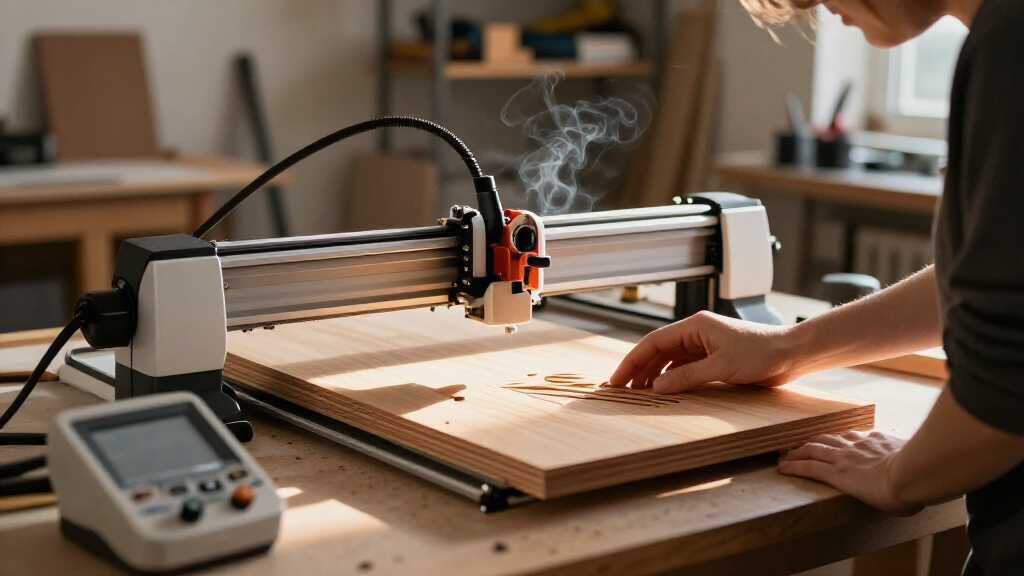

The best laser engravers balance material range, work area, safe operation, and ease of setup rather than relying on laser power alone. My best overall pick is the Aliencell X1 20W, whose higher output and dual cameras make it a strong fit for varied engraving and cutting work. The xTool M2 stands out for an enclosed, camera-guided workflow, while the Woxcker G1 Ultra offers a distinctive diode-and-fiber setup for buyers working with different materials. The main tradeoffs are power versus precision, open-frame flexibility versus enclosure, and specialized features versus a simpler setup. Read on for the full comparison and help matching a machine to your workspace, materials, and experience.

Get art and craft supplies delivered free with Prime
- Fast, free delivery on millions of items
- Prime Video, Amazon Music and more included
- Member-only deals all year
Key Takeaways
- The Aliencell X1 20W is the strongest all-round contender in this lineup for buyers who want higher diode output alongside dual-camera positioning.
- Enclosure and camera support separate convenience-focused picks: the xTool M2, Creality Falcon A1C, and BlazeX M3 prioritize a more contained workflow over the open-frame flexibility of several alternatives.
- Laser type matters as much as wattage: the Woxcker G1 Ultra pairs a diode laser with a fiber laser, a different approach from the diode-focused machines in most of the roundup.
- Large projects call for attention to work area as well as power: the 400 × 400 mm AlgoLaser MK3 15W provides a notably spacious bed, while the LASERGRACE X2 is aimed at a more compact 200 × 200 mm footprint.
- Maximum power is not the right target for every buyer: the Creality Falcon2 Pro 60W favors demanding cutting work, while lower-power choices may better suit engraving-focused projects and tighter workspace needs.
| AlgoLaser DIY Kit MK3 8W Laser Engraver with 3.5-Inch Touchscreen |  | Best for Beginner-Friendly Standalone Engraving | Laser power: 8W diode | Work area: 400 × 400 mm (15.75 × 15.75 inches) | Maximum speed: 15,000 mm/min | VIEW LATEST PRICE | See Our Full Breakdown |
| xTool M2 10W Enclosed Laser Engraver with Dual Cameras |  | Best Enclosed Pick for Craft-Room Use | Laser type: 10W diode | Safety class: Class 1 | Cameras: Built-in dual cameras | VIEW LATEST PRICE | See Our Full Breakdown |
| Aliencell X1 20W Laser Engraver and Cutter with Dual 8MP Cameras |  | Best for Large Projects and Batch Work | Laser power: 20W | Work area: 26 × 21 inches | Maximum speed: 600 mm/s | VIEW LATEST PRICE | See Our Full Breakdown |
| AlgoLaser MK3 15W Laser Engraver and Cutter, 400 × 400 mm Work Area |  | Best Value for Engraving and Cutting | Laser type: Diode | Laser power: 15W | Work area: 400 × 400 mm | VIEW LATEST PRICE | See Our Full Breakdown |
| Aliencell E1 10W Laser Engraver and Cutter with 8MP Camera |  | Best for Camera-Assisted Positioning | Laser power: 10W | Laser spot size: 0.03 × 0.03 mm | Maximum speed: 600 mm/s | VIEW LATEST PRICE | See Our Full Breakdown |
| Woxcker G1 Ultra Dual-Laser Engraver, 10W Fiber and 15W Diode |  | Best for Two-Laser Material Range | Laser system: 10W fiber and 15W diode | Maximum engraving speed: 5000 mm/s | Precision: 0.01 mm | VIEW LATEST PRICE | See Our Full Breakdown |
| Creality Falcon A1 10W Enclosed Laser Engraver |  | Best for Large Enclosed Diode Projects | Laser power: 10W diode | Engraving speed: Up to 600 mm/s | Engraving area: 15 × 12 inches | VIEW LATEST PRICE | See Our Full Breakdown |
| Creality Falcon A1C 10W AI Laser Engraver with Camera |  | Best for Guided Setup and Module Options | Included laser module: 10W | Compatible modules: 5W, 10W, and 1.2W | Work area: 150 × 150 × 148 mm | VIEW LATEST PRICE | See Our Full Breakdown |
| BlazeX M3 10W Laser Engraver and Cutter with Enclosure and Honeycomb Bed |  | Best Starter Kit | Laser power: 10W | Stated precision: 0.01 mm | Compatible materials: Wood, leather, glass, coated metal, acrylic | VIEW LATEST PRICE | See Our Full Breakdown |
| xTool F2 Dual Laser Engraver, 15W Diode and 5W IR |  | Best Compact Portable Dual-Laser | Laser types: 15W diode and 5W infrared | Camera: Built-in 50MP | Maximum speed: 6000 mm/s | VIEW LATEST PRICE | See Our Full Breakdown |
| Creality Falcon2 Pro 60W Laser Engraver and Cutter |  | Best Enclosed High-Power Pick | Laser power: Adjustable 60W, 40W, or 22W | Secondary laser: 1.6W | Safety design: Fully enclosed Class 1 | VIEW LATEST PRICE | See Our Full Breakdown |
| LONGER RAY5 20W Laser Engraver and Cutter |  | Best for a Large Open Work Area | Laser power: 20W | Beam spot size: 0.08 × 0.1 mm | Maximum processing speed: 10,000 mm/min | VIEW LATEST PRICE | See Our Full Breakdown |
| Twotrees TTS-10 Pro 10W Laser Engraver |  | Best Value for a Sturdy Mid-Size Frame | Optical power: 10W | Laser wavelength: 450 nm | Work area: 300 × 300 mm (approximately 11.8 × 11.8 in) | VIEW LATEST PRICE | See Our Full Breakdown |
| LASERGRACE X2 7W Laser Engraver and Cutter, 200 × 200 mm Workspace |  | Best for Small, Simple Projects | Laser power: 7W in title; 12W in description | Working area: 200 × 200 mm | Precision: 0.01 mm, as stated in title | VIEW LATEST PRICE | See Our Full Breakdown |
| Carverall K15 Pro 10W Laser Engraver and Cutter |  | Best Compact App-Controlled Pick | Laser power: 10W | Work area: 11.8 × 7.9 inches | Engraving precision: 0.01 mm | VIEW LATEST PRICE | See Our Full Breakdown |
| laser engraver | Laser power | Work area | Weight |
|---|---|---|---|
| AlgoLaser DIY Kit MK3 8W Laser | 8W diode | 400 × 400 mm (15.75 × 15.75 inches) | 8.59 pounds |
| xTool M2 10W Enclosed Laser En | — | — | — |
| Aliencell X1 20W Laser Engrave | 20W | 26 × 21 inches | 29.17 kg |
| AlgoLaser MK3 15W Laser Engrav | 15W | 400 × 400 mm | 7.59 pounds |
| Aliencell E1 10W Laser Engrave | 10W | 305 × 305 mm (12 × 12 inches) | 28.7 pounds |
| Woxcker G1 Ultra Dual-Laser En | — | 100 × 100 mm | 14.55 pounds |
| Creality Falcon A1 10W Enclose | 10W diode | — | — |
| Creality Falcon A1C 10W AI Las | — | 150 × 150 × 148 mm | — |
| BlazeX M3 10W Laser Engraver a | 10W | — | — |
| xTool F2 Dual Laser Engraver | — | — | 4.6 kg (10 pounds) |
| Creality Falcon2 Pro 60W Laser | Adjustable 60W, 40W, or 22W | — | — |
| LONGER RAY5 20W Laser Engraver | 20W | 400 × 365 mm | 10.68 lb |
| Twotrees TTS-10 Pro 10W Laser | — | 300 × 300 mm (approximately 11.8 × 11.8 in) | — |
| LASERGRACE X2 7W Laser Engrave | 7W in title; 12W in description | — | — |
| Carverall K15 Pro 10W Laser En | 10W | 11.8 × 7.9 inches | 2.68 kg |
More Details on Our Top Picks
AlgoLaser DIY Kit MK3 8W Laser Engraver with 3.5-Inch Touchscreen
The 8W AlgoLaser DIY Kit MK3 is a sensible starting point for crafters who want a roomy work area without making a computer part of every project. Its 3.5-inch touchscreen, onboard AlgoOS, material presets, and phone connectivity allow basic jobs to start directly on the machine. The 400 × 400 mm bed is larger than the Aliencell E1’s 305 × 305 mm area, giving you more room for signs and repeated small pieces. That breadth does not make it a heavy-duty cutter: the 8W diode is better suited to engraving and light batch work than demanding cuts. It also arrives mostly assembled, which reduces setup effort. Glass needs preparation, and plastics must be laser-safe, so material choice still calls for care.
Pros:- Built-in touchscreen and AlgoOS support basic projects without a computer.
- 400 × 400 mm work area accommodates larger pieces than the Aliencell E1’s 305 × 305 mm bed.
- 95% pre-assembled setup reduces initial assembly work.
- Material presets and included safety features support a more guided start.
Cons:- 8W output is better suited to engraving and light batch work than demanding cutting.
- Glass needs preparation, and only laser-safe plastics should be used.
- The touchscreen is useful for basic jobs but does not replace full desktop design tools.
Best for: New hobby engravers who want a generous work area, guided presets, and the option to create simple jobs without a computer.
Not ideal for: Buyers focused on frequent cutting or faster production, since the 8W diode is positioned for engraving and light batch projects.
- Laser power:8W diode
- Work area:400 × 400 mm (15.75 × 15.75 inches)
- Maximum speed:15,000 mm/min
- Display:3.5-inch HD IPS touchscreen
- Connectivity:WiFi, USB, SD card, PC, and phone app
- Compatible software:LightBurn, LaserGRBL, and AlgoLaser app
- Safety features:Flame detection, overheat alerts, and emergency stop
- Weight:8.59 pounds
Our verdict“Choose this AlgoLaser if a large work area and standalone beginner-friendly controls matter more than higher cutting power.”
xTool M2 10W Enclosed Laser Engraver with Dual Cameras
The xTool M2 makes the strongest case here for a contained, camera-guided craft setup. Its Class 1 enclosure and dual cameras give users a live workspace view, while xTool Studio’s templates and AI image generator can shorten the path from idea to craft project. It handles materials such as wood, leather, felt, fabric, and paper, with cutting as well as engraving in its intended craft range. Unlike the open-frame AlgoLaser DIY Kit MK3, this is a heavier enclosed machine, so it suits a dedicated work surface better than a portable setup. Its expansion path is appealing but not complete out of the box: color printing, rotary engraving, and IR engraving each require optional modules. Choose it for containment and guided workflow, not an all-in-one bundle.
Pros:- Class 1 enclosure provides a contained setup compared with the open-frame AlgoLaser DIY Kit MK3.
- Dual cameras show the workspace for design placement and preview.
- Supports cutting and engraving across common craft materials.
- xTool Studio supplies templates and an AI image generator for project planning.
Cons:- CMYK printing, rotary engraving, and IR engraving require separately purchased modules.
- At 36.2 pounds, it is less convenient to move than the lighter open-frame options.
- The listed compatible materials focus on craft materials rather than a broad range of industrial substrates.
Best for: Craft-room users who work with paper, fabric, felt, leather, and wood and want an enclosed machine with camera-based positioning.
Not ideal for: Buyers who need a lightweight or self-contained expandable setup, or who expect color, rotary, or IR functions without separate modules.
- Laser type:10W diode
- Safety class:Class 1
- Cameras:Built-in dual cameras
- Compatible materials:Cardstock, felt, leather, wood, fabric, and paper
- Included items:xTool M2 machine and base material kit
- Optional accessories:CMYK Inkjet module, RA3 Lite Rotary, and 3W IR laser
- Item weight:36.2 pounds
Our verdict“Pick the xTool M2 for enclosed, camera-assisted craft work, provided you are comfortable treating its expansion modules as separate purchases.”
Aliencell X1 20W Laser Engraver and Cutter with Dual 8MP Cameras
The Aliencell X1 earns its place for buyers whose projects outgrow compact hobby beds. Its 26 × 21-inch work area can fit oversized pieces or multiple smaller items in one layout, while 20W power makes it a more capable engraving-and-cutting choice than the 8W AlgoLaser DIY Kit MK3. Dual 8MP cameras, cross-laser positioning, and preview simulation help manage that larger workspace before a job begins. The 6.86-inch touchscreen, onboard storage, and offline operation also mean a PC need not stay connected during a run. The tradeoff is a machine weighing 29.17 kg: it is better treated as a fixed workstation than something to move between projects. Its manual operation mode may also call for more hands-on setup.
Pros:- 26 × 21-inch work area accommodates substantially larger layouts than the 400 × 400 mm AlgoLaser MK3.
- 20W laser power gives it a stronger cutting-and-engraving profile than the 8W AlgoLaser DIY Kit MK3.
- Dual 8MP cameras, cross-laser positioning, and preview simulation assist with alignment.
- Touchscreen, onboard storage, and offline operation support PC-free runs.
Cons:- 29.17 kg weight makes relocation difficult.
- Manual operation mode may require more hands-on setup.
- Its large footprint is excessive for buyers working only on small craft pieces.
Best for: Makers and small production shops handling oversized pieces or batches who want camera-assisted positioning and offline operation.
Not ideal for: Occasional hobbyists with limited bench space or anyone who needs a lightweight engraver that is easy to relocate.
- Laser power:20W
- Work area:26 × 21 inches
- Maximum speed:600 mm/s
- Cameras:Dual 8MP
- Display:6.86-inch touchscreen
- Offline operation:Supported
- Preview deviation:<5%
- Weight:29.17 kg
- Safety features:Class 1, flame sensors, and fire-resistant materials
Our verdict“Choose the Aliencell X1 when large-format work and batch capacity outweigh the need for a compact, easy-to-move machine.”
AlgoLaser MK3 15W Laser Engraver and Cutter, 400 × 400 mm Work Area
For buyers who want cutting capability without giving up a generous bed, the 15W AlgoLaser MK3 is the more versatile choice over the 8W DIY Kit MK3. Both offer a 400 × 400 mm work area, touchscreen controls, and mostly assembled delivery, but the 15W model is specifically positioned for engraving and cutting. Its built-in AlgoOS tools and more than 400 projects make it approachable for quick jobs, while LightBurn and LaserGRBL provide a path to more involved computer-designed work. That flexibility has limits: the built-in text tool supports English letters, numbers, and punctuation, and advanced design work requires a compatible computer. It is a lighter, open-frame alternative to the enclosed xTool M2, but buyers seeking containment should favor that model instead.
Pros:- 15W diode is positioned for both engraving and cutting, unlike the 8W AlgoLaser DIY Kit MK3’s lighter-duty focus.
- 400 × 400 mm work area supports larger craft projects.
- Touchscreen, AlgoOS, and 400+ built-in projects enable offline basic jobs.
- 95% pre-assembled delivery reduces setup work.
Cons:- Advanced design work in LightBurn or LaserGRBL requires a compatible computer.
- Built-in text entry is limited to English letters, numbers, and punctuation.
- Its open-frame design lacks the enclosed format of the xTool M2.
Best for: Crafters who want one 400 × 400 mm machine for engraving and cutting, with onboard projects for simple jobs and desktop software for more advanced designs.
Not ideal for: Users who need an enclosed Class 1 design or plan to create complex designs entirely through the built-in text tools.
- Laser type:Diode
- Laser power:15W
- Work area:400 × 400 mm
- Touchscreen:3.5 inches
- Built-in projects:400+
- Assembly:95% pre-assembled
- Software compatibility:LightBurn and LaserGRBL
- Weight:7.59 pounds
Our verdict“Choose this 15W AlgoLaser if cutting and engraving on a large open bed matter more than enclosure or computer-free advanced design.”
Aliencell E1 10W Laser Engraver and Cutter with 8MP Camera
The Aliencell E1 is the lineup’s focused pick for buyers who value design placement more than a very large bed. Its 8MP autofocus camera and preview tools help position artwork on a 305 × 305 mm workspace, while vibration compensation is intended to preserve crisp results at higher speeds. That makes it a more guided option than the touchscreen-led AlgoLaser DIY Kit MK3, though the AlgoLaser gives you a larger 400 × 400 mm area and a more substantial set of built-in material presets. The E1 supports LightBurn and can work with optional 3W or 20W modules, but those modules are sold separately; the rotary attachment is also an extra purchase. Its 10W configuration is a middle ground, not the ready-to-go choice for users seeking the X1’s 20W power and large-format capacity.
Pros:- 8MP autofocus camera and preview tools help place designs on material.
- Vibration compensation supports crisp engraving at high speeds.
- 305 × 305 mm bed accommodates full-size sheets within its stated dimensions.
- Frame supports optional 3W and 20W laser modules and a rotary attachment.
Cons:- Optional 3W and 20W laser modules are sold separately.
- Rotary attachment is sold separately.
- Its work area is smaller than the 400 × 400 mm AlgoLaser MK3 models.
Best for: LightBurn users making repeatable, carefully positioned projects on materials that fit a 305 × 305 mm bed.
Not ideal for: Makers who routinely engrave oversized pieces, want higher power immediately, or expect rotary work without buying an attachment.
- Laser power:10W
- Laser spot size:0.03 × 0.03 mm
- Maximum speed:600 mm/s
- Maximum acceleration:20,000 mm/s²
- Camera:8MP autofocus camera
- Work area:305 × 305 mm (12 × 12 inches)
- Supported laser modules:3W, 10W, and 20W; 3W and 20W modules sold separately
- Software compatibility:LightBurn
- Weight:28.7 pounds
Our verdict“Choose the Aliencell E1 if camera-guided placement and LightBurn compatibility matter more than a larger bed or included expansion hardware.”
Woxcker G1 Ultra Dual-Laser Engraver, 10W Fiber and 15W Diode
The G1 Ultra pairs a 10W fiber laser with a 15W diode, giving it a broader material role than the diode-only Creality Falcon A1. The fiber source is intended for marking compatible metals, while the diode handles wood engraving and cutting tasks; that split makes this a more versatile choice for a small workshop working across different materials. Its smart camera and electric focus can help with artwork placement and repeat jobs without relying only on manual alignment. The tradeoff is its 100 × 100 mm work area, which is much smaller than the Falcon A1’s 15 × 12-inch bed and restricts project size. At 14.55 pounds, it is also a compact desktop machine, not a large-format cutter. I’d choose it for material variety over oversized work.
Pros:- Fiber and diode sources cover different engraving and marking tasks.
- Smart camera assists with artwork positioning and repeat layouts.
- Electric focusing and adjustable height accommodate different workpieces.
- Enclosed design includes tilt protection, a child lock, and an emergency stop.
Cons:- The 100 × 100 mm work area limits project dimensions.
- Results depend on material, artwork, and settings, so workflows may need adjustment.
- The dual-laser setup does not make each source suitable for every material.
Best for: Makers who want one enclosed desktop machine for compatible metal marking and smaller wood projects.
Not ideal for: Buyers making large signs, batch layouts, or oversized panels, because the 100 × 100 mm work area is restrictive.
- Laser system:10W fiber and 15W diode
- Maximum engraving speed:5000 mm/s
- Precision:0.01 mm
- Work area:100 × 100 mm
- Dimensions:11.81 × 8.66 × 11.53 inches
- Weight:14.55 pounds
- Safety:Enclosed Class 1 design, tilt protection, child lock, emergency stop
- Software compatibility:LightBurn, CutLabX, GRBL-compatible workflows
Our verdict“Choose the G1 Ultra if you need both compatible metal marking and diode engraving in a compact enclosure and can work within its small bed.”
Creality Falcon A1 10W Enclosed Laser Engraver
Among these five picks, the Falcon A1 offers the largest stated work area, at 15 × 12 inches, making it a stronger fit for signs and larger flat pieces than the Woxcker G1 Ultra or xTool F2. Its pre-assembled, enclosed design reduces setup work, while the built-in camera helps place designs on the material. The CoreXY system reaches up to 600 mm/s, and the listed cutting capacity covers wood up to 6 mm in one pass. Those capabilities suit users who want a roomy diode machine rather than the G1 Ultra’s metal-marking flexibility. The tradeoff is material scope: this 10W diode is not suitable for highly reflective surfaces such as mirror-finished metals or mirrored acrylic. It is also a substantial 30 × 25 × 15-inch unit, and the honeycomb panel size is specific.
Pros:- 15 × 12-inch work area accommodates larger projects than the compact dual-laser models here.
- Pre-assembled enclosure lowers setup effort.
- Camera assists with positioning artwork on the material.
- Emergency stop and lid-opening pause add useful safety controls.
Cons:- Diode laser is not suitable for highly reflective materials such as mirror-finished metals or mirrored acrylic.
- The machine has a sizable 30 × 25 × 15-inch footprint.
- Compatible honeycomb panel dimensions are specific.
Best for: Home studios and small businesses engraving larger wood, leather, or acrylic pieces that benefit from a roomy enclosed bed.
Not ideal for: Makers who need fiber-style metal marking, a compact footprint, or flexibility to use a different honeycomb panel size.
- Laser power:10W diode
- Engraving speed:Up to 600 mm/s
- Engraving area:15 × 12 inches
- Laser spot size:0.06 × 0.08 mm
- Listed cutting capacity:Up to 6 mm wood and 9.6 mm black acrylic in one pass
- Safety classification:Class 1 enclosed design
- Dimensions and weight:30 × 25 × 15 inches; 28.7 pounds
- Software compatibility:Falcon Design Space, LightBurn, LaserGRBL
Our verdict“Pick the Falcon A1 if a large enclosed work area and straightforward setup matter more than metal marking or compact size.”
Creality Falcon A1C 10W AI Laser Engraver with Camera
The Falcon A1C puts setup assistance first: its AI camera, automatic focus, and design tools aim to make positioning and job preparation less dependent on manual adjustments. That gives it a different appeal from the larger-bed Falcon A1, which offers a 15 × 12-inch area but does not list automatic focus or interchangeable modules. The A1C’s 150 × 150 × 148 mm workspace is better suited to compact pieces than large signs, and its platform can work with compatible 5W, 10W, and 1.2W modules. Only one module is included, however, so expanding the setup means acquiring compatible modules separately. Its enclosed Class 1 design is suited to home, studio, or classroom use, but the modest work area makes it a poor fit for production runs of larger items.
Pros:- AI camera and automatic focus assist with positioning and setup.
- Platform supports compatible 5W, 10W, and 1.2W modules.
- Enclosed design is built to meet FDA Class 1 requirements.
- Compact work area suits smaller wood, leather, and acrylic pieces.
Cons:- The 150 × 150 mm footprint limits project size.
- Only one laser module is included with each package.
- Its listed positioning accuracy is less precise than the 0.01 mm claims on some other models in this batch.
Best for: Beginners and classroom makers who value camera-assisted alignment, automatic focus, and a compact enclosed workspace.
Not ideal for: Users producing large panels or expecting multiple laser modules in the box; the area is small and only one module is included.
- Included laser module:10W
- Compatible modules:5W, 10W, and 1.2W
- Work area:150 × 150 × 148 mm
- Engraving speed:Up to 15,000 mm/min
- Positioning accuracy:Up to 0.1 mm
- Camera and focus:Built-in AI HD camera and automatic focus
- Dimensions and weight:18.5 × 16.54 × 15.75 inches; 30.9 pounds
- Safety:Enclosed design; FDA Class 1 requirements
Our verdict“Choose the Falcon A1C for guided setup and future module flexibility on small projects, not for a large working area.”
BlazeX M3 10W Laser Engraver and Cutter with Enclosure and Honeycomb Bed
The BlazeX M3 stands out for what comes in the box: its starter kit includes an enclosure, honeycomb bed, tool kit, and 13 engraving materials. That gives a first-time owner more to start with than the xTool F2, whose listed bundle includes a base plate and base material kit, while leaving accessories such as a purifier optional. The M3 supports materials including wood, leather, glass, coated metal, and acrylic, with LightBurn, LaserGRBL, and CutLabX compatibility for different workflows. Its 10W laser and 0.01 mm stated precision make it a general-purpose entry point, not a high-power cutting specialist. The description does not provide a work-area measurement or speed, so buyers have less information for judging throughput and project scale. Air assist, risers, a rotary roller, and a purifier are optional upgrades.
Pros:- Starter bundle includes an enclosure, honeycomb bed, tool kit, and 13 materials.
- Listed material range includes wood, leather, glass, coated metal, and acrylic.
- Lid and tilt sensors trigger an automatic stop.
- Compatible with LightBurn, LaserGRBL, and CutLabX.
Cons:- The 10W laser may limit cutting capability compared with higher-powered machines.
- Rotary roller, risers, air assist, and purifier are optional upgrades.
- The supplied product data does not state the work area or engraving speed.
Best for: New hobbyists who want an enclosed machine with a honeycomb bed, tools, and sample materials included for early projects.
Not ideal for: Buyers planning frequent thick-material cutting or needing clearly stated work-area and speed figures before choosing a machine.
- Laser power:10W
- Stated precision:0.01 mm
- Compatible materials:Wood, leather, glass, coated metal, acrylic
- Included components:Protective enclosure, tool kit, 13 engraving materials, honeycomb bed
- Safety features:Lid and tilt stop; Class 1 enclosure design
- Software compatibility:LightBurn, LaserGRBL, CutLabX
- Dimensions:14.28 × 11.28 × 8.6 inches
- Power:120 volts; corded electric
Our verdict“Choose the BlazeX M3 if a ready-to-start kit matters more than cutting power or detailed published performance figures.”
xTool F2 Dual Laser Engraver, 15W Diode and 5W IR
The xTool F2 combines a 15W diode with a 5W infrared laser in an assembled enclosure weighing 4.6 kg, making it the most portable dual-source option in this group. Compared with the Woxcker G1 Ultra, it has a 50MP camera and a listed maximum speed of 6000 mm/s, while the Woxcker provides a stated 100 × 100 mm work area and fiber laser. These sources serve different material tasks, so the F2’s diode and IR capabilities should not be treated as interchangeable. Its camera-assisted alignment can help visualize and position jobs, and the enclosed body suits a compact workspace. The compromises are the separate capabilities of its two lasers and the fact that the purifier and slide extension are optional. The supplied data also does not state a work-area size, which makes project-scale comparisons harder.
Pros:- 15W diode and 5W infrared lasers support different engraving and marking tasks.
- Built-in 50MP camera assists with workspace visualization and alignment.
- Arrives assembled and weighs 4.6 kg for easier relocation.
- Fully enclosed design includes a built-in fan.
Cons:- The diode and infrared sources have different material capabilities, so the correct laser must be selected for each task.
- Purifier and slide extension are optional accessories.
- The supplied specifications do not state a work-area size.
Best for: Makers who need a portable enclosed machine for smaller jobs across materials suited to diode and infrared engraving.
Not ideal for: Buyers who need a published large work area, fiber-laser metal marking, or a purifier and slide extension included.
- Laser types:15W diode and 5W infrared
- Camera:Built-in 50MP
- Maximum speed:6000 mm/s
- Alignment accuracy:Up to 0.1 mm
- Motion accuracy:0.00199 inches
- Weight:4.6 kg (10 pounds)
- Dimensions:6.89 × 9.33 inches (length × width)
- Design and warranty:Fully enclosed; 1-year warranty
Our verdict“Pick the F2 if portability, an enclosure, and two distinct laser sources matter more than a clearly specified large work area.”
Creality Falcon2 Pro 60W Laser Engraver and Cutter
The Falcon2 Pro is the standout choice here for buyers who want an enclosed machine with more power flexibility than the open-frame LONGER RAY5 20W or the Twotrees TTS-10 Pro. Its adjustable 60W, 40W, and 22W output supports a wider range of engraving and cutting jobs, while the separate 1.6W laser is intended for positioning and fine engraving. The built-in camera helps place designs and align batches, and air assist and exhaust management address smoke and burn marks during work. The enclosure, viewing window, emergency stop, and safety monitoring give it a more contained setup than the other listed diode machines. The tradeoff is that its work area is not specified, making project-size comparisons difficult; listed weight and dimensions also appear unusual and merit verification before purchase.
Pros:- Selectable 60W, 40W, and 22W output provides flexibility across materials and task types.
- Enclosed Class 1 design includes a viewing window, emergency stop, and safety monitoring.
- Built-in HD camera supports material alignment, previews, and repeat batch placement.
- Air assist and exhaust management help control smoke and reduce burn marks.
Cons:- The product data does not state the working-area dimensions.
- The listed weight and dimensions appear inconsistent with a full enclosed machine and should be verified.
- Its feature-rich enclosed setup is less suited to buyers seeking a simple, open-frame entry point.
Best for: Makers who want an enclosed, higher-output engraver for varied cutting and engraving tasks, with camera-assisted placement and smoke management.
Not ideal for: Buyers who need a clearly stated work area or a lightweight, open-frame machine that is easy to move and compare by footprint.
- Laser power:Adjustable 60W, 40W, or 22W
- Secondary laser:1.6W
- Safety design:Fully enclosed Class 1
- Camera:Built-in HD camera
- Features:Air assist, exhaust management, emergency stop, and safety monitoring
- Software:LightBurn and LaserGRBL
- Compatible materials:Wood, acrylic, leather, bamboo, slate, and coated metal
- Model:Falcon2 Pro 60W
Our verdict“Choose the Falcon2 Pro if enclosure, adjustable output, and camera alignment matter more than having a clearly documented work area.”
LONGER RAY5 20W Laser Engraver and Cutter
The LONGER RAY5 20W earns its place for buyers who need a generous, clearly stated work surface: its 400 × 365 mm area is larger than the Twotrees TTS-10 Pro’s 300 × 300 mm bed and the Carverall K15 Pro’s compact 11.8 × 7.9-inch area. A 0.08 × 0.1 mm beam spot and precision rails are aimed at detailed work, while the stated maximum speed of 10,000 mm/min gives a useful reference for job planning. The touchscreen and four connection options—USB, TF card, Wi-Fi, and app—make it less dependent on a computer at the machine than many open-frame alternatives. It supports LightBurn and LaserGRBL, too. Its main compromise is setup: an air pump is recommended for better results, and the open-frame format offers less containment than the enclosed Creality Falcon2 Pro.
Pros:- 400 × 365 mm work area accommodates larger pieces than the TTS-10 Pro and K15 Pro.
- 3.5-inch color touchscreen and USB, TF card, Wi-Fi, and app connections offer flexible operation.
- Compatible with both LightBurn and LaserGRBL.
- Compressed beam and precision rails are suited to detailed engraving.
Cons:- An air pump is recommended for improved engraving and cutting results.
- Open-frame construction does not provide the containment of the enclosed Falcon2 Pro.
- Maximum processing speed is lower on paper than the TTS-10 Pro’s stated maximum.
Best for: Makers working on larger signs, panels, or batches who want a sizable open work area and multiple ways to send jobs.
Not ideal for: Buyers who prioritize an enclosed safety setup or want air assistance included as a settled part of the workflow.
- Laser power:20W
- Beam spot size:0.08 × 0.1 mm
- Maximum processing speed:10,000 mm/min
- Work area:400 × 365 mm
- Touchscreen:3.5-inch color
- Connection modes:USB, TF card, Wi-Fi, and app
- Software:LaserGRBL and LightBurn
- Weight:10.68 lb
- Warranty:1 year
Our verdict“Pick the RAY5 if a large work area and flexible job transfer matter more than enclosure or an included air pump.”
Twotrees TTS-10 Pro 10W Laser Engraver
The Twotrees TTS-10 Pro is a practical middle ground for makers who want a substantial work area and a rigid frame without stepping up to the LONGER RAY5 20W. Its 300 × 300 mm bed is roomier than the Carverall K15 Pro’s A4-sized area, while the 10W optical output and 0.069 mm spot size suit detailed work on wood, bamboo, leather, and other listed materials. The aluminum-alloy frame and dual Y-axis motors give it a more substantial mechanical setup than a compact desktop pick such as the K15 Pro. It also supports LightBurn and LaserGRBL, with USB or TF card file transfer. The tradeoffs are a workspace that still limits larger pieces and a less direct path to bare-metal marking: bare stainless steel and uncoated metal need preparation or marking spray. TF-card operation also requires a separate monitor.
Pros:- 300 × 300 mm work area is larger than the Carverall K15 Pro’s listed workspace.
- 10W optical power and a 0.069 mm spot size support detailed engraving.
- Aluminum-alloy frame and dual Y-axis motors provide a robust platform.
- Works with LightBurn and LaserGRBL and accepts USB or TF-card files.
Cons:- Bare stainless steel and uncoated metal require surface preparation or marking spray.
- The 300 × 300 mm workspace may not fit projects larger than about 12 inches.
- TF-card operation requires a monitor purchased separately.
Best for: Hobby makers who want a 300 mm square workspace, a sturdy frame, and familiar desktop engraving software.
Not ideal for: Users engraving large panels or expecting direct engraving on bare steel without surface preparation or marking spray.
- Optical power:10W
- Laser wavelength:450 nm
- Work area:300 × 300 mm (approximately 11.8 × 11.8 in)
- Maximum speed:30,000 mm/min
- Laser spot size:0.069 mm
- Frame:Aluminum alloy and injection-molded parts
- Motors:Dual Y-axis 42 stepper motors
- Software:LightBurn and LaserGRBL
- File transfer:USB cable or TF card
Our verdict“Choose the TTS-10 Pro for a sturdy, mid-size engraving platform, but look to the RAY5 for larger projects or the Falcon2 Pro for an enclosure.”
LASERGRACE X2 7W Laser Engraver and Cutter, 200 × 200 mm Workspace
The LASERGRACE X2 is the straightforward pick for buyers whose projects fit within a 200 × 200 mm bed and who want to work with common craft materials. Its aluminum-alloy structure and LightBurn and LaserGRBL compatibility give it a familiar setup, while the included goggles, USB cable, power adapter, tool kit, and sample materials make the package more ready to start with than the Carverall K15 Pro, whose appeal leans more on app and offline controls. The X2’s smaller workspace is also a clear step down from the Twotrees TTS-10 Pro’s 300 × 300 mm area, so it suits small signs, tags, and modest custom pieces rather than larger panels. There is a notable specification uncertainty: the title lists 7W power, but the description gives a different figure. I would not choose it when power claims are central to the buying decision.
Pros:- 200 × 200 mm workspace accommodates small custom designs and craft pieces.
- Aluminum-alloy structure provides a sturdier frame than a minimal lightweight setup.
- Compatible with LightBurn and LaserGRBL.
- Includes goggles, a tool kit, sample materials, USB cable, and power adapter.
Cons:- Product data conflicts on laser power: the title lists 7W while the description lists 12W.
- The 200 × 200 mm work area is substantially smaller than the TTS-10 Pro and LONGER RAY5 beds.
- The listed material compatibility is limited to wood, acrylic, and leather rather than a broader set of confirmed materials.
Best for: Beginners and occasional crafters making small wood, acrylic, or leather pieces who value a basic software-compatible setup.
Not ideal for: Buyers with larger projects or anyone who needs reliable, consistent laser-power specifications before choosing a machine.
- Laser power:7W in title; 12W in description
- Working area:200 × 200 mm
- Precision:0.01 mm, as stated in title
- Frame material:Aluminum alloy
- Software:LightBurn and LaserGRBL
- Included components:Laser goggles, USB cable, power adapter, aluminum sheet, tool kit, kraft paper, and two basswood pieces
- Listed materials:Wood, acrylic, and leather
Our verdict“Consider the X2 for small craft work and a basic included kit, but verify its laser-power specification before buying.”
Carverall K15 Pro 10W Laser Engraver and Cutter
The Carverall K15 Pro makes the most sense for desk-based makers who value compact dimensions and simple repeat jobs over a broad work area. Its 11.8 × 7.9-inch workspace is smaller than the Twotrees TTS-10 Pro’s square bed and far below the LONGER RAY5’s 400 × 365 mm area, but it keeps the machine suited to smaller tags, panels, and craft pieces. Wireless app control, TF-card offline operation, saved-file memory, and one-touch focus make it less dependent on a computer during routine jobs. It also supports LightBurn and LaserGRBL, with CutLabX as another option. Multi-pass cutting is stated for plywood and acrylic, though thicker stock takes longer. Bare-metal engraving requires the optional 1W IR head, so buyers seeking metal work should compare it with options offering a more suitable setup out of the box.
Pros:- Compact 11.8 × 7.9-inch work area suits small desktop projects.
- Wireless app control and TF-card offline operation provide flexible job handling.
- One-touch focus and saved-file memory support repeat work.
- Compatible with CutLabX, LightBurn, and LaserGRBL, with an optional IR-head upgrade.
Cons:- Bare-metal engraving requires the optional 1W IR laser head.
- The work area is smaller than the TTS-10 Pro and LONGER RAY5.
- Cutting thicker plywood or acrylic requires multiple passes.
Best for: Desk-based hobbyists making small repeat projects who want app control, offline file operation, and a simple focusing routine.
Not ideal for: Makers who need to process large sheets or engrave bare metal without buying an optional IR laser head.
- Laser power:10W
- Work area:11.8 × 7.9 inches
- Engraving precision:0.01 mm
- Maximum speed:15,000 mm/min
- Cutting capacity:Multi-pass cutting stated up to 12 mm plywood and 8 mm acrylic
- Connectivity and control:Wireless app control and TF-card offline operation
- Software:CutLabX, LightBurn, and LaserGRBL
- Weight:2.68 kg
- Warranty:1 year
Our verdict“Pick the K15 Pro for compact, repeatable craft jobs and app-based control, not for large workpieces or out-of-box bare-metal engraving.”

How We Picked
I compared the 15 machines against the needs that most affect a buying decision: laser type and stated output, usable work area, material flexibility, positioning aids, enclosure, and setup demands. I treated cameras and touchscreens as workflow features, not proof of engraving quality; a useful camera can simplify placement, but it does not replace correct focus, material settings, or ventilation. I also weighed whether a machine’s format and feature set fit a clear buyer need, from compact craft use to more demanding cutting tasks.
The ranking favors machines with a compelling balance of capability and usability, then gives specialist models credit when their tradeoffs suit a distinct audience. That puts the Aliencell X1 20W near the top as a versatile higher-output option, while enclosed camera-equipped models score well for guided operation. The Creality Falcon2 Pro 60W is a more specialized choice rather than an automatic winner: its output is most relevant to buyers who need substantial cutting capacity. Since listed wattage alone cannot predict results across materials, I also considered work area, laser type, and the practical demands of running each format.
Factors to Consider When Choosing Best Laser Engravers
Before choosing among these best laser engravers, start with the work you actually plan to do. The right machine depends on materials, project size, available space, and how much setup you are willing to manage—not simply the highest wattage or longest feature list.
Match the laser type to your materials
Diode and fiber lasers are not interchangeable tools, so identify your usual materials before comparing output figures. A diode machine can suit many craft and workshop jobs, while a fiber laser is designed around a different set of marking tasks, particularly on metals. A dual-laser machine such as the Woxcker G1 Ultra can broaden material options, but that versatility may be unnecessary if your projects stay within one material group. Check the manufacturer’s material guidance for the exact machine and finish you plan to use rather than assuming any laser will mark every surface. Also separate engraving from cutting: cutting generally demands more power, slower passes, or both. Buying for occasional metal marking when you mostly engrave wood can mean paying for capability that sits unused.
Treat wattage as one part of cutting performance
Higher stated output can make a machine more suitable for demanding cuts, but it does not tell the whole story. Lens, focus, motion system, material thickness, and the number of passes all affect the result. The Falcon2 Pro 60W is the lineup’s high-output choice, yet it makes sense mainly when cutting capacity is central to the work. For engraving details, a buyer may care more about reliable positioning and the right work area than maximum wattage. Look for guidance on supported materials and cutting limits, and leave room in your expectations for material variation. Avoid choosing a machine solely by comparing wattage numbers from different laser types.
Choose a work area for real projects, not occasional exceptions
Measure the largest item you expect to engrave, then allow for positioning and any fixtures or jigs you will use. A larger bed such as the AlgoLaser MK3 15W’s 400 × 400 mm area can reduce the need to split or reposition broad projects, but it also takes more room on a bench. The LASERGRACE X2’s 200 × 200 mm workspace may fit a compact hobby area better, though it limits the size of a single setup. Check whether the machine can handle longer materials through a pass-through design if that matters to your work; bed dimensions alone may not answer that. Buyers often overestimate how frequently they need a large format or underestimate how much clear bench space it requires. Match the footprint to both your biggest regular project and your available workspace.
Decide how much enclosure and guidance you need
An enclosure can help contain light and debris and may make a machine easier to place in a shared workspace, but it does not remove the need to follow safety instructions or manage fumes. Open-frame units can offer easier access to larger or unusual pieces, yet they ask more of the operator and the surrounding setup. Cameras and touchscreens may reduce alignment steps, particularly when placing designs on small or irregular items, but they cannot correct a poor focus or unsuitable material settings. If this is your first machine, prioritize clear controls, accessible setup information, and a workflow you can repeat. Experienced users with a dedicated work area may prefer a more open format instead of paying for guidance features they rarely use. Check what ventilation and protective measures the manufacturer requires before deciding where the engraver will live.
Budget for the full working setup
The machine is only one part of an engraving station. Ventilation, a stable work surface, protective equipment, materials, and any rotary or other project-specific accessories can shape the actual cost and effort of ownership. An enclosed model may simplify some aspects of placement, while an open-frame unit may call for more planning around the surrounding area. Before buying, check which accessories come with the machine and which are optional; product names do not always reveal what is included. Also consider how easily you can access replacement parts and maintenance instructions. A lower initial outlay can be a poor fit if the missing accessories are essential for your intended work. Plan the complete setup around your materials and space rather than comparing machines in isolation.
Frequently Asked Questions
Is a 20W diode engraver a better choice than a 10W model for a first machine?
Not automatically. More output can suit buyers who expect to cut more often, but it does not make setup, focusing, or material selection simpler. A 10W machine may be a more manageable fit for engraving-led projects, especially if its enclosure or camera support makes positioning easier. Compare the intended materials, work area, and safety setup alongside wattage. If you are undecided, list your most common projects and choose around those rather than a hypothetical future job.
Can one laser engraver handle wood, metal, and other materials?
Some machines cover a wider material range than others, but no single specification guarantees good results on every surface. Laser type plays a major role, which is why the Woxcker G1 Ultra’s diode-and-fiber pairing differs from a diode-only machine. Coatings, color, thickness, and surface finish can also change how a material responds. Consult the manufacturer’s compatibility guidance for the exact model and material, and test settings on a suitable sample before committing a finished piece. If metal marking is a regular requirement, prioritize a machine designed for that task instead of assuming a general-purpose diode will suffice.
Do I need an enclosed laser engraver if I have a separate workshop?
A dedicated workshop can make an open-frame machine easier to accommodate, but it does not remove the need for protective measures, ventilation, and controlled access. An enclosure may offer a more contained working arrangement and can be useful when other people share the space. It can also limit how easily you place oversized or unusual objects, depending on the design. Check the manufacturer’s safety and ventilation instructions for either format before purchase. Choose based on the full workspace and the items you plan to engrave, not on the assumption that an enclosure alone makes operation risk-free.
Will a camera make engraving alignment accurate enough for small or irregular objects?
A camera can make it easier to position artwork relative to a visible object, which is helpful when placement matters. Its usefulness still depends on setup, calibration, focus, and the shape of the item. Curved or uneven surfaces can present alignment challenges that a camera does not solve by itself. For repeat work, use a consistent fixture or jig and check alignment on a sample first. Buyers who mainly engrave standard blanks may find that careful manual placement is enough, while frequent one-off placement can make camera assistance more valuable.
Should I choose a large work area if my projects are usually small?
A larger bed is useful when you regularly handle broad pieces, batch several items, or need room for fixtures. If your work is small and consistent, a compact workspace may take up less bench area and be easier to place in a home workshop. Remember that a larger machine can affect storage, ventilation planning, and how you move materials around the work area. Measure your most common projects and the available surface before choosing. For occasional oversized work, check whether the machine offers a practical way to handle it rather than buying a larger format that your regular jobs do not use.
Conclusion
For the widest mix of engraving and cutting tasks, I would start with the Aliencell X1 20W as the best overall pick. Buyers focused on guided, contained operation should compare the xTool M2 and camera-equipped enclosed options, while the Woxcker G1 Ultra is the best fit for those who specifically need both diode and fiber laser capabilities. For high-demand cutting, the Creality Falcon2 Pro 60W is the premium, high-output choice; for larger projects, the AlgoLaser MK3 15W stands out for its 400 × 400 mm work area. Beginners should prioritize an enclosed format and helpful positioning tools, such as those found on the Creality Falcon A1C, rather than chasing maximum power. My best-value pick is the Twotrees TTS-10 Pro for buyers seeking a straightforward 10W diode option, while compact-workspace shoppers should look closely at the LASERGRACE X2. Choose according to your materials, project size, and working space first; those needs will narrow this list more reliably than wattage alone.