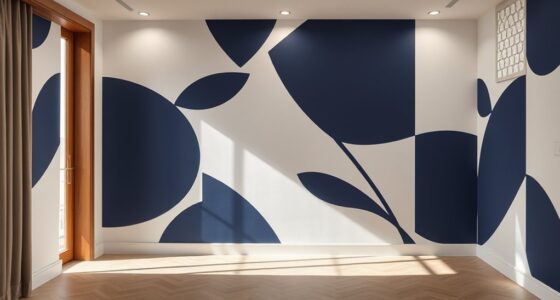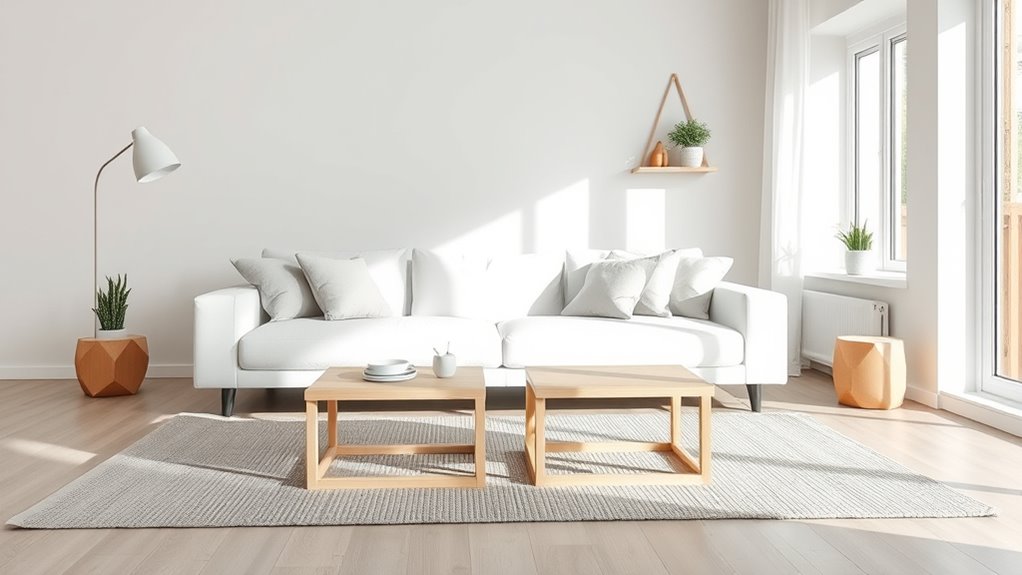
Scandinavian design blends timeless simplicity with functionality to create inviting, clutter-free spaces. You’ll notice a focus on natural materials like wood, wool, and linen, which add warmth and texture. The color palette emphasizes neutral tones that enhance natural light, making rooms feel bright and airy year-round. Practical furniture and clever storage keep everything organized without sacrificing style. To discover how this design approach promotes well-being and eco-friendliness, keep exploring the principles behind it.
Key Takeaways
- Scandinavian design emphasizes minimalist aesthetics, natural materials, and clutter-free spaces to create timeless, elegant environments.
- It employs neutral color palettes and maximizes natural light for bright, inviting interiors year-round.
- Natural elements like wood, wool, and linen add warmth, texture, and sustainability to the design.
- Prioritizing functionality, furniture combines sleek form with comfort and clever storage solutions.
- The style promotes well-being, simplicity, and environmental responsibility, ensuring relevance beyond fleeting trends.
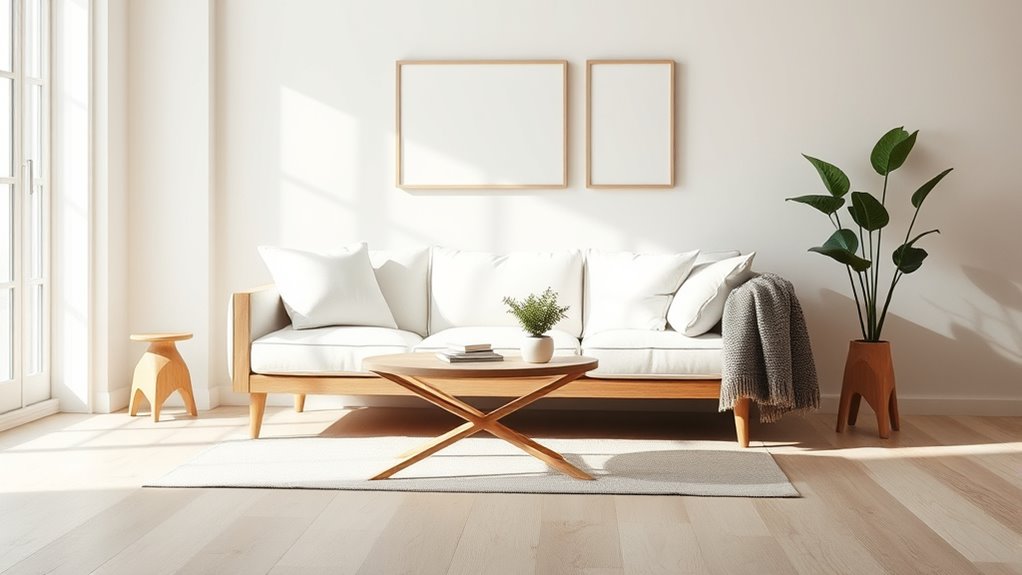
Have you ever wondered what makes Scandinavian design so timeless and popular? It all comes down to its core principles — a focus on minimalist aesthetics and the use of natural materials. When you step into a space decorated with Scandinavian style, you immediately notice its simplicity. There’s an effortless elegance that feels both modern and inviting. You won’t find clutter or unnecessary ornamentation; instead, every piece serves a purpose. This minimalist approach creates a calm, organized environment that promotes clarity and peace of mind.
Scandinavian design combines simplicity, purpose, and natural beauty to create inviting, timeless spaces.
The beauty of Scandinavian design lies in its restraint. It emphasizes clean lines, open spaces, and a neutral color palette. Think whites, soft greys, and muted earth tones, which reflect the natural Nordic landscapes. These colors aren’t just trendy; they’re carefully chosen to maximize light, especially important during the long, dark winters. The goal is to make spaces feel bright and airy, even when the days are short. By keeping things simple, you allow the natural beauty of the materials and the architecture to shine through, which enhances the overall sense of harmony and balance.
Natural materials play a crucial role in achieving that authentic Scandinavian look. You’ll often see wood, leather, wool, and linen incorporated into furniture and decor. These materials aren’t just chosen for their aesthetic appeal but also for their durability and sustainability. The warmth of wood, for example, adds a cozy touch to minimalist interiors, preventing them from feeling sterile or cold. Wool rugs and linen textiles introduce texture, making the space feel more inviting. The emphasis on natural materials also aligns with the Scandinavian commitment to eco-friendliness, ensuring that designs are both beautiful and environmentally responsible. Additionally, many Scandinavian designs incorporate innovative storage solutions, which help maintain the clutter-free appearance essential to this style.
In Scandinavian design, functionality is paramount. Each item serves a purpose, and form follows function. Furniture is sleek but comfortable, with practical features that suit everyday life. You’ll notice that storage solutions are cleverly integrated, helping to keep your space tidy without sacrificing style. This focus on utility doesn’t compromise aesthetics; instead, it enhances the overall sense of harmony. The design philosophy encourages you to live simply, appreciating the beauty of well-made, functional objects that stand the test of time.
Ultimately, Scandinavian design isn’t just about looks. It’s about creating spaces that nurture well-being through minimalist aesthetics, natural materials, and thoughtful functionality. When you adopt this style, you embrace a way of living that values clarity, comfort, and sustainability — qualities that remain relevant no matter how trends change.
Scandinavian style wooden coffee table
As an affiliate, we earn on qualifying purchases.
As an affiliate, we earn on qualifying purchases.
Frequently Asked Questions
How Does Scandinavian Design Incorporate Sustainability?
You can see Scandinavian design incorporates sustainability through the use of sustainable materials like reclaimed wood and eco-friendly practices such as minimizing waste and reducing energy consumption. By prioritizing durability and timeless aesthetics, it encourages you to choose pieces that last longer, decreasing environmental impact. This approach promotes eco-conscious living, allowing you to enjoy stylish, functional spaces while supporting sustainability efforts.
What Are Common Materials Used in Scandinavian Interiors?
Imagine walking into a cozy, sunlit room where natural woods and soft textiles embrace you like a warm hug. In Scandinavian interiors, you’ll find these materials are staples. Natural woods, like light oak or pine, bring warmth and texture, while soft textiles such as wool or linen add comfort and softness. Together, they create a serene, inviting space that celebrates simplicity and harmony with nature.
How Can Scandinavian Style Be Adapted for Small Spaces?
To adapt Scandinavian style for small spaces, prioritize multi-functional furniture that saves space and adds versatility. Use light colors and simple decor to maximize natural light, making your area feel more open and airy. Keep clutter minimal, and choose sleek, streamlined pieces that blend form and function. Incorporate cozy textiles and smart storage solutions to maintain the clean, minimalist aesthetic while ensuring your space remains practical and inviting.
What Are the Key Color Palettes in Scandinavian Design?
Imagine a peaceful winter landscape—calm, serene, with subtle shades and striking pops of color. That’s your palette in Scandinavian design. You’ll mostly use neutral tones like whites, grays, and beiges to create a bright, airy feel. To add visual interest, incorporate bold accents such as navy, black, or vibrant yellows. This balance keeps your space feeling both soothing and lively, embodying the timeless simplicity of Scandinavian style.
How Does Scandinavian Design Influence Modern Furniture Trends?
You notice that Scandinavian design influences modern furniture trends by emphasizing Nordic minimalism and rustic elegance. This style encourages clean lines, functional pieces, and natural materials, making furniture both stylish and practical. You find that many contemporary pieces incorporate these elements, blending simplicity with warmth. As a result, furniture becomes versatile and timeless, appealing to those who want a calm, inviting space with a modern touch.
minimalist linen curtains
As an affiliate, we earn on qualifying purchases.
As an affiliate, we earn on qualifying purchases.
Conclusion
Imagine stepping into a space where natural light dances on clean, minimalist surfaces, inviting calm and clarity. Scandinavian design wraps you in a sense of warmth and effortless elegance, blending function with beauty. Its timeless simplicity creates a soothing sanctuary, where every piece feels purposeful yet inviting. Embrace this style to transform your home into a peaceful retreat, where life’s everyday moments become serene and inspiring, grounded in the honest beauty of Scandinavian design.
natural wool area rug
As an affiliate, we earn on qualifying purchases.
As an affiliate, we earn on qualifying purchases.
sleek storage ottomans
As an affiliate, we earn on qualifying purchases.
As an affiliate, we earn on qualifying purchases.