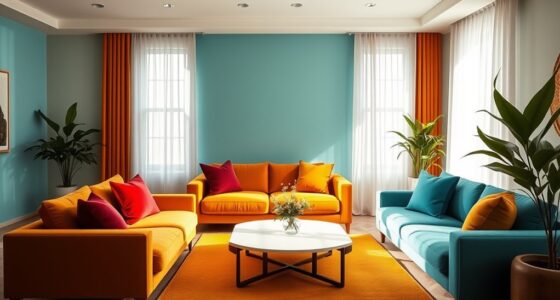
To mix patterns and textures without chaos, stick to a cohesive color palette and balance bold patterns with subtle textures. Use larger patterns sparingly as focal points and fill gaps with smaller designs and textured accessories. Aim for harmony by grouping similar textures and sharing common colors across different patterns. This approach creates a lively yet curated environment. Keep exploring these tips to master the art of stylish, inviting spaces full of personality.

Get art and craft supplies delivered free with Prime
- Fast, free delivery on millions of items
- Prime Video, Amazon Music and more included
- Member-only deals all year
Key Takeaways
- Use a neutral color palette as a foundation to unify diverse patterns and textures.
- Balance bold, large-scale patterns with subtler, smaller designs to prevent visual overwhelm.
- Share common colors or themes across patterns and textures for cohesive integration.
- Limit the number of large patterns, filling space with smaller patterns and textured accessories.
- Group similar patterns and textures to create intentional, harmonious design clusters.
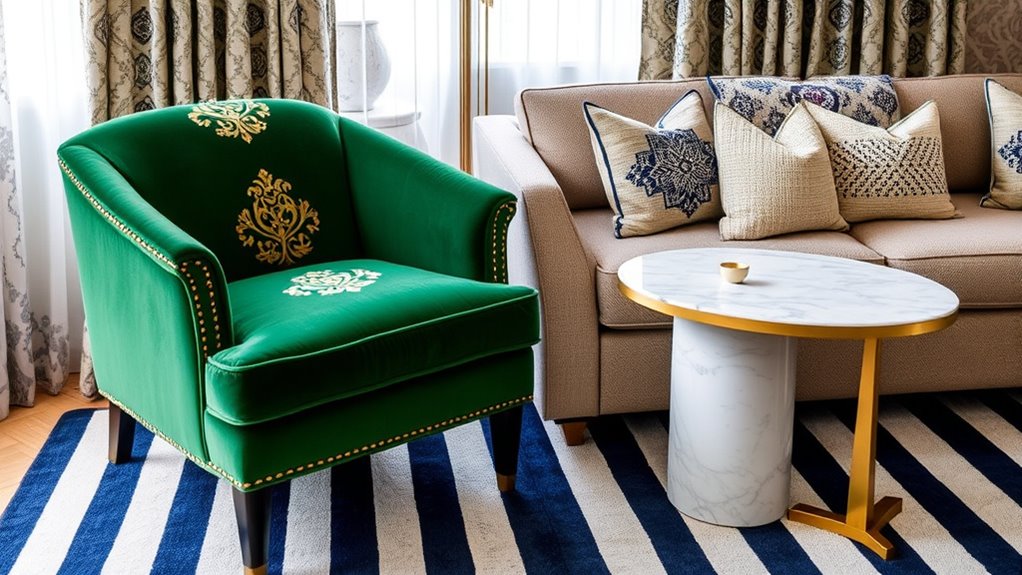
Mixing patterns and textures can instantly elevate your space, creating visual interest and a dynamic atmosphere. When you choose to combine different patterns, paying attention to pattern scale is essential. Large-scale patterns, like bold stripes or oversized florals, serve as focal points that draw the eye, while smaller, intricate designs can add subtle layers of detail. Balancing these scales ensures your room doesn’t feel overwhelming or chaotic. For example, pair a statement-sized patterned rug with smaller throw pillows or curtains. This contrast in pattern scale creates a harmonious flow, guiding the eye naturally around the space without causing visual clutter. Understanding visual balance**** is key to achieving a cohesive look.
Mix large bold patterns with smaller details for a balanced, clutter-free space.
Texture contrast plays a pivotal role in achieving a cohesive look. When you introduce variety through textures, you add depth and richness, making your space feel more inviting and tactile. Think about combining smooth, sleek fabrics with rougher, nubby materials. For instance, a velvet sofa contrasted with woven throw blankets or a glossy ceramic vase paired with a textured woven basket can work beautifully. The key is to create a deliberate interplay between different textures, so they complement rather than compete with each other. This contrast enhances the visual complexity without making the room feel disorganized.
To master mixing patterns and textures without chaos, start by establishing a neutral color palette. This foundation allows you to experiment freely with different patterns and textures while maintaining cohesion. When you introduce a bold pattern, balance it with more subdued, textured pieces. For instance, if you have a patterned wallpaper with a lot of visual weight, offset it with textured accessories in neutral tones. Similarly, layering a variety of patterns—like stripes, florals, and geometric shapes—works best when they share a common color or theme. This creates a unified look, preventing the patterns from clashing.
Additionally, consider the placement and proportion of each element. Use larger patterns sparingly to avoid overwhelming the space, and let smaller patterns and textures fill in the gaps. Grouping similar textures or patterns in clusters can also help to create a sense of intentional design. Remember, the goal is to create a lively, inviting environment that feels curated, not chaotic. When you combine pattern scale and texture contrast thoughtfully, you craft a space that’s full of personality and visual intrigue—without ever feeling cluttered.
Popular right now

KitchenAid Artisan 5-Quart Tilt-Head Stand Mixer, Almond Cream

Roborock RockMow X130H Wire-Free 4WD Robot Lawn Mower

DREAME A3 AWD 1000 LiDAR Robot Lawn Mower
As an affiliate, we earn on qualifying purchases.
Frequently Asked Questions
How Can I Balance Bold Patterns With Subtle Textures?
To balance bold patterns with subtle textures, start with pattern harmony by choosing a dominant pattern and complement it with more understated textures. Use a neutral color palette to keep the look cohesive, and vary the scale of patterns to create visual interest. Focus on texture contrast to add depth without overwhelming the space. This approach guarantees your bold patterns stand out while subtle textures provide balance and harmony.
What Color Schemes Work Best With Mixed Patterns?
Imagine a garden where colors bloom in harmony—neutral tones like beige, gray, and soft whites serve as the soil, allowing your patterns to flourish. For pattern harmony, stick with complementary or analogous color schemes, blending shades seamlessly. You’ll find that color coordination creates a balanced canvas, where bold patterns pop without overwhelming, making your space feel cohesive and vibrant. This approach guarantees your mixed patterns work beautifully together.
How Do I Avoid Overwhelming a Room With Too Many Textures?
To avoid overwhelming a room with too many textures, use color blocking to create visual balance and guide the eye. Incorporate pattern scaling by varying the size of patterns—smaller textures for subtlety and larger ones for statement pieces. Keep a neutral or cohesive color palette to unify your textures, and limit the number of different textures you introduce. This approach guarantees your space feels dynamic yet harmonious.
Can Mixing Patterns Make a Small Space Feel Larger?
Yes, mixing patterns can make a small space feel larger if you pay attention to pattern scale and texture contrast. Use larger patterns for focal points and smaller ones for balance, creating visual depth. Incorporate different textures to add richness without clutter. This contrast guides the eye around the room, making it feel more expansive and dynamic, rather than cramped or chaotic.
What Are Some Beginner Tips for Combining Different Textures?
Think of combining textures as weaving a tapestry; each thread adds depth and richness. Start with layering techniques by varying scale—mix large, bold textures with smaller, subtle ones. Keep a cohesive color palette to unify your space. Don’t be afraid to experiment, but stay balanced. Use pattern scaling to prevent chaos—less is more. With patience and practice, your space will feel inviting and thoughtfully curated.
Conclusion
Now that you know how to mix patterns and textures with confidence, remember that harmony doesn’t mean everything matching perfectly. It’s about creating a balanced tapestry that reflects your unique style. Trust your instincts, and don’t be afraid to experiment—that’s how you find your signature look. When done right, your space will come together beautifully, like a well-woven quilt. Keep weaving those elements together, and your room will tell a story worth telling.