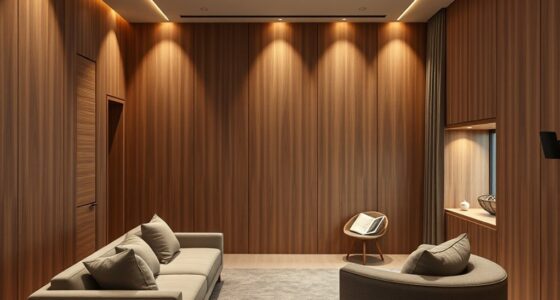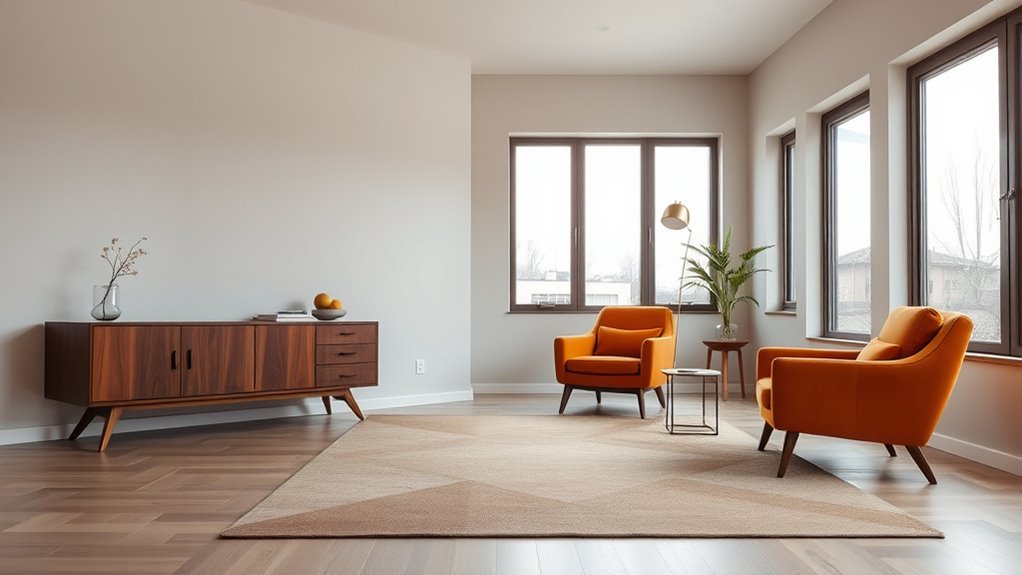

Mid-century modern furniture blends form and function with sleek lines, innovative materials like molded plywood and fiberglass, and bold yet earthy color palettes that create timeless appeal. Its design emphasizes simplicity, durability, and honest materials, showcasing iconic pieces like the Eames lounge chair and minimalist tables. These principles continue to influence contemporary styles, inspiring what’s popular in today’s interiors. To uncover how these ideas shape your space, keep exploring the key concepts behind this enduring aesthetic.
Key Takeaways
- Originated in mid-20th century emphasizing simplicity, functionality, and elegance in furniture design.
- Features bold color palettes combining earthy tones with bright accents like turquoise and mustard yellow.
- Utilizes innovative materials such as molded plywood, fiberglass, and plastic for sleek, minimalist forms.
- Focuses on honest materials, clean lines, and practical forms reflecting a forward-thinking philosophy.
- Iconic pieces like Eames lounge chairs exemplify the style’s seamless blend of form and function.

Have you ever wondered what makes Mid-Century Modern furniture so timeless? It’s a combination of innovative design principles, striking aesthetics, and a forward-thinking approach to materials and color. This style emerged in the mid-20th century, but its appeal remains strong today because it captures a sense of simplicity, functionality, and elegance that’s hard to replicate. When you look at iconic pieces from this era, you’ll notice a deliberate use of color palettes that blend earthy tones with bold accents. Think warm browns, olive greens, and soft oranges paired with brighter shades like turquoise or mustard yellow. These palettes create a balanced visual harmony that feels both inviting and lively. But it’s not just the colors that make this style stand out; it’s also the material innovations that revolutionized furniture design during that time. Recognition through awards and global accolades helped cement the style’s reputation and influence.
Mid-Century Modern furniture makers experimented with new materials that allowed for sleeker shapes and cleaner lines. You’ll see a lot of pieces crafted from molded plywood, fiberglass, and even plastic, which were groundbreaking at the time. These material innovations made furniture more affordable, lighter, and easier to produce, opening up new possibilities for design. You might notice how the use of molded plywood, for instance, enabled designers to create curved forms that are both comfortable and visually striking. Similarly, the introduction of new manufacturing techniques allowed for seamless joins and minimalist aesthetics, emphasizing form and function without unnecessary ornamentation. This focus on materials not only defined the style’s look but also its philosophy: furniture should be functional, durable, and aesthetically pleasing without excess.
The combination of thoughtfully curated color palettes and innovative materials gave Mid-Century Modern furniture a distinctive character that’s still relevant today. You can see this in everything from sleek Eames lounge chairs to minimalist side tables, where the materials are celebrated as much as the shapes. The style’s emphasis on simplicity and practicality doesn’t mean sacrificing style; instead, it’s about highlighting the beauty of honest materials and clean lines. When you bring a piece of Mid-Century Modern furniture into your space, you’re not just adding a decorative element—you’re incorporating a design philosophy rooted in innovation, functionality, and timeless appeal. This seamless blend of form and function is what keeps Mid-Century Modern furniture relevant, inspiring generations of designers and homeowners alike.
Frequently Asked Questions
How Did Mid-Century Modern Design Influence Today’s Interior Trends?
Mid-century modern design influences today’s interior trends by emphasizing minimalist aesthetics and sustainable practices. You’re likely to notice clean lines, functional furniture, and open spaces that create a sense of simplicity and calm. Many modern interiors incorporate eco-friendly materials and timeless furniture pieces inspired by mid-century styles. This approach helps you achieve a stylish, sustainable, and clutter-free environment that reflects the enduring appeal of mid-century modern design principles.
What Are the Key Materials Used in Mid-Century Modern Furniture?
Imagine a sleek canvas of warm wood veneers, smooth and inviting, paired with shiny plastic laminates that catch the light like a mirror. You’ll find these key materials—wood veneers for rich, textured surfaces and plastic laminates for durability and color—at the heart of mid-century modern furniture. They create clean lines and timeless appeal, making your space feel both stylish and functional, like a piece of art you live in.
Who Are the Most Influential Designers of the Mid-Century Modern Era?
You should know that influential mid-century modern designers like Charles and Ray Eames, Eero Saarinen, and Arne Jacobsen shaped the era’s design philosophies and manufacturing techniques. They embraced sleek, functional forms, innovative materials, and efficient production methods. Their work emphasized simplicity, quality craftsmanship, and a focus on usability, which continues to influence contemporary design. By studying their innovations, you can better appreciate the timeless appeal of mid-century modern furniture.
How Can I Identify Authentic Mid-Century Modern Pieces?
You can spot authentic mid-century modern pieces like a detective unearthing hidden clues. Look closely at craftsmanship details—smooth joins, natural wood grain, and precise construction. Trust your eye for provenance verification by checking labels, signatures, and original hardware. These subtle signs reveal a piece’s true origin, ensuring you’re investing in genuine design history rather than a replica. Your keen eye transforms furniture hunting into a thrilling treasure hunt.
What Are Common Challenges When Restoring Vintage Mid-Century Modern Furniture?
When restoring vintage mid-century modern furniture, you often face challenges like balancing restoration techniques with material preservation. You need to carefully clean, repair, and refinish surfaces without damaging original wood or veneer. Cracks and loose joints are common issues, so use appropriate adhesives and techniques. Patience is key to maintaining the piece’s authenticity while ensuring it’s sturdy and visually appealing. Proper research helps you make informed decisions during your restoration process.
Conclusion
As you embrace mid-century modern design, remember it’s like a well-crafted melody—simple yet unforgettable. Imagine walking into a room where a sleek, iconic chair invites you to sit and stay awhile, echoing the era’s blend of form and function. Just as a timeless song remains relevant, these furniture pieces age gracefully, proving that good design isn’t just about looks but about creating spaces that feel both fresh and enduring.