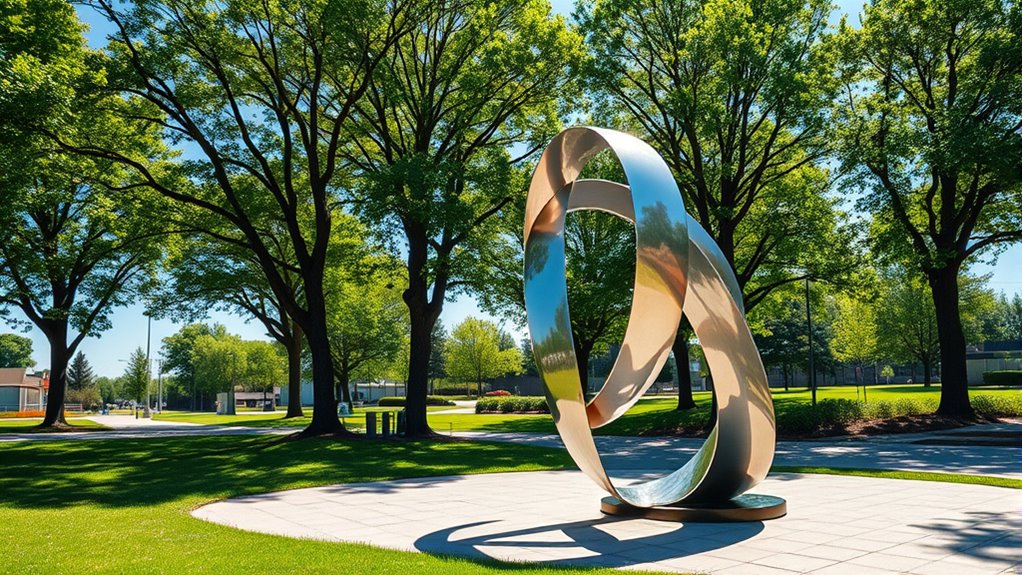

When installing an outdoor sculpture, you should carefully choose durable materials like stainless steel or granite to withstand the elements. Conduct a site analysis to assess soil, topography, and environmental exposure, ensuring proper foundation and placement for stability. Consider risks like vandalism and use lighting or strategic positioning to protect and highlight the artwork. Planning foundation work and anchoring techniques will improve longevity. Continue exploring these guidelines to make your installation successful and lasting.
Key Takeaways
- Conduct thorough site analysis to assess terrain, soil stability, and environmental exposure before installation.
- Select durable, weather-resistant materials suited for outdoor conditions to ensure longevity.
- Plan foundation and anchoring methods that provide stability and accommodate environmental factors.
- Position sculptures thoughtfully to balance visual impact, safety, and protection from vandalism.
- Incorporate proper lighting and security measures to enhance visibility and safeguard the artwork over time.
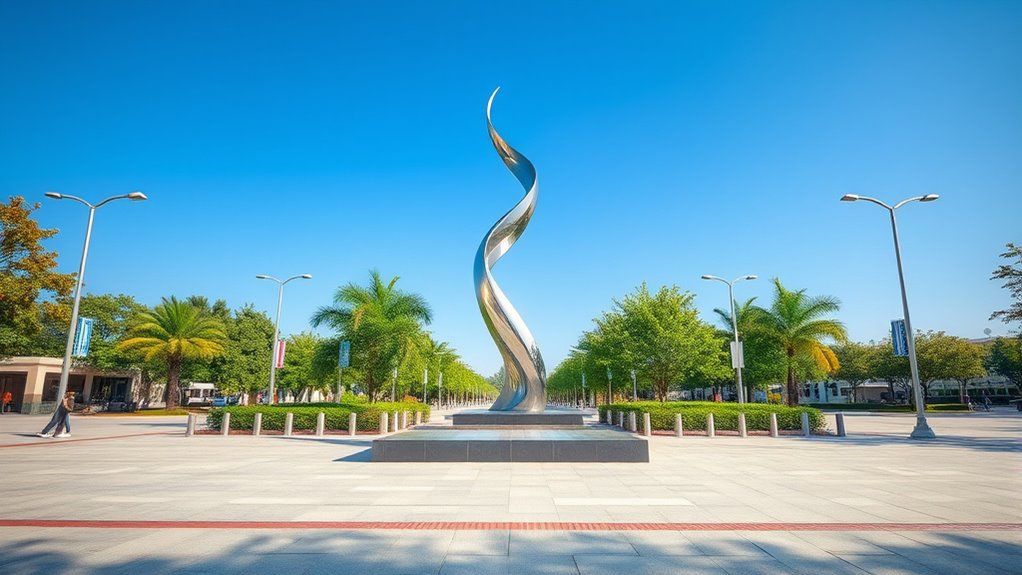
Installing outdoor sculptures requires careful planning to guarantee safety, durability, and visual impact. One of the most critical steps involves selecting the right materials. You need to consider how well different materials withstand weather, corrosion, and environmental stressors. For example, metals like bronze and stainless steel are popular choices because of their strength and resistance to corrosion. Stone sculptures, such as granite or marble, offer timeless beauty but may require specific maintenance to prevent erosion or staining. When choosing materials, think about the sculpture’s location, expected lifespan, and how it will age over time. This decision influences not only how long your sculpture remains intact but also how it interacts visually with the surroundings. Additionally, incorporating innovative materials can further enhance the sculpture’s resilience and aesthetic appeal over time.
Another essential aspect is conducting a thorough site analysis before installation. You should evaluate the site’s topography, soil composition, and exposure to elements like wind, rain, or sunlight. Understanding the terrain helps you determine the best placement for stability and aesthetic appeal. For example, if the ground is uneven, you might need to level the area or create a sturdy foundation to prevent shifting or settling. Soil testing can reveal whether the ground can support the sculpture’s weight or if you need to improve drainage to avoid water accumulation that might compromise the base. Additionally, consider the environmental impact and how the sculpture will look in relation to nearby features, trees, or buildings. The goal is to find a location that enhances the sculpture’s visual impact while ensuring it remains secure over time.
During site analysis, you should also assess potential risks, such as vandalism or accidental damage. Positioning the sculpture where it’s visible yet protected can help mitigate these issues. Think about accessibility, ensuring viewers can appreciate the artwork without risking safety or damaging it. Lighting is another factor—good illumination can highlight details and improve safety at night.
Once you’ve chosen your materials and analyzed the site, you can develop a detailed installation plan. This includes preparing the foundation, ensuring proper anchoring techniques, and considering environmental factors that might affect installation. Proper planning minimizes future repair needs and guarantees your sculpture’s safety and longevity. In brief, careful materials selection paired with a thorough site analysis forms the foundation of a successful outdoor sculpture installation. These steps help you achieve a balance of aesthetic appeal, durability, and safety that lasts for years to come.
Frequently Asked Questions
What Permits Are Required for Outdoor Sculpture Installation?
When you plan to install outdoor sculpture, you need to understand the permit process involved. You’ll typically require permits from local authorities, which ensure your project complies with zoning regulations and safety standards. Start by checking with your city or county planning department, as they can guide you through the necessary paperwork. Securing these permits before installation helps avoid fines or delays, making your project smooth and compliant.
How Do Weather Conditions Affect Sculpture Installation?
Weather impact plays a significant role in sculpture installation, as it can cause delays or pose safety risks. You’ll face installation challenges like strong winds, rain, or extreme temperatures that can affect equipment and materials. To guarantee a smooth process, you need to monitor weather forecasts closely, plan installations during favorable conditions, and be prepared for sudden changes. Addressing weather impact helps protect both the artwork and installation team.
What Are the Maintenance Requirements Post-Installation?
After installing your outdoor sculpture, you need to follow proper maintenance to guarantee its long-term preservation. Regular cleaning protocols prevent dirt, grime, and environmental damage. You should inspect the sculpture periodically for signs of corrosion or damage and address issues promptly. Applying protective coatings can help shield it from weather effects. By maintaining your sculpture diligently, you keep it looking great and preserve its artistic value for years to come.
How to Ensure Sculpture Safety During Earthquakes?
To guarantee sculpture safety during earthquakes, you should incorporate seismic reinforcement and earthquake-resistant design. Securely anchor the sculpture to its foundation using flexible joints and shock absorbers to absorb quake forces. Regularly inspect structural components for wear or damage, and update reinforcement as needed. By proactively strengthening your sculpture with these measures, you reduce the risk of damage or collapse, protecting both the artwork and public safety during seismic events.
Can Outdoor Sculptures Be Installed on Uneven Terrain?
Think of uneven terrain as a tricky dance partner—you need to lead carefully. Yes, you can install outdoor sculptures on uneven ground, but terrain challenges demand solid foundation adjustments. You’ll want to assess the site thoroughly, then tailor your foundation to stabilize the sculpture. This way, your artwork remains a steadfast beacon, not wobbling with the whims of uneven terrain, ensuring both safety and beauty endure over time.
Conclusion
By following these guidelines, you guarantee your outdoor sculpture stands the test of time—standing tall and proud for generations. Proper installation isn’t just a task; it’s the backbone of preserving art’s beauty and integrity amidst nature’s relentless forces. If you ignore these steps, your masterpiece could be damaged or lost forever—an unthinkable tragedy! So, take your time, stay diligent, and watch your sculpture become an awe-inspiring landmark that captures hearts for ages to come.