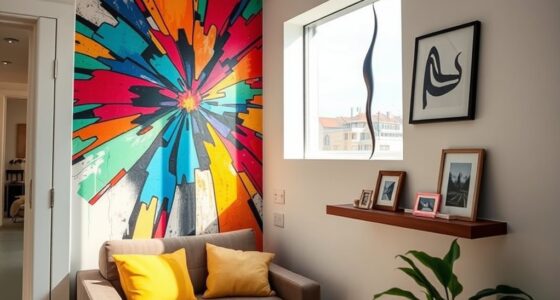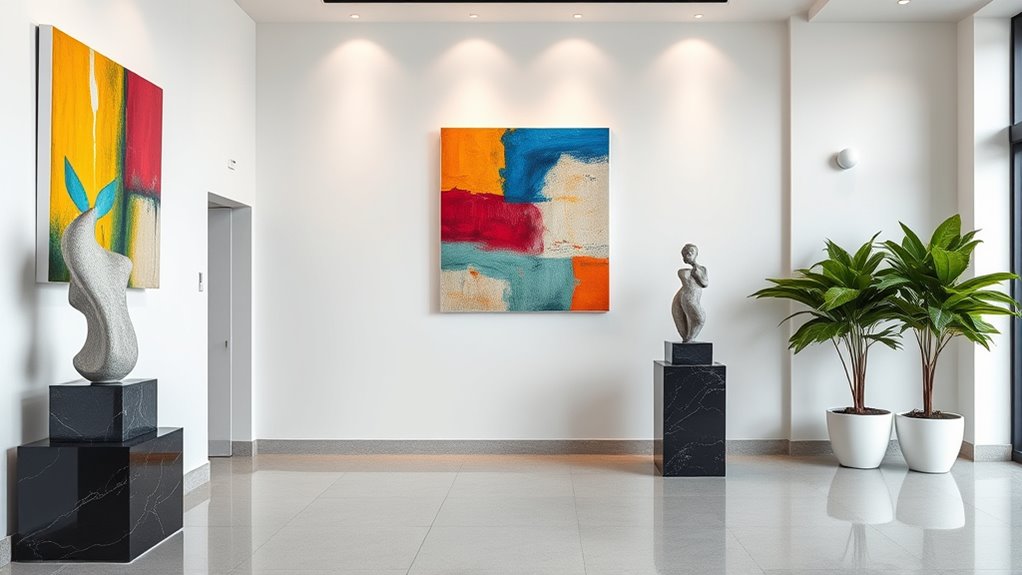

Curating art collections for corporate interiors involves selecting pieces that reflect your brand’s identity, inspire creativity, and enhance the workspace atmosphere. Focus on building a cohesive collection that aligns with your company’s values, considering scale, color, and thematic content. Work with galleries and art consultants to find meaningful works that complement your interior design without overwhelming it. If you want to discover more about creating a mesmerizing corporate art collection, keep exploring the possibilities.
Key Takeaways
- Align artwork selection with company brand values, aesthetic vision, and desired narrative.
- Consider scale, color, and thematic harmony to complement interior design and space dynamics.
- Collaborate with galleries and art consultants to access meaningful, high-quality, and emerging works.
- Focus on long-term collection growth, balancing innovation with relevance to corporate culture.
- Use art strategically to enhance environment, motivate employees, and create a memorable impression on visitors.
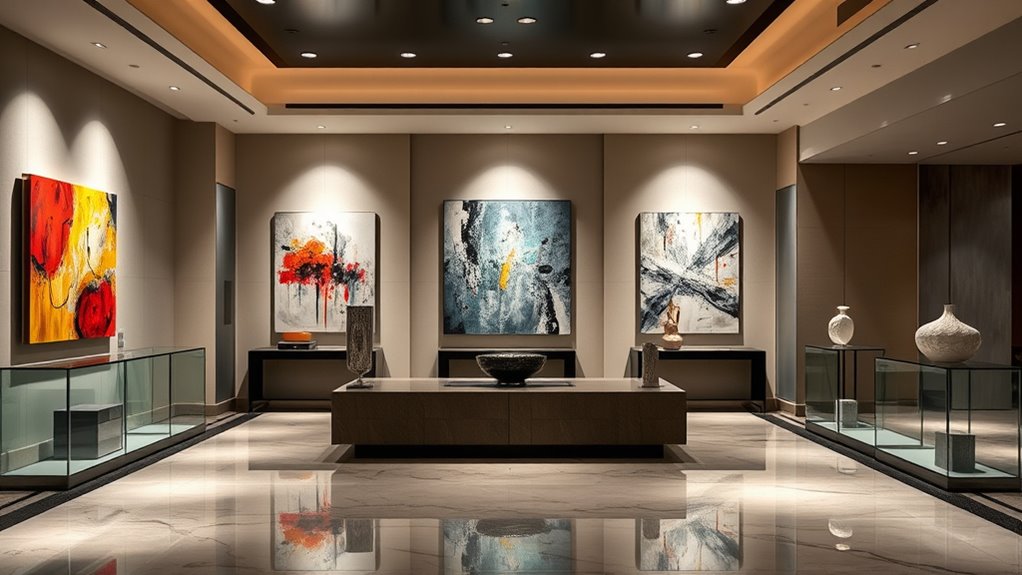
Integrating art collections into corporate interiors can transform workspaces into inspiring environments that reflect your company’s identity. When you thoughtfully select and display artwork, you create a space that not only motivates employees but also leaves a lasting impression on clients and visitors. Effective curation involves more than just choosing attractive pieces; it’s about building a cohesive collection that aligns with your brand values and aesthetic vision. To achieve this, you should consider art investment opportunities that offer both cultural value and potential financial growth. Investing strategically in artwork can enhance your company’s reputation, especially when you partner with reputable galleries and artists. Establishing gallery partnerships allows you to access exclusive works, stay current with emerging art trends, and receive professional guidance in building your collection. These collaborations help you curate a sophisticated environment that communicates stability, creativity, and innovation.
When you pursue gallery partnerships, you gain an advantage in sourcing high-quality pieces that resonate with your brand message. Galleries often provide tailored recommendations based on your corporate ethos, ensuring the art complements your interior design and corporate culture. Furthermore, they facilitate access to emerging artists, giving your collection a unique edge that can evolve over time. This ongoing relationship fosters trust, making it easier to acquire new works that maintain the collection’s freshness and relevance. As you develop your art collection, think about how each piece interacts within the space—consider scale, color palette, and thematic content. Art should enhance, not overpower, your environment. You want your collection to evoke inspiration and dialogue among employees and visitors alike.
Additionally, integrating art into your corporate spaces can serve as a strategic branding tool. A well-curated collection demonstrates your company’s commitment to culture and innovation, distinguishing you from competitors. It also creates a more welcoming atmosphere that encourages creativity and collaboration. When you view your art investment as a long-term endeavor, you open up possibilities for growth and transformation, which can increase the collection’s value over time. Partnering with galleries and art consultants ensures you make informed decisions, avoiding impulsive purchases and focusing on pieces that truly add value. Overall, curating an art collection for your corporate interior isn’t just about decoration; it’s about crafting a narrative that embodies your company’s ethos through carefully selected artwork, fostered by strategic gallery partnerships and smart investments. Incorporating insights from design principles can help ensure your collection complements your space expertly.
Frequently Asked Questions
How Do I Determine the Appropriate Art Budget for My Company?
You determine your art budget by starting with budget planning and conducting a thorough cost assessment. Consider your company’s financial health, the space’s importance, and the desired impact of the art. Set a realistic range based on these factors, and consult with professionals if needed. Remember, a well-planned art budget guarantees you select pieces that enhance your environment without overspending or compromising quality.
What Are the Best Ways to Authenticate Artwork for Corporate Display?
You should start with authenticity verification by consulting reputable experts or appraisers who can confirm the artwork’s legitimacy. Always request provenance documentation, which details the piece’s history and previous ownership. Cross-check this information with galleries or auction houses to verify accuracy. These steps help prevent forgeries, protect your investment, and ensure your corporate display features genuine, valuable artwork.
How Can Art Collections Positively Influence Employee Productivity?
You can boost employee motivation and spark creative inspiration by thoughtfully selecting art that resonates with your team. When employees see inspiring pieces, they feel more motivated and engaged, leading to increased productivity. Art creates a stimulating environment, encouraging innovative thinking and positive mood. By curating a diverse collection that reflects your company’s values, you foster a workspace where creativity flourishes and employees feel valued and inspired daily.
What Legal Considerations Are Involved in Acquiring Corporate Art?
When acquiring corporate art, you must consider legal issues like art licensing and intellectual property rights. Make sure you have proper licenses if you’re using copyrighted works, and verify ownership to avoid infringement. Always review licensing agreements, credit artists appropriately, and respect intellectual property laws. Doing so protects your company from legal disputes and ensures you legally display and reproduce the artwork, maintaining ethical standards and safeguarding your reputation.
How Often Should Corporate Art Collections Be Refreshed or Rotated?
Think of your collection as a garden that blooms anew with each season. You should refresh or rotate your art collection every 6 to 12 months, ensuring it remains vibrant and engaging. Establish an art rotation schedule to maintain collection vitality and avoid stagnation. Regular collection maintenance helps preserve artworks and keeps your corporate space dynamic, inspiring creativity and positive impressions with fresh visual narratives that reflect your company’s evolving story.
Conclusion
By thoughtfully curating art for your corporate space, you transform a mere office into a reflection of your brand’s soul. Every piece becomes a silent ambassador, whispering stories that inspire and engage. Remember, your collection isn’t just decor; it’s a canvas of your company’s identity. So, why settle for ordinary when you can create an extraordinary environment that captivates and motivates? After all, art isn’t just what you see—it’s what your space becomes.