
TL;DR
Pope Leo XIV told artists and cultural figures at a Vatican meeting on October 2 that the Catholic Church plans to renew its alliance with the arts. He argued that art made by people has a human quality that machine-generated work cannot reproduce, while warning of AI-related censorship and cultural homogenization. The speech does not set out specific policies or restrictions on AI.
Pope Leo XIV called for the Catholic Church to renew its alliance with artists and cultural institutions, arguing at a Vatican meeting on October 2 that human art has a quality that machine-generated work lacks. His remarks addressed concerns about artificial intelligence, censorship and cultural homogenization, but did not announce a specific policy on AI or its use in the arts.

Get art and craft supplies delivered free with Prime
- Fast, free delivery on millions of items
- Prime Video, Amazon Music and more included
- Member-only deals all year
The pope spoke in the Vatican’s Consistory Hall at “The Art of Possibility: Weaving Together,” a meeting organized by the Dicastery for Culture and Education. Artists and curators attended, including people who have contributed to the Vatican’s pavilion at the Venice Biennale. Leo said the Church intends to strengthen its relationships with artists and cultural institutions amid what he described as pressures from censorship and homogenization linked to AI.
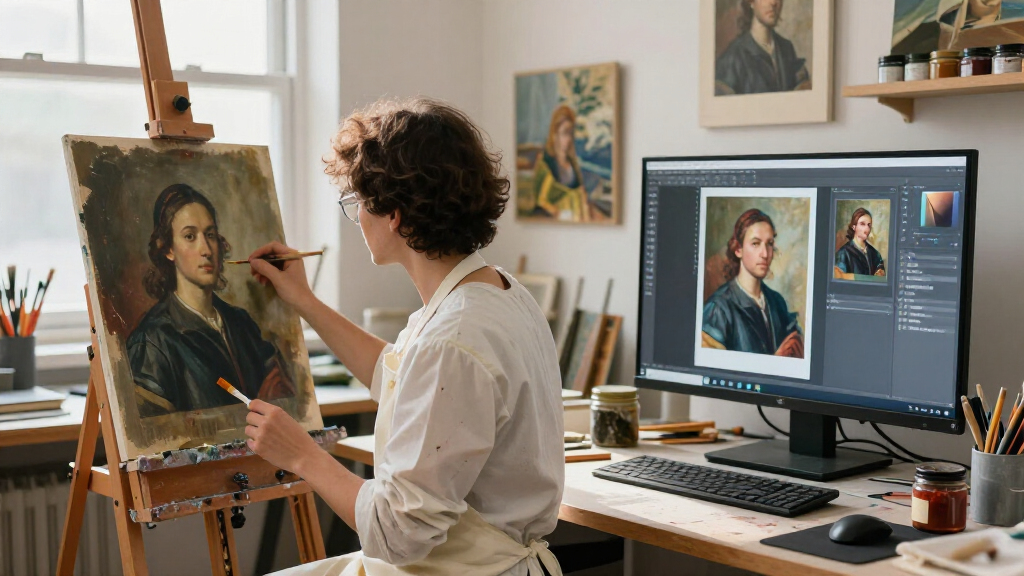
In his address, Leo drew a distinction between art made by people and images or other material generated by machines. “There is an ontological difference — even before an aesthetic one — between art and what a machine can generate through statistical calculation based on millions of images created by others,” he said. The statement framed his concern as more than a question of whether AI output looks convincing: it also concerns the human experience and authorship behind a work.
Leo also described art as a way of making human concerns available to others. Referring to the phrase “The Ear is the Eye of the Soul,” the title of this year’s Vatican pavilion, he said art can receive “the great questions of the human heart” and make them “audible, visible and shareable.” He added: “Algorithms lack the spark of the human, whereas ‘authentic culture and art preserve this spark.’”
The Vatican’s Case for Human Art
The speech sets out how Leo wants the Church to approach AI’s growing presence in cultural life: not simply as a new tool, but as a technology that raises questions about human creativity, authorship and shared experience. His distinction between human art and machine-generated work gives artists and cultural institutions a religious and ethical framework for discussing the technology, even though the address does not spell out practical standards.
For artists, the remarks signal a potential source of institutional support at a time when AI systems can generate images and other content using statistical patterns learned from existing material. The pope’s comments do not resolve disputes about how such systems are trained, how creators should be credited or compensated, or where AI belongs in artistic practice. They do, however, make clear that the Vatican wants human agency and connection to remain central to its cultural work.
Popular right now

Philips 2200 Series Fully Automatic Espresso Machine with Classic Milk Frother, Ceramic Grinder, and AquaClean Filter

Philips 3300 Series Fully Automatic Espresso Machine with LatteGo

Hisense E6 Cinema Series 85-Inch 4K UHD Hi-QLED Smart Fire TV
As an affiliate, we earn on qualifying purchases.
From Biennale Pavilion to Vatican Meeting
The Vatican’s engagement with artists has included its pavilion at the Venice Biennale. In May, artist Patti Smith inaugurated the pavilion with a sound installation described in the source report as encouraging listening, contemplation and reflection on human intellect. The October gathering brought together artists and curators, some of whom had contributed to the pavilion in recent years.
Leo’s comments also echoed the position set out in his first encyclical, Magnifica Humanitas, published in May, according to the report. The letter cautions against AI encroaching on human life and argues that progress should not be measured only by performance or technological speed, but also by empathy and connection. The October speech carried that argument into a discussion focused on art and cultural institutions.
“There is an ontological difference — even before an aesthetic one — between art and what a machine can generate through statistical calculation based on millions of images created by others.”
— Pope Leo XIV
No AI Rules Announced in Speech
The address, as reported, did not outline new Church rules, regulations or practical guidance for artists using AI. It also did not specify how the Vatican would respond to concerns about training data, copyright, attribution or the economic effects of AI-generated work. Those issues remain distinct from Leo’s broader claim that human art and machine output differ in kind.
The pope’s warning about censorship and homogenization was not accompanied in the report by specific examples, named cases or proposed remedies. It is also unclear what form the promised renewal of the Church’s alliance with artists and cultural institutions will take, or what future initiatives may follow the meeting.
How the Church Builds Artist Ties
The next step will be whether the Church turns Leo’s call for closer ties with artists and cultural institutions into concrete programs, partnerships or further public guidance. The source report does not identify a schedule for such work. Attention will also remain on how Vatican cultural projects address AI and the concerns the pope raised, including censorship and the loss of distinct human voices.
Key Questions
What did Pope Leo XIV say about AI and art?
He said there is an ontological difference between human art and what machines generate through statistical calculations, and argued that authentic art preserves a human spark.
Where and when did the pope make the remarks?
Leo spoke on October 2, 2026, in the Vatican’s Consistory Hall at “The Art of Possibility: Weaving Together,” a meeting organized by the Dicastery for Culture and Education.
Did the Vatican announce a ban on AI-generated art?
No ban or specific AI policy was announced in the report. The speech expressed the pope’s views on the difference between human-made art and machine-generated output.
What does the pope mean by renewing the Church’s alliance with artists?
Leo said the Church plans to renew its relationship with artists and cultural institutions. The speech did not detail programs, commitments or a timeline for that effort.
Source: rss