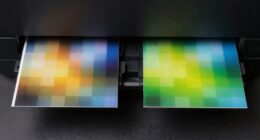
To fix a color cast in your scans in 60 seconds, start by adjusting the white balance using your editing software’s tools or sliders. This quick fix neutralizes unwanted tints, like blue or yellow, making your image more natural. Keep your scanner clean and guarantee proper lighting during the scan to prevent issues. If the problem persists, advanced corrections can help, so stick around to learn more effective techniques for perfect results.
Key Takeaways
- Use automatic white balance adjustment in photo editing software for quick correction.
- Manually adjust the red, green, and blue channels to neutralize color tints.
- Apply a neutral gray or white point reference to balance colors instantly.
- Keep your scanner and originals clean to prevent persistent color casts.
- Conduct a side-by-side comparison with the original for quick verification.

Vidpro WB-24 White Balance Dual-Sided Disc – 18% Gray Card with Target & Neutral White Panel – Collapsible & Wipe Clean Surface Reference Reflector Use in Any Lighting Condition Includes Carrying Case
Dual-Sided Disc: Featuring an 18% gray exposure target on one side and a white balance and reflector on…
As an affiliate, we earn on qualifying purchases.
As an affiliate, we earn on qualifying purchases.
Quickly Fix Color Casts in Your Scans (60 Seconds or Less)

When you notice a color cast in your scan, fixing it quickly can save you time and frustration. Start by understanding basic color theory—recognize which hues are off and adjust accordingly. Most scanning software offers quick correction tools, like auto-correct or color balance sliders, that can fix minor casts instantly. For more precise results, perform scanner calibration regularly; this ensures your device captures true-to-life colors, minimizing the need for extensive edits later. In many cases, adjusting the midtones or using a neutral gray reference can correct the cast in under a minute. Remember, simple tweaks based on color theory principles can often fix color casts fast, so don’t overthink it—trust your eyes and act swiftly. Additionally, exploring digital concepts can enhance your understanding of color manipulation in various formats. A well-calibrated DLP technology can significantly improve color fidelity, ensuring more accurate scans. Regular calibration also helps maintain SWIFT accuracy, allowing your scans to reflect true colors. To further enhance your scanning experience, consider incorporating eco-friendly natural pools as a metaphor for creating harmonious environments that reflect true colors. Incorporating innovative solutions can also streamline the event planning process, making it easier to focus on achieving the perfect scan.

2026 FOXWELL NT614 Elite OBD2 Scanner with 5 Resets ABS Bleeding, SAS Calibration, Oil, EPB, Throttle, Upgrade of NT604 Code Reader Scan Tools, ABS SRS Engine Transmission Battery Test Car Scanner
✅PAID FOR ITSELF ON THE FIRST USE – SKIP MORE DIAGNOSIS FEE: One visit to a dealership just…
As an affiliate, we earn on qualifying purchases.
As an affiliate, we earn on qualifying purchases.
What Causes Color Casts When Scanning? Key Factors Explained

Color casts during scanning often occur because of various factors related to your equipment and environment. One common cause is ink smudges on the original document or photo, which can introduce unwanted color tones into the scan. If the ink isn’t clean or smudges easily, it can create inconsistent color areas. Additionally, paper texture plays a significant role; rough or uneven surfaces can reflect light differently, leading to color distortions. Light scattering caused by textured paper can make certain colors appear cast or distorted. Environmental factors like ambient lighting or scanner settings also contribute, but ink smudges and paper texture are primary physical causes. Paying attention to cleaning your originals and choosing smooth paper can help minimize these color cast issues when scanning.

Photo editing software compatible with Windows 11, 10 – view, edit, enhance and organize your photos – more than 200 features (collages, slideshows and more)
Image editing program compatible with Windows 11, 10 (x64)
As an affiliate, we earn on qualifying purchases.
As an affiliate, we earn on qualifying purchases.
How to Adjust White Balance to Remove Tints

To remove unwanted tints, you can correct the color cast by adjusting your scanner’s white balance settings. Using dedicated white balance tools or sliders helps you target the specific tint and neutralize it effectively. Once you fine-tune these adjustments, your scans will display more accurate and true-to-life colors. Additionally, ensuring your scanning environment is well-lit can further enhance the accuracy of your scans. Understanding how cookie categories can affect digital imaging tools is essential for optimal results.
Correcting Color Tint
Adjusting the white balance is essential for removing unwanted color tints that can distort your scan’s appearance. By understanding color theory, you can better recognize how tints affect the overall image and make more accurate adjustments. For example, a blue tint might evoke feelings of coldness, while a yellow tint can create warmth or discomfort, depending on the context—this is where color psychology comes into play. To correct the tint, tweak the white balance so that whites appear neutral, which often involves balancing red, green, and blue channels. This step is crucial in enhancing security and transparency in digital transactions, as accurate colors can improve the clarity of scanned documents. Doing this enhances true-to-life colors and eliminates distracting color casts. Additionally, mastering firewood techniques can provide you with useful skills that enhance your overall DIY experience. With a quick adjustment, you guarantee your scan conveys the intended mood and detail, making your images look professional and vibrant. Additionally, much like the importance of establishing a sleep routine, understanding and adjusting your image settings can significantly impact the final outcome. By embracing calm and clarity, you can approach these adjustments with more focus and intention, ultimately leading to better results. Regularly using tools to detect passive voice can also enhance your writing clarity, ensuring your message remains direct and engaging.
Using White Balance Tools
Using white balance tools is a straightforward way to correct color tints in your scans. These tools help with color calibration, guaranteeing your scanned images display accurate colors. Most photo editing software offers automatic white balance adjustments, which can quickly neutralize unwanted tints. To get the best results, manually fine-tune the white balance by selecting a neutral gray or white point in your image, which guides the software to remove color casts. Regular scanner maintenance also plays a role; dust or dirt can affect color accuracy, so keep your equipment clean. Ensuring proper airflow around the unit can help maintain optimal performance, similar to how a clean scanner ensures color fidelity. Properly calibrated scanners and white balance settings work together to produce true-to-life scans, saving you time and effort in post-processing. This simple step ensures your images are color-accurate and vibrant. Additionally, understanding information structures can further enhance the impact of your content by attracting a larger audience.
![Lightdow 12 x 12 Inch (30 x 30 cm) White Balance 18% Gray Reference Reflector Grey Card with Carry Bag [Folded Version]](https://m.media-amazon.com/images/I/31GeGGNhEvL._SL500_.jpg)
Lightdow 12 x 12 Inch (30 x 30 cm) White Balance 18% Gray Reference Reflector Grey Card with Carry Bag [Folded Version]
Gray side: Reflectance 17.8%; Density 0.74
As an affiliate, we earn on qualifying purchases.
As an affiliate, we earn on qualifying purchases.
Best Color Correction Tools for Fixing Scans

When tackling color casts in scanned images, choosing the right correction tools can make a significant difference. You should focus on software that leverages color theory principles to balance hues accurately. Programs like Adobe Photoshop and Lightroom offer powerful sliders and adjustment layers that allow precise color correction, making it easy to neutralize unwanted casts. Additionally, tools that support digital calibration help you align your monitor and scanner for consistent results. Look for features like automatic tone correction or white balance adjustment, which speed up the process. These tools give you control over individual color channels, helping you restore true colors quickly. By combining color theory knowledge with digital calibration, you guarantee your scans look as vibrant and accurate as the original. Moreover, being mindful of ethical considerations in consumer choices can enhance your overall approach to digital imaging. Furthermore, understanding how flywheel upgrades can improve overall performance can also inspire creativity in your editing process. Electric dirt bikes, such as the KTM Freeride E-XC, showcase instant torque which enhances their acceleration and can serve as inspiration for dynamic color corrections. Additionally, investing in top car protection accessories can also reflect a commitment to quality, further influencing your creative decisions. Using tools that offer natural appearance can help ensure your scans maintain their original vibrancy.
Tips to Prevent Color Casts During the Scanning Process

To prevent color casts from appearing in your scans, it’s important to start with proper scanning setup and techniques. Begin by ensuring your scanner’s color calibration is accurate, which helps maintain true color representation. Adjust your scanner settings to set the correct color mode—usually RGB for photographs and artwork. Use the highest quality resolution suitable for your needs, as low resolutions can lead to inaccurate colors. Before scanning the entire batch, do a test scan to check for color accuracy and make necessary adjustments. Keep your scanner’s glass clean to avoid dust or smudges that can affect color. Consistently using calibrated settings and proper techniques will *considerably* reduce the chance of unwanted color casts in your scans.
When to Use Advanced Color Correction Techniques

You’ll want to contemplate advanced color correction techniques when simple adjustments don’t fix persistent color casts or inconsistencies. Recognizing these situations involves analyzing the scan’s overall color balance and identifying areas that need more precise correction. Applying complex corrections can restore accurate colors, but it requires careful assessment and skillful adjustments.
Identifying When It’s Needed
Recognizing the right moments to apply advanced color correction techniques is essential for achieving a natural and balanced scan. You’ll want to evaluate the lighting conditions when the original photo was taken—poor or uneven lighting often results in color casts that simple fixes can’t fully correct. Additionally, if your scanner calibration isn’t perfect, it can cause persistent color inaccuracies. When you notice that colors remain off despite basic adjustments, it’s a sign that advanced correction may be necessary. Look for scans with strong color casts that don’t respond to simple tweaks, especially when lighting conditions were less than ideal or the scanner wasn’t recently calibrated. In these cases, more sophisticated techniques will help restore accurate, natural colors. Understanding proper lighting techniques can also aid in preventing these issues during the scanning process.
Applying Complex Corrections
When simple adjustments fail to eliminate a color cast, it’s time to contemplate applying complex corrections. This is essential when understanding color theory and color psychology helps you make precise adjustments. Advanced techniques allow you to target specific problem areas or subtle shifts that basic tools can’t fix. Use layered corrections, curves, or selective color adjustments to fine-tune hues and tones.
| When to Use | Techniques to Try |
|---|---|
| Persistent color casts | Curves, hue/saturation |
| Color imbalance | Selective color correction |
| Subtle color shifts | Masking and layering |
Final Checks to Make Sure Your Scan Looks True to Life

Before finalizing your scan, it’s vital to compare the digital image to the original to guarantee color accuracy. Check that the scanned colors match the real-life hues, especially after adjustments. Use screen calibration tools to verify your monitor displays true-to-life colors; an uncalibrated screen can mislead your judgment. Examine the scan for consistent tones, avoiding overly saturated or dull areas. Pay attention to subtle shades and details to confirm they reflect the original. Perform side-by-side comparisons with the physical item when possible. Adjust brightness, contrast, and color balance as needed, then recheck the image. Remember, accurate color reproduction depends on both your monitor’s calibration and careful review. These final steps help assure your scan looks authentic and true to life.
- Compare digital image with original
- Use screen calibration tools
- Check for consistent tones
- Adjust brightness, contrast, colors
- Perform side-by-side comparisons
Frequently Asked Questions
Can Color Casts Be Completely Eliminated Without Professional Editing?
You can often eliminate color casts without professional editing by applying basic color correction techniques and ensuring proper scanner calibration. Using photo editing tools, you can adjust white balance, hue, and saturation to correct unwanted color tints. Regularly calibrate your scanner to prevent color inaccuracies from the start. While complete elimination might be challenging for severe casts, these steps greatly improve your scan’s color accuracy in just a few minutes.
Which Scanning Settings Influence Color Accuracy the Most?
A stitch in time saves nine, and in scanning, the right settings make all the difference. You should focus on color calibration and ink compatibility, as these considerably influence color accuracy. Adjust your scanner’s color profiles, and guarantee the ink used on your originals matches the scanner’s capabilities. These tweaks help prevent color shifts, making your scans true to life without needing professional editing.
Do Different Types of Scanners Produce Varying Color Cast Issues?
Yes, different scanners can produce varying color cast issues due to differences in color calibration and scanner compatibility. Some scanners might have inaccurate color profiles or less advanced sensors, leading to unwanted color casts. To minimize this, you should regularly calibrate your scanner and guarantee it’s compatible with your editing software. This helps maintain consistent color accuracy across different devices and prevents unwanted color shifts in your scans.
How Does Lighting During Scanning Affect Color Cast Formation?
Lighting during scanning impacts color cast formation considerably. Inconsistent lighting causes uneven color reproduction, leading to unwanted color casts. To prevent this, guarantee lighting is consistent throughout the process. Use proper calibration techniques, such as color calibration targets and software adjustments, to maintain accurate color balance. Consistent lighting and calibration help produce clean scans with true-to-life colors, minimizing the need for post-processing corrections.
Are There Specific Storage Methods to Prevent Color Shifts Over Time?
To prevent color shifts over time, you should use archival storage methods that protect your scans from deterioration. Keep your files in environments with proper environmental controls—avoid high humidity, extreme temperatures, and direct sunlight. Store your digital files on reliable, protected drives and consider using cloud backups. Regularly check and update storage conditions, ensuring consistent preservation and minimizing the risk of color cast changes caused by environmental factors.
Conclusion
So, after a quick fix, your scan now looks perfect—until you realize it’s just a temporary illusion. Ironically, the very tools designed to correct color casts can sometimes introduce new ones if you’re not careful. But don’t worry; with a little patience and these tips, you’ll master the art of flawless scans. Because in the end, achieving true color accuracy is almost as elusive as catching a perfect shot in a single click.