When creating AI art, you need to take into account issues like copyright ownership, attribution, and authenticity. Clarify who owns the rights—whether it’s the AI’s creator, user, or dataset sources—and be transparent about AI’s role. Respect proper attribution to acknowledge human contribution, and ensure your work aligns with ethical standards. By focusing on responsible practices, you help protect artists’ rights and foster trust. Exploring these concerns further helps ensure your AI art remains ethical and respectful.
Key Takeaways
- Ensure transparency about AI involvement and dataset sources to maintain honesty and accountability.
- Properly attribute human contributors and clarify AI’s role in the creative process.
- Respect copyright laws by avoiding use of copyrighted data without permission in training datasets.
- Address questions of originality by emphasizing AI as a tool that amplifies human creativity.
- Develop and adhere to evolving legal and ethical frameworks to protect artists’ rights and promote responsible AI use.
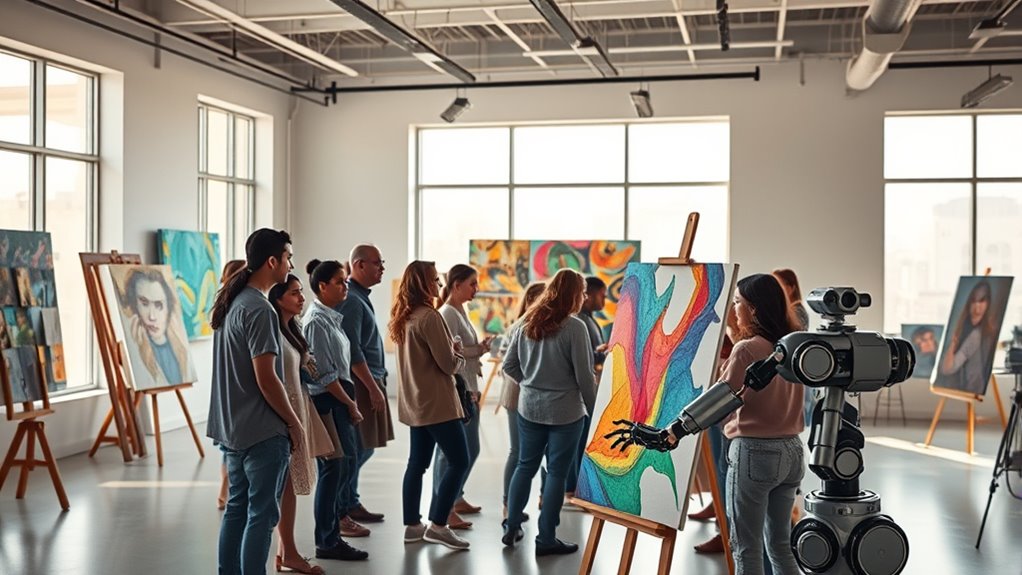
As AI increasingly transforms the art world, it raises important ethical questions that creators and audiences must consider. One of the most pressing concerns revolves around copyright issues. When AI models generate artwork, questions arise about who owns the rights to the final piece. Did the person who trained the AI hold the rights to the original data? Or does the copyright belong to the artist who created the algorithm? These ambiguities can lead to legal disputes, especially as AI tools become more sophisticated and capable of producing works that closely resemble human-made art. As an artist or viewer, you need to understand that using AI-generated art may involve navigating complex legal frameworks, which are still evolving. It’s essential to be transparent about how a piece was created, clarifying whether AI played a role and whether any copyrighted material was involved in the training datasets.
Another critical aspect is artist attribution. When AI contributes to the creation of a piece, it becomes tricky to determine who should be credited. Is it the programmer who designed the AI, the user who input the prompts, or the AI itself? Most often, the human behind the process deserves recognition, but the lines blur when AI tools are involved. If you’re creating or sharing AI art, you must consider how to properly attribute the work. Giving credit where it’s due not only respects the efforts of those involved but also helps maintain transparency within the art community. Failing to attribute correctly can diminish the value of human creativity and potentially mislead audiences into thinking that AI-generated works are entirely autonomous, which they are not.
Furthermore, the ethical implications extend beyond legalities to issues of authenticity and originality. As AI can mimic styles and generate near-identical copies of existing works, it challenges the very concept of originality in art. You might find yourself questioning whether AI art should be considered truly creative or simply derivative. This debate impacts how audiences perceive the value of AI-generated pieces and whether they can evoke genuine emotion or meaning. As someone engaging with AI art, you should be mindful of these distinctions, recognizing that the technology is a tool that can amplify human creativity, but it also raises questions about the authenticity of the final product.
In the end, navigating the ethical landscape of AI art requires a thoughtful approach. Respect for copyright issues, clear artist attribution, and an honest acknowledgment of AI’s role are fundamental to fostering a responsible artistic environment. By staying informed and advocating for transparency, you help ensure that AI art continues to evolve ethically while respecting the rights and efforts of human creators.
![MixPad Free Multitrack Recording Studio and Music Mixing Software [Download]](https://m.media-amazon.com/images/I/71ltIxIuz1L._SL500_.jpg)
MixPad Free Multitrack Recording Studio and Music Mixing Software [Download]
Create a mix using audio, music and voice tracks and recordings.
As an affiliate, we earn on qualifying purchases.
As an affiliate, we earn on qualifying purchases.
Frequently Asked Questions
How Does AI Art Impact Traditional Artists’ Livelihoods?
AI art impacts your livelihood by causing artist displacement and affecting economic effects in the creative industry. As AI-generated art becomes more popular, traditional artists might struggle to compete, potentially losing commissions and income. You may feel pressure to adapt or find new ways to showcase your talent. While AI expands creative possibilities, it also challenges the value of human artistry, urging you to innovate and distinguish your work.
Can Ai-Generated Art Be Considered Original or Truly Creative?
Thinking about AI-generated art, you might wonder if it’s truly original or just clever mimicry. Like a modern-day Da Vinci with a chatbot—pretty cool, right? The authenticity debate fuels the idea that AI can produce work that’s creatively authentic, but some argue it lacks human intuition. While AI can generate impressive visuals, whether it’s genuinely creative remains a subjective debate, blending technology with human expression.
Who Owns the Rights to Ai-Created Artworks?
You own the rights to AI-created artworks if you’re the creator, but it depends on intellectual property laws and how much human input you provide. Authorship attribution can be complex; if you substantially direct the process, you’re likely considered the author. However, if the AI operates autonomously, rights might belong to the developer or the entity that owns the AI system. Clarify your role to determine ownership and guarantee proper intellectual property recognition.
How Transparent Should AI Tools Be About Their Algorithms?
Like Pandora’s box, AI tools should be transparent about their algorithms to prevent surprises. You need to know how the algorithm transparency works and guarantee user awareness, so you can trust the process and make informed decisions. When developers openly share their methods, it fosters accountability and trust, much like the clear light of day dispelling shadows. You deserve honesty about how AI creates art, so you stay empowered and aware.
What Are the Environmental Impacts of Training AI Art Models?
You should consider that training AI art models consumes significant energy, increasing carbon footprints. The process requires powerful servers, which use substantial electricity, contributing to environmental strain. Additionally, the data footprint from collecting and processing vast datasets adds to resource use. By being mindful of these impacts, you can support sustainable AI practices, such as optimizing algorithms for efficiency and choosing greener energy sources, to reduce the environmental footprint of AI art creation.
digital attribution tools for AI art
As an affiliate, we earn on qualifying purchases.
As an affiliate, we earn on qualifying purchases.
Conclusion
As you navigate the world of AI art creation, remember that every choice you make shapes the future of creativity. Will you prioritize originality or respect existing works? The ethical lines are still being drawn, and your decisions could tip the balance. Stay vigilant, question your motives, and consider the broader impact. The next move you make could redefine what art truly means—are you ready to face what’s coming?
AI art creation tools with ethical features
As an affiliate, we earn on qualifying purchases.
As an affiliate, we earn on qualifying purchases.
AI art training dataset licensing
As an affiliate, we earn on qualifying purchases.
As an affiliate, we earn on qualifying purchases.