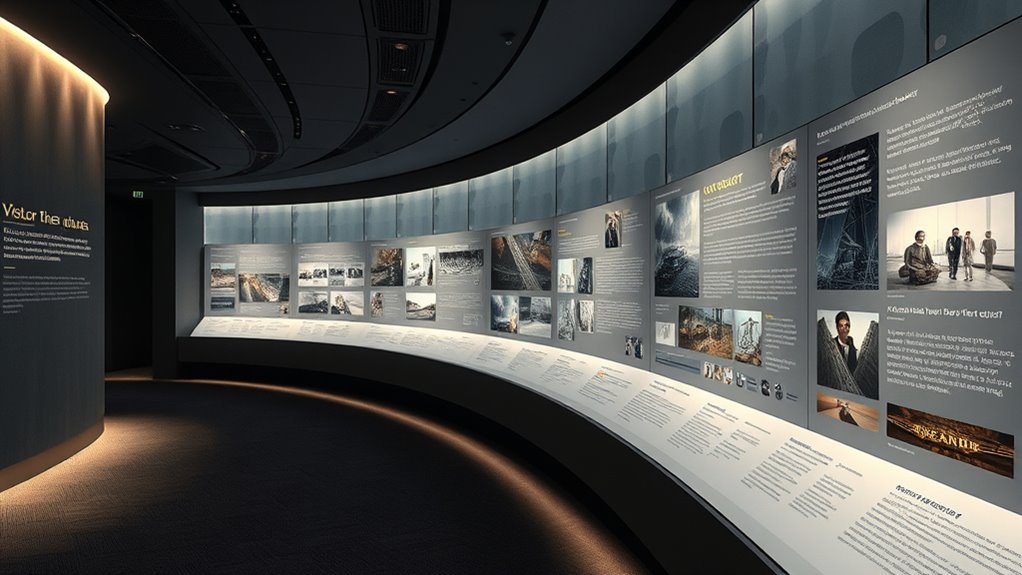

Storytelling through exhibition design invites you to craft immersive, engaging experiences that connect emotionally and intellectually with visitors. By integrating cultural narratives, interactive displays, and cohesive visual cues, you guide your audience through a meaningful journey. Thoughtful layout and multimedia elements help make stories memorable and accessible. When you focus on creating a seamless narrative, you’ll inspire curiosity, empathy, and reflection. Keep exploring to discover how to turn your exhibition into a compelling story that resonates long after the visit.
Key Takeaways
- Integrate compelling narratives and cultural context to guide visitors through a cohesive story.
- Use interactive displays like touch screens and VR to actively engage visitors in storytelling.
- Design layouts with visual cues and thematic elements that create a seamless narrative flow.
- Incorporate multimedia elements such as audio guides and storytelling panels to enrich the experience.
- Aim for emotional connection and reflection to make the exhibition memorable and impactful.
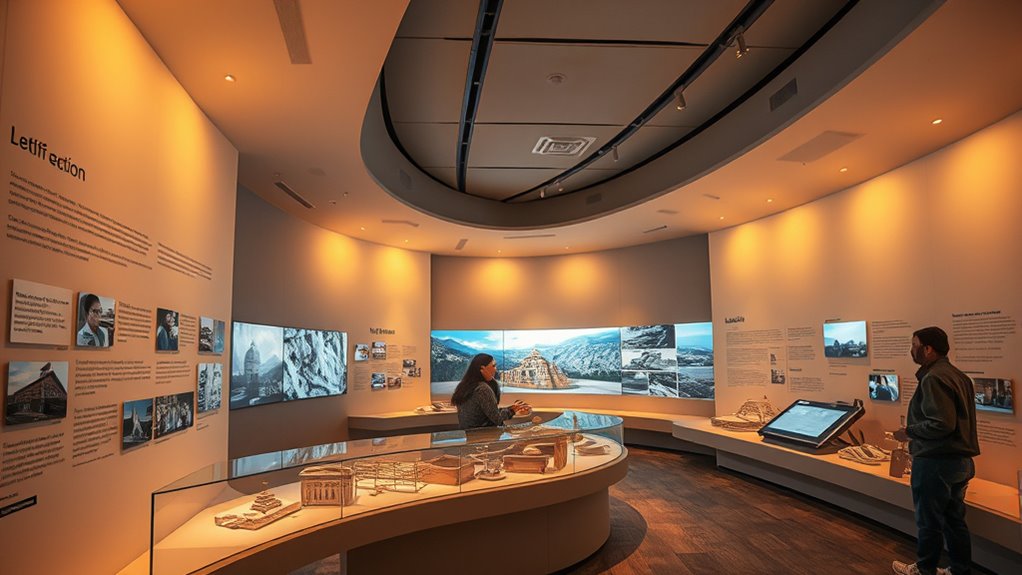
Have you ever wondered what makes an exhibition truly engaging and memorable? It’s often the way stories are told, how the space invites visitors to become part of a narrative rather than just passively observe. Effective exhibition design transforms a collection of objects or information into an immersive experience that resonates emotionally and intellectually. To do this, you need to focus on creating compelling storytelling elements that captivate your audience from start to finish.
Engaging exhibitions tell stories that invite visitors to become part of a memorable narrative.
One of the most powerful tools in storytelling through exhibition design is the use of interactive displays. These elements go beyond static exhibits, encouraging visitors to physically engage with the content. For example, touch screens, virtual reality stations, or hands-on artifacts make the experience more dynamic. When visitors can manipulate objects or explore digital reconstructions, they develop a deeper understanding and emotional connection to the story you’re sharing. Interactive displays make abstract concepts tangible, turning passive observation into active participation. They also help cater to different learning styles, making the narrative accessible and memorable for a wider audience.
Alongside interactive displays, weaving cultural narratives throughout the exhibition elevates the storytelling. Cultural narratives provide context, history, and personal stories that breathe life into the exhibits. They act as threads weaving through the entire space, guiding visitors along a meaningful journey. When you integrate cultural narratives, you give visitors a reason to care — whether it’s about a community’s history, a particular tradition, or a significant event. This approach creates an emotional resonance, making the story not just educational but also personal and impactful. You can incorporate narratives through multimedia presentations, storytelling panels, or audio guides that share voices and perspectives from the community or individuals involved.
Designing an exhibition with storytelling at its core requires thoughtful planning. You want visitors to move through the space intuitively, with each section building on the last, creating a cohesive narrative arc. Use visual cues, thematic elements, and contextual information strategically to guide their journey. By blending interactive displays with compelling cultural narratives, you foster a sense of discovery and connection. Visitors shouldn’t just learn facts; they should feel involved and inspired, motivated to reflect on what they’ve experienced long after they leave.
Ultimately, successful storytelling through exhibition design hinges on your ability to craft an experience that is both engaging and meaningful. When visitors interact with exhibits and immerse themselves in cultural narratives, you forge a memorable connection. The goal is to ignite curiosity, evoke empathy, and leave a lasting impression — turning your exhibition into a story worth sharing. Incorporating educational strategies and aligning them with storytelling techniques can further enhance visitor engagement and learning outcomes.
interactive touchscreen display for exhibitions
As an affiliate, we earn on qualifying purchases.
As an affiliate, we earn on qualifying purchases.
Frequently Asked Questions
How Do Cultural Differences Influence Storytelling in Exhibitions?
Cultural differences shape how you craft storytelling in exhibitions by influencing cultural narratives and visual storytelling techniques. You adapt your displays to resonate with diverse audiences, using symbols, colors, and stories that reflect their values and beliefs. By understanding these cultural nuances, you guarantee your exhibition communicates effectively, fostering connection and engagement. Your approach becomes more inclusive, enriching the visitor experience through thoughtful storytelling tailored to varied cultural perspectives.
What Role Does Technology Play in Modern Exhibition Storytelling?
Technology plays a pivotal role in modern exhibition storytelling by making experiences more immersive and engaging. You can use Augmented Reality to bring exhibits to life, offering visitors interactive layers of information. Interactive Displays allow you to actively involve visitors, encouraging exploration and deeper understanding. These tools transform traditional exhibits into dynamic storytelling platforms, helping you connect with diverse audiences and create memorable, impactful experiences that resonate long after their visit.
How Can Exhibition Design Evoke Emotional Responses From Visitors?
You can evoke emotional responses by using symbolism that resonates with visitors’ experiences. Incorporate color psychology to set moods—warm hues for comfort, cool shades for calm. Use spatial storytelling to guide visitors through a narrative, creating immersive moments that evoke feelings of wonder or reflection. Thoughtfully designed pathways and strategic focal points help deepen emotional engagement, making each exhibit feel personal and impactful.
What Are Common Challenges in Integrating Narrative Into Exhibit Layouts?
You often face challenges integrating narrative into exhibit layouts due to spatial constraints and the need for engaging interactive displays. Limited space can make it hard to create a seamless story flow, while interactive elements must be carefully placed to enhance rather than disrupt the experience. Balancing storytelling with functional design requires strategic planning, ensuring each display contributes to the narrative without overcrowding or confusing visitors.
How Do Visitor Feedback and Behavior Shape Storytelling Strategies?
You notice that visitor feedback and behavior unexpectedly reveal what resonates most, guiding your storytelling strategies. Interactive displays capture their interest, showing you where to adjust narrative pacing for maximum engagement. When visitors linger at certain exhibits, you realize which stories need more depth, while quick movements suggest areas to simplify. By actively listening to their responses, you craft a more compelling, dynamic experience that truly connects.
virtual reality station for museums
As an affiliate, we earn on qualifying purchases.
As an affiliate, we earn on qualifying purchases.
Conclusion
By now, you see how powerful storytelling transforms exhibitions and engages visitors deeply. Did you know that exhibits with compelling narratives increase visitor understanding by 50%? When you craft a clear story, you don’t just display objects—you create an immersive experience that resonates. So, next time you design an exhibit, remember: your story can turn a simple display into an unforgettable journey, leaving visitors inspired and informed long after they leave.
storytelling panels for exhibitions
As an affiliate, we earn on qualifying purchases.
As an affiliate, we earn on qualifying purchases.
audio guides for museum exhibits
As an affiliate, we earn on qualifying purchases.
As an affiliate, we earn on qualifying purchases.