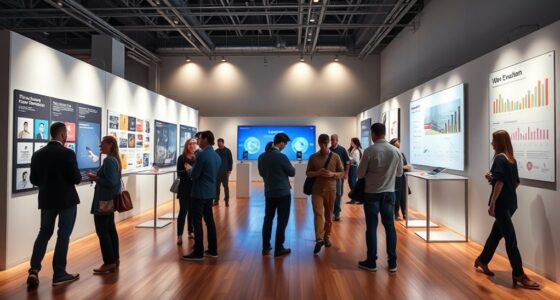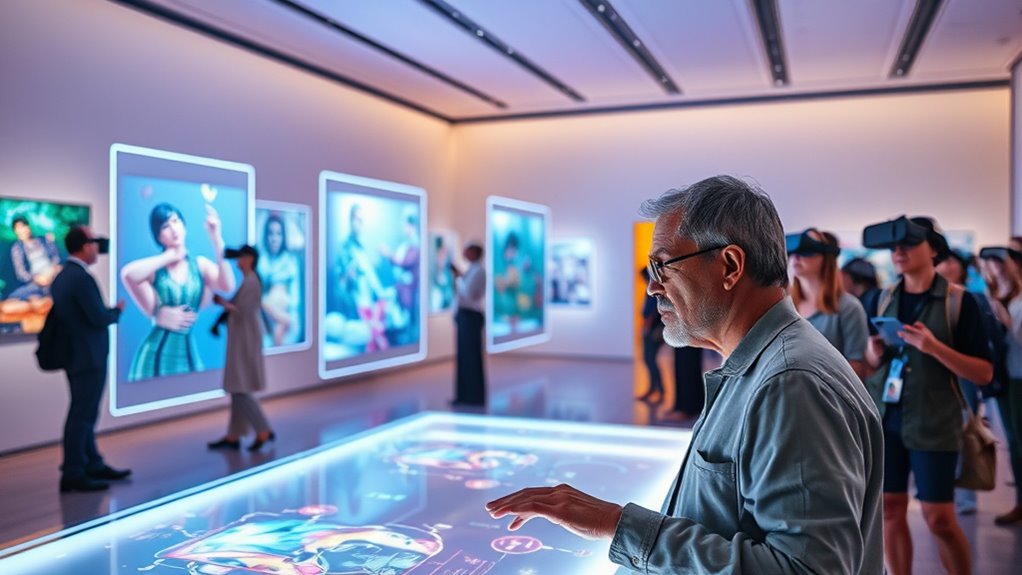

In the digital age, curatorial practice shifts from traditional static exhibitions to immersive, participatory experiences that leverage technology for broader engagement. You can now use social media, virtual tours, and interactive digital platforms to connect with diverse audiences worldwide. Technology enables real-time feedback, fostering ongoing dialogue and inclusive storytelling. If you stay curious, you’ll discover how innovative collaborations and digital tools continue to shape the future of exhibitions and audience interaction.
Key Takeaways
- Curatorial practice has shifted from static exhibitions to participatory, concept-driven experiences enabled by digital tools.
- Digital platforms like social media and virtual tours expand audience reach and foster ongoing engagement.
- Technology integration enhances artwork presentation, storytelling, and allows for dynamic, multimedia exhibition formats.
- Cross-disciplinary collaborations with tech, science, and community groups broaden creative and cultural perspectives.
- Online interactions and feedback sustain dialogue beyond physical spaces, promoting democratized access and collective participation.

The evolution of curatorial practice reflects a dynamic shift from traditional exhibition management to a more participatory and concept-driven approach. In the digital age, you’re no longer confined to physical gallery spaces or static displays. Instead, digital engagement has transformed how audiences interact with art, allowing you to reach wider, more diverse communities beyond geographic limitations. Through social media, virtual tours, interactive websites, and online archives, you can create immersive experiences that invite active participation. This shift encourages viewers to engage with the artwork on a personal level, fostering dialogue and deeper understanding. Digital tools also enable real-time feedback, which can influence curatorial decisions and foster a more responsive, inclusive environment. Incorporating technology integration into your practice enhances the ways you can present and interpret artworks, making the experience more accessible and engaging for all audiences.
Interdisciplinary collaboration plays a vital role in this evolving landscape. You now have the opportunity to work across fields—merging art with technology, science, anthropology, and other disciplines—to craft richer, more layered exhibitions. Such collaboration pushes the boundaries of traditional curatorial roles, requiring you to think beyond the conventional. For example, partnering with digital developers, scientists, or community organizations can help you design innovative projects that resonate on multiple levels. By integrating diverse perspectives, you create exhibitions that are not only visually engaging but also intellectually and culturally meaningful. This approach often results in more nuanced narratives that challenge audiences to think critically and connect with the subject matter in meaningful ways.
Moreover, digital engagement facilitates ongoing conversations long after an exhibition closes. You can leverage online platforms to sustain dialogue, share additional content, and gather feedback for future projects. This continuous interaction helps you build communities around your curatorial vision, fostering a sense of collective ownership and participation. It also democratizes access to art, enabling people from different backgrounds to contribute their voices and experiences. As a curator in the digital age, you’re no longer solely responsible for creating a singular experience; instead, you facilitate a dynamic, participatory process that evolves through ongoing engagement and collaboration.
Ultimately, this shift demands that you adapt your skills—embracing technology, cultivating interdisciplinary partnerships, and developing new ways to connect with audiences. The digital age challenges you to rethink what a curated experience can be, making it more inclusive, interactive, and responsive. By harnessing digital engagement and fostering interdisciplinary collaboration, you can craft exhibitions that are vibrant, relevant, and deeply resonant in today’s interconnected world.
Top picks for "evolution curatorial practice"
Open Amazon search results for this keyword.
As an affiliate, we earn on qualifying purchases.
Frequently Asked Questions
How Do Digital Tools Influence Curatorial Object Selection?
Digital tools considerably influence your curatorial object selection by enabling virtual cataloging, which streamlines organization and access. You can easily verify digital provenance, ensuring authenticity and history. These tools allow you to explore a broader range of objects, compare details quickly, and make more informed choices. They also facilitate collaboration with other institutions, expanding your perspective and enriching your collection with well-documented, digitally verified artifacts.
What Skills Are Essential for Modern Digital Curators?
You need strong digital literacy and technological adaptability to succeed as a modern digital curator. You should be comfortable maneuvering digital tools, managing online collections, and understanding virtual exhibition platforms. Staying updated on emerging technologies helps you innovate and engage audiences effectively. Your ability to adapt quickly to new digital trends ensures your curatorial practices remain relevant, dynamic, and accessible in an increasingly digital world.
How Does Audience Interaction Change With Digital Curatorial Practices?
You experience interactive engagement and audience participation more directly with digital curatorial practices. These methods allow you to tailor content, encouraging real-time feedback and personalized interactions. As a result, your audience feels more involved, fostering a sense of community and shared exploration. Digital platforms break down barriers, making it easier for you to facilitate meaningful connections, enhance understanding, and create dynamic, participatory experiences that evolve with audience input.
What Are the Ethical Considerations in Digital Curation?
You should consider copyright concerns to protect creators’ rights and avoid legal issues. Ensuring digital authenticity is essential to maintain trust and accurately represent artworks. Be transparent about sources and modifications, and respect intellectual property. Balancing accessibility with these ethical considerations helps you create a responsible digital curation that honors creators while engaging your audience effectively.
How Is Data Privacy Managed in Online Exhibitions?
You manage data privacy in online exhibitions by implementing strict privacy protocols to protect visitor information. You use data anonymization techniques, removing personal identifiers to guarantee user identities remain confidential. Additionally, you inform visitors about data collection practices and obtain consent where necessary. By actively applying these measures, you safeguard user privacy while offering engaging digital experiences, ensuring ethical standards are maintained throughout the digital curation process.
Conclusion
As you navigate the evolving landscape of digital curation, you embrace the gentle shifts shaping your practice. The digital age softly broadens your horizons, inviting deeper connections and new expressions. While change quietly redefines traditional boundaries, it also offers subtle opportunities for growth and innovation. By staying adaptable and open-minded, you can weave these delicate transformations into your work, ensuring your practice remains vibrant and meaningful amid the ever-changing digital currents.