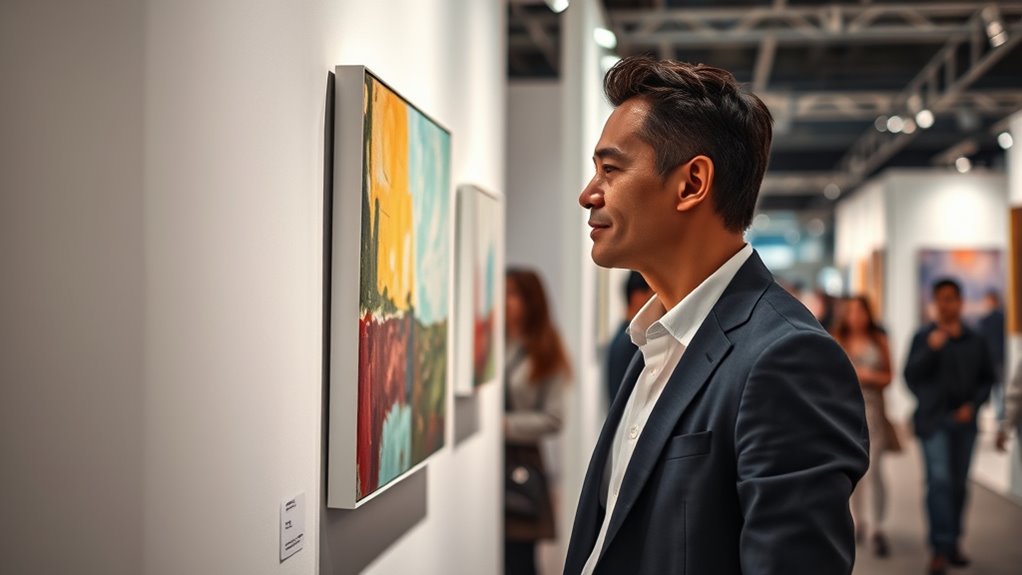

As a curator at an art fair, you select artworks and artists that align with the event’s theme and vision. You craft cohesive exhibitions that tell interconnected stories, attracting visitors, critics, and collectors. Your decisions shape the overall experience, balancing artistic integrity with strategic goals. By fostering diverse perspectives and innovative practices, you create engaging spaces that reflect current trends. Keep exploring—there’s much more to uncover about how curators elevate art fairs to new heights.
Key Takeaways
- Curators craft cohesive exhibitions that tell interconnected stories and enhance the overall visitor experience.
- They select artists and works based on artistic quality, relevance, diversity, and strategic considerations.
- Curators collaborate with galleries and stakeholders to ensure programming aligns with the fair’s vision.
- They shape the narrative and thematic focus of the fair, fostering dialogue and innovation.
- Curators influence the fair’s reputation by promoting contemporary issues and diverse perspectives through curated displays.
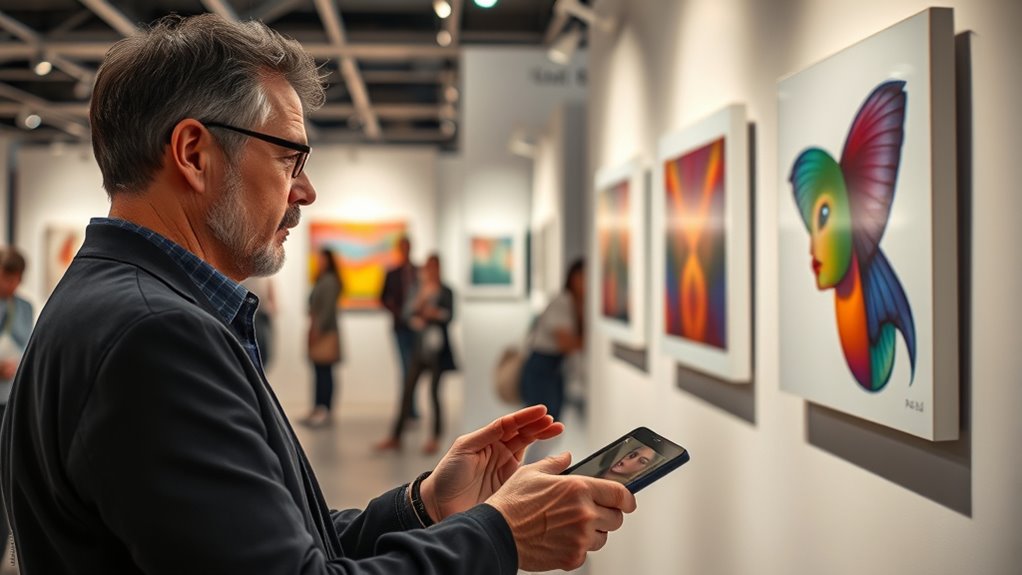
Curators play a crucial role in shaping the success of art fairs by selecting and showcasing the most compelling works. Your ability to craft a cohesive and engaging exhibition programming is essential in attracting visitors, collectors, and critics alike. When organizing an art fair, you carefully curate a diverse and thought-provoking lineup of artworks that reflect current trends, innovative practices, and meaningful themes. Your decisions in exhibition programming determine how different pieces interact, creating a narrative or dialogue that resonates with audiences and elevates the overall experience. You don’t just pick individual works—you craft an interconnected story that guides visitors through the fair and leaves a lasting impression.
Curators craft cohesive, engaging exhibitions that tell interconnected stories, attracting audiences and elevating the art fair experience.
A key aspect of your role is artist selection. You review portfolios, visit studios, and attend other exhibitions to identify artists whose visions align with the fair’s theme or strategic goals. Your eye for talent involves balancing established names with emerging voices, ensuring the fair remains fresh and relevant. You consider not just the quality of the artwork but also the potential for impact and future growth. Your choices influence the fair’s reputation, helping to position it as a platform for innovative and influential artists. By selecting the right artists, you foster a vibrant environment where new ideas flourish and conversations around contemporary art are sparked.
Your process of artist selection isn’t solely based on aesthetics; you evaluate an artist’s concept, technical skill, and relevance to current dialogues within the art world. You weigh the diversity of perspectives and backgrounds, aiming to create a fair that is inclusive and representative of different voices. This careful curation helps build a community around the event, attracting visitors who want to experience cutting-edge art and discover new talents. Your keen understanding of trends and cultural heritage and market dynamics enables you to choose works that will resonate with collectors and critics, potentially increasing sales and visibility for participating artists.
Throughout the planning process, you collaborate with galleries, artists, and stakeholders to ensure that each piece fits within the overall vision. Your role involves balancing artistic integrity with strategic considerations, making tough decisions when necessary. Ultimately, your expertise in exhibition programming and artist selection shapes the identity and success of the art fair, turning it into a compelling platform for innovation, dialogue, and discovery. Your work ensures that every aspect of the event reflects a thoughtful, curated experience that celebrates the richness and diversity of contemporary art.
art gallery display lighting
As an affiliate, we earn on qualifying purchases.
As an affiliate, we earn on qualifying purchases.
Frequently Asked Questions
How Do Curators Select Participating Galleries for Art Fairs?
You evaluate gallery relationships and their relevance to the fair’s theme or target audience. You consider each gallery’s reputation, quality of exhibitions, and how well their artists align with your vision. You also assess exhibition logistics, ensuring they can deliver works on time and handle setup efficiently. By balancing these factors, you select galleries that will contribute to a cohesive, engaging fair experience for visitors.
What Criteria Do Curators Use to Choose Artworks for Display?
You evaluate artworks by scrutinizing their originality, craftsmanship, and emotional impact, imagining each piece’s story behind the surface. You seek artistic diversity, ensuring a mix that surprises and engages visitors, sparking curiosity. Your keen eye spots works that challenge conventions or evoke strong feelings, carefully selecting those that will stand out in the bustling fair. This meticulous process creates an immersive experience, enthralling audiences with a carefully curated visual journey.
How Do Curators Influence the Overall Theme of an Art Fair?
You shape the overall theme of an art fair through your curatorial vision, selecting works that align with a central concept. Your choices create thematic coherence, guiding visitors’ experience and emphasizing specific ideas or trends. By thoughtfully curating pieces that reflect this vision, you influence how the entire fair feels, ensuring a cohesive narrative that resonates with audiences and highlights the intended message or artistic dialogue.
What Challenges Do Curators Face During the Organization of Art Fairs?
You face logistical complexities and stakeholder negotiations when organizing art fairs. Managing tight schedules, coordinating with artists, galleries, and sponsors, and ensuring smooth installation can be overwhelming. Negotiating with stakeholders over space, funding, and exhibit choices adds pressure. You must balance artistic vision with practical constraints, often making quick decisions. Staying adaptable and clear communication help you navigate these challenges, ensuring the event’s success despite these difficulties.
How Do Curators Balance Commercial Interests With Artistic Integrity?
You balance commercial interests with artistic integrity by prioritizing ethical considerations, even as market influence grows—statistics show that 65% of collectors value authenticity over sales. You carefully select works that align with your vision while satisfying buyers, ensuring the art’s message isn’t compromised. By fostering transparent relationships and emphasizing quality over profit, you maintain integrity, creating a fair space where art’s true value shines amidst market pressures.
art exhibition display stands
As an affiliate, we earn on qualifying purchases.
As an affiliate, we earn on qualifying purchases.
Conclusion
As a curator at an art fair, you’re the lighthouse guiding visitors through a sea of creativity. Your choices illuminate hidden gems, guiding eyes and hearts toward meaning. Just as a lighthouse stands firm amidst shifting tides, your vision anchors the experience, helping audiences navigate the vast ocean of art. In this role, you become both the beacon and the compass—shaping journeys, inspiring discovery, and ensuring that every piece finds its rightful place in the collective voyage.
art curatorial books
As an affiliate, we earn on qualifying purchases.
As an affiliate, we earn on qualifying purchases.
art fair signage and banners
As an affiliate, we earn on qualifying purchases.
As an affiliate, we earn on qualifying purchases.