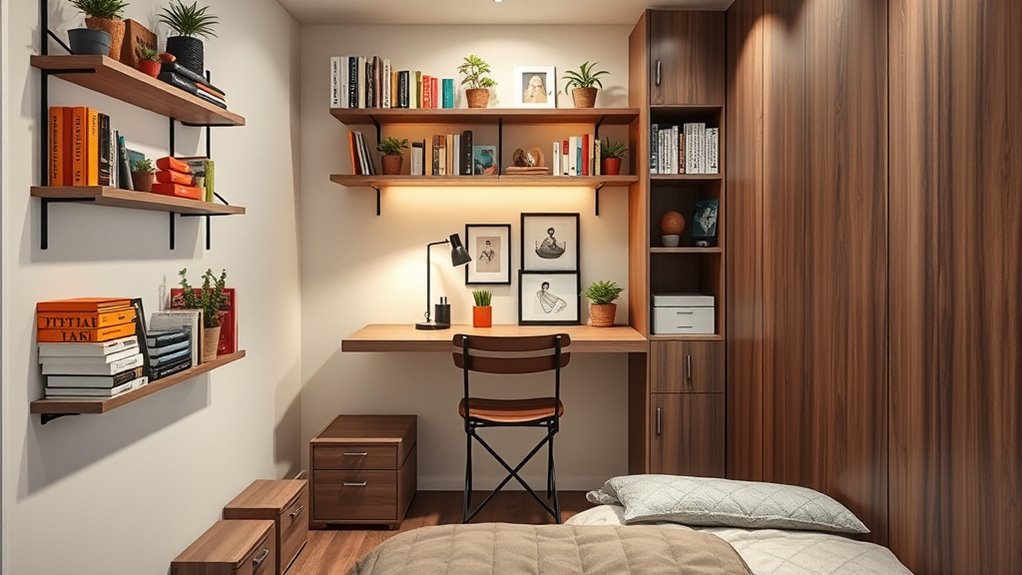

To curate a stylish, functional space with limited room, use vertical shelving to maximize wall space and keep surfaces clear. Incorporate multipurpose furniture like fold-out desks or hidden-storage bed frames to increase utility without clutter. Combine these strategies with natural or vintage decor to add character and cohesion. Smart design choices turn small areas into efficient, personalized environments. Keep exploring these ideas for more clever ways to optimize every inch of your space.
Key Takeaways
- Maximize wall space with vertical shelving to free up surface areas and create a sense of openness.
- Incorporate multifunctional furniture like sofa beds and fold-out desks to save space and increase utility.
- Use natural or vintage decor elements to add character while maintaining a cohesive, personalized aesthetic.
- Combine vertical storage with multipurpose furniture for organized, clutter-free environments.
- Strategically design small spaces to enhance functionality, organization, and visual appeal through smart furniture choices.
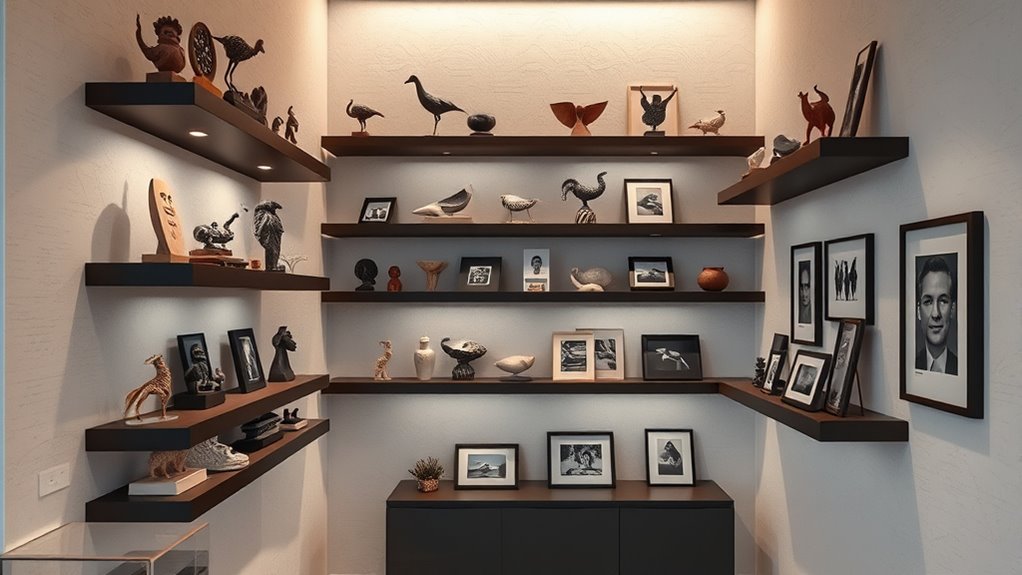
When space is tight, curating a compelling and functional collection becomes a creative challenge. You need to maximize every inch without sacrificing style or usability. One of the smartest solutions is to incorporate vertical shelving into your design. Vertical shelving takes advantage of wall space, freeing up surface areas for other uses. Instead of bulky furniture that eats into your floor plan, vertical shelves let you display books, decorative items, or essential supplies neatly and accessibly. They also help create a sense of openness by drawing the eye upward, making your space feel larger than it actually is. With adjustable or modular options, you can customize your vertical shelving to fit your specific needs, whether it’s storing kitchen essentials, organizing office supplies, or showcasing collectibles. Plus, they’re easy to install and maintain, making them ideal for small apartments or multifunctional rooms. Incorporating natural materials or vintage decor into your shelving can further enhance the farmhouse aesthetic and add character to your space.
Alongside vertical shelving, multipurpose furniture becomes your best friend in tight spaces. These versatile pieces serve more than one function, reducing clutter and increasing your storage options without adding extra furniture. Think of a sofa bed that transforms into a guest bed or an ottoman with hidden compartments for blankets and books. Coffee tables with built-in shelves or fold-out desks can turn a living area into a workspace in seconds. When you choose multipurpose furniture, you’re effectively doubling your usable space, which is *essential* when every square foot counts. It also encourages a minimalist aesthetic, because you’re intentionally selecting furniture that’s both practical and sleek. You don’t need a separate dresser, nightstand, and desk — a well-designed piece can handle all those roles seamlessly.
Combining vertical shelving with multipurpose furniture creates a dynamic, adaptable environment. You might install tall, open shelves beside a fold-away desk or choose a bed frame with integrated storage drawers and shelving units. This approach helps you keep your space organized, clutter-free, and visually appealing. It’s about making smart, intentional choices to support your lifestyle without sacrificing comfort or style. When you’re strategic about how you use vertical space and multifunctional furniture, you turn what seems like limitations into opportunities. Your space becomes more than just a place to live — it becomes a reflection of your creativity and organization. By thinking vertically and choosing furniture that works harder, you’ll find that even the smallest spaces can feel open, functional, and personalized.
vertical wall shelving units
As an affiliate, we earn on qualifying purchases.
As an affiliate, we earn on qualifying purchases.
Frequently Asked Questions
How Can I Maximize Wall Space for Display?
You can maximize wall space by installing artistic lighting to highlight your displays and create ambiance. Use vertical space efficiently with floating shelves or wall-mounted units for themed arrangements, ensuring items are accessible yet organized. Incorporate multi-functional pieces like mirrors or hooks to add depth and functionality. Keep your displays cohesive with thoughtful placement, making the most of every inch. This approach transforms your wall into a mesmerizing, space-efficient showcase.
What Materials Are Best for Small-Scale Curation?
Ever wondered what materials can handle artistic layering in tight spaces? You should choose lightweight, durable options like acrylic, metal, or high-quality wood—they resist wear while supporting your display’s complexity. These materials allow you to create dynamic, multi-dimensional arrangements without sacrificing stability. Are you ready to transform limited space into a mesmerizing artistic showcase? With the right materials, your small-scale curation becomes a bold statement of creativity and resilience.
Are Digital Solutions Effective for Limited Spaces?
Yes, digital solutions are highly effective for limited spaces. You can utilize digital storage to organize and access your collections efficiently, saving physical space. Virtual exhibitions allow you to showcase your curated items without physical constraints, reaching a broader audience online. These tools help you maximize limited space while maintaining engaging, accessible displays. Embracing digital solutions makes your curation more flexible, innovative, and space-efficient.
How Do I Ensure Safety With Compact Displays?
Think of your compact display as a treasure chest—you want to protect its contents. To guarantee safety, optimize lighting to deter theft and enhance visibility, making it easier to spot any suspicious activity. Install robust security measures like locks, cameras, and alarms, and position items thoughtfully to prevent accidental damage. Regularly check these precautions, so your treasure remains secure, even in a tight space.
Can Multi-Purpose Furniture Enhance Curation Space?
Yes, multi-purpose furniture can considerably enhance your curation space. Opt for multi-functional furniture like fold-away tables or storage ottomans to maximize utility. Incorporate modular shelving that adapts to your needs, allowing you to easily reorganize and display items efficiently. This flexibility enables you to create a dynamic, organized environment, making the most of limited space while maintaining a clean, professional presentation that highlights your curated pieces effectively.
multipurpose fold-out desk
As an affiliate, we earn on qualifying purchases.
As an affiliate, we earn on qualifying purchases.
Conclusion
As you explore these innovative solutions, you’ll find that sometimes, the most creative ideas come from unexpected coincidences. Just like stumbling upon that perfect wall or forgotten corner, limited space can spark your imagination and lead to surprising arrangements. Keep an open mind, and you’ll discover that small spaces often hold the biggest potential. After all, it’s in these unlikely moments that your unique, eye-catching displays truly come to life.
hidden storage bed frame
As an affiliate, we earn on qualifying purchases.
As an affiliate, we earn on qualifying purchases.
compact sofa bed with storage
As an affiliate, we earn on qualifying purchases.
As an affiliate, we earn on qualifying purchases.