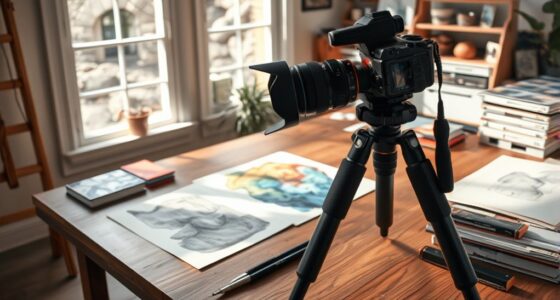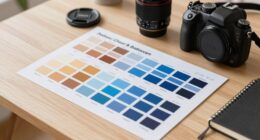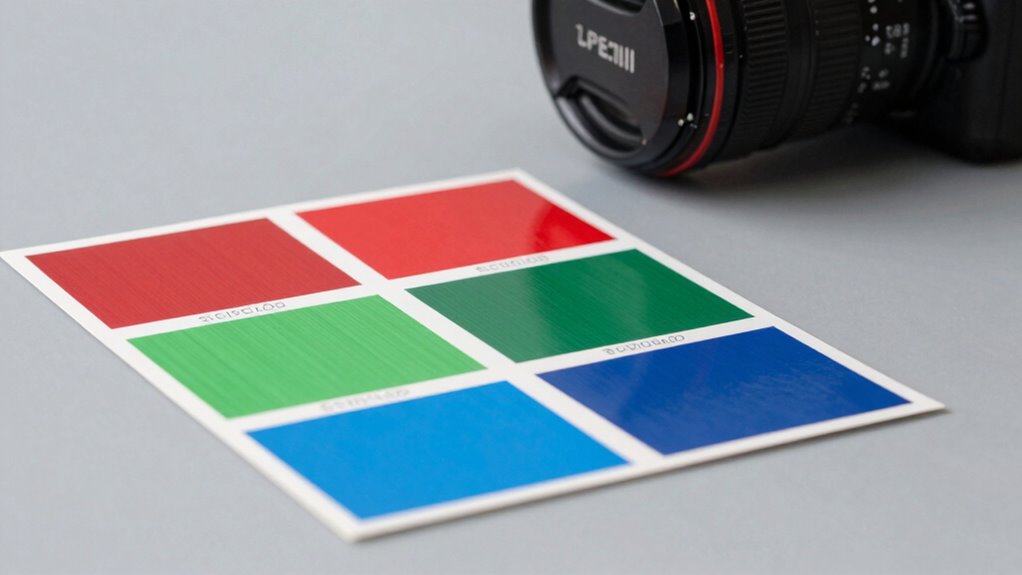
To use a color checker card like a pro, start by choosing a neutral, well-lit environment and position the card properly facing the camera. Include the card in every shot, keeping it flat and unobstructed. During post-processing, use the color sampler tool to match the card’s patches for accurate white balance and color calibration. Maintain consistent lighting throughout your shoot to guarantee reliable results. Keep learning the best techniques, and you’ll master professional color accuracy in no time.
Key Takeaways
- Always shoot the color checker card under current lighting conditions before capturing your main subject.
- Keep the card flat, well-lit, and positioned close to the subject for accurate color reference.
- Use the eyedropper tool in editing software to set white balance using gray patches on the card.
- Maintain consistent lighting and camera settings throughout the shoot for reliable calibration results.
- Regularly revisit and re-calibrate with the card during editing to ensure color accuracy and consistency.
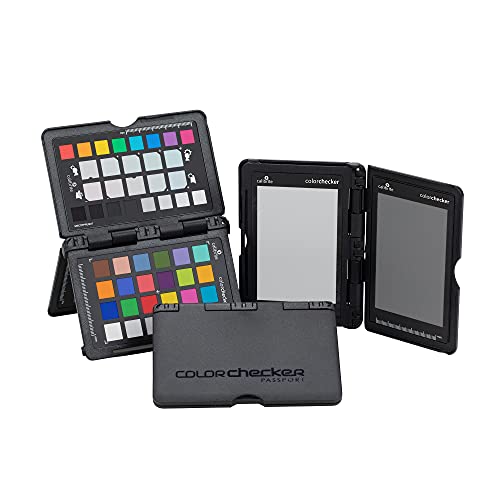
Calibrite ColorChecker Passport Photo 2 Portable Color Calibration Kit for Photo and Video, 4 Target Set for White Balance, Exposure and Camera Profiling, Protective Folding Case with Lanyard (CCPP2)
SPECIFICATIONS: Portable ColorChecker Passport kit with 4 targets for exposure control, custom white balance, camera profiling, and enhancement…
As an affiliate, we earn on qualifying purchases.
As an affiliate, we earn on qualifying purchases.
What Are Color Checker Cards and Why Are They Essential for Photographers?

Have you ever struggled with achieving accurate colors in your photographs? That’s where color checker cards come in. These tools are essential for ensuring proper color calibration, giving you consistent, reliable color accuracy across your images. Color checker cards feature a series of standardized color patches that serve as reference points during editing or shooting. By capturing the card in your shot, you can fine-tune your camera’s settings or editing process to match true colors. This helps eliminate unwanted color casts and tonal inconsistencies. Additionally, using these cards can enhance security in digital transactions, ensuring that your photographic edits remain authentic and verifiable. Moreover, understanding digital concepts in photography can further improve your workflow, leading to even better results. For instance, just as you would ensure heating optimization in your living space, achieving accurate color representation ensures your images are warm and inviting. Using a color checker card can also improve color accuracy in your photography, allowing you to produce images that truly reflect your creative vision. Furthermore, proper care for your photography gear, including your color checker card, can significantly extend its lifespan and maintain optimal performance. Whether you’re a professional photographer or an enthusiast, incorporating a color checker card into your workflow guarantees that your images reflect true-to-life colors, saving you time in post-processing and elevating the overall quality of your work.

Calibrite Display Pro HL Monitor Calibration Colorimeter for LCD Mini LED and OLED Displays, Measure up to 3000 Nits, PROFILER Software, USB C with Adapter, Validation/Color Uniformity Tools
SPECIFICATIONS: HL high luminance sensor colorimeter measures up to 3000 nits, calibrates and profiles LCD mini LED OLED…
As an affiliate, we earn on qualifying purchases.
As an affiliate, we earn on qualifying purchases.
How to Set Up and Use Your Color Checker Card for Accurate Results
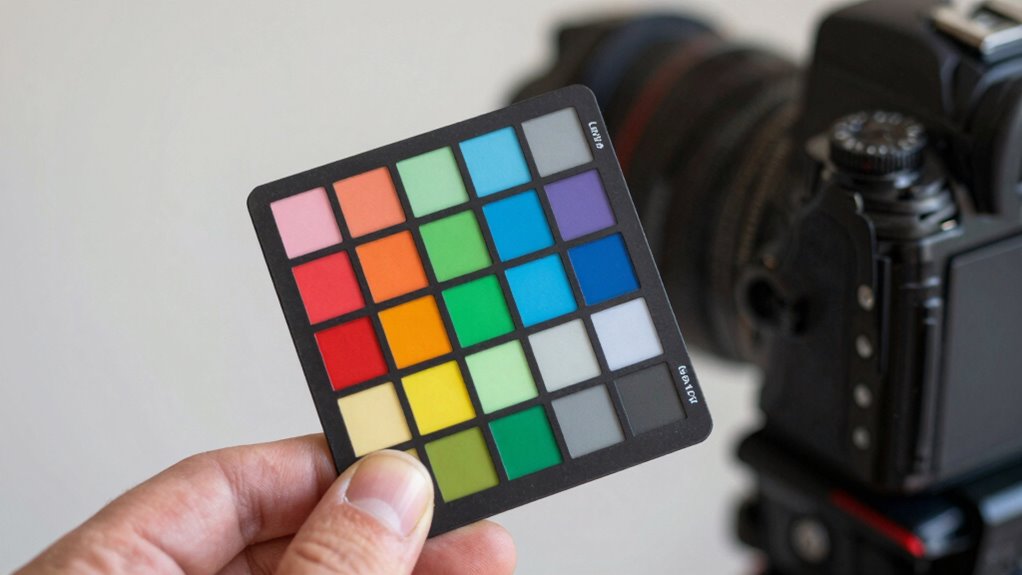
To get the most accurate results from your color checker card, it’s important to set it up correctly before shooting. Begin by choosing a neutral, well-lit environment to minimize shadows and color cast issues. Use consistent calibration techniques, like setting your camera’s white balance manually or shooting in RAW format, to guarantee the card’s colors are captured precisely. Home improvement fundamentals can also provide insights into creating the perfect shooting environment. Additionally, understanding ethical consumer choices can enhance your photography, as selecting sustainable materials and methods contributes to responsible practices. Position the card flat and facing the camera directly, avoiding any angles that could distort colors. Before starting your shoot, take a calibration shot of the card under your current lighting conditions. This reference image helps you adjust your post-processing for maximum color accuracy. Proper setup ensures your color checker card provides reliable data, making your color calibration techniques more effective and your final images true to life. Furthermore, just as early socialization and training are vital for a well-adjusted adult dog, setting up your color checker correctly is crucial for achieving professional results and supports healthy development in your photography journey. Incorporating brewing fundamentals can also help you understand how lighting affects color perception in your images.
Calibrite ColorChecker Passport Photo 2 Portable Color Calibration Kit for Photo and Video, 4 Target Set for White Balance, Exposure and Camera Profiling, Protective Folding Case with Lanyard (CCPP2)
SPECIFICATIONS: Portable ColorChecker Passport kit with 4 targets for exposure control, custom white balance, camera profiling, and enhancement…
As an affiliate, we earn on qualifying purchases.
As an affiliate, we earn on qualifying purchases.
Step-by-Step Guide to Capturing Consistent Colors in Your Photos
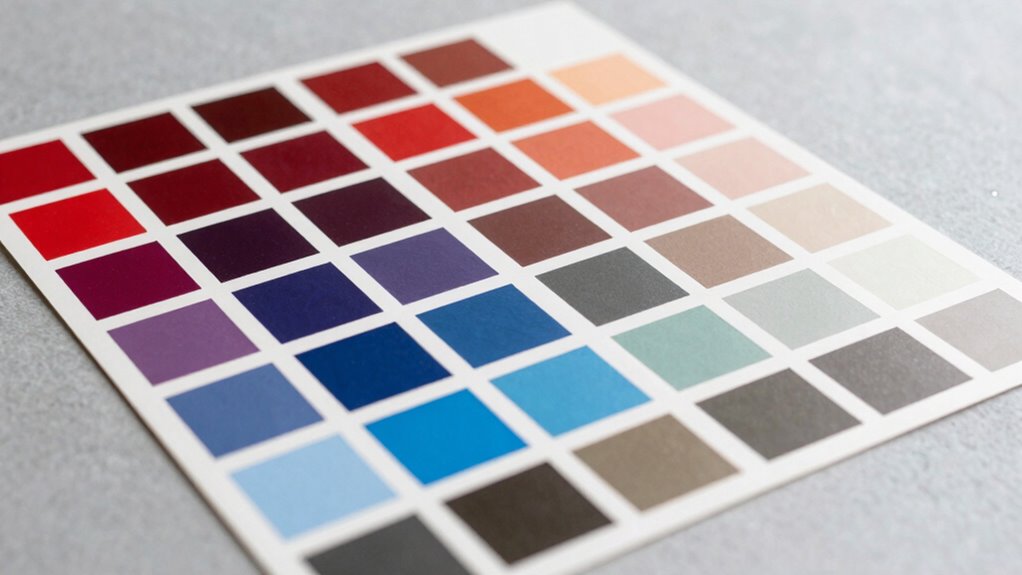
To get consistent colors, you need to place your color checker card correctly in your scene, ensuring it’s facing the camera straight on. Keep your lighting conditions steady and uniform so the colors appear the same in every shot. By paying attention to placement and lighting, you’ll make color matching much easier and more accurate. Additionally, understanding home safety standards can help ensure your environment is optimized for capturing the best possible images. Utilizing techniques from the evolution of arcade games can inspire creative approaches to your photography composition.
Proper Placement Techniques
Proper placement of your color checker card is essential for capturing accurate and consistent colors in your photos. Position the card close to your subject, ensuring it’s fully visible and not obstructed. Keep the card flat and well-lit to facilitate effective lighting calibration and camera calibration. Avoid shadows or reflections that could distort color readings. Place the card at the same level as your subject for uniformity. Maintain a consistent distance from the camera to ensure accurate color sampling. Use a tripod or stable surface to prevent movement during capture. Remember, the goal is to replicate real-world conditions for precise calibration. Proper placement guarantees your color reference is reliable, leading to better color accuracy across all your shots. Additionally, using a color checker can help improve color accuracy in photography by providing a standardized reference point for adjustments.
- Keep the card in the same lighting as your subject
- Position the card flat and unobstructed
- Maintain consistent distance from your camera
- Avoid shadows or reflections on the card
- Use a tripod or stable surface for placement
Consistent Lighting Conditions
Achieving consistent colors in your photos hinges on maintaining stable lighting conditions throughout your shoot. Lighting consistency is essential for accurate color calibration, ensuring your color checker card reflects true colors under the same lighting. To do this, avoid changing light sources or angles once you’ve started shooting. Use natural light if possible, but monitor its changes, like clouds passing or the sun shifting. If you’re indoors, set up artificial lighting and keep it fixed. Use a tripod to prevent camera movement, and consider using light meters to measure and replicate the same lighting setup. Career change strategies can also benefit from maintaining consistency in approaches, just as consistent lighting guarantees your color calibration remains accurate across all shots, making post-processing smoother and more reliable. This control ultimately helps you achieve true-to-life, professional-looking images. Additionally, creating a growth mindset in children can enhance their ability to adapt to various environments, which may also be reflected in their creative endeavors.
Calibrite ColorChecker Passport Photo 2 Portable Color Calibration Kit for Photo and Video, 4 Target Set for White Balance, Exposure and Camera Profiling, Protective Folding Case with Lanyard (CCPP2)
SPECIFICATIONS: Portable ColorChecker Passport kit with 4 targets for exposure control, custom white balance, camera profiling, and enhancement…
As an affiliate, we earn on qualifying purchases.
As an affiliate, we earn on qualifying purchases.
Smart Tips for Using Color Checker Cards During Post-Processing
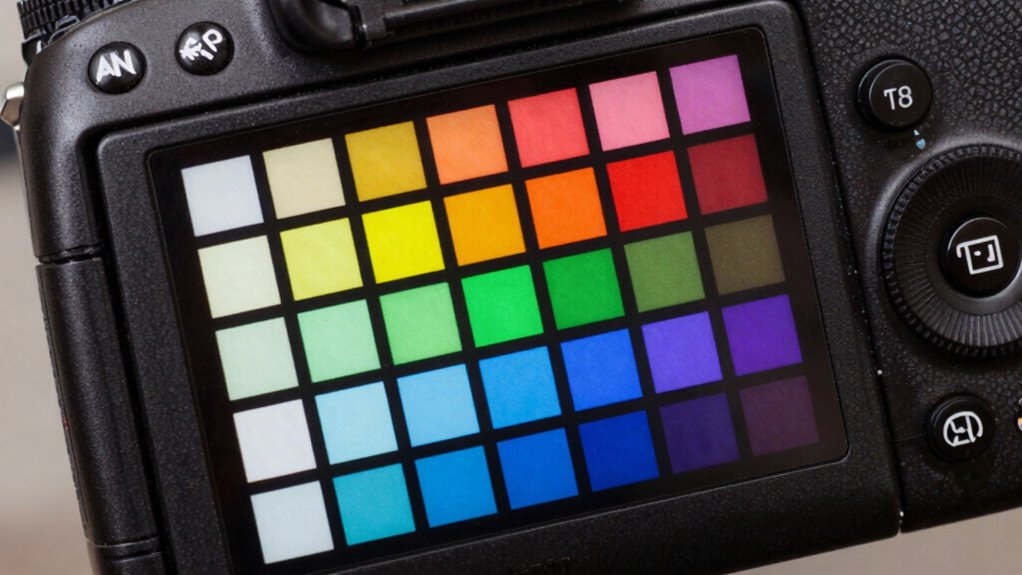
Using Color Checker cards effectively during post-processing can substantially improve your color accuracy and consistency. To optimize their use, focus on proper color calibration and precise color matching. Start by importing your images and the reference chart into your editing software. Use the eyedropper tool to select the known gray patches for accurate white balance. Then, adjust the overall colors to match the standardized colors on the card, ensuring consistent color calibration across your images. Additionally, understanding color dynamics can further enhance the accuracy of your adjustments. Establishing trust and intimacy in your editing workflow can also lead to improved results and a more satisfying creative process.
Incorporating techniques similar to grocery savings strategies can help streamline your workflow and enhance efficiency during your editing process. Understanding the impact of AI trends can also inform your approach to integrating technology in your creative process.
- Use the color sampler tool to verify color matching
- Create custom presets based on the card’s reference colors
- Regularly revisit the card for ongoing color calibration
- Use histogram and tone controls alongside color adjustments
- Save and apply profiles for consistent results across projects
Incorporating the principles of engine performance upgrades can also enhance your understanding of color dynamics, making your editing process more effective.
Avoid These Common Mistakes When Using Color Checker Cards
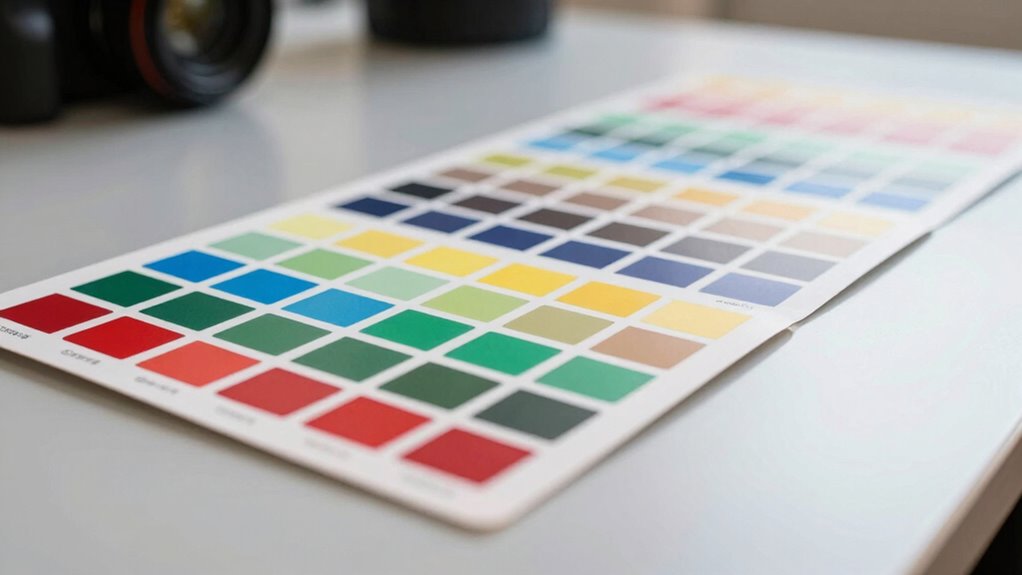
While employing color checker cards can greatly improve your color accuracy, many photographers make common mistakes that undermine their effectiveness. One mistake is neglecting proper lighting conditions when capturing the chart, which hampers accurate color calibration. Make sure the lighting remains consistent and neutral to avoid skewed results. Additionally, curiosity and happiness can inspire you to experiment with different lighting setups for optimal outcomes. Another error is forgetting to include the color checker in every relevant shot, disrupting your overall color management. Moreover, using a consistent flush volume option can help maintain uniformity in your color calibration process. Additionally, some overlook the importance of setting your camera’s white balance manually, relying instead on auto settings that can introduce errors. Phil Lesh’s influence on jam band culture shows how consistent practices can lead to greater success. Failing to follow a consistent process for capturing and applying the color chart can lead to inaccurate color calibration. By avoiding these pitfalls, you guarantee your color management remains precise, resulting in more consistent and true-to-life colors in your final images. Understanding the role of consistent lighting conditions can enhance your results even further. Additionally, the principles of comparative advantage can encourage photographers to focus on their strengths in color management techniques.
Choosing the Best Color Checker Card for Your Photography Needs
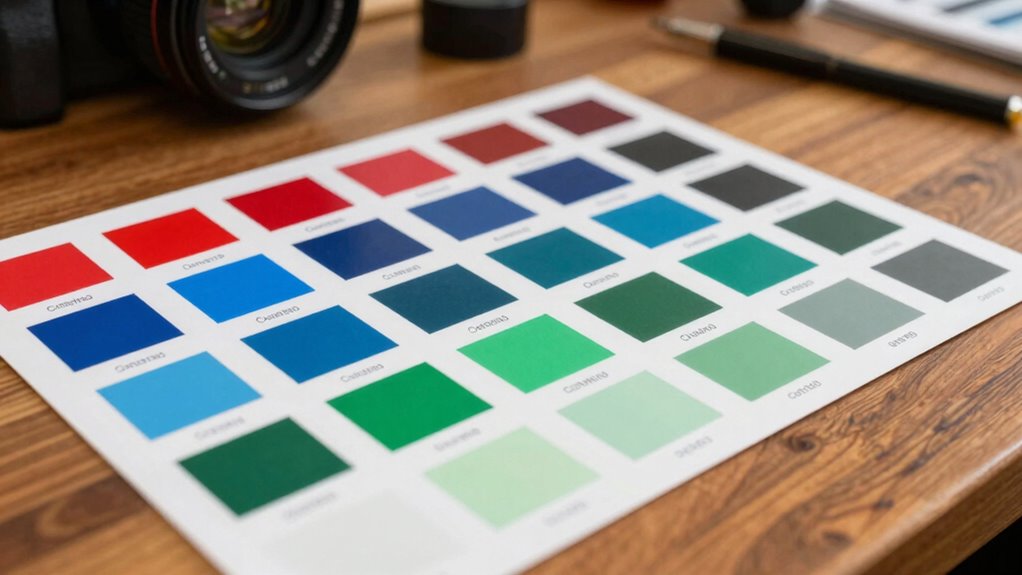
Choosing the right color checker card depends on your specific photography needs and workflow. If you focus on color harmony and precise editing, opt for a standard chart with a wide range of accurate color patches. For creative applications, consider cards with more vibrant or unconventional colors to inspire unique edits. Think about your environment—outdoor shoots may require a portable, durable option, while studio work benefits from high accuracy. Also, evaluate compatibility with your camera and editing software.
Choose a color checker card suited to your workflow, environment, and creative needs for accurate, inspiring results.
- Standard charts for color accuracy and consistency
- Creative or artistic cards for bold, unique colors
- Portable, durable options for on-location shoots
- Compatibility with your camera and editing tools
- Specialized charts for specific genres like portrait or landscape
Frequently Asked Questions
Can I Use a Color Checker Card With Smartphone Photography?
Yes, you can use a color checker card with smartphone photography. It helps with smartphone calibration, ensuring your photos have accurate colors. Simply photograph the card in your scene and use editing apps that support color calibration to match the card’s colors. For the best results, follow color accuracy tips like consistent lighting and proper card placement. This way, you’ll achieve professional-looking, true-to-life colors in your smartphone shots.
How Often Should I Recalibrate My Color Checker Card?
You should recalibrate your color checker card every few months to keep your color accuracy sharp—better safe than sorry. Over time, environmental factors like sunlight, humidity, and handling can cause the card to fade or change, throwing off calibration. Think of it as tuning a musical instrument; regular checks ensure your colors stay true. Keep a routine, and your photos will always look spot on.
Are There Specific Lighting Conditions for Best Results?
To get the best results, you should use your color checker card in consistent lighting conditions, as lighting variability can affect color accuracy. Avoid changing the light source or time of day during your shoots. Ideally, shoot in controlled, neutral lighting like daylight-balanced or studio lights. This consistency helps guarantee your color calibration remains accurate, leading to more reliable color reproduction across your images.
Can I Use a Color Checker Card for Video Production?
Yes, you can definitely use a color checker card for video production. It helps you achieve better color accuracy on set, ensuring your footage looks true to life. Additionally, it simplifies post-production editing by providing a reliable reference for color correction. By capturing a shot with the card, you make color grading more precise, saving time and enhancing the overall quality of your video.
How Do I Store and Care for My Color Checker Card?
To keep your color checker card in top shape, store it in a cool, dry place away from direct sunlight, and use a protective case to prevent damage. Regularly clean it with a soft, lint-free cloth, avoiding harsh chemicals that could harm the surface. Follow storage tips like keeping it flat and clean, and cleaning techniques such as gentle wiping, to maintain accurate color calibration for professional results.
Conclusion
Now that you know how to harness the power of color checker cards, imagine the stunning, perfectly balanced images you’ll create. With every shot, you’ll be one step closer to mastering true color accuracy—bringing your vision to life with precision and confidence. But beware, the real magic begins when you start experimenting in unpredictable lighting conditions, revealing secrets only true professionals can access. Are you ready to elevate your photography to the next level?