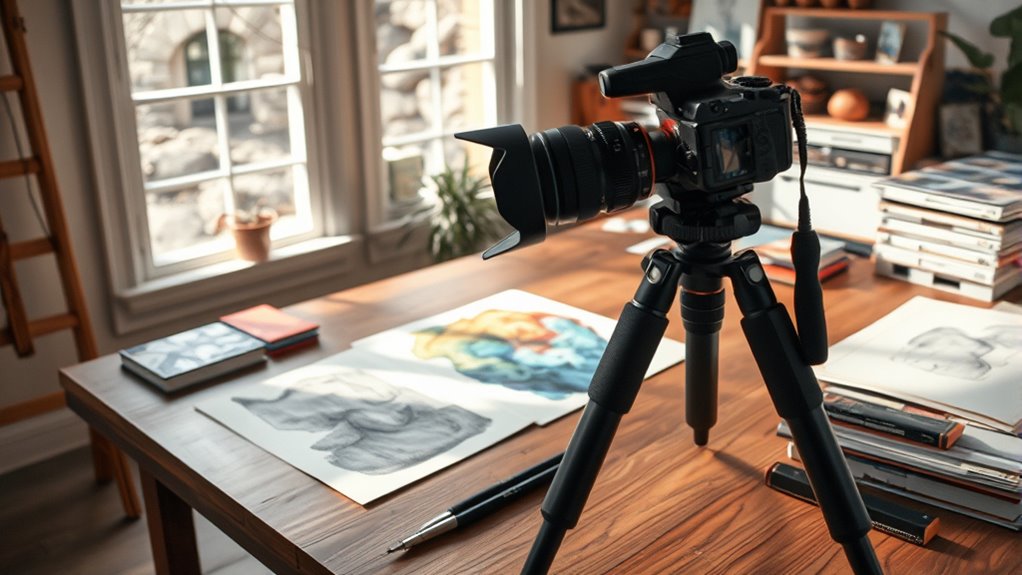

To effectively document your artwork, use proper photography techniques like natural or balanced artificial lighting, positioning lights at 45-degree angles to avoid reflections, and diffusing them for even coverage. Keep your images sharp with high resolution, and organize your files with consistent naming conventions. Embedding metadata such as dates, materials, and provenance enhances future retrieval. Following these tips guarantees your artwork’s details are preserved accurately—continue exploring to master the full process.
Open a free Amazon Business account
Business pricing, bulk buying and tax-exempt orders.
As an affiliate, we earn on qualifying purchases.
Key Takeaways
- Use proper lighting with diffusers and 45-degree angles to capture true colors and avoid reflections.
- Develop consistent naming conventions and organize images in structured folders for easy retrieval.
- Embed detailed metadata such as title, date, medium, and provenance to enhance digital records.
- Store high-resolution images securely on local drives and cloud services, creating multiple backups.
- Maintain organized archiving practices and understand projectors’ contrast ratios for accurate digital reproduction.

Have you ever wondered why documenting artwork is essential for artists and collectors alike? Proper documentation not only preserves the visual integrity of your work but also guarantees that your art remains accessible and protected over time. When it comes to capturing your artwork, a good lighting setup is crucial. The right lighting highlights the details, textures, and true colors of your piece, helping you avoid shadows, glare, or color distortions. Natural light is often preferred, but if you’re working indoors, investing in adjustable, daylight-balanced artificial lights can make a significant difference. Position your lights at 45-degree angles to the artwork to minimize reflections and shadows, and use diffusers or softboxes to create even, gentle illumination. This meticulous lighting setup ensures that your photographs accurately represent your work, which is vital whether you’re creating a portfolio, submitting to galleries, or selling online. Additionally, understanding the contrast ratio of your projector can influence how well you capture the nuances of your artwork’s details in digital formats. Once you’ve captured high-quality images, digital storage becomes your next priority. Digital files are your permanent record, so organizing and safeguarding them is essential. Develop a consistent naming convention that includes details like the artwork’s title, date, medium, and dimensions. Store these files in a dedicated, organized folder system on your computer or external drives, making it easy to locate specific pieces later. Backups are equally important—use cloud storage services for additional security and accessibility. Cloud platforms like Dropbox, Google Drive, or specialized art archiving services automatically synchronize your files and protect against hardware failures. Additionally, consider creating multiple copies and storing them in different locations to prevent loss from theft, fire, or other disasters. When archiving digital images, save high-resolution versions to preserve detail, and keep lower-resolution copies for online sharing or quick previews. Metadata also plays a vital role; embed information about the artwork—such as the creation date, materials used, and provenance—directly into the image files. This thorough documentation makes future retrieval easier and adds value to your digital archive.
artwork photography lighting kit
As an affiliate, we earn on qualifying purchases.
As an affiliate, we earn on qualifying purchases.
Frequently Asked Questions
What Are the Best Lighting Conditions for Photographing Artwork?
You should aim for natural lighting, preferably during overcast days or near windows with diffused light, to guarantee color accuracy. Avoid harsh direct sunlight, which can create glare and shadows. Using soft, even lighting helps capture true colors and details of your artwork. If natural light isn’t available, use diffusers and reflectors to mimic it, ensuring your photos represent the piece accurately and beautifully.
How Do I Choose the Right Background for Archiving?
Think of your background as the stage that reveals your artwork’s true essence. To choose the right one, consider color contrast; pick a neutral or complementary shade that makes your piece pop. Pay attention to background texture—smooth surfaces work best for detailed pieces, while textured backgrounds can add depth. Your goal is clarity and focus, so select a background that enhances without overpowering your artwork’s message.
What File Formats Are Best for Digital Art Preservation?
You should save your digital art in high-quality formats like TIFF or PNG for preservation. Use the highest resolution settings to capture detail, and choose a consistent color profile, such as Adobe RGB or sRGB, to guarantee accurate color reproduction. These formats and settings help maintain your artwork’s integrity over time, making it easier to reproduce or print later without losing quality.
How Often Should I Update My Digital Archives?
Think of your digital archives as a garden needing regular tending. You should update your digital storage and metadata management every few months or after major projects to keep everything fresh and accessible. Frequent updates prevent decay and ensure your artwork’s story stays vibrant. Regular checks help catch potential issues early, safeguarding your digital treasures so they bloom beautifully for years to come.
What Security Measures Protect My Digital Artwork Files?
You should protect your digital artwork files with strong security measures like digital encryption to keep your files safe from unauthorized access. Always use cloud backups to guarantee you have copies stored securely off-site, protecting against hardware failures or theft. Regularly update your security settings and passwords. Combining encryption with reliable cloud backups gives you a robust defense, ensuring your artwork remains secure and accessible whenever you need it.
high resolution digital art storage
As an affiliate, we earn on qualifying purchases.
As an affiliate, we earn on qualifying purchases.
Conclusion
By mastering photography and archiving techniques, you turn your artwork into a timeless storybook, each image a vivid page waiting to be revisited. Your documentation becomes a treasure chest, safeguarding your creativity for years to come. With every shot and careful record, you craft a bridge between the present and future, ensuring your artistic journey isn’t just a fleeting spark but a radiant legacy that endures through time. Keep capturing, keep preserving—your masterpiece awaits eternity.
As an affiliate, we earn on qualifying purchases.
artwork metadata embedding tools
As an affiliate, we earn on qualifying purchases.
As an affiliate, we earn on qualifying purchases.
Flea & tick season Picks
flea and tick prevention
As an affiliate, we earn on qualifying purchases.