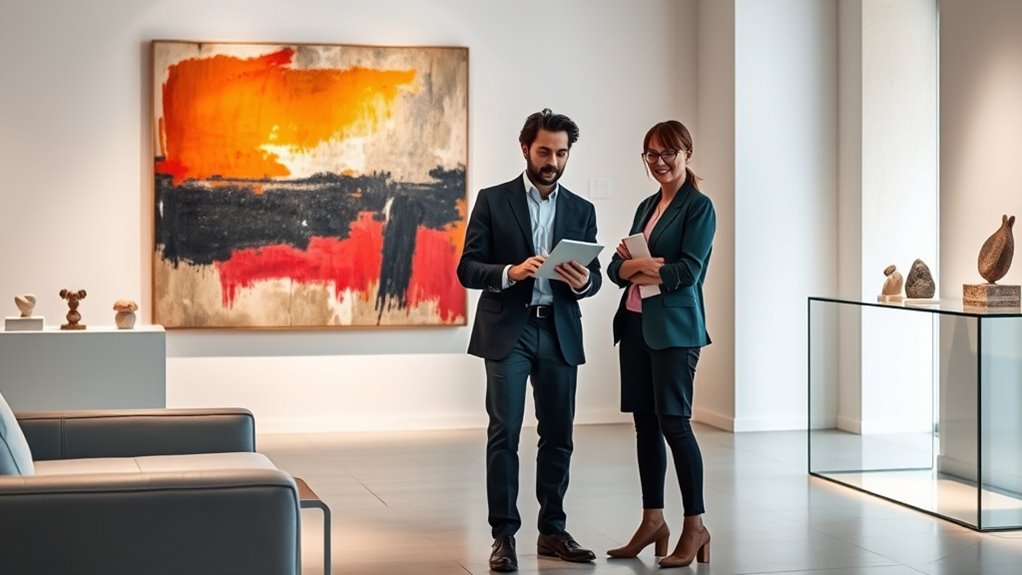

To collaborate effectively with galleries, prioritize clear communication about each party’s roles, responsibilities, and expectations. Build trust by being transparent about logistical details, finances, and marketing strategies. Regular check-ins help address issues early and keep everyone aligned on the vision. Respect each other’s expertise and contributions to foster a strong partnership. Paying attention to visual presentation and planning for long-term collaboration can boost success—if you explore further, you’ll find strategies to enhance your partnerships even more.
Open a free Amazon Business account
Business pricing, bulk buying and tax-exempt orders.
As an affiliate, we earn on qualifying purchases.
Key Takeaways
- Establish clear communication to define roles, responsibilities, and expectations early in the collaboration.
- Coordinate logistics meticulously, including installation, transportation, and timelines, to ensure smooth operations.
- Maintain regular check-ins to address issues, align goals, and adapt plans as needed.
- Prioritize transparency in financial, marketing, and audience engagement strategies to foster trust.
- Focus on visual presentation quality and build long-term relationships for future collaborations.

Have you ever wondered how galleries can work together seamlessly to boost their visibility and sales? It’s a fascinating process that requires clear communication, mutual understanding, and strategic planning. At the core of successful collaboration are well-defined roles and responsibilities, especially when it comes to curatorial responsibilities and exhibition logistics. When you partner with another gallery, you need to assure that each party understands what’s expected, from selecting artworks to managing the flow of the exhibition. This clarity helps prevent misunderstandings and keeps the project running smoothly.
Curatorial responsibilities are crucial in collaborative efforts. You’ll want to establish who handles the artist selection, the thematic direction, and the overall narrative of the exhibition. Sharing these responsibilities requires open dialogue to align visions and expectations. Some galleries might focus on the curation process, bringing in their expertise and contacts, while others contribute resources or promotional support. By clearly delineating roles, you avoid duplication and ensure that every aspect of the exhibition receives the attention it deserves. This division of labor also fosters trust, showing that each gallery values professionalism and transparency.
Clear role division in curatorial tasks fosters trust and professionalism in collaborative exhibitions.
Exhibition logistics play an equally important role in collaboration. You need to coordinate on the technicalities—such as installation and deinstallation schedules, transportation, insurance, and display requirements. Working together means aligning on timelines to ensure the artworks arrive and are installed on schedule, avoiding delays that can impact the exhibition’s success. Effective communication about logistics also involves sharing contacts, resources, and contingency plans. When you’re proactive in planning these details, you reduce the risk of mishaps and last-minute surprises, creating a seamless experience for visitors and artists alike.
Building a successful partnership also depends on setting expectations from the start. Be clear about financial arrangements, marketing strategies, and audience engagement goals. Regular check-ins keep everyone on the same page, allowing you to address issues early and adapt as needed. It’s essential to respect each other’s expertise and contributions, fostering a collaborative environment rather than a competitive one. When everyone feels heard and valued, the partnership becomes stronger, and the exhibition benefits from diverse perspectives and shared resources.
Additionally, understanding the importance of color accuracy and contrast ratio in projectors can significantly enhance the presentation of artwork and visual displays within exhibitions. When you prioritize high contrast ratios and accurate color reproduction, your visual content becomes more compelling and true to the original piece, ultimately elevating the overall experience for visitors.
In the end, effective collaboration between galleries hinges on meticulous planning, clear roles, and open communication. By carefully managing curatorial responsibilities and exhibition logistics, you create a cohesive experience that elevates both galleries and their artists. This strategic approach not only enhances visibility but also builds long-term relationships that can lead to future successful projects. Collaboration, when done right, becomes a powerful tool for growth—benefiting everyone involved.
Top picks for "collaborat gallery expectation"
As an affiliate, we earn on qualifying purchases.
Frequently Asked Questions
How Do I Approach Galleries for Collaboration?
When approaching galleries for collaboration, start with targeted gallery outreach by researching their focus and past exhibitions. Craft a personalized message that highlights your unique work and how it aligns with their vision. Use partnership strategies like proposing specific ideas or joint projects to demonstrate your commitment. Be professional, concise, and respectful of their time. Building genuine relationships and showing flexibility can increase your chances of forming successful collaborations.
What Should I Include in My Initial Proposal?
In your initial proposal, include a clear overview of your art licensing ideas, highlighting how your work aligns with the gallery’s brand and audience. Share your promotional strategies to demonstrate how you’ll help boost exposure. Keep it concise, professional, and focused on mutual benefits. Show enthusiasm, provide examples of your previous work, and suggest potential collaboration formats to make it easy for the gallery to see the value you bring.
How Are Royalties or Profits Typically Shared?
Royalty agreements and profit sharing are usually negotiated upfront, with artists often receiving a percentage of sales or royalties based on the artwork’s revenue. You should clearly define these terms in your contract, specifying percentages, payment schedules, and whether profits include or exclude gallery commissions. This transparency helps prevent misunderstandings and guarantees both you and the gallery have clear expectations regarding the financial relationship.
What Are Common Contractual Obligations?
In your exhibition agreement, you typically agree to specific contractual obligations like artist licensing restrictions and display requirements. For example, you might license your artwork exclusively to a gallery for a set period, guaranteeing you can’t showcase it elsewhere. These agreements specify the scope of rights granted, duration, and responsibilities like promotion or insurance, helping protect both your interests and the gallery’s. Clear terms ensure smooth collaboration and avoid misunderstandings.
How Do I Handle Disagreements During Collaboration?
When disagreements arise, you should approach them with creative negotiation, aiming to find mutually beneficial solutions. Stay calm, listen actively, and express your perspective clearly. Use conflict resolution techniques like compromise or seeking common ground to resolve issues. Remember, open communication fosters trust, so be willing to negotiate and adapt. This proactive approach helps maintain a healthy collaboration and keeps the focus on achieving shared goals.
Conclusion
Remember, building strong gallery relationships takes time and trust. Be clear about your goals, communicate openly, and respect their expertise. Always stay professional and adaptable, but don’t forget to stay true to your artistic vision. As the saying goes, “A journey of a thousand miles begins with a single step.” Keep learning from each experience, and you’ll find that collaboration becomes a rewarding part of your artistic journey.
NFL season / tailgating Picks
team gear
As an affiliate, we earn on qualifying purchases.