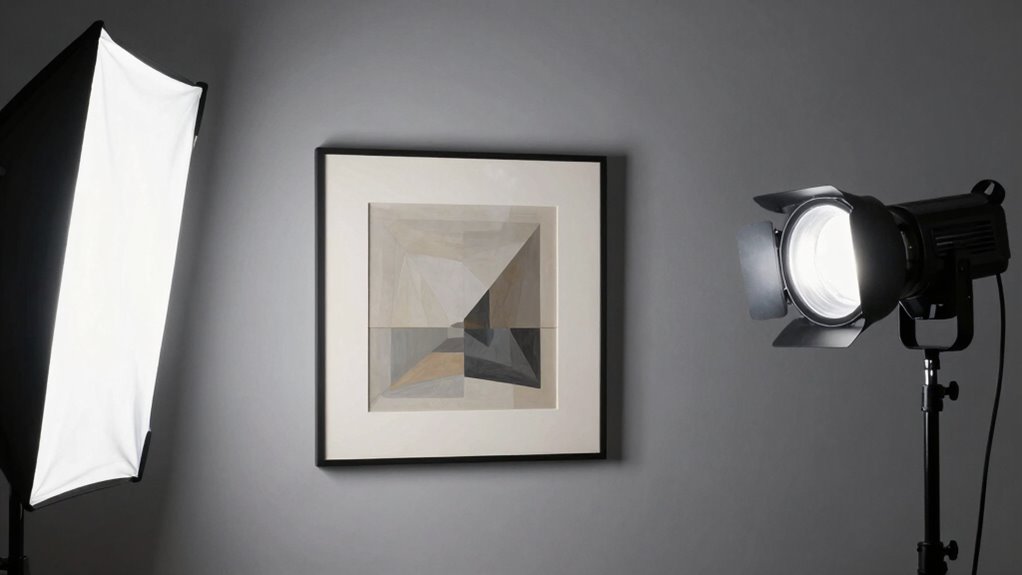
When choosing between continuous lights and strobes for art reproduction, you need to weigh ease of use against precision. Continuous lights offer real-time feedback and consistent color, making adjustments simpler and quicker. Strobes provide intense, focused illumination that captures fine details and textures with high accuracy but require more setup and calibration. Understanding these trade-offs helps you pick the right option for your goals, and exploring further will reveal how to optimize your lighting setup for the best results.
Key Takeaways
- Continuous lights offer real-time visual feedback, making adjustments easier during artwork setup and reproduction.
- Strobes provide higher intensity and better control over sharpness and detail, ideal for capturing fine textures.
- Continuous lighting ensures consistent color temperature and spectral output, improving color fidelity in reproductions.
- Strobes require more calibration and setup time but deliver powerful, focused illumination for precise detail work.
- Budget, workspace, and workflow preferences influence whether continuous lights or strobes are more suitable for art reproduction.
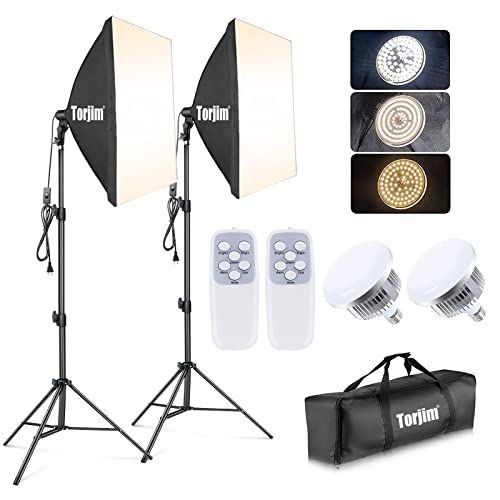
Torjim Softbox Photography Lighting Kit, 2Pcs 27" x 27" Professional Soft Box | 3000K-7500K 85W LED Bulbs with Remote, Photography Continuous Lighting Kit for Studio Lights, Portrait, Video Recording
【Excellent Soft box with Wide Coverage】Soft box’s inner nylon reflector surface make the light much brighter, while its…
As an affiliate, we earn on qualifying purchases.
As an affiliate, we earn on qualifying purchases.
Foundations of Lighting for Art Reproduction
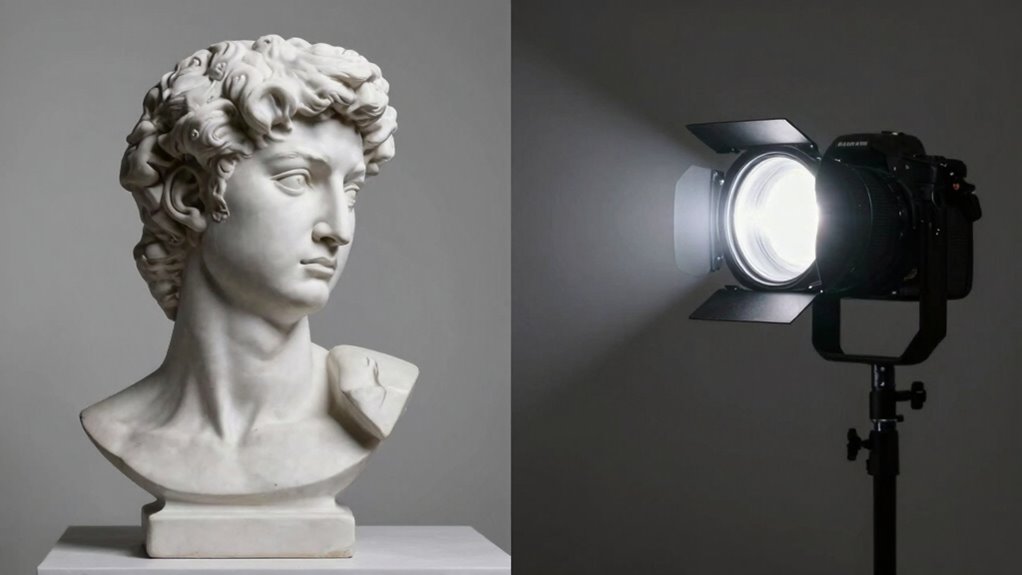
Understanding the fundamentals of lighting is vital for successful art reproduction. Historically, lighting techniques have evolved from natural sunlight to carefully controlled artificial sources, influencing how artworks are perceived and interpreted. When reproducing art, you must consider how different lighting setups affect the piece’s colors, textures, and overall artistic interpretation. For example, warm or cool tones can highlight specific details or create mood, while consistent lighting guarantees the artwork’s authenticity is preserved. Knowing the historical context of lighting methods helps you choose the right approach for accurate reproduction. Additionally, the principles of color temperature significantly impact how the artwork is viewed under different lighting conditions. In family photoshoots, silly tantrums often add humor, reminding us that unexpected moments can enhance visual storytelling. To achieve optimal results, understanding the importance of contrast ratios can enhance the clarity and depth of the reproduced artwork. Furthermore, ensuring that your workspace is free from portable oil radiators can prevent potential hazards associated with heating devices. Whether you’re using natural or artificial light, the goal remains to faithfully represent the artist’s intent and the artwork’s original appearance, making a solid understanding of lighting foundations indispensable. Additionally, exploring new frontiers in digital content can enhance the way we approach and implement lighting techniques in modern art reproduction.

NEEWER Q300 300Ws 2.4G Outdoor Studio Flash with Q Compact Wireless Trigger, 7800mAh Li ion Battery Powered Strobe Light Photography Cordless Monolight with 1000 Full Power Flash 0.4-2.5s Recycle
【300Ws High Power Outdoor Strobe Light】 300Ws photo flash with 1/64–1/1 power and stable 5600K (±200K) lighting. 13W…
As an affiliate, we earn on qualifying purchases.
As an affiliate, we earn on qualifying purchases.
How Continuous Lights Mimic Natural Lighting Conditions
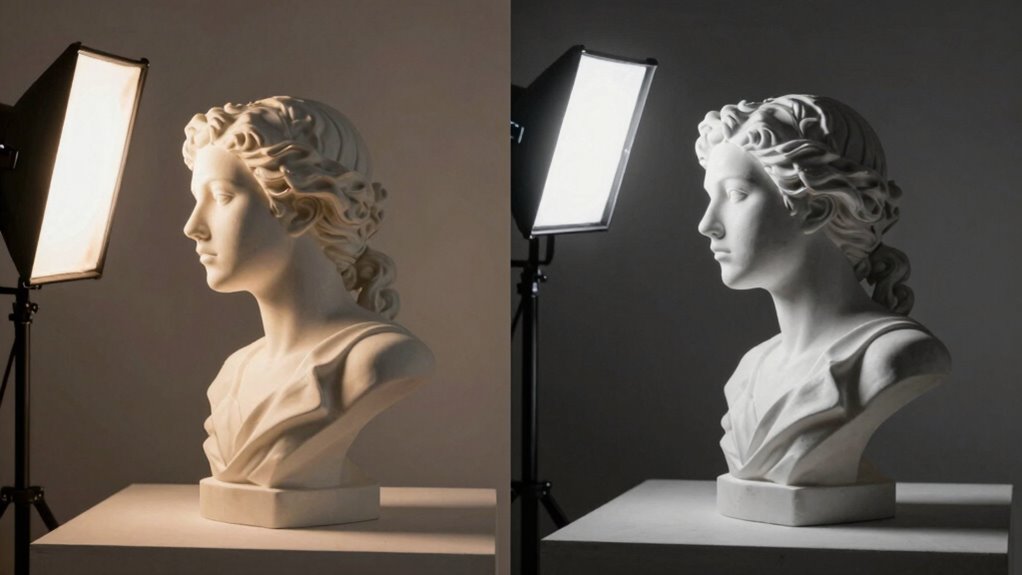
Continuous lights are designed to produce a steady, consistent illumination that closely resembles natural daylight, making them a popular choice for art reproduction. This creates a natural glow that helps reveal true colors without harsh shadows or color shifts. By mimicking daylight, these lights provide effective daylight simulation, ensuring your artwork appears authentic and true to life. The continuous output allows you to see how the lighting interacts with the piece in real time, making adjustments easier. This resemblance to natural lighting conditions helps maintain color accuracy and detail, especially in subtle gradations. Overall, continuous lights create an environment that closely replicates natural daylight, supporting faithful reproduction and helping you capture the true essence of the artwork. Additionally, using continuous lights can enhance user satisfaction by allowing artists to visualize their work in optimal conditions. Furthermore, just as Bitcoin’s price fluctuations can impact investment strategies, the quality of your lighting setup can significantly influence the final outcome of art reproduction. To optimize light quality, consider the battery inverter generator you use, as it can impact the steadiness and reliability of your lighting setup.

LGIDTECH FUT007 Mi.Light CCT WW+CW 4-Zone Remote Controller (Battery Not Included) for Milight/Miboxer Color Temperature Adjustable LED Lamps and LED Strip Light Controller FUT035 FUT036
***Please pair remote with lamp before controlling***1)ONLY work with Mi.Light CCT WW/CW series LED bulb FUT017 FUT019 and…
As an affiliate, we earn on qualifying purchases.
As an affiliate, we earn on qualifying purchases.
The Power and Precision of Strobes in Capturing Fine Details
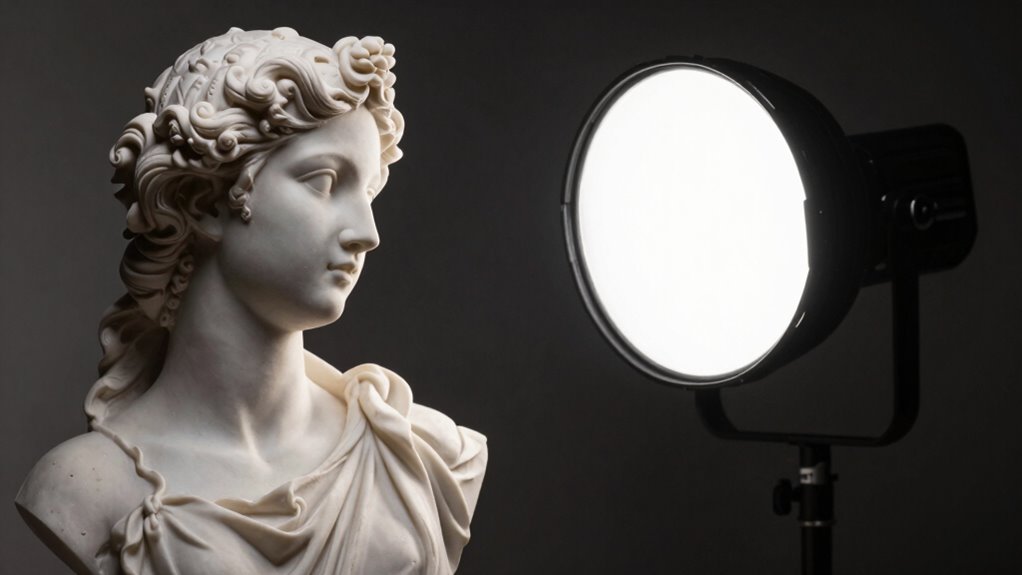
Strobes pack a powerful punch when it comes to capturing fine details in artwork. Their intense, focused light allows you to highlight intricate textures and subtle nuances with precision. Because strobes emit a consistent color temperature, you can rely on accurate color reproduction without worrying about shifts that might occur with continuous lighting. Light diffusion accessories, like softboxes or reflectors, help soften the light, reducing harsh shadows and revealing even the tiniest details. This controlled, high-intensity burst of light ensures you can freeze motion, capture sharp lines, and preserve delicate textures essential for art reproduction. The combination of stable color temperature and effective light diffusion makes strobes an ideal choice for detailed, high-quality imaging. Additionally, using luxury wallpapers can create a unique backdrop that enhances the overall aesthetic of your art presentations. Moreover, understanding budgeting strategies for couples can help ensure you invest wisely in the right lighting equipment for your art reproduction needs. Furthermore, using 85mm lenses can enhance your portraits by providing excellent depth of field and detail. Moreover, incorporating performance upgrades can elevate the overall quality of your art reproduction setup, ensuring optimal conditions for capturing fine details. Moreover, integrating herbal baths into your wellness routine can enhance your creative process, providing a calming environment that fosters artistic inspiration.

EMART Softbox Photography Lighting Kit, 16"x16" Pull Soft Box, 50W 3000K-6000K LED Bulb with Remote/APP Control, Professional Photoshoot Equipment for Studio Lights, Portrait, Video Recording(2 Pack)
【One-Second Installation-16"x 16" Pull Soft box】Upgraded Soft Box, Open- Press the button and pull out the rod. Close-…
As an affiliate, we earn on qualifying purchases.
As an affiliate, we earn on qualifying purchases.
Comparing How Different Lights Affect Color Accuracy and Consistency
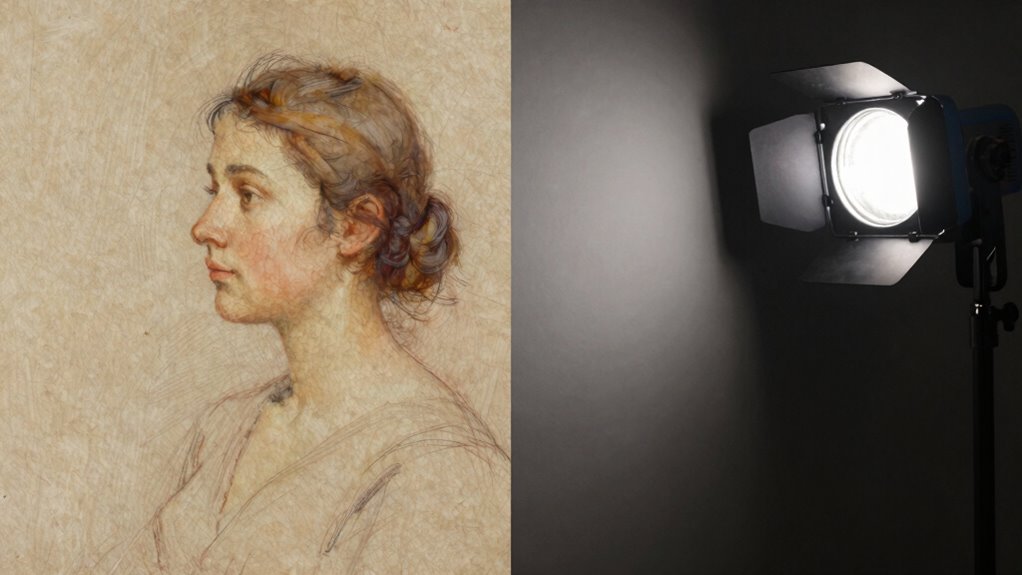
When evaluating different lighting options for art reproduction, color accuracy and consistency become critical factors. Different lights can cause color shift, making artwork appear different under various conditions. Light temperature influences how colors are perceived; a mismatch can lead to inaccurate reproductions. To compare, consider these points:
- Continuous lights often have a stable light temperature, reducing color shift during extended shoots. Additionally, using lights with natural ingredients can enhance the overall quality of the lighting setup. Continuous lights are also known for their superior color rendering, which helps in accurately depicting the hues found in artwork.
- Strobes may have slight variations in color temperature, potentially causing inconsistencies if not properly calibrated.
- The spectral output of each light impacts color fidelity; a broad, even spectrum ensures more precise and consistent color reproduction. Additionally, understanding gelato color accuracy can enhance our appreciation of how lighting affects visual perception in various contexts.
Choosing the Right Lighting Setup: Practical Factors to Consider
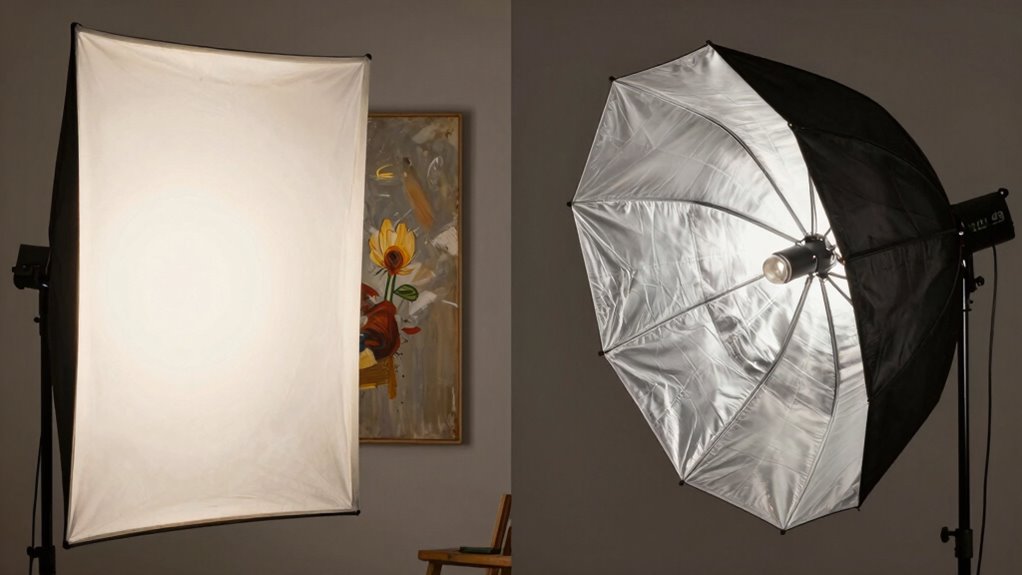
Selecting the right lighting setup requires you to weigh practical considerations alongside technical performance. Consider your workflow, space, and budget, as these impact your choice. Continuous lights mimic historical techniques, offering immediate visual feedback, which suits artists working with traditional styles. Strobes, however, provide powerful, brief bursts of light that can better freeze motion and highlight intricate details, essential for reproducing complex artistic styles. Think about how each setup integrates into your studio environment. Continuous lights may generate heat and need more space, while strobes often require specialized accessories and safety precautions. Your familiarity with the equipment also influences your decision. Ultimately, selecting the right setup depends on balancing these practical factors with the aesthetic demands of your art reproduction process.
Debunking Common Myths About Lighting Types in Art Reproduction
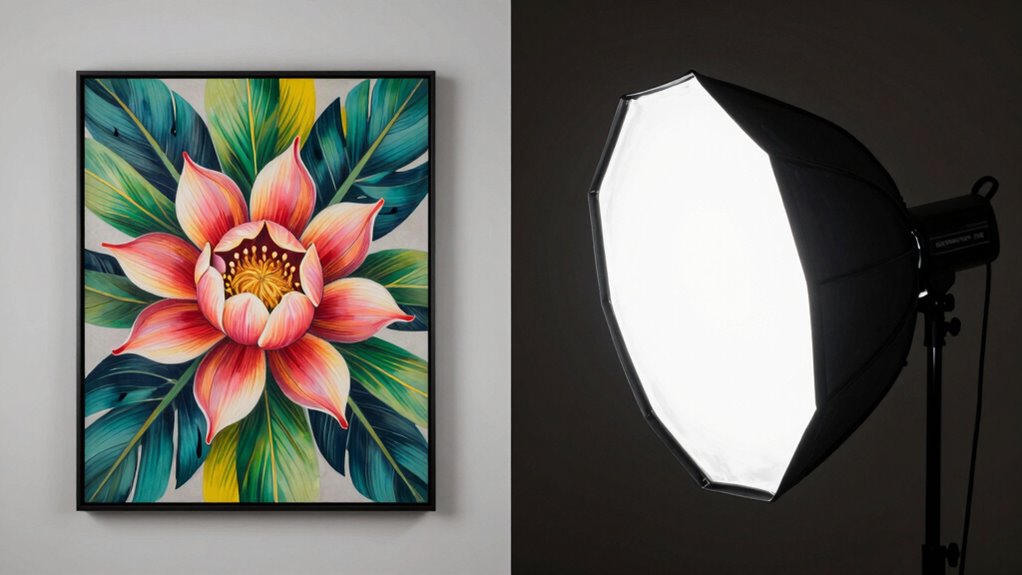
Many common misconceptions about lighting in art reproduction can lead to subpar choices and frustration. One myth is that continuous lights aren’t suitable for accurate color capture, but modern lighting technology has improved their color rendering capabilities. Another false belief is that strobes automatically provide better artistic interpretation, ignoring that both lighting types can be fine-tuned to highlight details or textures effectively. Finally, some think that one lighting type fits all scenarios, but the best choice depends on your specific art and goals. To clarify:
Effective art reproduction depends on choosing the right lighting for your specific artwork and goals.
- Continuous lights can deliver precise color accuracy with the right technology.
- Artistic interpretation depends on how you control and shape light, regardless of type.
- The ideal setup varies based on your art’s characteristics, not the lighting technology alone. Additionally, maintaining indoor air quality is essential, as it can influence both the artist’s comfort and the condition of the artwork during reproduction.
Which Lighting Is Best for Different Art Reproduction Scenarios?
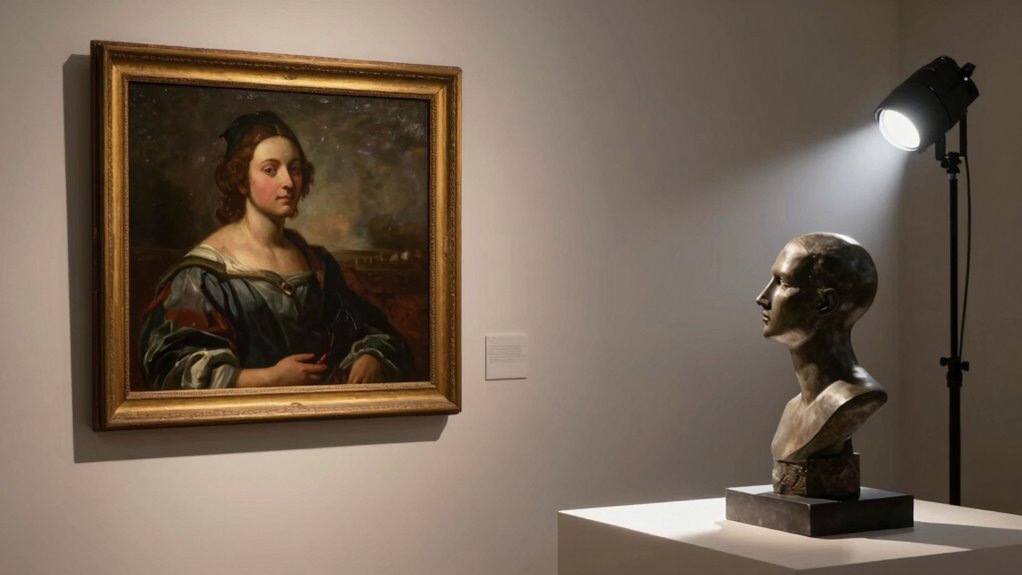
When choosing the right lighting for art reproduction, you need to take into account color accuracy to ensure true-to-life results. Flexibility and ease of use also matter, especially if you work with different types of artwork or need quick setup. By understanding these points, you can select the lighting that best fits your specific reproduction scenarios.
Color Accuracy Considerations
Achieving accurate color reproduction is essential when photographing artwork, as even slight color shifts can alter the viewer’s perception. To guarantee true colors, consider how lighting affects color temperature and spectral distribution.
- Color temperature impacts how colors appear; a balanced temperature (around 5000K–5500K) closely matches natural daylight, reducing color shifts. Additionally, using natural lighting techniques can further enhance the authenticity of the colors captured, as optimal conditions lead to improved image quality and greater visual appeal.
- Spectral distribution influences how well different colors are rendered; a light with a broad spectrum ensures more accurate color reproduction.
- Light source consistency affects reproducibility; continuous lights often provide stable spectral output, while strobes may vary with age or quality.
Choosing lighting with accurate spectral distribution and appropriate color temperature helps faithfully reproduce artwork’s true colors, making your images more authentic. Additionally, the choice of printmaking paper texture can influence how colors are perceived in the final reproduction.
Flexibility and Ease of Use
Choosing the right lighting for art reproduction depends largely on your specific needs and working environment. Continuous lights offer greater flexibility and ease of use, allowing you to see the effect of your creative lighting instantly. This makes them ideal for artists and photographers who want to experiment with mood enhancement and different lighting angles on the fly. Strobes, on the other hand, require more setup and adjustment but provide powerful, consistent illumination once configured. If your projects demand quick changes or live adjustments, continuous lighting simplifies the process. For scenarios where creative lighting and mood enhancement are priorities, continuous lights give you immediate feedback, making them easier to operate. Ultimately, your choice depends on how much flexibility and hands-on control you need during your art reproduction workflow.
Tips for Achieving Optimal Results With Your Lighting Setup
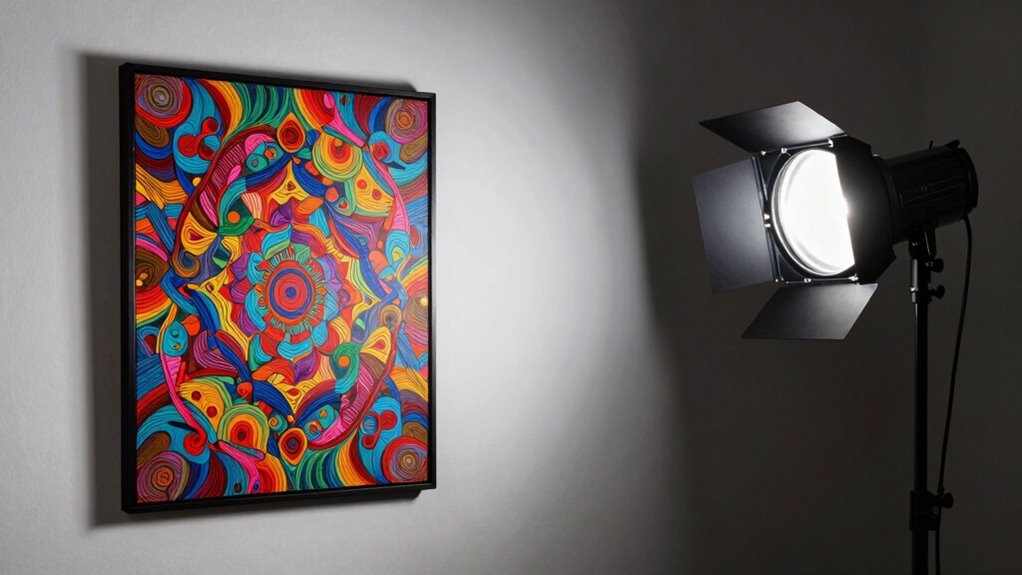
To get the best results, focus on proper light placement to evenly illuminate your artwork. Adjust light intensity carefully to highlight details without causing glare or shadows, and control light spread to prevent unwanted reflections. These steps guarantee your art is accurately reproduced with crisp, vibrant details. Additionally, consider the effects of humidity on your artwork, as excess moisture can impact both the lighting and the integrity of the piece. Using smart choices in your lighting setup can significantly enhance the overall quality of your art reproduction.
Proper Light Placement
Here’s the revised content following your directions:
—
Proper light placement is essential for capturing the true details and textures of your artwork. Achieving this involves paying attention to lighting angle and shadow control. Properly positioning your lights helps highlight textures without creating harsh shadows or glare.
Here are three key tips:
- Keep the lighting angle consistent to avoid uneven highlights and shadows.
- Use diffusers to soften light, aiding shadow control for a more even illumination.
- Experiment with placement to find the angle that best reveals fine details without losing depth or creating unwanted reflections.
Additionally, consider using HEPA filters in your workspace to ensure that dust and allergens do not interfere with your art reproduction setup. Incorporating clean air tips can further enhance your environment, making it more conducive to artistic work. Understanding Victorian etiquette can also enhance your overall presentation, making your art displays more engaging.
Adjusting Light Intensity
Adjusting light intensity is essential for capturing artwork accurately, as too much light can wash out details, while too little can obscure textures. To achieve ideal results, focus on light diffusion to soften shadows and distribute light evenly across the piece. Use power regulation to fine-tune the brightness of your lights, ensuring you don’t overpower or under-illuminate the artwork. With continuous lights, dimming can be straightforward, while strobes often require adjusting the power output to control intensity precisely. Always test your setup and make incremental adjustments to avoid overexposure or underexposure. Proper control over light diffusion and power regulation allows you to balance brightness and detail, resulting in more accurate and vibrant reproductions of your artwork.
Controlling Light Spread
Controlling the spread of light plays a vital role in achieving accurate art reproduction. Proper management guarantees the artwork’s colors and details are faithfully captured. To do this effectively, focus on three key strategies:
- Adjust the light’s beam angle to limit its spread, concentrating illumination on the artwork without spilling onto surrounding surfaces.
- Use light diffusion materials, like softboxes or diffusion gels, to soften the light and reduce harsh shadows.
- Position your light source closer to the artwork to control the light’s spread more precisely, avoiding unwanted glare or uneven lighting.
Final Factors to Consider When Selecting Your Art Reproduction Lighting
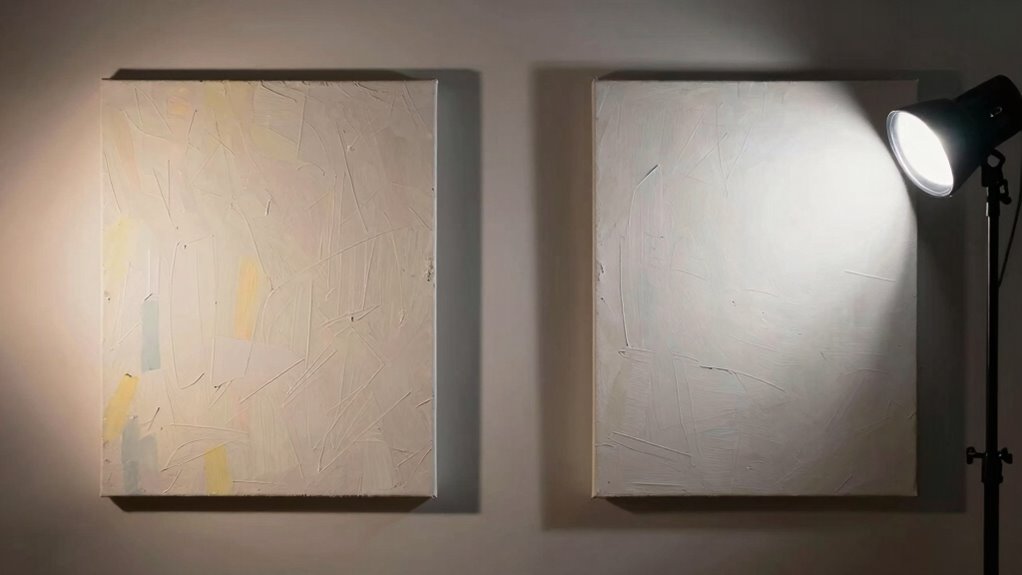
When choosing between continuous lights and strobes for art reproduction, it’s essential to take into account factors like color accuracy, ease of use, and budget. Consider how historical techniques influence your workflow—continuous lights offer a natural, steady view, aligning with traditional methods. Artistic interpretations also matter; strobes can freeze motion and highlight details sharply, while continuous lights provide a consistent preview. Use this table to compare:
| Factor | Continuous Lights | Strobes | Best For |
|---|---|---|---|
| Color Accuracy | High, stable output | Slight variation, needs calibration | Sensitive color work |
| Ease of Use | Simple, instant preview | Requires setup, test shots | Fast-paced projects |
| Budget | Usually more affordable | Higher initial cost | Long-term investment |
Choose based on your technique preferences and reproduction goals.
Frequently Asked Questions
How Do Continuous Lights Impact Workflow Efficiency During Art Reproduction?
Continuous lights improve your workflow efficiency during art reproduction by providing real-time feedback on color accuracy, helping you make quick adjustments. They offer consistent power, ensuring uniform lighting across your artwork, which reduces setup time. You don’t need to wait for fast recycling like with strobes, so your process stays smooth and steady. This combination of immediate visual clarity and steady illumination helps you work faster and more accurately.
Are There Specific Types of Artwork Better Suited for Strobe Lighting?
Strobes are perfect for capturing the finest details of highly reflective or complex artwork, like glass sculptures or metallic paintings, where precision matters. They deliver sharp, high-intensity flashes that freeze motion and reveal intricate textures. For these masterpieces, you need impeccable color accuracy and controlled light diffusion—strobes excel here, ensuring every nuance is preserved without unwanted shadows or color shifts, making your reproduction as breathtaking as the original.
How Does Ambient Light Influence the Effectiveness of Continuous and Strobe Lights?
Ambient light can profoundly impact how effective your lighting setup is. It affects color accuracy, making it harder to achieve true colors, especially with continuous lights, which blend with ambient light. Strobes, with their quick bursts, can overpower ambient light, improving color accuracy and contrast. Using light diffusion helps soften shadows and balance ambient light’s effects, ensuring your artwork’s details and colors are captured accurately regardless of ambient conditions.
What Are the Long-Term Maintenance Considerations for Each Lighting Type?
You should consider that continuous lights typically have longer-lasting lamps, reducing frequent bulb replacements, but their bulbs may degrade over time, affecting color accuracy. Strobes often require more maintenance due to their high-intensity bulbs, which might need replacing more often. Lamp durability varies, so check manufacturer recommendations. Regular maintenance guarantees consistent performance, but be prepared for potential higher costs and replacement timelines with strobes versus continuous lights.
Can Hybrid Lighting Setups Combine the Benefits of Both Continuous and Strobe Lights?
A hybrid lighting setup is like a Swiss Army knife, combining the best of both worlds. You can enjoy continuous lights’ excellent color accuracy for detailed work and strobe’s power flexibility for quick, high-quality shots. By integrating both, you adapt to different art reproduction needs, ensuring consistent color and the right intensity. This versatile approach helps you optimize your workflow without sacrificing precision or power.
Conclusion
Think of your lighting setup as a trusted compass on a journey—each type guides you differently. Continuous lights offer a steady, natural glow, like a gentle breeze, perfect for real-time viewing. Strobes, on the other hand, are like a sudden gust, capturing intricate details with precision. Choose wisely based on your destination—your art reproduction needs—so you can navigate toward flawless, true-to-life results every time.