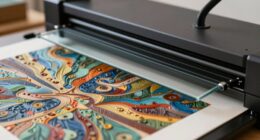

To build a personal brand as an artist, focus on developing a clear artistic identity that reflects your unique voice, style, and story. Consistently create content that aligns with this core, using social media to share behind-the-scenes, process, and personal insights that deepen audience connection. Engage actively with your followers, participate in conversations, and collaborate to expand your reach. By staying authentic and cohesive, you’ll forge a strong brand that resonates—explore further to perfect your brand journey.
Key Takeaways
- Define and develop a unique artistic identity that reflects your voice, style, and emotional goals.
- Create a consistent narrative across all content to reinforce your brand and deepen audience connection.
- Select social media platforms that suit your target audience and use visual and thematic consistency to strengthen your presence.
- Engage actively with your community through comments, collaborations, and strategic hashtags to build loyalty and expand reach.
- Focus on authentic storytelling and long-term branding goals inspired by media like anime to foster genuine creative growth.
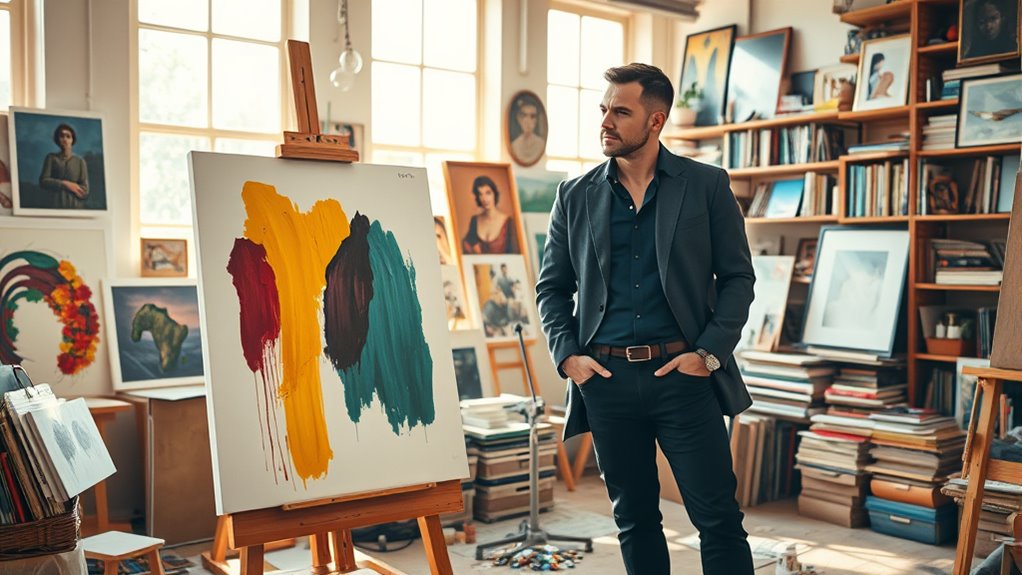
Ever wondered how some artists stand out in a crowded creative world? The secret often lies in how well they craft their personal brand, which starts with understanding and cultivating their artistic identity. Your artistic identity is the core of who you are as an artist — it’s the unique voice, style, and story that set you apart from others. When you clearly define what makes your art special and authentic, it becomes easier to communicate that to your audience. Developing this identity involves reflecting on what inspires you, what themes resonate through your work, and what emotions you want to evoke. Once you have a strong sense of your artistic identity, you can then build a consistent narrative around it, making sure every piece, post, or interaction aligns with this core.
Alongside honing your artistic identity, a savvy social media strategy is vital to building your personal brand. Social media isn’t just a platform to showcase your work; it’s a tool to tell your story and create meaningful connections. You want your social media presence to reflect your artistic identity authentically. That means choosing the right platforms where your target audience spends their time and tailoring your content accordingly. For instance, if your art is highly visual and vibrant, Instagram or TikTok might be your best channels. If you prefer more detailed storytelling or sharing your process, consider using Facebook or Twitter. Consistency is key: post regularly, use a cohesive visual style, and craft captions that reinforce your brand message. Think about your content as a reflection of your artistic journey — behind-the-scenes shots, works-in-progress, or personal insights can deepen your audience’s connection.
Engaging with your followers is equally important. Respond to comments, ask for feedback, and participate in conversations within your niche. This active engagement helps you build a community that resonates with your artistic identity. Remember, your social media strategy isn’t just about gaining followers; it’s about creating a loyal audience that appreciates your unique voice. Use hashtags strategically to reach wider audiences and collaborate with other artists or influencers to expand your reach. Over time, this consistent effort will reinforce your brand and position you as a distinctive presence in the art world.
In the end, building a personal brand as an artist isn’t about mimicking others or chasing trends. It’s about staying true to your artistic identity and communicating it effectively through a well-planned social media strategy. When these elements align, you’ll find your audience not only grows but also connects deeply with your work, helping you carve out a space where your creativity can truly thrive. Additionally, studying successful anime movies can inspire your visual storytelling and help you develop a unique aesthetic that resonates with viewers.

Logos that Last: How to Create Iconic Visual Branding
As an affiliate, we earn on qualifying purchases.
As an affiliate, we earn on qualifying purchases.
Frequently Asked Questions
How Long Does It Typically Take to Build a Recognizable Personal Brand?
It usually takes several months to a few years to build a recognizable personal brand. Consistency in your branding and regular audience engagement are key. You need to consistently share your work, message, and style across platforms, so your audience recognizes and connects with you. Stay committed, keep engaging authentically, and over time, your brand will become more recognizable and influential in your niche.
What Are Common Mistakes to Avoid When Developing My Brand?
You should avoid inconsistent messaging and neglecting audience engagement when developing your brand. Inconsistent messaging confuses your audience and weakens your identity, so stay authentic and clear. Additionally, neglecting audience engagement can make you seem disconnected; instead, actively respond to comments, ask for feedback, and build relationships. These mistakes hinder growth, so prioritize consistent communication and genuine interactions to strengthen your brand and connect meaningfully with your audience.
How Can I Measure the Success of My Personal Branding Efforts?
Think of your brand as a garden; its success depends on how well you tend to it. You can measure your efforts through audience engagement—likes, shares, comments—and by tracking how consistently your brand message stays true across platforms. If your audience grows and interacts more over time, and your brand remains consistent, you’re effectively nurturing your personal brand. Keep observing these signs to gauge your progress.
Should I Focus on One Art Style or Diversify My Portfolio?
You should focus on genre consistency initially to strengthen your personal brand and attract a dedicated audience. However, don’t hesitate to diversify your skills later; this shows versatility and broadens your appeal. Balancing genre consistency with skill diversification allows you to build a recognizable style while exploring new techniques. Prioritize your core style first, then gradually expand your portfolio, ensuring your brand remains authentic and engaging.
How Do I Handle Negative Feedback or Criticism Publicly?
You can turn negative feedback into growth by handling your public response with professionalism. When receiving constructive critique, thank the critic for their input and avoid defensiveness. Remember, not all criticism is personal; some helps refine your art. Respond calmly, show your willingness to improve, and avoid engaging in heated arguments. This positive approach enhances your personal brand, demonstrating maturity and openness to growth.

Social Media Content Planner: Youtuber Planner
As an affiliate, we earn on qualifying purchases.
As an affiliate, we earn on qualifying purchases.
Conclusion
Remember, building your personal brand is like crafting a timeless masterpiece—every brushstroke matters. Stay authentic, engage with your audience, and keep evolving just like an artist in a Renaissance atelier. Don’t forget, even in this digital age, your unique voice is your most valuable tool. So, stay focused, be consistent, and let your passion shine brighter than a neon sign in Times Square. Your future as a legendary artist is just a canvas away.

Illustrators' Sketchbooks: Inside the Creative Processes of 60 Iconic and Emerging Artists
As an affiliate, we earn on qualifying purchases.
As an affiliate, we earn on qualifying purchases.

Arokimi 1/2" Wood Burning Letter Kit, 26 Pcs Alphabet Branding Iron for Wood Leather Hats BBQ Bread, With an 80W Electric Branding Iron
Wood Burning Alphabet Kit: Brass letters/ numbers, durable and polished smooth, comes with a 80w electric branding iron,…
As an affiliate, we earn on qualifying purchases.
As an affiliate, we earn on qualifying purchases.