
TL;DR
Prime for Young Adults — start your free trial
Fast free delivery, streaming and member deals for eligible 18–24 year olds.
Try it freeAs an affiliate, we earn on qualifying purchases.
The largest Roman mosaic ever discovered has been excavated and opened to the public. This significant archaeological find highlights Roman artistic achievements and attracts worldwide interest. Details about its exact location and date are confirmed, but some aspects of its origins remain uncertain.
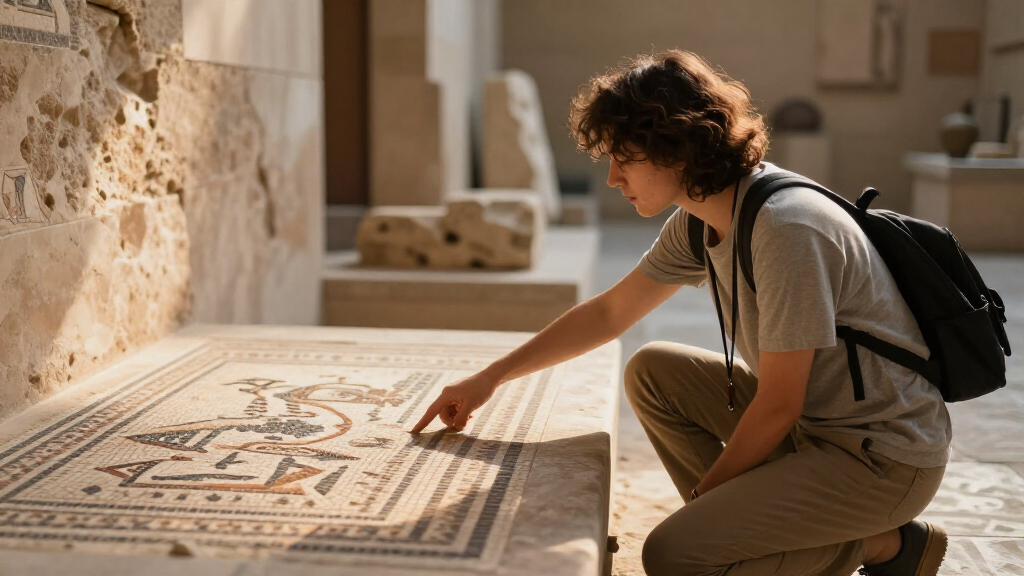
The world’s largest Roman mosaic has been excavated and opened to the public, offering a rare glimpse into ancient Roman artistic mastery. The discovery is considered a major milestone in archaeology, attracting international attention and scholarly interest. The mosaic, unearthed during recent excavations, is now accessible at a site that has become a significant tourist and research destination.
According to official sources, the mosaic was uncovered during archaeological excavations at a site believed to date back to the Roman Empire era. The mosaic covers an estimated area of over 1,500 square meters, surpassing previous known Roman mosaics in size. It features intricate geometric patterns, mythological scenes, and detailed depictions of Roman life, showcasing the high level of craftsmanship achieved by ancient artisans.
The excavation team confirmed that the mosaic was carefully preserved during the process, with efforts to protect its vibrant colors and detailed imagery. The site has been made accessible to the public following conservation work and is now part of a museum complex dedicated to Roman history. Officials from the archaeological authority emphasized the significance of the find for understanding Roman art and cultural expression.
Local authorities and heritage organizations have highlighted the mosaic’s potential to boost tourism and educational opportunities, as well as to deepen scholarly research into Roman civilization. The site is expected to host guided tours, academic visits, and special exhibitions focused on Roman mosaics and ancient craftsmanship.
Implications for Roman Art and Archaeology
This discovery provides valuable insights into Roman artistic practices and cultural expression. The mosaic’s size and detailed craftsmanship contribute to our understanding of decorative art in Roman society. It also highlights the importance of mosaics in both public and private Roman architecture.
The find has the potential to enhance the profile of the archaeological site, encouraging further scholarly collaboration and research. The public display of the mosaic offers an educational resource for understanding ancient craftsmanship and cultural heritage.
As an affiliate, we earn on qualifying purchases.
Recent Discoveries and Roman Mosaic Significance
Roman mosaics are valued for their artistic complexity and durability, with many examples found across Europe and the Mediterranean. Historically, the largest known mosaics have covered areas of several hundred square meters. The recent discovery, now confirmed as the largest, is believed to date back to the second or third century AD.
Excavations at this site have been ongoing for several years, with earlier finds indicating a wealthy Roman estate or public building. The mosaic’s size and detail suggest it was a prominent feature of the structure, possibly serving as a decorative element in a large hall or public space. The exact location and the original builders remain under investigation, though initial assessments suggest a high-status Roman community.
Interest in the mosaic has increased recently, driven by media coverage of archaeological discoveries and broader cultural interest in ancient Rome. The recent unveiling has contributed to this renewed focus, with ongoing research expected to shed more light on its origins.
As an affiliate, we earn on qualifying purchases.
Unresolved Questions About the Mosaic’s Origins
While the mosaic’s size and artistic features are confirmed, details regarding its precise date, the identity of its original owner, and the broader historical context remain uncertain. Ongoing research aims to clarify these aspects, but definitive conclusions have yet to be published.
Some experts suggest it may have been part of a private villa or a public building, but conclusive evidence is still under analysis. Additionally, the full extent of the site and whether other significant artifacts are present are still being explored.
As an affiliate, we earn on qualifying purchases.
Future Research and Public Engagement Plans
Archaeologists plan to continue excavations at the site to better understand its historical context and to identify additional artifacts. Conservation efforts will also proceed to ensure the mosaic’s long-term preservation. Researchers will analyze the imagery and craftsmanship to gain further insights into its cultural significance.
Public programs, including guided tours, educational exhibits, and digital reconstructions, are expected to expand in the coming months. International collaboration and academic conferences are also anticipated to support ongoing research and dissemination of findings.
As an affiliate, we earn on qualifying purchases.
Key Questions
Where exactly was the mosaic discovered?
The precise location has not been publicly disclosed, but it is part of an archaeological site believed to be a Roman estate or civic building in southern Europe.
How old is the mosaic?
Initial estimates suggest it dates back to the second or third century AD, but ongoing research aims to confirm its exact age.
Can the public visit the mosaic now?
Yes, the mosaic has been opened to the public following conservation efforts, and guided tours are available.
What makes this mosaic so significant?
Its size, detailed craftsmanship, and the insights it provides into Roman art and culture make it a notable archaeological discovery.
Are there plans to display more artifacts from the site?
Yes, further excavations are planned, and additional artifacts may be displayed as they are uncovered and preserved.
Source: rss
NFL season / tailgating Picks
team gear
As an affiliate, we earn on qualifying purchases.