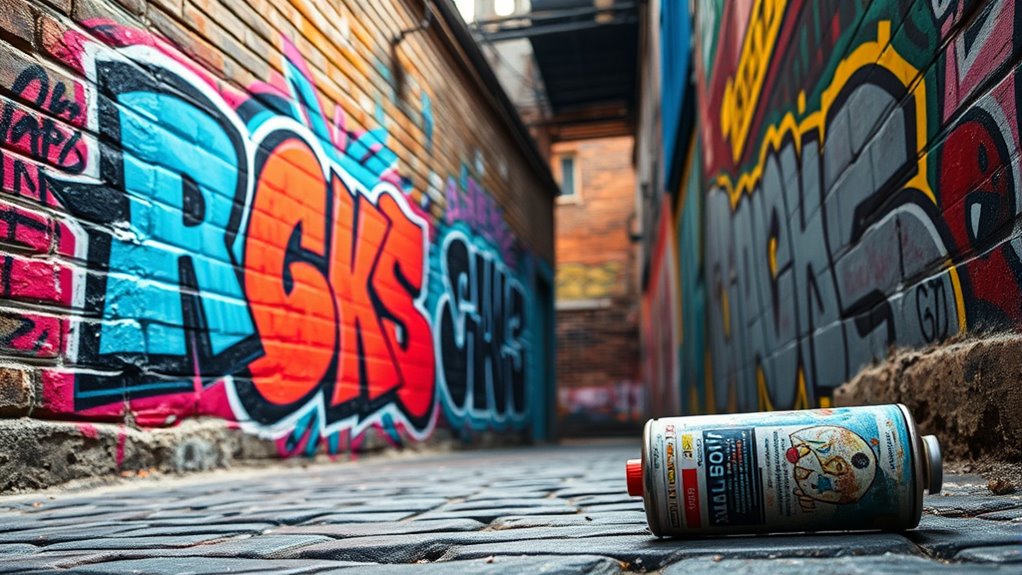

Street art started as rebellious graffiti on city walls, often anonymous and raw, challenging societal norms. Over time, it evolved into a form of visual activism that gives voice to communities and critiques social issues. Artists developed intricate murals, gaining recognition beyond urban spaces, even in galleries and exhibitions. Today, street art is a global movement blending urban expression with social commentary. Continue exploring and discover how it shapes society and transforms public spaces worldwide.
Key Takeaways
- Street art evolved from anonymous graffiti to a recognized form of visual activism and cultural expression.
- It initially faced rejection as vandalism but gained legitimacy through social and political messaging.
- Artists developed sophisticated techniques, transforming urban walls into intricate murals and canvases.
- Street art now bridges activism and gallery recognition, influencing societal discourse and cultural identity.
- Globally embraced, it continues to transform urban spaces into platforms for social change and self-ownership.
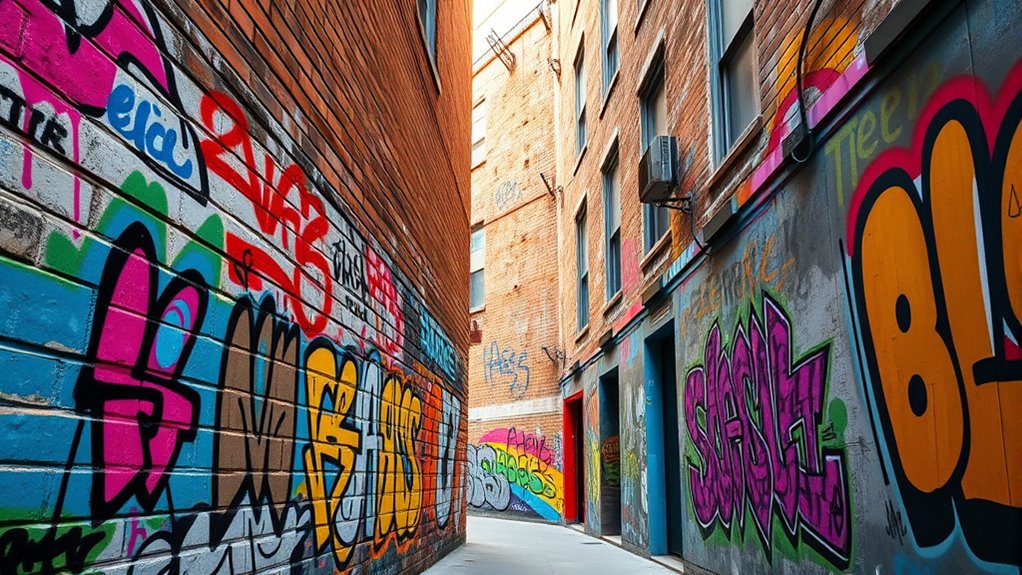
Have you ever wondered how street art evolved from simple graffiti to a respected form of artistic expression? It’s a fascinating journey that reflects more than just creative talent — it’s a story of urban expression and visual activism. In its early days, street art was often dismissed as vandalism, a rebellious act performed anonymously on city walls. But over time, it transformed into a powerful voice for communities and individuals seeking to communicate messages that couldn’t be silenced. The raw, unfiltered nature of graffiti allowed artists to claim space in urban landscapes, turning blank walls into canvases that challenged societal norms and questioned authority. This act of claiming public space was more than just aesthetic; it was an act of visual activism, making statements about social issues, political unrest, or cultural identity. As the movement gained momentum, artists began to develop more sophisticated techniques and styles, elevating street art’s status and recognition.
As street art gained visibility, it began to attract attention from critics and art collectors alike. Artists started to develop distinct styles and techniques, elevating their work from mere tags and throw-ups to intricate murals and detailed pieces. This shift helped blur the lines between traditional art and street art, encouraging galleries and museums to recognize its cultural significance. The movement’s trajectory from rebellious urban expression to celebrated art form wasn’t overnight, but it was driven by a desire to be heard and seen. Artists used their work to address pressing issues like inequality, war, and environmental concerns, turning city streets into open-air classrooms and forums for activism. Their art became a visual language that transcended barriers, speaking directly to passersby and sparking conversations about change.
Today, street art is no longer confined to alleyways and subway stations; it’s a global phenomenon that’s embraced in galleries and exhibitions worldwide. Yet, at its core, it remains rooted in urban expression — a form of visual activism that empowers marginalized voices and challenges the status quo. You can see how this evolution reflects broader shifts in society’s attitudes towards art and activism, recognizing the power of visual storytelling in shaping public discourse. Whether it’s a mural protesting injustice or a piece celebrating cultural heritage, street art continues to serve as a dynamic platform for expression and activism. It has come a long way from its humble beginnings, but its essence remains rooted in the desire to speak out, challenge norms, and transform urban spaces into powerful visual statements. Additionally, understanding the self-custody aspect of street art helps contextualize how artists maintain control over their work and messages in a rapidly changing environment.
Frequently Asked Questions
How Did Street Art Influence Mainstream Contemporary Art Movements?
Street art influences mainstream contemporary art by bringing urban expression into galleries and museums, making it accessible to a wider audience. Its cultural impact challenges traditional notions of art, pushing boundaries and encouraging experimentation. You see this in how artists incorporate graffiti styles, bold visuals, and social commentary into their work, blurring lines between street and fine art. This movement revitalizes contemporary art, making it more dynamic, relevant, and connected to everyday life.
What Are the Legal Consequences of Creating Street Art Today?
When you create street art today, you face legal consequences like vandalism penalties, which can include fines or jail time if you’re caught graffitiing without permission. You also risk copyright issues if you use protected images or styles without approval. Always consider obtaining permission from property owners to avoid these legal problems and make sure your art stays within the law.
How Do Different Cities’ Policies Affect Street Art Visibility?
Imagine you’re in 2023, and city policies shape your street art visibility. Urban regulation varies—some cities embrace murals, boosting public space creativity, while others impose strict bans, limiting your work’s exposure. These policies directly influence where you can paint and how much audiences see. Changes in regulations can turn a once-forbidden alley into a thriving gallery, making your art more accessible and celebrated in different urban landscapes.
Who Are Some Influential Street Artists Not Widely Recognized?
You should know about hidden pioneers like Blek le Rat and Os Gêmeos, who’ve profoundly influenced street art but remain less recognized. Underground legends such as Swoon and Retna push creative boundaries behind the scenes. These artists shape the scene with innovative styles and powerful messages, even if mainstream recognition hasn’t caught up. Their work inspires you and keeps the spirit of authentic street art alive beyond the spotlight.
How Has Technology Transformed Street Art Creation and Distribution?
Technology has revolutionized how you create and share street art. Digital tools like tablets and design software let you sketch and plan intricate pieces easily. Social media platforms enable you to instantly showcase your work, reaching a global audience and gaining recognition. You can also collaborate with others, gather feedback, and even participate in online exhibitions. This digital shift makes street art more accessible, versatile, and connected than ever before.
Conclusion
As you explore the vibrant world of street art, you begin to see it as more than just rebellious marks on walls. It’s a gentle whisper of culture, creativity, and history that quietly transforms urban spaces. Embrace its evolution from raw graffiti to revered gallery pieces, and realize that behind every stroke lies a story waiting to be discovered. In this way, street art invites you to see beauty in unexpected places, gently reminding you of art’s power to inspire and connect us all.