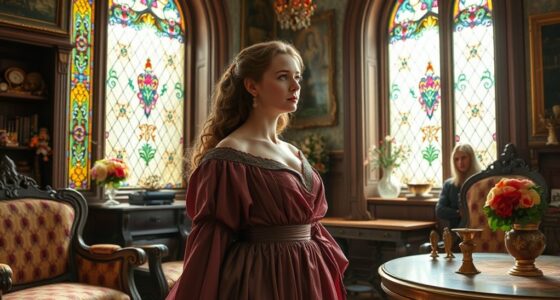
Rococo art surrounds you with delicate ornamentation, featuring intricate motifs like swirls, shells, and floral patterns that evoke playful charm. Its soft pastel colors create a light, airy atmosphere filled with elegance, whimsy, and intimacy. This style emphasizes beauty, romance, and leisure, moving away from grandeur to focus on joyful, decorative detail. If you keep exploring, you’ll discover how these charming elements seamlessly blend to create a unique, lively aesthetic that captivates the senses.
Key Takeaways
- Rococo art emphasizes delicate beauty, intricate ornamentation, and playful motifs inspired by nature, such as shells, roses, and vines.
- It features organic, flowing forms, swirling curves, and asymmetrical compositions to create a sense of movement and whimsy.
- The color palette is dominated by pastel shades, enhancing the light, airy, and soft atmosphere characteristic of the style.
- Rococo shifts focus from religious themes to scenes of aristocratic leisure, romance, and mythological subjects.
- Its overall aesthetic combines ornate decoration with a light, joyful charm, inviting viewers into a world of elegance and playful elegance.

Ever wondered what makes Rococo art so distinct and enchanting? It’s a style that radiates elegance, lightness, and playful charm, setting itself apart from the heavier, more serious baroque influence that preceded it. While Rococo drew inspiration from the baroque’s grandeur, it reinterpreted these elements to emphasize delicate beauty and exuberant ornamentation. You’ll notice that Rococo art is characterized by its intricate decorative motifs—think swirling curves, floral patterns, and fanciful scrolls—that create a sense of movement and whimsy. These motifs aren’t just random embellishments; they serve to draw your eye across a canvas or wall, guiding you through a world filled with lighthearted themes and ornate details. The influence of baroque art is still evident in the sense of theatricality and drama, but Rococo softens that intensity, opting instead for grace and intimacy. The ornate decorations are often crafted with meticulous detail, showcasing the high level of craftsmanship typical of Rococo artisans. When you observe a Rococo painting or interior, you’ll see how decorative motifs are central to its charm. They often feature motifs inspired by nature—shells, roses, vines, and cherubs—that blend seamlessly into the overall design. These motifs aren’t just decorative; they evoke a sense of playfulness and flirtation. The compositions tend to be asymmetrical, with elements flowing organically rather than rigidly adhering to symmetry, adding to their lively, spontaneous feel. You might notice that Rococo artists use pastel colors—pale pinks, blues, and creams—that enhance the light, airy atmosphere. These color choices, combined with the decorative motifs, create a sense of softness and elegance that feels inviting and joyful. The delicate balance between ornamentation and subtle color palettes contributes significantly to the overall effect of Rococo works. The influence of the baroque is still present in Rococo’s attention to detail and its desire to captivate viewers, but it’s tempered by a sense of frivolity and charm. Instead of grand religious or political themes, Rococo art often depicts scenes of leisure, romance, and playful interactions among aristocrats or mythological beings. You’re encouraged to experience the art as a reflection of a luxurious, carefree world where beauty and pleasure take center stage. The decorative motifs serve as visual cues, guiding you through this fantasy domain with their intricate patterns and lively forms. Overall, Rococo art’s unique blend of baroque influence and decorative motifs creates an aesthetic that’s both elegant and whimsical, inviting you into a universe of ornate beauty and playful themes.
Rococo style wall art
As an affiliate, we earn on qualifying purchases.
As an affiliate, we earn on qualifying purchases.
Frequently Asked Questions
How Did Rococo Influence Modern Interior Design?
Rococo influences modern interior design by bringing luxury ornamentation and playful motifs into your space. You’ll notice curving lines, intricate details, and soft pastel colors that create a sense of elegance and whimsy. Incorporating Rococo-inspired elements can make your home feel sophisticated yet lively, blending timeless charm with contemporary comfort. This style encourages you to experiment with decorative accents that evoke a sense of playful beauty and refined luxury.
What Are the Key Differences Between Rococo and Baroque Art?
You notice that Rococo art emphasizes delicate ornamentation, elegance, and playful motifs, making it light and decorative. In contrast, Baroque art is grand, dramatic, and intense, with bold contrasts and emotional power. Rococo’s focus on ornate details and whimsical themes creates a sense of frivolity, while Baroque’s grandeur aims to evoke awe. These key differences highlight Rococo’s playful elegance versus Baroque’s dramatic intensity.
Which Artists Were Most Prominent in Rococo Movement?
Think of rococo as a shimmering garden of artistic talent. You’d spotlight famous rococo painters like François Boucher and Jean-Honoré Fragonard, whose playful scenes and delicate brushwork capture whimsy. Prominent rococo sculptors like Étienne-Maurice Falconet and Clodion bring lively figures to life in marble and terracotta. These artists create a vibrant, ornate world that invites you to explore its elegance and charm.
How Did Rococo Reflect Societal Values of the 18TH Century?
You see, Rococo reflects the 18th-century societal values through its focus on luxury leisure and aristocratic elegance. It emphasizes playful themes, ornate decoration, and lightheartedness, showcasing the carefree lifestyle of the nobility. This art style highlights their desire for beauty, pleasure, and escapism, revealing a society that prioritized personal indulgence and the refinement of leisure activities, rather than serious or political themes.
Are There Contemporary Artists Inspired by Rococo Aesthetics?
You can see contemporary artists inspired by rococo aesthetics through digital revival and reinterpretations. For example, imagine an artist using digital art tools to recreate rococo’s ornate details and playful themes in modern settings, blending historical elegance with current technology. These contemporary reinterpretations honor rococo’s ornamental beauty, making its intricate designs accessible and relevant today, showing how its playful spirit continues to influence creative expressions in the digital age.
pastel floral decorative pillows
As an affiliate, we earn on qualifying purchases.
As an affiliate, we earn on qualifying purchases.
Conclusion
You now see how Rococo art is like a delicate garden, bursting with ornate blooms and playful twists. Its whimsical themes and intricate details invite you to wander through a world of joy and elegance. Just as a garden delights with surprises around every corner, Rococo’s beauty lies in its lighthearted charm and ornamental finesse. Embrace this art form as a joyful escape, where every brushstroke whispers a story of playful sophistication.
ornate Rococo mirror
As an affiliate, we earn on qualifying purchases.
As an affiliate, we earn on qualifying purchases.
whimsical floral tableware
As an affiliate, we earn on qualifying purchases.
As an affiliate, we earn on qualifying purchases.