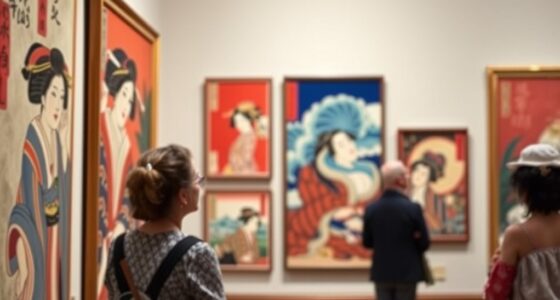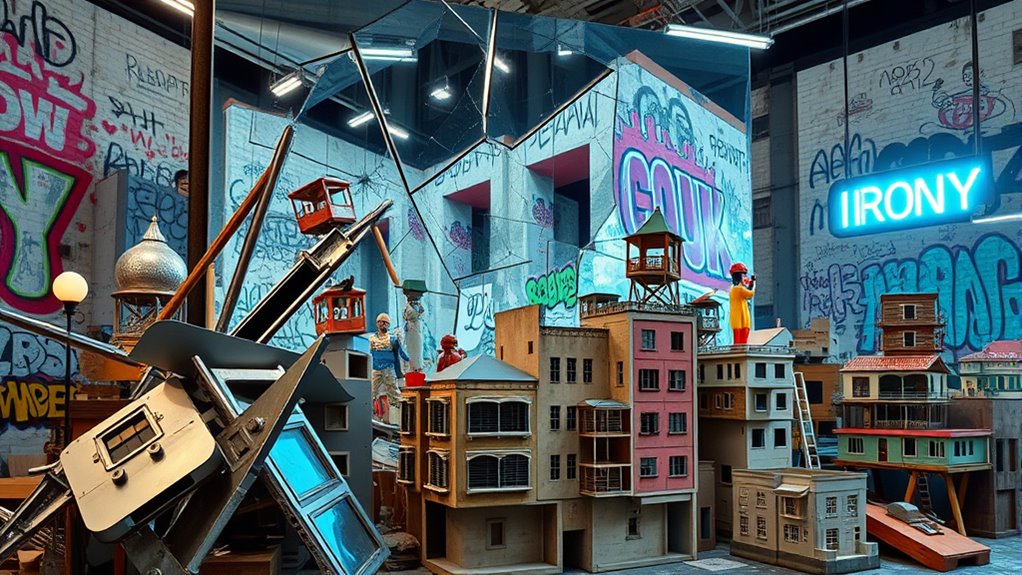
In postmodern art, deconstruction and irony challenge traditional ideas of meaning, authority, and aesthetics. You’ll see works that parody or exaggerate cultural symbols, encouraging you to question surface-level interpretations. These tools reveal hidden messages and societal norms behind the artwork, prompting critical thinking. Irony often disrupts expectations, making you reconsider what is valuable or genuine. If you’re curious, there’s more to discover about how these techniques shape contemporary art’s playful yet provocative nature.
Key Takeaways
- Postmodern art employs parody to critique cultural stereotypes, commercialism, and high art pretensions through humor and exaggeration.
- Deconstruction in postmodern art reveals how cultural constructs influence perception, challenging surface-level interpretations.
- Irony is used to question traditional narratives, provoke reflection, and highlight contradictions within societal messages.
- Postmodernism encourages critical thinking by questioning artistic authority, emphasizing multiplicity, and promoting active cultural dialogue.
- It expands art’s boundaries by challenging conventions, celebrating ambiguity, and using techniques like parody and irony to subvert norms.
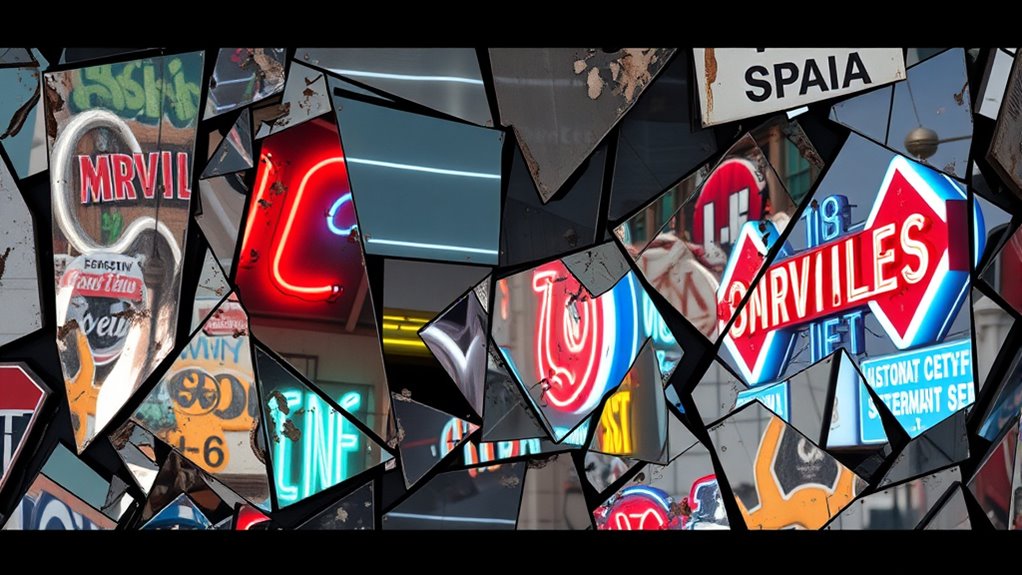
Cultural parody is another hallmark of postmodern art. You might encounter pieces that mimic or exaggerate popular culture, media, or historical styles, all with a sense of humor or critique. Instead of taking things at face value, you’re encouraged to see the layers of meaning behind the parody. It’s a way of poking fun at cultural stereotypes, commercialism, or the pretensions of high art. For example, an artist may create a work that looks like a commercial advertisement but is actually a commentary on consumer obsession or societal values. By doing this, the artist invites you to reconsider the cultural messages we often accept uncritically. Parody becomes a tool for deconstruction, revealing how cultural constructs shape your perception and understanding. Additionally, postmodern artists often employ irony to challenge traditional narratives and provoke critical reflection.
Postmodern art’s use of deconstruction and irony pushes you to think more critically about art’s authority and its role in society. It questions who gets to decide what’s “original” or “valuable” and often highlights the fluidity of meaning. Instead of seeking to elevate a single voice or style, postmodernism celebrates multiplicity and ambiguity. When you engage with this art, you’re not just a passive viewer; you’re part of an ongoing dialogue that challenges you to think differently. It’s about breaking down the barriers of traditional aesthetics and exposing the underlying assumptions that govern artistic and cultural authority. In doing so, postmodern art becomes a powerful tool for questioning, subverting, and ultimately expanding your understanding of what art can be.
Frequently Asked Questions
How Has Digital Technology Influenced Postmodern Artistic Practices?
Digital technology has transformed your postmodern artistic practices by enabling virtual collaboration, making it easier to connect and create with others worldwide. You now experiment with digital aesthetics, blending multimedia, and incorporating irony into your work. These tools give you new ways to deconstruct traditional ideas, challenge norms, and express complex ideas creatively. As a result, your art becomes more dynamic, interactive, and reflective of contemporary digital culture.
What Are the Key Differences Between Modernism and Postmodernism in Art?
Think of modernism as a strict architect, building with clear lines and a sense of purpose rooted in its time. Postmodernism, however, is a playful artist, mixing styles and questioning truths. You see, modernism values conceptual originality within a solid historical context, while postmodernism challenges those boundaries, embracing irony and deconstruction. It’s a shift from certainty to questioning, making art feel like a conversation rather than a command.
How Do Postmodern Artists Challenge Traditional Aesthetic Values?
You challenge traditional aesthetic values by redefining beauty and embracing ambiguity in your art. Instead of adhering to classical standards, you use irony and deconstruction to question established norms. Your work often blends different styles and mediums, encouraging viewers to interpret meaning personally. This approach invites open-ended dialogue, breaking away from conventional expectations and highlighting that beauty isn’t fixed but fluid and subjective.
In What Ways Does Postmodern Art Address Cultural Identity?
Imagine a tapestry woven with threads of diverse colors and patterns, symbolizing cultural hybridity. You see postmodern art embracing identity politics, challenging fixed notions of who you are. It reflects your multifaceted cultural background, blending traditions and perspectives. By doing so, it invites you to question stereotypes, celebrate differences, and recognize the fluidity of cultural identities, making your personal story part of a broader, dynamic cultural dialogue.
Can Postmodernism Be Considered a Global Artistic Movement?
Yes, postmodernism can be considered a global artistic movement. You see, it challenges cultural homogenization by embracing regional diversity, encouraging artists worldwide to express their unique identities. This movement’s flexibility allows it to adapt across different cultures, blending influences and ideas. As a result, postmodernism becomes a worldwide phenomenon that celebrates varied perspectives, breaking down borders and fostering a truly global dialogue in art.
Conclusion
You see, postmodernism in art is like a kaleidoscope—constantly shifting, revealing new perspectives with every turn. Embracing deconstruction and irony, it invites you to question norms and find meaning in chaos. By refusing simple answers, it challenges you to explore deeper truths. So, next time you encounter a postmodern piece, remember it’s like a puzzle waiting for your unique interpretation—every piece adds to the vibrant, complex picture.