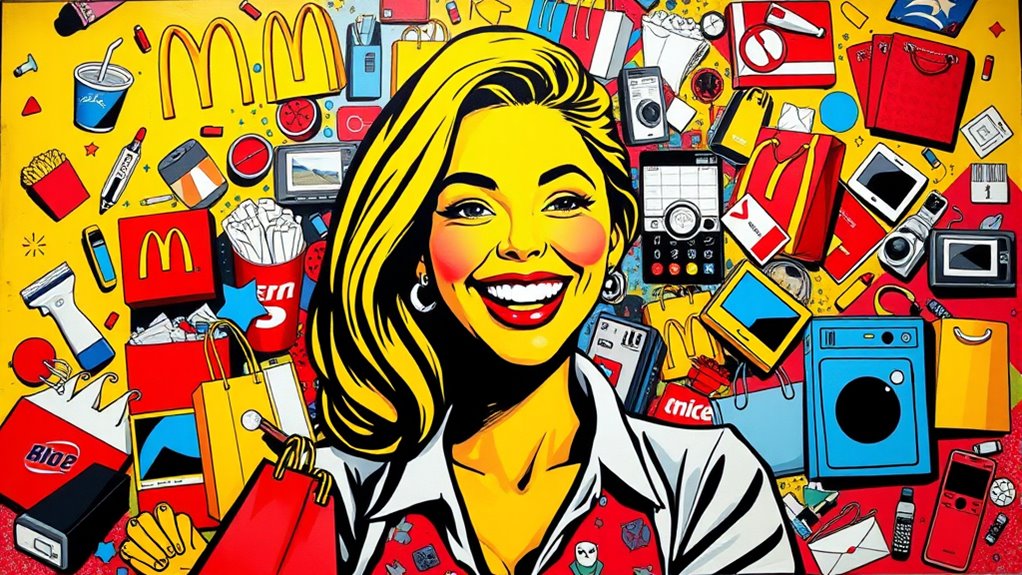

Pop Art uses bold colors and repetitive images to turn everyday consumer products and celebrities into striking works of art. It challenges traditional ideas of “high” art by celebrating popular culture and mass media influence. You’ll see how artists highlight consumerism’s role in shaping identity and desire, questioning what’s real versus manufactured. If you want to explore how pop art reveals these cultural messages, there’s more to discover beyond this overview.
Key Takeaways
- Pop Art elevates everyday consumer products and media images into vibrant, high art, highlighting their cultural significance.
- It employs bold colors and repetitive patterns to emphasize the ubiquity of consumer culture.
- Artists incorporate celebrity images to critique mass media’s role in shaping fame and societal values.
- Pop Art blurs the line between “high” and “low” art, merging popular culture with fine art.
- It offers social commentary on how advertising, branding, and media influence identity and perceptions.

Have you ever wondered how artists transform everyday objects into bold, colorful works of art? That’s the essence of Pop Art, a movement that takes consumer culture and makes it immediately striking. At its core, Pop Art is about elevating the ordinary—comic strips, advertisements, and consumer products—into high art. It’s a celebration of mass media and the way it shapes our perceptions of reality. When you look at a Warhol Campbell’s Soup can or a Lichtenstein comic panel, you’re witnessing artists tapping into the visual language of mass media to challenge traditional notions of art’s seriousness and exclusivity. They use familiar images to comment on the pervasive influence of consumerism and popular culture, blurring the line between high and low art. This approach often employs visual repetition to emphasize the ubiquity of consumer products and media messages in everyday life.
Celebrity endorsement plays a pivotal role in this cultural dialogue. Pop artists often incorporate images of celebrities, turning them into icons that symbolize fame, desire, and societal values. Think of Andy Warhol’s portraits of Marilyn Monroe or Elvis Presley—they’re not just depictions of individuals but symbols of the mass media’s power to create and commodify celebrity. By including these figures, artists comment on how celebrity culture is manufactured and consumed, mirroring the way products are marketed to the masses. This approach makes the artwork resonate with a broad audience because it reflects their daily reality—an environment saturated with celebrity images and advertising. It’s almost as if the celebrities and products become part of the viewer’s world, reinforcing how deeply consumer culture has infiltrated our lives.
Pop Art also leverages the visual language of mass media—bold colors, repetitive patterns, and graphic styles—to make a quick, impactful statement. The use of celebrity endorsement in art highlights how marketing strategies influence public perception. When you see a celebrity’s face in a piece of pop art, it’s not just about admiration; it’s a critique of how media constructs and manipulates fame for commercial gain. The movement’s embrace of mass media imagery turns the spotlight on the consumerist society we live in, making you think about how media, branding, and celebrity culture shape your identity and desires.
Ultimately, Pop Art’s fusion of mass media and celebrity endorsement invites you to see everyday objects and images in a new, vibrant light. It’s a reflection of modern life’s bombardment of visuals, pushing you to question what’s real and what’s manufactured. By transforming familiar symbols into art, Pop artists challenge you to contemplate how consumer culture influences your perceptions and values, making the ordinary extraordinary and the commercial cultural commentary.
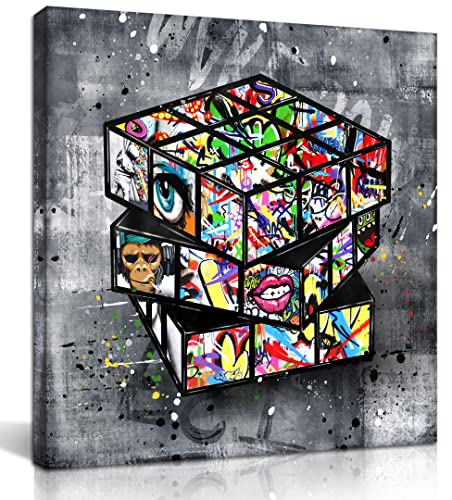
SIXTTART Banksy Canvas Wall-Art for Bedroom – Street Graffiti Wall Art Abstract Painting Pop Art Wall Decor Modern Home Office Decor 14" W x14 H Stretched and Framed Ready to Hang
【CANVAS WALL ART SIZE】 Size is 14"x14" banksy graffiti canvas wall art
As an affiliate, we earn on qualifying purchases.
As an affiliate, we earn on qualifying purchases.
Frequently Asked Questions
How Did Pop Art Influence Contemporary Advertising?
Pop art influenced contemporary advertising by emphasizing brand symbolism and celebrity endorsements. You see this in how ads use iconic images and popular culture references to create strong brand identities, making products memorable. Celebrities are often featured to boost appeal and credibility. This approach, rooted in pop art’s playful and bold style, helps you connect emotionally with brands, making advertising more engaging and culturally relevant today.
Who Are the Most Iconic Pop Art Artists Besides Warhol and Lichtenstein?
Imagine walking through a vibrant street art mural or scrolling through digital pop on your screen—that’s where artists like Roy Lichtenstein and Andy Warhol’s influence shines. Besides them, Keith Haring’s bold lines and Yayoi Kusama’s polka-dot obsession stand out. Their work bridges street art and digital pop, transforming everyday visuals into iconic symbols. These artists push boundaries, blending pop culture with contemporary art to captivate and challenge viewers like you.
What Materials Are Commonly Used in Creating Pop Art Pieces?
You typically use printmaking techniques like silkscreen and lithography to create pop art pieces, which allow for bold, repetitive images. You might also incorporate mixed media applications, combining paint, collage, and found objects to enhance visual impact. These materials and methods help you capture consumer culture’s vibrancy and mass production aesthetic, making your artwork vibrant and accessible, echoing the pop art movement’s focus on popular imagery and everyday objects.
How Does Pop Art Reflect Societal Attitudes Towards Consumerism?
You can’t judge a book by its cover, but pop art shows society’s love-hate relationship with consumerism. It acts as a consumerist critique, highlighting how mass media influence shapes our desires and perceptions. By using bold imagery and familiar symbols, pop artists reflect society’s obsession with consumer culture, encouraging you to question whether these images celebrate or critique the pervasive influence of advertising and mass production in everyday life.
Are There Any Significant International Variations of Pop Art?
You’ll find that pop art has significant international variations, shaped by cultural adaptations and regional styles. For example, in Britain, artists like Richard Hamilton integrated local symbols, while in Japan, pop art blended manga and anime influences. These adaptations reflect each society’s unique consumer culture, creating diverse expressions of pop art worldwide. So, regional styles influence how pop art communicates consumerism, making it a truly global movement with distinct local flavors.

BOHU ARTS Andy Warhol Canvas Wall Art Warhol Pop Art Monroe Framed Painting for Bedroom Livingroom Office
This canvas print is stretched and wrapped around a sturdy wood frame, giving it a sleek and modern…
As an affiliate, we earn on qualifying purchases.
As an affiliate, we earn on qualifying purchases.
Conclusion
You can see how pop art transformed consumer culture into bold, captivating images. Did you know that Andy Warhol’s Campbell’s Soup cans sold for over $11 million at auction? That’s a proof to how everyday objects became valuable art, reflecting society’s obsession with consumerism. Pop art invites you to look closer at the world around you, reminding you that even the simplest items can carry powerful cultural meaning. It’s a vibrant celebration of modern life on canvas.

Mona Lisa Graffiti Wall Art – Pop art Wall Decor Poster – Colorful Trendy – Modern Wall Decor – Andy Warhol Style Funky Wall Art – Chic Living room Print – Cool Print, Retro Picture
8×10 UNFRAMED PRINTS – NOT Canvas or Tin Sign
As an affiliate, we earn on qualifying purchases.
As an affiliate, we earn on qualifying purchases.

HAUS AND HUES Celebrity Pop Art Wall Decor – Set of 4 Fashion Posters | Audrey Hepburn, Marilyn Monroe, Grace Kelly, Elizabeth Taylor UNFRAMED 8"x10"
DISPLAY HOLLYWOOD GLAMOUR DECOR: Haus and Hues's cute celebrity bubblegum wall art posters are perfect for turning any…
As an affiliate, we earn on qualifying purchases.
As an affiliate, we earn on qualifying purchases.