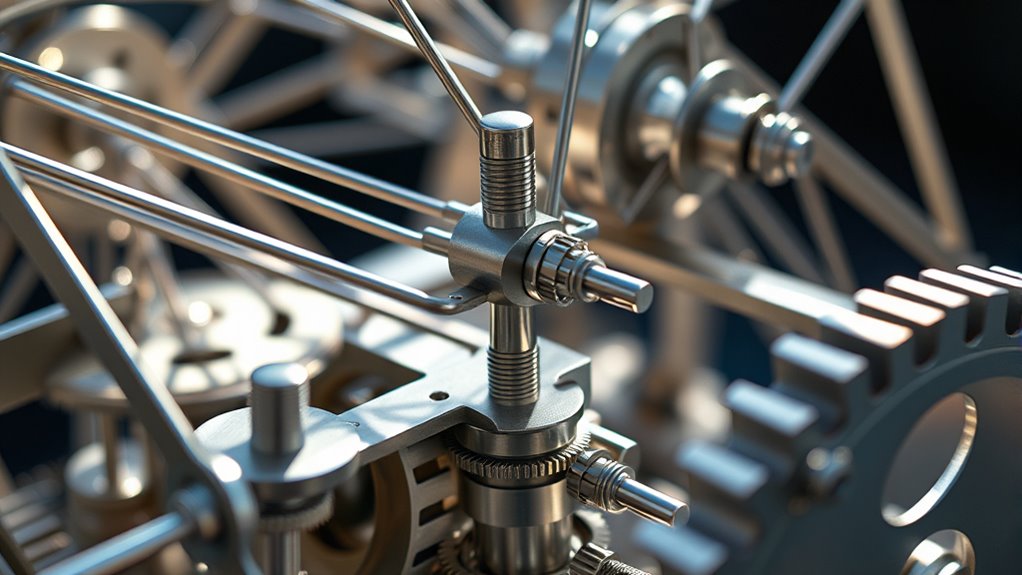
Kinetic art’s movement relies on mechanical systems like gears, pulleys, motors, and levers that create deliberate, mesmerizing motion. These components are designed for specific patterns, symbolizing themes or responding to stimuli like light or wind. They blend engineering with creativity to produce dynamic visual effects, making static sculptures come alive. Each mechanical part plays a role in conveying the artist’s vision, and exploring further will reveal the innovative interplay behind these enthralling creations.
Key Takeaways
- Mechanical components like gears, pulleys, and motors drive movement, transforming static sculptures into dynamic art pieces.
- Artists design specific systems to create deliberate motion patterns, emphasizing artistic intent and visual rhythm.
- Mechanical parts serve both functional and expressive roles, symbolizing themes such as progress, chaos, or harmony.
- External stimuli like wind or viewer interaction are integrated with mechanical systems to produce responsive movement.
- Engineering principles ensure the durability and smooth operation of mechanical systems, enhancing the artwork’s longevity and impact.
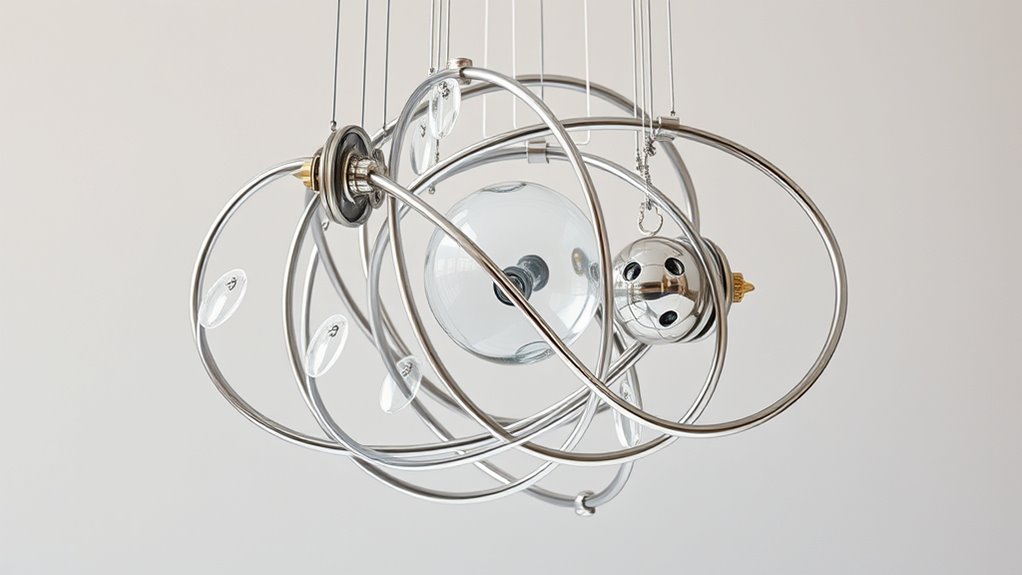
Have you ever noticed how some artworks seem to come alive with movement? That’s the magic of kinetic art, where motion isn’t just an accidental feature but a core element of artistic expression. At its heart, kinetic art combines creativity with mechanical components, transforming static sculptures into dynamic, mesmerizing pieces. These mechanical parts—gears, levers, motors, pulleys—are carefully engineered to produce precise movements that catch the eye and evoke emotion. When you stand before a kinetic sculpture, you’re witnessing a harmonious blend of engineering and artistry, where each mechanical component plays a role in conveying a message or evoking a feeling.
Kinetic art transforms static sculptures into dynamic, mesmerizing expressions through carefully engineered mechanical components that evoke emotion and movement.
In kinetic art, mechanical components aren’t just functional; they’re integral to the visual language. Artists design intricate systems that allow their works to move in specific patterns or respond to external stimuli like wind, light, or even viewer interaction. For example, a sculpture might feature rotating discs, oscillating arms, or flowing ribbons—all driven by motors or manual mechanisms. These elements are meticulously crafted to ensure smooth, deliberate motion, emphasizing the artist’s intent while showcasing technical mastery. The use of mechanical components in this context elevates the artwork beyond simple visual appeal, inviting viewers to experience it from multiple angles and perspectives as it shifts and changes right before their eyes.
You might notice that the mechanical components in kinetic art serve multiple purposes. They create a sense of rhythm and harmony, guiding your eye across the piece in a choreographed dance of movement. They can also symbolize themes like progress, chaos, or harmony, depending on how the artist orchestrates their mechanical systems. Additionally, the integration of mechanical engineering principles ensures the durability and reliability of these moving artworks over time. When you observe a kinetic sculpture in motion, you’re not just watching an object; you’re engaging with a complex interplay of mechanical engineering and artistic expression. This interaction makes the artwork more immersive and memorable, as it challenges your perception of static art and invites you into a world where motion is an essential part of the artistic narrative.
Ultimately, the beauty of kinetic art lies in its ability to fuse mechanical ingenuity with creative vision. The mechanical components are the tools that bring the artist’s ideas to life, allowing movement to become a language of its own. As you explore these works, appreciate how each gear, motor, or pulley contributes to a living piece of art—one that captures the essence of motion and transforms it into a profound expression of human creativity. In kinetic art, mechanics aren’t just technical details; they’re the heartbeat of artistic innovation that continues to inspire and captivate.

CulinaryEdge Kinetic Energy Sculpture Pendulum Perpetual Motion Ornament Desktop Anti-Gravity Pendant Silent Metal Desk Toy
1.Power principle: The sculpture is powered by 4 AA batteries (to be equipped with their own), and the…
As an affiliate, we earn on qualifying purchases.
As an affiliate, we earn on qualifying purchases.
Frequently Asked Questions
What Are the Most Common Materials Used in Kinetic Art?
When choosing materials for kinetic art, you focus on materials selection and durability factors to guarantee your piece moves smoothly and lasts. Common materials include lightweight metals like aluminum, plastics, and wood because they are easy to shape and durable. You also consider motors, wires, and fasteners, making sure they’re sturdy enough to handle movement. Balancing aesthetics with durability helps your kinetic art remain functional and visually appealing over time.
How Do Artists Ensure the Stability of Moving Sculptures?
Balance techniques and structural supports are your keys to ensuring the stability of moving sculptures. You carefully analyze weight distribution, anchoring heavier parts lower for better balance. Using sturdy materials and reinforced joints, you create a solid foundation that withstands motion. By integrating these methods, you prevent wobbling or toppling, allowing your kinetic sculpture to move gracefully and securely, mesmerizing viewers without compromising safety or stability.
What Are the Safety Considerations for Kinetic Art Installations?
When considering safety for kinetic art installations, you need to prioritize clear safety signage to alert viewers to moving parts and potential hazards. Regular maintenance protocols are essential to guarantee all mechanisms function safely and prevent accidents. You should also conduct routine inspections, secure electrical components, and educate viewers about safe distances. These steps help protect both the audience and the artwork, ensuring a safe and enjoyable experience for all.
How Does Kinetic Art Influence Viewer Perception?
Did you know that kinetic art can alter your visual perception by creating illusions of motion? As you observe the movement, it sparks an emotional response that deepens your engagement. You might find yourself more immersed or even feeling a sense of wonder. Kinetic art influences your perception by playing with your senses, making you more aware of movement and space, ultimately enhancing your overall experience and emotional connection to the artwork.
Are There Digital or Electronic Components in Traditional Kinetic Art?
You might wonder if traditional kinetic art includes digital integration or electronic mechanisms. Typically, it doesn’t, relying instead on mechanical parts like motors, gears, or pulleys to create movement. However, some artists blend old techniques with modern technology, incorporating electronic mechanisms or digital components to enhance or control motion. This fusion allows for more complex, dynamic pieces, bridging classic craftsmanship with innovative digital integration, making kinetic art even more engaging.
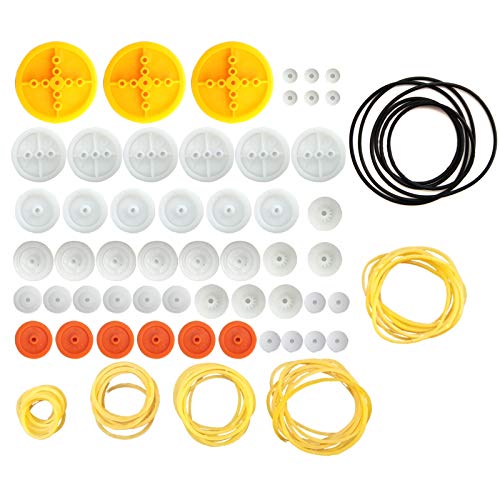
EUDAX 2mm Hole Plastic Belt Pulley Gears Combination Modulus Package Rubber Belts Band Plastic Model Accessories for DIY Robots Cars RC Toy Car Airplane
Product Name : Belt Pulley;Used for : DIY Toy Model;
As an affiliate, we earn on qualifying purchases.
As an affiliate, we earn on qualifying purchases.
Conclusion
Now that you’ve explored the mechanics behind kinetic art, you see how movement breathes life into art pieces. Your understanding reveals that, like the saying goes, “a picture is worth a thousand words,” but a moving one is worth a thousand times more. With each twist and turn, kinetic art challenges you to see beauty in motion, proving that sometimes, the best way to appreciate art is to experience it in action.

WOODEN.CITY Kinetic Wall Art Sculpture Ornate Geometric, Model Size 37.4 x 27.55 in, Hypnotic Wooden Decor for Office, Home, Living Room, Bedroom, or Kitchen – Stress Relief and Creative Energy Boost
Hypnotic Design: Mesmerizing geometric patterns that captivate and relax as you watch.
As an affiliate, we earn on qualifying purchases.
As an affiliate, we earn on qualifying purchases.

Mindsight Moving Kinetic Wall Art – Wind up to power peaceful motion (no battery) – Calming Wall Décor for Living Room, Office, Bedroom, Kitchen – Hand Crafted Wood – Glide, Walnut Brown
🌀 HOW IT WORKS – [see video, last product image] wind up by hand to power (no battery)…
As an affiliate, we earn on qualifying purchases.
As an affiliate, we earn on qualifying purchases.