
The feminist art movement uses creativity to challenge patriarchal norms and push for gender equality. It shifts away from traditional, stereotyped portrayals of women, instead depicting them as complex and empowered individuals. Through activism and powerful visuals, this movement confronts systemic barriers and societal injustices like gender inequality and violence. By exploring themes like reproductive rights and body autonomy, it inspires social change. If you keep exploring, you’ll see how art becomes a essential tool for transformation and progress.
Key Takeaways
- Feminist art redefines women’s portrayal, promoting complex, authentic representations that challenge traditional stereotypes and objectification.
- The movement confronts systemic barriers, advocating for greater visibility, recognition, and equal opportunities for women artists.
- Artists address societal issues like reproductive rights, violence, and gender inequality through provocative and activist artworks.
- Feminist art fosters societal dialogue, aiming to dismantle patriarchal norms and promote gender equality via creative expression.
- It inspires collective activism, empowering women and allies to challenge systemic oppression and promote social change through art.
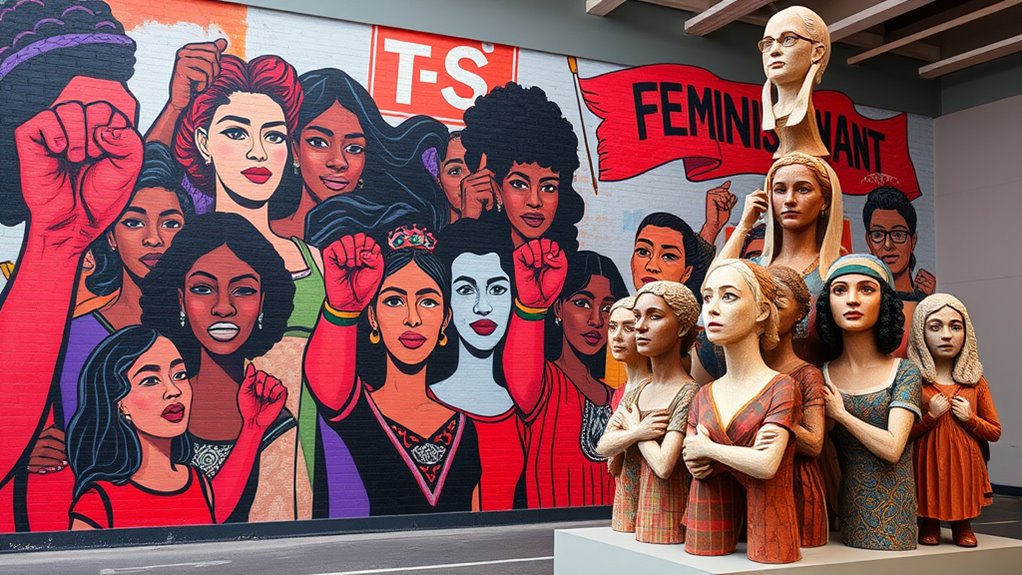
Have you ever wondered how art can challenge societal norms and give voice to women’s experiences? The feminist art movement has played a crucial role in reshaping how women are represented within the cultural landscape. Historically, women’s representation in art was limited and often stereotyped, reinforcing gender roles rather than questioning them. Today, feminist artists use their work to confront these distortions, aiming to elevate women’s voices and push for gender equality. By doing so, they challenge the patriarchal narratives that have long marginalized women, transforming art into a powerful tool for activism and change.
In this movement, artists focus on depicting women authentically, breaking away from traditional portrayals that often objectified or silenced them. Instead of idealized or passive figures, feminist art showcases women as complex, empowered individuals with their own stories. This shift in representation helps viewers see women through a more truthful and nuanced lens, fostering empathy and understanding. When you engage with feminist art, you’re encouraged to question societal assumptions about gender and recognize the importance of diverse women’s experiences. These works demand attention and provoke conversations about gender equality, making them more than just aesthetic expressions—they’re acts of resistance.
Feminist artists also challenge the male-dominated art world, advocating for greater visibility and inclusion for women creators. They confront the systemic barriers that have kept women on the margins of artistic recognition and push for equal opportunities. This effort to increase women’s representation in galleries, museums, and public spaces is intrinsic to the movement’s goals. As you explore feminist art, you’ll notice how it often highlights issues like reproductive rights, domestic violence, body autonomy, and gender-based violence. These themes resonate deeply, emphasizing how art can be a powerful form of protest and a means of raising awareness.
Furthermore, the movement encourages collaborations that amplify women’s voices, fostering a community that supports gender equality. It’s not just about individual expression but about creating a collective push towards societal change. By challenging patriarchal structures through creative expression, feminist artists inspire others to reconsider their perceptions and advocate for a more equitable world. When you observe or participate in this movement, you become part of a broader dialogue that seeks to dismantle gender stereotypes and promote justice. Ultimately, feminist art demonstrates that creativity can be a catalyst for societal transformation, giving voice to those who have been silenced and ensuring that women’s representation continues to grow—an essential step toward true gender equality. Moreover, many feminist artists draw inspiration from diverse environments, which enriches their work and broadens the movement’s impact.
feminist art books
As an affiliate, we earn on qualifying purchases.
As an affiliate, we earn on qualifying purchases.
Frequently Asked Questions
How Has Feminist Art Evolved Internationally Over the Decades?
You see that feminist art has evolved internationally by embracing diverse global perspectives and cultural influences. Over the decades, artists from different countries incorporate local traditions, issues, and gender narratives, creating a rich, multifaceted movement. This evolution challenges patriarchal norms worldwide, blending activism with cultural expression. You notice how contemporary feminist art continues to push boundaries, fostering dialogue across cultures and expanding the movement‘s reach and impact globally.
What Are Some Key Feminist Artists Who Revolutionized the Movement?
You’ll find that iconic pioneers like Judy Chicago and Kara Walker revolutionized the movement, breaking barriers with bold, provocative works. Contemporary innovators such as Guerrilla Girls and Tracey Emin continue to challenge norms and inspire change. They’re the real deal, pushing boundaries and shining a spotlight on gender issues through their art. Together, these artists prove that you can’t judge a book by its cover and truly make a difference.
How Do Feminist Artworks Address Intersectionality and Diversity?
You see feminist artworks addressing intersectionality by emphasizing identity politics, showcasing diverse experiences, and challenging stereotypes. These pieces highlight cultural representation, portraying marginalized voices often ignored in mainstream art. By blending personal narratives with broader social issues, artists create powerful visuals that foster understanding and inclusivity. This approach guarantees that multiple identities are acknowledged, promoting equality and inspiring dialogues around race, gender, sexuality, and class within the feminist movement.
What Challenges Do Feminist Artists Face Within the Mainstream Art World?
You face significant challenges within the mainstream art world due to gender bias and institutional barriers. These obstacles often limit your exposure, funding, and recognition, making it harder to showcase your work. You might encounter skepticism or marginalization because your feminist perspective challenges traditional norms. Overcoming these hurdles requires resilience, advocacy, and finding alternative platforms to guarantee your voice and message reach a broader audience.
How Can New Artists Contribute to the Ongoing Feminist Art Movement?
Like fresh paint on a blank canvas, you can shape the feminist art movement by actively challenging gender representation and pushing boundaries. Get involved in activist collaboration, connect with like-minded artists, and amplify marginalized voices. Your unique perspective fuels change, inspiring others to question patriarchal norms. By creating provocative, inclusive art, you help keep the movement vibrant and evolving, driving progress for gender equality through your creativity and collective effort.
women's empowerment art prints
As an affiliate, we earn on qualifying purchases.
As an affiliate, we earn on qualifying purchases.
Conclusion
You now see how the feminist art movement acts as a fierce lighthouse, guiding us through the stormy seas of patriarchy. By challenging societal norms and redefining femininity, it sparks change and inspires voices that were once silenced. Keep in mind, every brushstroke and performance is a powerful ripple, shaping a more equal world. Embrace this creative revolution—your voice, like a spark, can ignite a brighter future for all.
activist art supplies
As an affiliate, we earn on qualifying purchases.
As an affiliate, we earn on qualifying purchases.
gender equality posters
As an affiliate, we earn on qualifying purchases.
As an affiliate, we earn on qualifying purchases.